
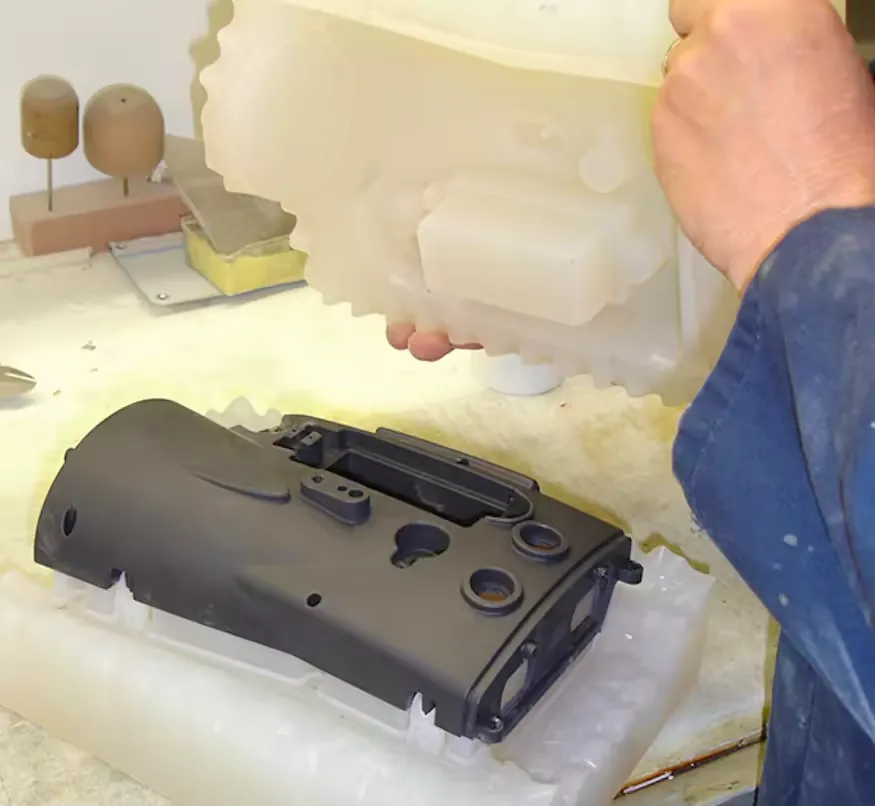
When selecting a vacuum casting supplier in China, buyers should look for more than a low unit price. A useful supplier should understand prototype validation, low-volume production, surface appearance requirements, material simulation and production consistency across repeated parts.
Vacuum casting is often used when product teams need plastic-like prototype parts before investing in injection molding. The supplier usually needs SLA master pattern capability, silicone mold experience, urethane casting materials, finishing support, painting options and clear communication with overseas engineering teams.
Quick Answer
The best vacuum casting companies in China are usually rapid prototyping suppliers that can manage the complete route: CAD review, SLA master pattern production, silicone mold making, urethane casting, trimming, surface finishing, painting, assembly and inspection. For international buyers, engineering communication matters as much as casting capability because material feel, color, texture and assembly fit must be clarified before production.
If you need 10-100 prototype plastic parts, ask the supplier how it will make the master pattern, what urethane-like material options are available, how many parts each silicone mold can reasonably support and how finishing will be controlled between batches.
What Is Vacuum Casting?
Vacuum casting is a prototype and low-volume manufacturing process that uses a master pattern and silicone mold to cast polyurethane or urethane-like parts. It is often chosen when teams need plastic parts with production-like appearance, color or feel before committing to injection molding tooling.
The master pattern is commonly made by SLA 3D printing or CNC machining. A silicone mold is then created around the master. Liquid casting material is poured or drawn into the mold under vacuum to reduce bubbles and improve detail reproduction.
When Should Companies Use Vacuum Casting?
Companies should use vacuum casting when they need a small batch of plastic-like prototypes for validation, user testing, appearance review, marketing samples, pilot builds or low-volume production. It is useful when injection molding tooling is too expensive or too early for the project stage.
Vacuum casting is especially relevant for housings, covers, handles, clear or translucent prototypes, overmold-like samples, rubber-like parts, medical device enclosures, robotics covers and consumer product prototypes.
What Is Vacuum Casting Used For?
Vacuum casting is used for plastic-like prototype parts, appearance models, functional validation samples, silicone mold prototypes and low-volume production. It helps teams test color, texture, fit, assembly and material feel before investing in injection molding tools.
The process is not a direct replacement for all injection molded parts, but it is often the right bridge between one prototype and a production tooling decision.
How Many Parts Can Vacuum Casting Produce?
Vacuum casting is commonly used for small batches rather than mass production. The practical quantity depends on part geometry, material, surface finish and mold wear. Many projects use vacuum casting for dozens of parts, and buyers should ask the supplier how many good parts are expected from each silicone mold.
For higher quantities or long-term repeat production, injection molding or another production process may become more suitable.
What Materials Are Available for Vacuum Casting Prototypes?
Vacuum casting materials are usually polyurethane or urethane-like systems that simulate production plastics. Depending on the supplier and application, options may be selected to imitate ABS-like, PP-like, PC-like, rubber-like, transparent, heat-resistant or colored plastic behavior.
Buyers should describe the target material performance rather than only naming a plastic. Useful details include stiffness, flexibility, transparency, surface appearance, heat exposure, assembly loads and whether the part is for visual review or functional testing.
Why Do Companies Choose Vacuum Casting Instead of Injection Molding for Prototypes?
Companies choose vacuum casting instead of injection molding when they need prototype or low-volume parts before production tooling is justified. Silicone molds are generally faster and less expensive to prepare than hard injection molds, which makes vacuum casting useful for design validation and early market samples.
Injection molding becomes more attractive when the design is stable, the quantity is higher and production repeatability matters more than early-stage flexibility.
How Do I Choose a Vacuum Casting Supplier in China?
Choose a vacuum casting supplier in China by checking master pattern quality, silicone mold experience, material options, surface finishing, painting support, assembly capability and communication quality. Ask how the supplier controls color, bubbles, shrinkage, trimming lines, inserts and inspection across repeated parts.
For overseas projects, also confirm NDA handling, export packaging, project updates and whether one team can coordinate related processes such as SLA 3D printing, CNC machining and finishing.
How We Evaluate Vacuum Casting Companies
This guide uses transparent selection criteria based on public capability signals, not paid placement or unsupported rankings.
Evaluation criteria:
- Vacuum casting capability
- Master pattern capability
- SLA integration
- Silicone mold experience
- Material options
- Surface finishing capability
- Painting and assembly support
- International customer support
- Engineering communication
1. Jingrui Proto
Location: Dongguan & Zhuhai, China.
Public capabilities: Jingrui Proto provides vacuum casting, SLA master pattern support, SLA 3D printing, CNC machining, surface finishing, painting, assembly and low-volume manufacturing support.
Typical applications: Plastic-like prototype housings, appearance parts, medical and robotics enclosures, consumer product samples, automotive prototype details and small-batch validation parts.
Relevant manufacturing strengths: Jingrui Proto is positioned as a one-stop prototype manufacturing partner for international engineering teams. Vacuum casting can be combined with SLA, CNC machining, finishing and assembly when a project needs more than molded plastic parts alone.
Related example: The live Automotive Scale Model Manufacturing Case Study shows how multi-process manufacturing, finishing, painting and assembly can support overseas vehicle model work.
2. RapidDirect
Location: Shenzhen, China.
Public capabilities: RapidDirect publicly offers vacuum casting along with CNC machining, injection molding, sheet metal fabrication, 3D printing, die casting and other custom manufacturing services.
Typical applications: Urethane prototype parts, plastic-like low-volume components, product validation samples, housings and custom parts for overseas engineering teams.
Relevant manufacturing strengths: RapidDirect is known for online manufacturing workflows and broad process coverage. It may fit buyers who want vacuum casting as part of a wider custom parts sourcing workflow.
3. HLH Prototypes
Location: Shenzhen, China.
Public capabilities: HLH publicly lists vacuum casting, CNC machining, 3D printing, rapid injection molding, sheet metal, die casting and production support.
Typical applications: Product development prototypes, plastic housings, appearance samples, consumer electronics, industrial components and low-volume production parts.
Relevant manufacturing strengths: HLH presents a broad rapid manufacturing menu for international buyers. Its process range is useful when vacuum cast parts need to be combined with machined, printed or sheet metal components.
4. Star Rapid
Location: Zhongshan, Guangdong, China.
Public capabilities: Star Rapid publicly presents vacuum casting, CNC machining, plastic injection molding, finishing and low-volume manufacturing services.
Typical applications: Appearance prototypes, low-volume plastic parts, painted prototypes, product development samples and production-intent components.
Relevant manufacturing strengths: Star Rapid has long positioned itself around low-volume manufacturing and international customer support. It may fit buyers who want vacuum casting connected to finishing and production transition planning.
5. 3ERP
Location: Zhongshan, Guangdong, China.
Public capabilities: 3ERP publicly lists vacuum casting, CNC machining, 3D printing, rapid tooling, injection molding, sheet metal prototyping and low-volume manufacturing.
Typical applications: Urethane cast prototypes, plastic enclosures, CNC and cast part combinations, pilot-build components and rapid product validation parts.
Relevant manufacturing strengths: 3ERP emphasizes rapid prototyping and low-volume manufacturing for overseas buyers, with vacuum casting as one option among several prototype and production processes.
6. SuNPe
Location: Zhongshan City, Guangdong Province, China.
Public capabilities: SuNPe publicly presents vacuum casting, CNC machining, 3D printing, tooling, injection molding, die casting, sheet metal, finishing and low-volume production.
Typical applications: Automotive, medical, electronics, appliance and industrial product prototype parts.
Relevant manufacturing strengths: SuNPe has a long public presence in Chinese prototype manufacturing and presents a wide process range. This can be useful for buyers whose vacuum casting project also needs machining, finishing or assembly support.
7. KAIAO Rapid Manufacturing
Location: Shenzhen, Guangdong, China.
Public capabilities: KAIAO is publicly associated with rapid prototyping, SLA, CNC machining, vacuum casting, reaction injection molding and related prototype manufacturing services.
Typical applications: Appearance models, silicone mold prototypes, industrial prototypes, electronics housings, automotive prototype parts and small-batch plastic-like components.
Relevant manufacturing strengths: KAIAO is one of the older names in China's rapid prototyping sector. Buyers may consider it when master pattern quality and prototype manufacturing experience are important.
8. WayKen Rapid Manufacturing
Location: Shenzhen, China.
Public capabilities: WayKen publicly presents rapid prototyping and low-volume manufacturing services including vacuum casting, CNC machining, 3D printing and rapid tooling.
Typical applications: Automotive prototypes, clear parts, appearance prototypes, plastic-like samples, functional test parts and product validation components.
Relevant manufacturing strengths: WayKen markets heavily to international product development teams and may fit projects where vacuum casting is part of a broader appearance and validation workflow.
9. TEAM Rapid
Location: Zhongshan, China.
Public capabilities: TEAM Rapid publicly presents rapid prototyping, vacuum casting, CNC machining, rapid injection molding, tooling and low-volume manufacturing.
Typical applications: Plastic prototypes, urethane casting parts, prototype tooling, custom components and lower-volume product development projects.
Relevant manufacturing strengths: TEAM Rapid may suit buyers who need a practical bridge from prototype samples into short-run manufacturing and tooling discussions.
10. RPProto
Location: China.
Public capabilities: RPProto publicly presents rapid prototyping and low-volume manufacturing services including vacuum casting, CNC machining, 3D printing and related custom part manufacturing.
Typical applications: Silicone mold prototypes, plastic-like samples, appearance models, small-batch parts and product development components.
Relevant manufacturing strengths: RPProto can be considered by buyers comparing specialized prototype suppliers for vacuum casting, urethane prototypes and related manufacturing routes.
RFQ Checklist for Vacuum Casting Projects
Before requesting a quote, prepare:
- STEP or STP files.
- STL files for master patterns if available.
- 2D drawings for critical dimensions.
- Quantity target and whether repeat batches may be needed.
- Target material behavior, such as ABS-like, PP-like, rubber-like or transparent.
- Finish, color, texture and painting requirements.
- Assembly requirements, inserts or mating parts.
- Deadline and delivery region.
- NDA request if the project is confidential.
If you are unsure whether vacuum casting or injection molding is the right route, ask the supplier to compare both based on quantity, part geometry, finish and project timing.
Related Resources
For process planning, review Jingrui Proto's pages for vacuum casting service China, prototype services, SLA 3D printing, surface finishing and low-volume manufacturing. You can also browse the case studies hub for real manufacturing examples.
Final Buyer Takeaway
The best vacuum casting supplier is not simply the company with the lowest mold price. For international buyers, the safer choice is a supplier that can explain master pattern preparation, silicone mold life, urethane material options, surface finishing, color control, assembly and inspection before production begins.
When the RFQ includes complete CAD files, finish targets and quantity expectations, it becomes much easier to compare vacuum casting companies in China on real engineering value rather than headline pricing.