
Improve tool access around contoured parts and angled features.
5-axis milling combines three linear axes with two rotary axes. It can orient the tool or workpiece to reach angled features and complex surfaces. Engineering review determines whether indexed 3+2 machining or simultaneous motion is appropriate.
In-house CNC machining · Typical ±0.02 mm
Typical ±0.02 mm, confirmed during engineering review.
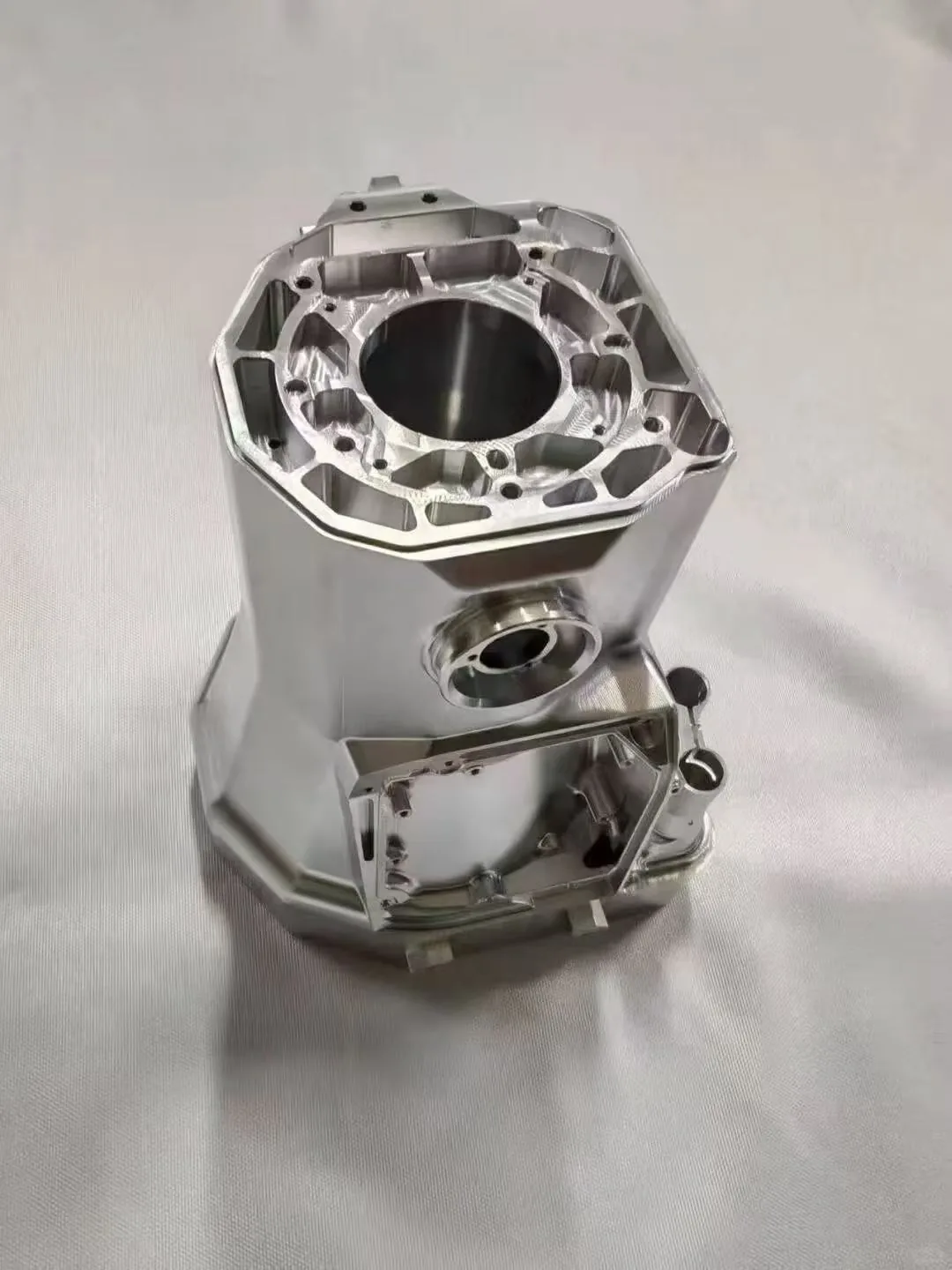
3+2 positioning versus simultaneous 5-axis
5-axis CNC milling requires review of the following geometry, material and manufacturing considerations for the submitted part.
| Route | How it works | Typical review focus |
|---|---|---|
| Indexed 3+2 | Two rotary axes position the part; cutting occurs with a fixed orientation. | Angled holes, tilted pockets, access from several directions and stable datum relationships. |
| Simultaneous 5-axis | Linear and rotary axes can move together during the cut. | Contoured surfaces, changing tool orientation, collision checks and coordinated toolpaths. |
Complex access still needs a feasible toolpath
Five axes can reduce setups and allow shorter tools in some regions. Tool orientation can improve cutting conditions, but surface finish still depends on tool engagement, material, step-over and vibration. It does not automatically remove polishing or guarantee a particular surface roughness.
- The fixture occupies part of the available access; a second setup may be needed to finish clamped faces.
- Toolholder and machine collisions must be checked along the full path.
- Deep thin features and narrow channels may remain inaccessible.
- Rotary travel, setup rigidity and machine envelope limit feasible geometry.
- If 3-axis or indexed 4-axis meets the drawing, the additional programming effort may not be justified.
Applications for angled and contoured parts
5-axis CNC milling requires review of the following geometry, material and manufacturing considerations for the submitted part.
- Impeller-like prototypes and complex housings, subject to tool access review.
- Gimbal and robotics components with compound-angle features.
- Contoured brackets and parts with several closely related machined faces.
- Mold and tooling features where the surface and toolpath suit the process.
Which materials can be reviewed for 5-axis CNC milling?
Material selection for 5-axis CNC milling depends on function, grade, stock condition, geometry and finishing requirements.
| Metal family | Examples for review | Selection considerations |
|---|---|---|
| Aluminum | 6061, 7075 | Weight, stiffness, machining access and anodizing requirements. |
| Stainless steel | 303, 304, 316 | Corrosion resistance, machinability and the specified surface condition. |
| Carbon and alloy steel | 1045, 4140 | Strength, final hardness, heat-treatment sequence and corrosion protection. |
| Titanium | Ti-6Al-4V | Strength-to-weight needs, tool access and cost. |
| Brass and copper | Drawing-specified grade | Machinability, conductivity, cosmetic requirements and stock condition. |
These are material examples, not a stock or performance guarantee. Confirm the exact alloy, temper or hardness, required certification and availability with the quotation. The tolerance framework must be checked for the selected material and geometry.
What tolerance and inspection requirements apply to 5-axis CNC milling?
Jingrui Proto provides CNC machining with typical tolerances of ±0.02 mm. Actual achievable tolerances depend on part geometry, material, dimensions and machining requirements and are confirmed during engineering review.
Identify datum references, positional requirements, threads, fits and the dimensions that govern assembly. A dimensional tolerance alone does not specify flatness, concentricity or surface texture. Agree the inspection method and report scope before production; available resources include CMM, optical measurement, micrometers and thread gauges, selected to suit the feature.
Which finishing processes for 5-axis CNC milling are in-house?
CNC machining, heat treatment, grinding, sanding, polishing, sandblasting, powder coating, painting and screen printing are available in-house. Electroplating and anodizing are arranged through qualified specialist partners in China. Jingrui Proto coordinates these processes within the overall manufacturing and delivery workflow.
Specify hardness, coating type, thickness, masking, cosmetic faces and whether dimensions apply before or after finishing. Heat treatment can move material; anodizing and plating can alter fits. Agree machining allowances, any final machining and inspection after the specified process.
See surface finishing options for the next review step. Availability and suitability depend on material and drawing requirements.
What should buyers confirm before requesting 5-axis CNC milling?
Before requesting 5-axis CNC milling, confirm the geometry, material, critical features, finish and inspection scope.
Does a more complex machine guarantee a tighter tolerance?
No. Feasible tolerances depend on the complete process, material, geometry, workholding and inspection. Mark critical requirements on the drawing for engineering review.
Is heat treatment performed in-house?
CNC machining, heat treatment, grinding, sanding, polishing, sandblasting, powder coating, painting and screen printing are available in-house. Electroplating and anodizing are arranged through qualified specialist partners in China. Jingrui Proto coordinates these processes within the overall manufacturing and delivery workflow.
Can I request a quote before deciding the exact route?
Yes. Send the model, drawing and functional requirements. Identify unresolved material or finish choices so they can be reviewed and clearly stated in the quotation.
What is needed for a 5-axis CNC milling manufacturing review?
A 5-axis CNC milling manufacturing review requires CAD, a dimensioned drawing, material and grade, quantity, finish and critical acceptance requirements.
The quotation should confirm the machining route, feasible tolerances, secondary-process responsibilities and inspection scope. Lead time is confirmed against the actual part and production schedule.