
Stereolithography resin printing
SLA 3D Printing Services for Detailed Prototypes and Finished Appearance Models
Jingrui Proto uses SLA 3D printing for smooth surfaces, fine details, transparent prototypes, large appearance models and resin parts that need sanding, polishing, painting or assembly before buyer review.
Send CAD files, quantity, target material behavior, finish requirements, critical dimensions and the purpose of the prototype. Our team reviews whether SLA is the right route or whether SLS, MJF, wax printing, CNC machining or another process is safer for the part.
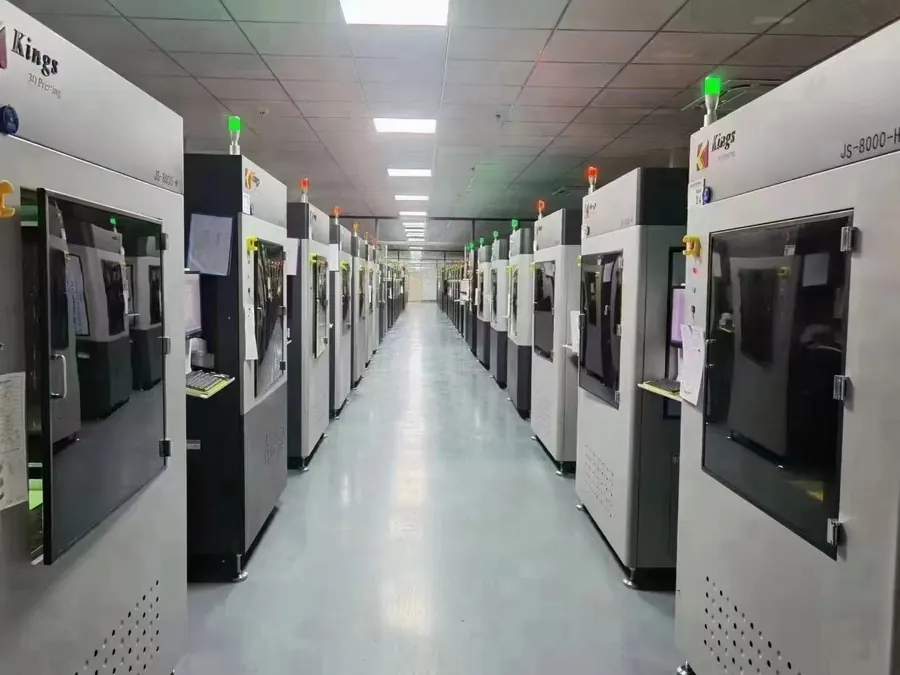
Quick Capability Overview
Best fit
Fine visual details, smooth surfaces, transparent or painted prototypes, display models, geometry checks and large resin models that can be bonded and finished.
Typical workflow
CAD review, orientation planning, SLA printing, cleaning, UV post-cure where specified, support removal, sanding, polishing, painting or assembly.
RFQ inputs
3D files, target resin category, quantity, finish, transparency expectations, assembly interfaces, drawing tolerances and any thermal or functional validation needs. Jingrui Proto’s approved SLA precision specification is ±0.01 mm. Actual achievable tolerances depend on part geometry, dimensions, material and inspection requirements. Specific tolerances should be confirmed during engineering review.
Six Confirmed SLA Resin Categories
Jingrui normally identifies SLA resins by color. The six categories below come from the owner-supplied SLA source pack. Values are listed only where the screenshot evidence supports the material; missing values are intentionally not filled.
Tough / yellow-green
Yellow-Green Tough SLA Resin
Smooth surface and fine details for automotive prototypes, jigs and inspection fixtures when a tougher SLA option is needed.
White / Somos 8000
White SLA Resin – Somos 8000
White display models, automotive prototypes and appliance prototypes. The Somos 8000 name is confirmed, but no numerical values are published here until its exact datasheet attribution is confirmed.
Brown / IP 200
Brown SLA Resin – IP 200
Detailed prototype models, character or animation models and footwear model development where a brown resin route is requested.
Clear
Clear / Transparent SLA Resin
Transparent enclosures, lenses or appearance samples, bottles and fluid-flow visualization. Specific optical transmission is not promised.
Black / tough
Black Tough SLA Resin
Functional prototypes where elongation and impact behavior are more important than a standard brittle display resin.
Heat resistant
High-Temperature SLA Resin – Temp R220
Heat-resistant prototype applications where HDT under test load matters. Review the real exposure temperature, load, time and validation purpose before selecting it.
Verified SLA Material Property Comparison
| Material | Liquid / exposure data | Tensile data | Flexural / impact / hardness data | HDT data |
|---|---|---|---|---|
| Yellow-Green Tough SLA Resin | Viscosity 402 cps at 30 C; density 1.12 g/cm3 at 25 C; Ec 21.6 mJ/cm2; Dp 0.15 mm; E10 109.8 mJ/cm2. | ASTM D638 tensile strength 53 MPa; tensile modulus 2400 MPa; elongation 10%. | ASTM D790 flexural strength 78 MPa; flexural modulus 2721 MPa; ASTM D256 Izod impact 31 J/m; Shore D 81. | ASTM D648: 59 C at 0.455 MPa; 54 C at 1.82 MPa. |
| White SLA Resin – Somos 8000 | Not published from this source pack. | Not published from this source pack. | Not published from this source pack. | Not published from this source pack. |
| Brown SLA Resin – IP 200 | Viscosity 325 cps at 30 C; density 1.15 g/cm3 at 25 C. | ASTM D638 tensile strength 46.7 MPa; tensile modulus 2445 MPa; elongation 13%. | ASTM D790 flexural strength 70 MPa; flexural modulus 2455 MPa; ASTM D256 impact 22.6 J/m; Shore D 85. | Screenshot labelled IP 200: 55.8 C at 0.455 MPa; 52.6 C at 1.82 MPa. |
| Clear / Transparent SLA Resin | Viscosity 165 cps at 30 C; E10 47 mJ/cm2. | Tensile modulus 2880 MPa; tensile strength 56 MPa; elongation 7.5%. | Izod impact 25 J/m. | 47 C at 0.46 MPa; 43 C at 1.81 MPa. |
| Black Tough SLA Resin | Viscosity 487 cps at 30 C; density 1.10 g/cm3 at 25 C. | Tensile strength 30.6 MPa; tensile modulus 985 MPa; elongation 55%. | Flexural strength 41 MPa; flexural modulus 1385 MPa; impact 34 J/m; Shore D 80. | 52.2 C at 0.455 MPa; 45 C at 1.82 MPa. |
| High-Temperature SLA Resin – Temp R220 | Viscosity 276 cps at 30 C; density 1.16 g/cm3 at 25 C; Ec 13.91 mJ/cm2; Dp 0.11 mm; E10 127 mJ/cm2. | Not published from this source pack. | Flexural strength 116 MPa; flexural modulus 4321 MPa; impact 16 J/m; Shore D 90. | HDT 227 C at 0.455 MPa; 170 C at 1.82 MPa. This is not continuous operating temperature. |
Real SLA Manufacturing and Finishing Photos
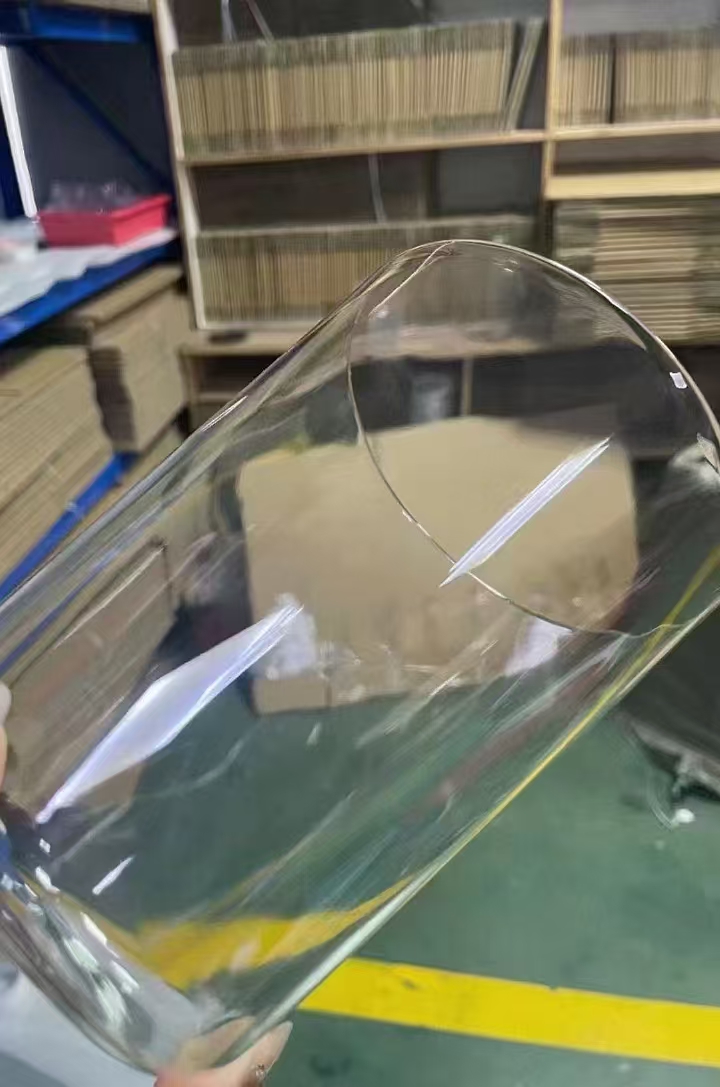
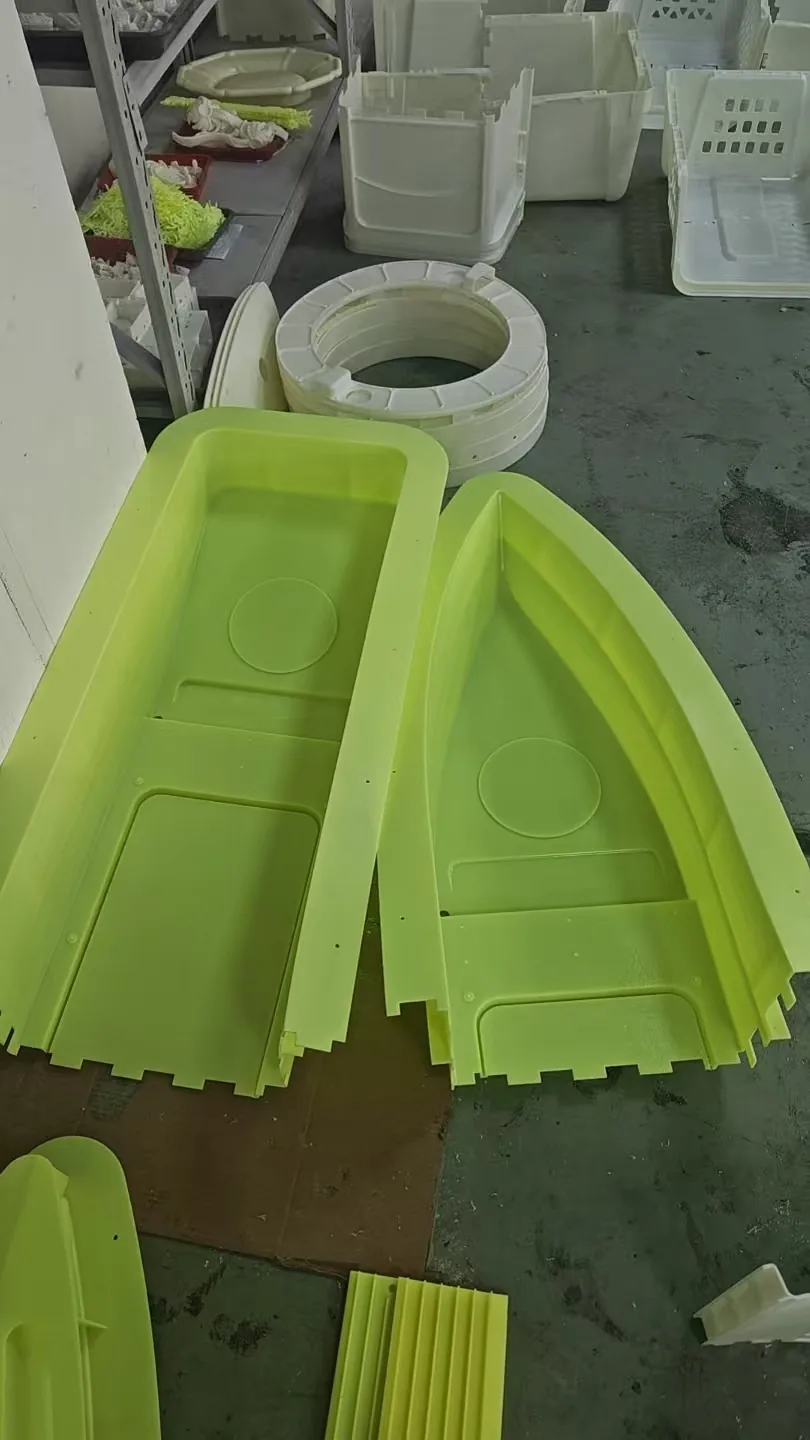
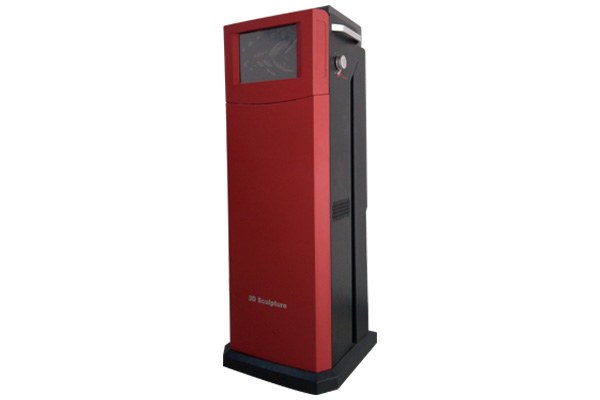
The media library currently contains verified SLA production, transparent SLA and SLA project photos. Only transparent SLA media is clearly attributed to one of the six material categories; the other material sample-photo mappings remain unconfirmed and are not shown as resin-specific samples.
Typical SLA Applications
Appearance and display models
White, yellow-green, brown and painted SLA parts can support design reviews, exhibition models, appliance concepts, character models and presentation samples.
Transparent prototypes
Clear resin can support transparent enclosures, lens-like appearance samples, bottle prototypes and flow-visualization models when optical expectations are reviewed in advance.
Functional checks
Tougher SLA materials may help with fit checks, jigs, inspection fixtures and limited functional review, but heavy load-bearing use should be assessed carefully.
SLA Design Considerations and DFM
Wall and feature stability
Thin walls, long slender ribs, pins and sharp details should be reviewed for support removal, handling and finishing risk.
Large-part splitting
Oversized models may need splitting, bonding, sanding and painting. Joint placement should avoid critical visible or functional areas where possible.
Transparent finishing
Clear parts often need additional polishing or coating. Send target clarity, viewing distance and acceptable cosmetic limits with the RFQ.
Thermal validation
For Temp R220, provide expected temperature, load, exposure duration and test objective. HDT under load is not the same as continuous service temperature.
SLA vs SLS, MJF and Wax 3D Printing
| Process | Choose it when | Watch-outs |
|---|---|---|
| SLA | You need smooth surfaces, fine details, transparent parts or finish-ready appearance prototypes. | Resin behavior, UV post-cure, support marks, brittleness and finishing expectations need review. |
| SLS | You need support-free nylon functional prototypes or nested nylon parts. | Surface texture and nylon behavior differ from SLA resin. |
| MJF | You need PA12 nylon functional prototypes or repeated low-volume nylon parts. | Not a clear-part process; finishing and dimensional needs should be specified. |
| Wax 3D Printing | You need wax patterns for casting-oriented workflows and fine pattern geometry. | It solves a different manufacturing problem than SLA prototype resin. |
Quality Control and Inspection
SLA quote review should identify critical dimensions, mating faces, cosmetic requirements, assembly interfaces and finish expectations. Jingrui Proto can combine SLA printing with sanding, polishing, painting, coating, bonding and assembly when the project requires a finished prototype rather than a raw printed part.
For finishing requirements, see surface finishing. For broader process comparison, review our 3D printing service.
Related SLA Project Evidence
2.2 m segmented SLA outdoor sculpture
Large SLA sections, bonding and surface finishing for a finished appearance model. View the case study.
Large-scale SLA unmanned boat prototype
Large-format SLA resin components and finishing support for a prototype assembly. View the case study.
Transparent SLA parts
Clear resin parts may need polishing, coating and cosmetic review before production decisions.
SLA 3D Printing FAQ
Can Jingrui Proto quote SLA from CAD files?
Yes. Send STEP, STL or other available CAD files with quantity, finish, material category, critical dimensions and the intended validation purpose.
Can SLA parts be transparent?
Clear / transparent SLA resin can be used for transparent appearance prototypes, but final clarity depends on geometry, print quality and finishing. Specific optical transmission should not be assumed without review.
Is Temp R220’s HDT the same as a continuous-use rating?
No. The supplied source pack verifies HDT values under test loads, including 227 C at 0.455 MPa and 170 C at 1.82 MPa. Those HDT values are load-specific test results, not continuous operating temperature.
When should I choose SLS or MJF instead of SLA?
Choose SLS or MJF when nylon behavior, functional clips, support-free powder-bed geometry or repeated PA12 parts matter more than the smooth surface and fine detail of SLA resin.
Request an SLA Prototype Quote
Send CAD files, quantity, preferred SLA material category, finish target, critical dimensions and any heat, transparency or assembly requirement. We will review the manufacturing route before quoting.