
CNC turning for shafts, bushings and threaded components
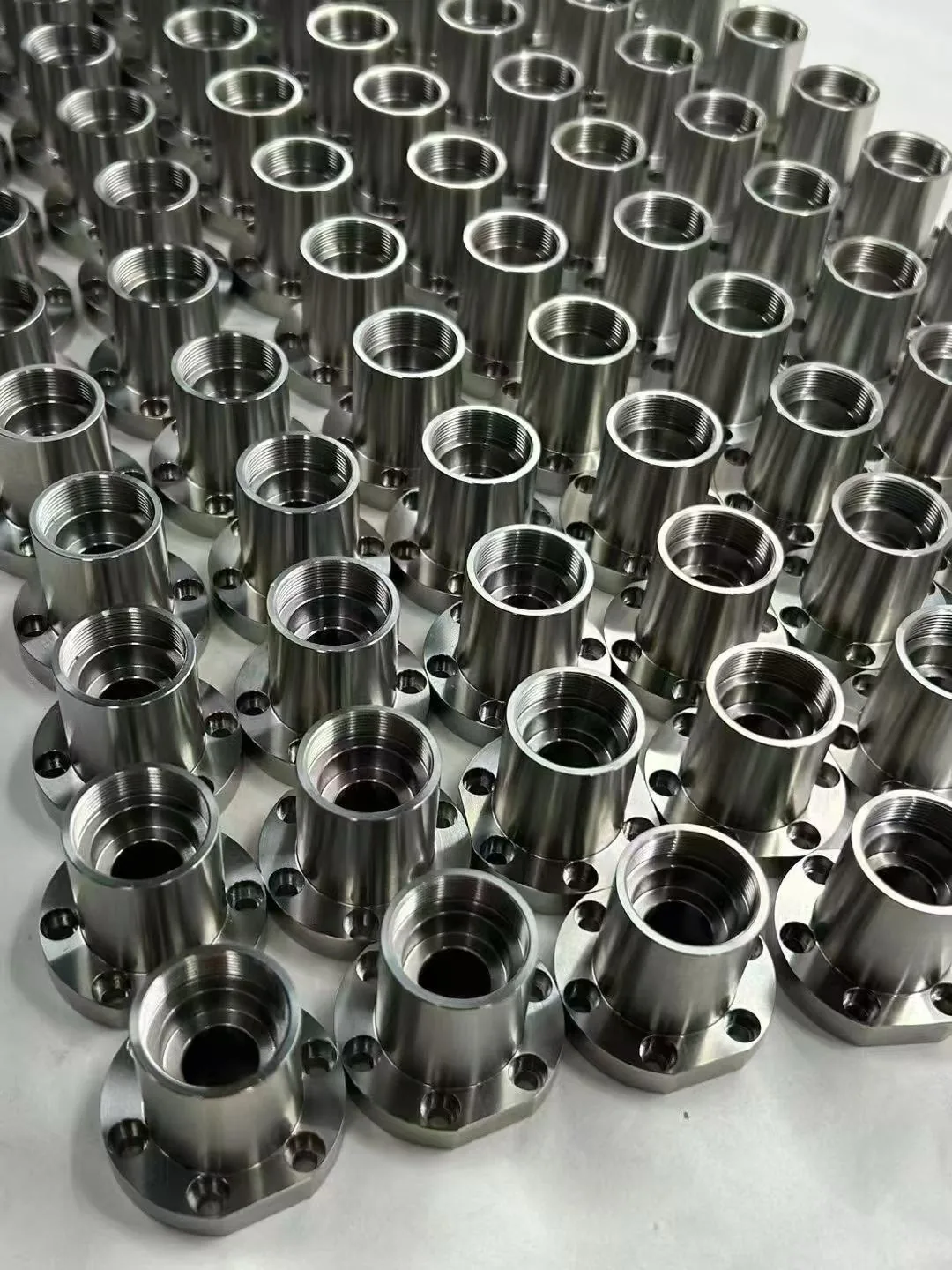
CNC turning rotates the workpiece while a cutting tool forms diameters, bores, shoulders, grooves and threads. Jingrui Proto reviews the material, workholding and datum strategy so the features that control fit and assembly are planned together.
In-house CNC turning · Drawing-based inspection
Typical ±0.02 mm, confirmed during engineering review.
Which parts suit CNC turning?
CNC turning suits predominantly rotational parts such as shafts, pins, bushings, sleeves, fittings and threaded rings.
Scroll the table horizontally on smaller screens.
| Component | Turning features | Drawing review |
|---|---|---|
| Shafts and pins | Stepped diameters, shoulders and grooves | Functional fits, runout, datum axis and straightness requirements. |
| Bushings and sleeves | Bores, outside diameters and end faces | Wall stability, bore-to-OD relationships and mating clearances. |
| Fittings and rings | Internal/external threads, sealing faces and reliefs | Thread standard, engagement, gauge requirements and sealing finish. |
Flats, cross-holes and pockets may require a separate milling operation after turning. The quote should include datum transfer and the complete operation sequence; dedicated mill-turn equipment is not assumed.
Which materials can be reviewed for CNC turning?
CNC turning material options include aluminum, stainless steel, suitable carbon and alloy steels, brass, copper and titanium, with the exact grade and stock condition confirmed for the project.
Scroll the table horizontally on smaller screens.
| Material family | Selection considerations |
|---|---|
| Aluminum | Weight, stiffness, chip control and anodizing requirements. |
| Stainless steel | Corrosion requirements, grade-specific machinability and final surface condition. |
| Carbon and alloy steel | Required hardness, heat-treatment sequence and corrosion protection. |
| Brass and copper | Conductivity, machinability, threads and cosmetic surfaces. |
| Titanium | Strength-to-weight requirements, tool access and cost. |
Polymer bushings and insulating parts require a separate material-stability and clamping review; see CNC plastic machining. Material certification and any regulatory requirement must be specified rather than inferred from the material family.
What limits the turning route for a shaft or bushing?
A turning route is limited by geometry, stock, tool access, part support and how the workpiece behaves during and after clamping.
The documented overall turning envelope is up to Ø200 × 500 mm, subject to engineering review; it is not a guaranteed envelope for every material, feature or fixture.
- Slender shafts may deflect and require a suitable support strategy.
- Thin-wall sleeves can deform under clamping or measurement pressure; define the accepted free or restrained state.
- Long or small bores need practical tool reach and chip evacuation.
- Features finished in different setups need controlled datum transfer.
- A turned part is not automatically perfectly concentric; specify runout or coaxial requirements when they matter.
How are CNC turning tolerances and inspection agreed?
Jingrui Proto provides CNC machining with typical tolerances of ±0.02 mm. Actual achievable tolerances depend on part geometry, material, dimensions and machining requirements and are confirmed during engineering review.
These values are not a blanket guarantee for every diameter, length, polymer or geometric requirement. Mark the datum axis, fits, runout, threads and surface-texture requirements on the drawing.
Agree inspection support, measurement condition and report scope. Micrometers, bore measurement and thread gauges may suit rotational features; CMM or optical methods can support other specified relationships. Select the method for the actual drawing rather than promising the same inspection for every part.
How are turning, heat treatment and finishing sequenced?
Turning and any heat treatment or finishing must be sequenced around the final dimensions, material condition and mating surfaces.
CNC machining, heat treatment, grinding, sanding, polishing, sandblasting, powder coating, painting and screen printing are available in-house. Electroplating and anodizing are arranged through qualified specialist partners in China. Jingrui Proto coordinates these processes within the overall manufacturing and delivery workflow.
Heat treatment can change dimensions; plating and coatings can change fits. Specify final hardness, surface texture, coating thickness, masking and whether inspection applies before or after finishing. See surface finishing options.
Where are turned components used?
Turned components are used where controlled cylindrical interfaces, threads, bearing fits or sealing faces support the function of an assembly.
- Automation shafts, locating pins and precision spacers.
- Bushings, sleeves and wear components.
- Instrument and equipment fittings with specified threads.
- Rotational housings, flanges and low-volume mechanical prototypes.
What is needed for a CNC turning quotation?
A CNC turning quotation starts with a 3D model or agreed profile data, a dimensioned drawing, material and grade, quantity, finish, critical features and inspection requirements.
Identify mating interfaces, acceptance conditions and the target delivery date. The quotation confirms the feasible manufacturing route, secondary-process responsibility and inspection scope before work begins.