
Wire-cut profiles for conductive components
Wire electrical discharge machining removes material from a conductive workpiece with controlled electrical discharges along a moving wire electrode. It can suit through-profiles that are difficult to mill, subject to wire access, workholding and the required surface condition.
Execution route, supplier responsibility and inspection confirmed in the quotation.
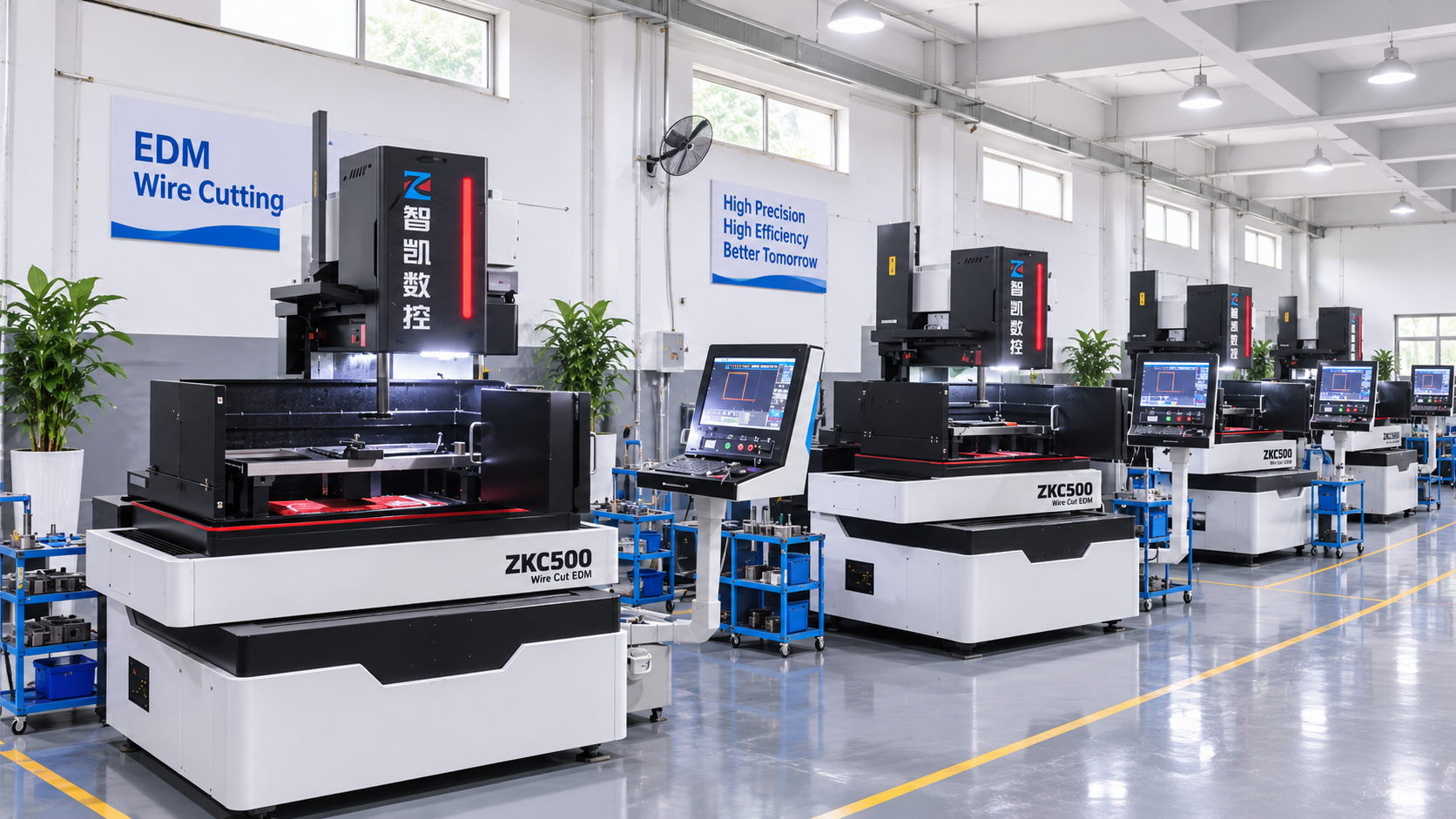
How does Wire EDM differ from CNC milling?
Wire EDM erodes electrically conductive material using a wire electrode and a discharge gap, while CNC milling removes material with a rotating cutter.
Wire cutting needs a suitable path through the workpiece; ordinary wire EDM is not a substitute for milling a blind pocket. The absence of conventional cutter contact does not eliminate workholding, residual-stress movement or thermal surface effects.
Scroll the table horizontally on smaller screens.
| Review point | Wire EDM | CNC milling |
|---|---|---|
| Material | Needs suitable electrical conductivity. | Can machine a wider range of materials, including engineering plastics. |
| Access | Needs a feasible through-path and wire entry. | Needs physical cutter and holder access. |
| Corners | Limited by the finite wire and discharge gap. | Limited by the cutter radius and access. |
| Surface | Review the EDM-affected surface and any finishing allowance. | Review tool marks, burrs and specified texture. |
Which materials can be considered for Wire EDM?
Wire EDM can be considered for suitable electrically conductive grades, including tool steel, stainless steel, aluminum, brass and copper.
Confirm the actual grade, heat-treatment condition, section and surface requirements. Electrical conductivity alone does not establish the feasible geometry, speed or final quality. Engineering plastics are generally not suitable for ordinary wire EDM.
What limits an internal Wire EDM profile?
An internal wire-cut profile is limited by through access, wire entry, the finite corner radius, section geometry and stable support as material separates.
- A closed internal profile normally needs an entry opening or prepared start hole.
- A finite wire and discharge gap prevent a genuinely zero-radius internal corner.
- Thin ligaments and retained slugs need a support and cut-sequence plan.
- Part thickness, taper and flushing conditions must be checked for the proposed equipment.
- Do not assume blind-pocket or arbitrary three-dimensional cavity capability.
See the wire EDM internal-profile design guide for drawing and access considerations.
How should Wire EDM precision and surface condition be specified?
Wire EDM precision must be agreed for the actual material, thickness, geometry, cutting sequence and inspection requirements rather than promised as a universal number.
Specify profile, positional and form requirements, permissible corner radii and the accepted surface condition. Additional passes or finishing may be needed. EDM can leave a thermally affected surface layer, and residual stress can move a part as material is removed.
Cutting after heat treatment can help control the final profile, but it does not guarantee zero distortion or remove every effect of previous processing. No blanket EDM tolerance or roughness is stated here.
How are Wire EDM execution and inspection responsibilities confirmed?
The quotation must confirm the Wire EDM execution route, any specialist supplier involvement and the inspection responsibility for the finished part.
Jingrui Proto’s confirmed in-house CNC milling and turning capability does not establish in-house Wire EDM equipment. Confirm equipment suitability, execution location and inspection responsibility in the quotation.
CNC machining, heat treatment, grinding, sanding, polishing, sandblasting, powder coating, painting and screen printing are available in-house. Electroplating and anodizing are arranged through qualified specialist partners in China. Jingrui Proto coordinates these processes within the overall manufacturing and delivery workflow.
Which component features may justify Wire EDM?
Through-slots, tooling profiles, inserts and conductive components with restrictive internal corner requirements may justify a Wire EDM review.
The application must support a feasible through-path and stable workholding. Compare the required interface with a milled radius or approved relief before specifying a wire-cut route solely because a part is described as precise.
What is needed for a Wire EDM quotation?
A Wire EDM quotation starts with a 3D model or agreed profile data, a dimensioned drawing, material and grade, quantity, finish, critical features and inspection requirements.
Identify mating interfaces, acceptance conditions and the target delivery date. The quotation confirms the feasible manufacturing route, secondary-process responsibility and inspection scope before work begins.
What is the typical tolerance for Wire EDM?
Jingrui Proto provides CNC machining with typical tolerances of ±0.02 mm. Actual achievable tolerances depend on part geometry, material, dimensions and machining requirements and are confirmed during engineering review.