
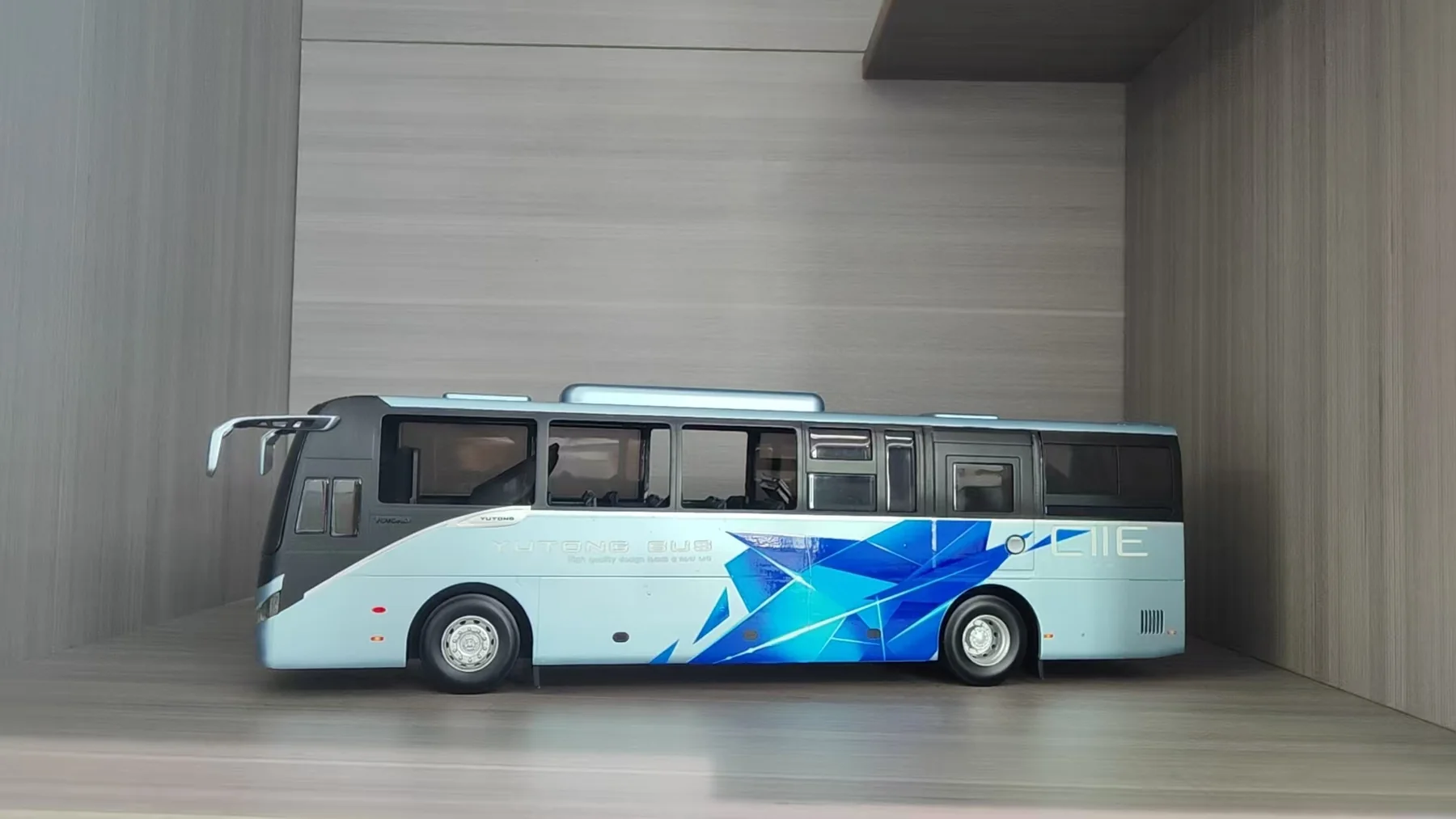
Automotive prototype development allows vehicle designers and engineering teams to turn CAD data into physical models for appearance review, engineering validation, presentation, assembly evaluation and other development needs before committing to production tooling.
Vehicle scale model projects can require several manufacturing processes because exterior bodies, structural components, transparent parts, decorative details and finishing requirements may have very different manufacturing needs. A display body shell, a clear window, a wheel detail, a metal bracket and a painted exterior surface should not automatically be assigned to the same process.
Quick Answer / Key Takeaways
Automotive scale models are usually manufactured through a planned workflow: CAD review, DFM, process selection, prototype manufacturing, surface preparation, painting or other finishing, graphics where needed, assembly, inspection and packaging. The goal is to make a physical model that supports design communication, presentation or engineering review without exposing confidential vehicle programs.
Key points for buyers:
- Start with STEP or STP files whenever possible.
- Use 2D drawings for critical dimensions, assembly interfaces and inspection requirements.
- Match each component to the right manufacturing process instead of forcing one process across the whole model.
- Treat surface finishing as part of the engineering plan, not a cosmetic afterthought.
- Ask whether one supplier can coordinate printing, machining, casting, finishing and assembly when the model has many part types.
What Is Automotive Prototype Development?
Automotive prototype development is the practical work of turning vehicle design data into physical parts, assemblies or scale models for review before production tooling. It may support styling review, appearance confirmation, ergonomic discussion, fit checks, display, testing or customer presentation.
For a vehicle scale model, the prototype does not always need to function like a finished vehicle. The model may instead need accurate proportions, clean surfaces, crisp details, realistic color and material expression, stable assembly and safe packaging for delivery. Those requirements still need manufacturing judgment.
Why Vehicle Scale Models Need More Than One Manufacturing Process
Automotive scale models often use multiple processes because different model components have different jobs. A large exterior body may need smooth finishing, small details may need fine resolution, transparent parts may need machining or polishing, metal parts may need strength, and rubber-like visual details may need a different route.
This is why process selection matters. 3D printing can help with complex forms and fast iteration. SLA 3D printing can be useful for high-detail appearance components. CNC machining can support precision components, clear acrylic windows or accurate interfaces. Vacuum casting can support selected low-volume plastic or rubber-like visual parts when the design and quantity fit the process.
The correct answer depends on the model geometry, material target, finish requirement, quantity, schedule and inspection needs.
Typical Manufacturing Workflow
A practical automotive prototype manufacturing workflow usually begins with file review, not machine selection. The supplier needs to understand what the model is for before deciding how to make it.
- CAD / design review: Check supplied STEP, STP, STL or native CAD data and confirm whether the geometry is manufacturable.
- DFM: Identify thin walls, fragile details, hidden assembly risks, surface issues and areas that may need split lines or support planning.
- Process selection: Match each component to SLA, SLS, MJF, SLM, CNC machining, vacuum casting, sheet metal or another suitable route.
- Prototype manufacturing: Build or machine the parts according to the selected process route.
- Surface preparation: Sand, smooth, prime, polish or otherwise prepare surfaces for the intended finish.
- Painting / finishing: Apply paint, texture, clear coat, polishing, anodizing or other finishing where appropriate.
- Graphics: Add silk screening, decals or water-transfer graphics where the model design requires them.
- Assembly: Fit exterior, interior, transparent, decorative and structural components together.
- Inspection: Check visual quality, assembly condition, critical dimensions and finish consistency.
- Packaging: Prepare the completed model for domestic or overseas delivery.
Which Manufacturing Processes Can Be Used?
Automotive prototype development can use SLA, SLS or MJF nylon printing, SLM metal printing, CNC machining, vacuum casting, sheet metal fabrication, surface finishing and assembly. Not every process is used on every vehicle model. The point is to choose the process that fits each component.
SLA can support detailed appearance parts and smooth painted surfaces. SLS or MJF nylon can support tougher plastic components. SLM metal printing may make sense for complex metal forms or strong small parts. CNC machining can help with precision, clear acrylic, metal details and accurate interfaces. Sheet metal may be suitable for brackets, panels or formed metal structures. Vacuum casting can support selected low-volume plastic or rubber-like components when master patterns and silicone molds are appropriate.
For buyers, the important question is not “Which process is best?” It is “Which process is best for this component, this finish and this assembly requirement?”
SLA for High-Detail Appearance Components
SLA is often useful for automotive appearance prototype parts because it can reproduce fine details and smooth surfaces. It can be a good fit for body sections, styling details, interior components, vents, bezels or presentation model parts that will be painted.
SLA parts still need DFM review. Large bodies may need splitting, alignment features, wall-thickness planning and surface preparation. If the model must be handled frequently or used for mechanical testing, the supplier should confirm whether SLA resin is suitable or whether another process is safer.
CNC Machining for Functional and Precision Components
CNC machining is useful when a prototype part needs accurate dimensions, clear surfaces, flat faces, holes, threads, inserts or stronger material behavior. In vehicle scale model manufacturing, CNC machining may support acrylic windows, metal parts, structural pieces, jigs, fixtures or precision interfaces.
CNC machining can also be combined with 3D printing in one project. For example, printed exterior or interior details may be assembled with machined transparent parts or precision components. This helps the model meet both appearance and assembly needs.
When Metal 3D Printing or Sheet Metal Makes Sense
Metal 3D printing or sheet metal fabrication should be considered when the model or prototype includes metal components, thin formed structures, brackets, mounting features or complex shapes that need metal behavior. These processes should be selected for specific component requirements, not because they sound more advanced.
For some projects, metal 3D printing can support complex geometry. For other projects, CNC machining or sheet metal fabrication may be simpler, cleaner or more economical. A good automotive prototype supplier should explain why a process is being recommended.
Why Surface Finishing Matters for Automotive Appearance Models
Surface finishing is critical because automotive appearance models are judged visually. Even when the base part is dimensionally acceptable, visible layer marks, sanding scratches, color mismatch, uneven paint, unclear graphics or poor assembly gaps can weaken the model’s value.
Finishing may include sanding, primer, painting, clear coating, polishing, silk screening, decals, water-transfer decoration, texture matching and final assembly checks. Buyers should send CMF requirements, reference photos, color codes or finish samples when available. Jingrui Proto’s surface finishing capability is relevant when a model needs both manufactured parts and presentation-quality exterior treatment.
Why One-Stop Manufacturing Reduces Supplier Coordination
One-stop manufacturing reduces coordination because the same project team can connect CAD review, DFM, process selection, prototype manufacturing, finishing, assembly and inspection. That matters when a vehicle model includes printed parts, machined details, painted surfaces, transparent components and decals.
When several vendors work separately, small decisions can fall between responsibilities. A printed body may not leave enough allowance for finishing. A window part may not fit after paint thickness changes. A decal may be prepared before the final surface is ready. A one-stop supplier cannot remove every project risk, but it can reduce handoff friction and make engineering feedback faster.
For multi-process automotive projects, start from one-stop prototyping services and confirm which processes, finishes and assembly steps can be managed by one project team.
Prototype vs Low-Volume Manufacturing
Prototype development and low-volume manufacturing overlap, but they are not the same. A prototype is usually built to answer design, appearance, fit or validation questions. Low-volume manufacturing focuses more on repeatability across multiple units, stable documentation, inspection consistency and delivery planning.
Vehicle scale model projects may begin as one prototype and later require several models for presentations, dealers, events or engineering teams. When that happens, the manufacturing plan should be reviewed again. A process that works for one sample may not be the best choice for repeated production.
What Should Buyers Send Before Requesting a Quote?
For an automotive prototype quote, buyers should send STEP or STP files, 2D drawings for critical requirements, quantity, material targets, finish or CMF requirements, critical dimensions, assembly requirements and deadline. If the model is confidential, ask for an NDA before sharing sensitive files.
A strong RFQ package usually includes:
- STEP or STP files for manufacturable geometry.
- STL files only when mesh data is the available source.
- 2D drawings for tolerances, critical dimensions and inspection points.
- Quantity and whether the need is one prototype or repeated models.
- Material targets or functional requirements.
- Finish, color, texture, CMF, decal or silk-screening requirements.
- Assembly requirements and mating parts.
- Deadline, shipping destination region and packaging expectations.
This information helps the supplier quote the complete manufacturing route instead of guessing from a screenshot or incomplete model file.
Real Automotive Manufacturing Example
Jingrui Proto’s live Automotive Scale Model Manufacturing Case Study shows how automotive prototype development can extend beyond a single part. The public case describes an anonymized customer relationship of approximately 5 years, automotive / vehicle scale model work, overseas delivery preparation and multi-process manufacturing support.
The case is useful because it shows the practical reason for process coordination. Vehicle scale models may involve model engineering support, prototype and scale model manufacturing, finishing, painting, detailing, assembly and packaging preparation. The public case does not disclose the confidential customer name, destination, commercial value, tolerance or unpublished technical data.
FAQ
What is automotive prototype development?
Automotive prototype development is the process of turning vehicle CAD data, drawings or design references into physical prototype parts, assemblies or models for review before production tooling. It can support styling, fit checks, presentation, engineering validation and supplier communication.
How are vehicle scale models manufactured?
Vehicle scale models are manufactured through CAD review, DFM, process selection, part production, surface preparation, finishing, graphics, assembly and inspection. Different components may use different processes, such as SLA, CNC machining, vacuum casting, sheet metal or metal 3D printing.
Which 3D printing process is suitable for automotive appearance models?
SLA is often suitable for high-detail automotive appearance components that need smooth surfaces and paint. SLS or MJF nylon may be better for tougher functional plastic parts, while SLM metal printing is considered only when the component needs metal properties or geometry.
Can CNC machining be combined with 3D printing?
Yes. CNC machining and 3D printing can be used in the same automotive prototype project. Printed parts may provide complex shapes or fine details, while CNC machining can support accurate interfaces, clear acrylic parts, metal details, holes, threads or assembly features.
Why is surface finishing important for automotive prototypes?
Surface finishing is important because automotive prototypes are often judged by visual quality. Paint, polish, texture, decals, silk screening, gaps and final assembly can affect whether a scale model communicates the intended design clearly.
Can one supplier manage several manufacturing processes?
Yes, if the supplier has the required in-house capability or controlled partner workflow. For automotive scale models, one coordinated supplier can reduce handoffs across 3D printing, CNC machining, finishing, painting, assembly and inspection.
What files are required for an automotive prototype quote?
Send STEP or STP files, 2D drawings for critical dimensions, quantity, material targets, finish or CMF requirements, assembly requirements and deadline. Include reference images or samples when color, texture or appearance matching matters.
RFQ CTA
Preparing an automotive prototype or vehicle scale model RFQ? Send your CAD files, quantity, finish requirements and deadline to Jingrui Proto so the engineering team can review the project route before quoting. Start from the RFQ / CAD upload page or review more prototype manufacturing case studies.