
The SLM workshop is our metal additive department. A fiber laser melts fine metal powder in an inert-gas chamber, welding each layer to the one below until the part is fully dense. It is the process we reach for when a component cannot be machined economically or at all — conformal cooling channels that curve through a mold insert, lattice structures, topology-optimized brackets, thin-wall heat exchangers. Printed parts then move to the CNC and finishing departments for datum machining, threading and surface treatment, so what leaves the building is a finished component rather than a raw print.
Our in‑house SLM metal 3D printing service produces high‑density functional metal prototypes and low‑volume production parts.
Ideal for complex structures, lightweight design, conformal cooling channels and high‑load functional components.
We provide DFAM design review, stress‑relief heat treatment, post‑machining and full inspection documents for overseas customers.
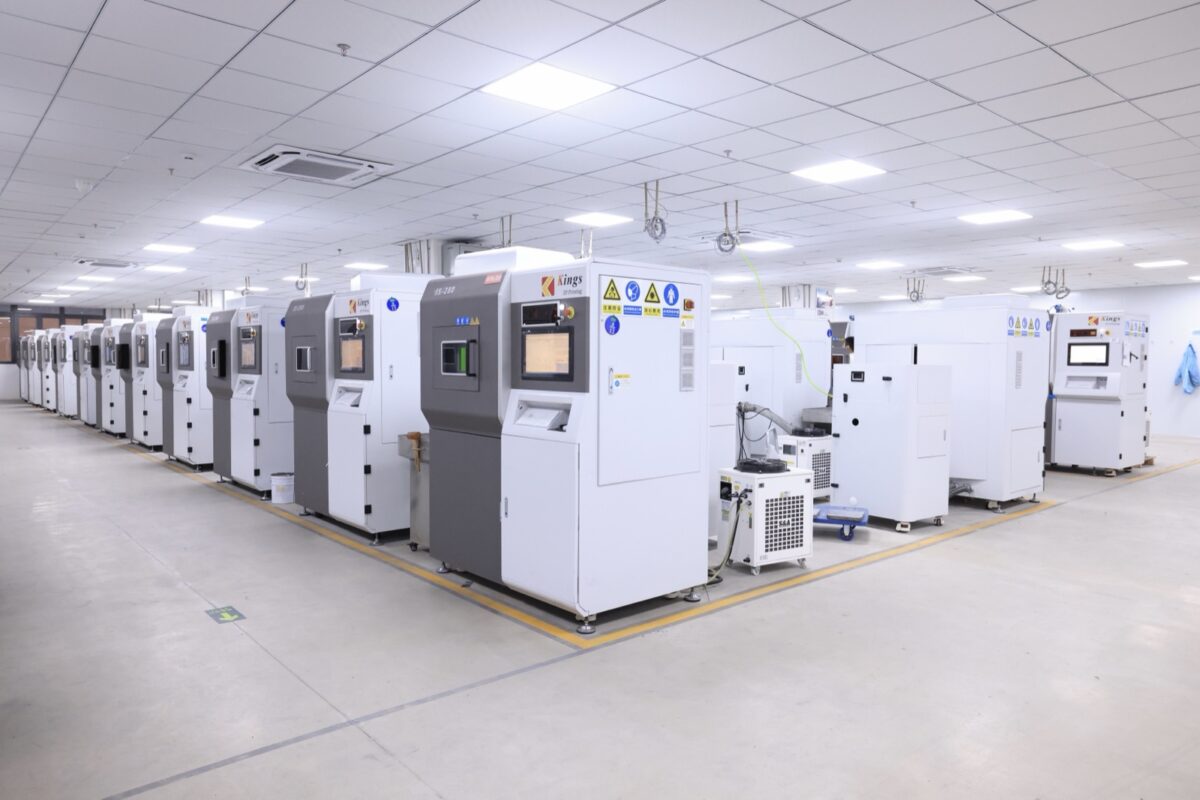
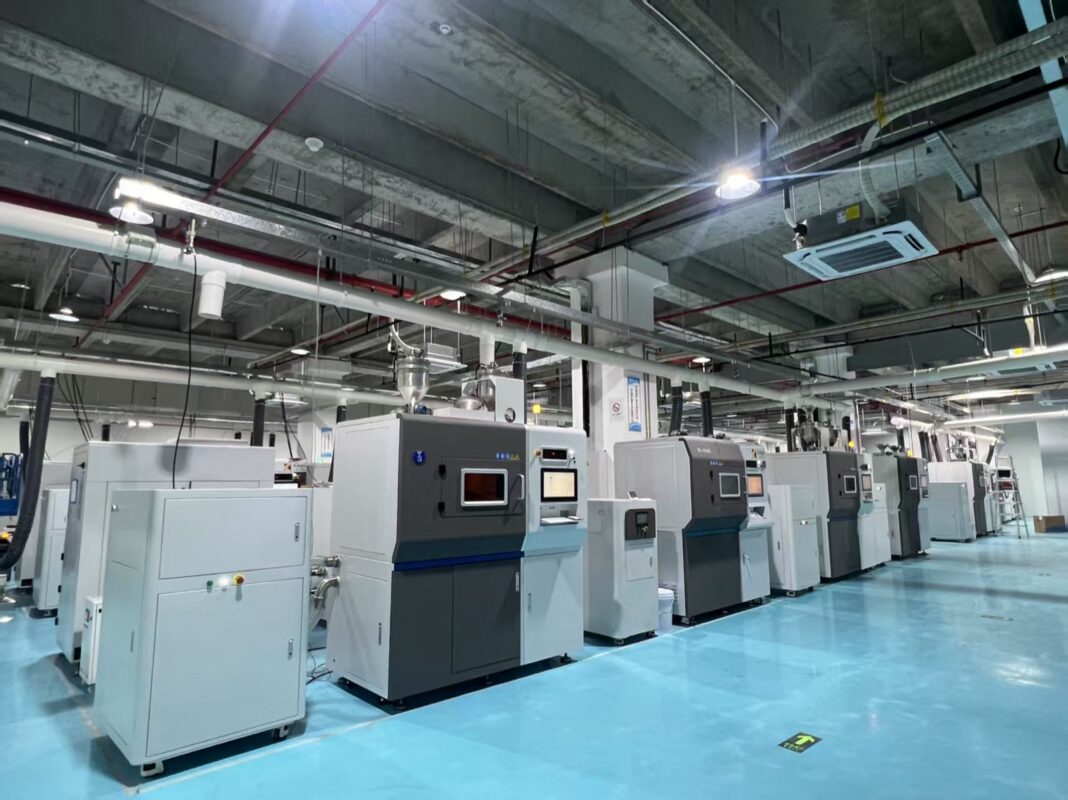
Inside the Workshop
Fifty dedicated metal printers run in this area on ZRapid and LASERADD industrial dual-laser systems with a 490 × 320 × 300 mm build volume, and 13 alloys qualified in house — AlSi10Mg aluminum, Ti6Al4V titanium, 316L stainless and Inconel 718 among them, covering most aerospace, medical and automotive requests. Each machine sits alongside its own powder handling and sieving station: metal powder is a controlled consumable, and keeping it segregated by alloy is what prevents cross-contamination from ruining a build. Chambers are purged with inert gas before every job, and the room is laid out with dedicated depowdering and heat treatment zones so parts move in one direction from build plate to stress relief to wire EDM removal.
Available Materials
– 316L Stainless Steel: Good corrosion resistance, widely used for equipment parts & housings
– AlSi10Mg Aluminum: Light weight, high strength, for automotive & consumer‑grade components
– H13 Tool Steel: High hardness, perfect for mold conformal cooling inserts
– Ti‑6Al‑4V Titanium: High strength‑to‑weight ratio, for medical and aerospace projects
– Inconel 718: High‑temperature resistant alloy for industrial high‑heat working parts
We supply original powder COC certificates upon request.
Quality & Process Control
Metal printing fails at the powder stage more often than at the laser, so every incoming batch is inspected for moisture content and particle size distribution before it goes near a machine — degraded or contaminated powder is the root cause of most porosity, oxidation and inter-layer cracking. Builds are printed to near-100% density, stress relieved before they come off the plate, CNC finished on critical faces and inspected in house. On inspected features we work to ±0.02 mm, and the honest answer is that this comes from machining those faces after printing rather than from printing alone. Dimensional and NDT reporting is available on request, under ISO 9001:2015, ISO 14001, ISO 13485 and IATF 16949.
Key Specifications
– Printing density: ≥99.7% for functional load‑bearing parts
– As‑printed tolerance: XY ±0.05‑0.10 mm; Z ±0.1‑0.20 mm
– Minimum recommended wall thickness: ≥1.0 mm
– Minimum hole diameter: ≥2 mm
– Critical mating features can be CNC secondary machined down to ±0.02‑0.05 mm
In‑house Post‑processing Services
✅ Support removal
✅ Vacuum stress‑relief heat treatment (mandatory for functional metal parts)
✅ Sandblasting & shot peening
✅ CNC 5‑axis precision re‑machining
✅ Complex internal cavity powder cleaning
✅ Surface passivation / polishing
All core processes are finished in‑house, no full subcontracting.
Related Services
This workshop produces our SLM metal 3D printing service. Printed parts almost always continue to CNC machining for critical faces and threads, and to surface finishing for polishing, anodizing or passivation. For simple metal geometries in quantity, ask us to compare printing against 5-axis milling or die casting before you commit.
Frequently Asked Questions
Q1: Does SLM metal print achieve final assembly tolerance directly?
A: As‑printed parts cannot reach high‑precision assembly requirement. Key mating surfaces need secondary CNC machining.
Q2: Will metal parts deform after printing?
A: We apply vacuum stress‑relief heat treatment for every functional metal part to reduce internal stress and avoid deformation.
Q3: What file formats do you accept?
A: STEP, IGES, STL are preferred. STL for printing; STEP/IGS for dimension inspection.
Start Your Project
Send us a STEP or IGES file and we will come back within 1–3 hours with a quote and free design-for-manufacturing feedback. Your files stay confidential, there is no minimum order quantity, and every process on this page runs under one roof with one project manager. Get a free quote.
Typical Lead Time
– Prototypes: 3‑7 working days (print + heat treatment + post‑processing)
– Urgent order: 2‑3 working days subject to file confirmation
– Low‑volume batch: 7‑10 working days
What documents we can provide
– Powder COC certificate
– Build report
– CMM coordinate measuring inspection report
– NDA confidentiality agreement available