
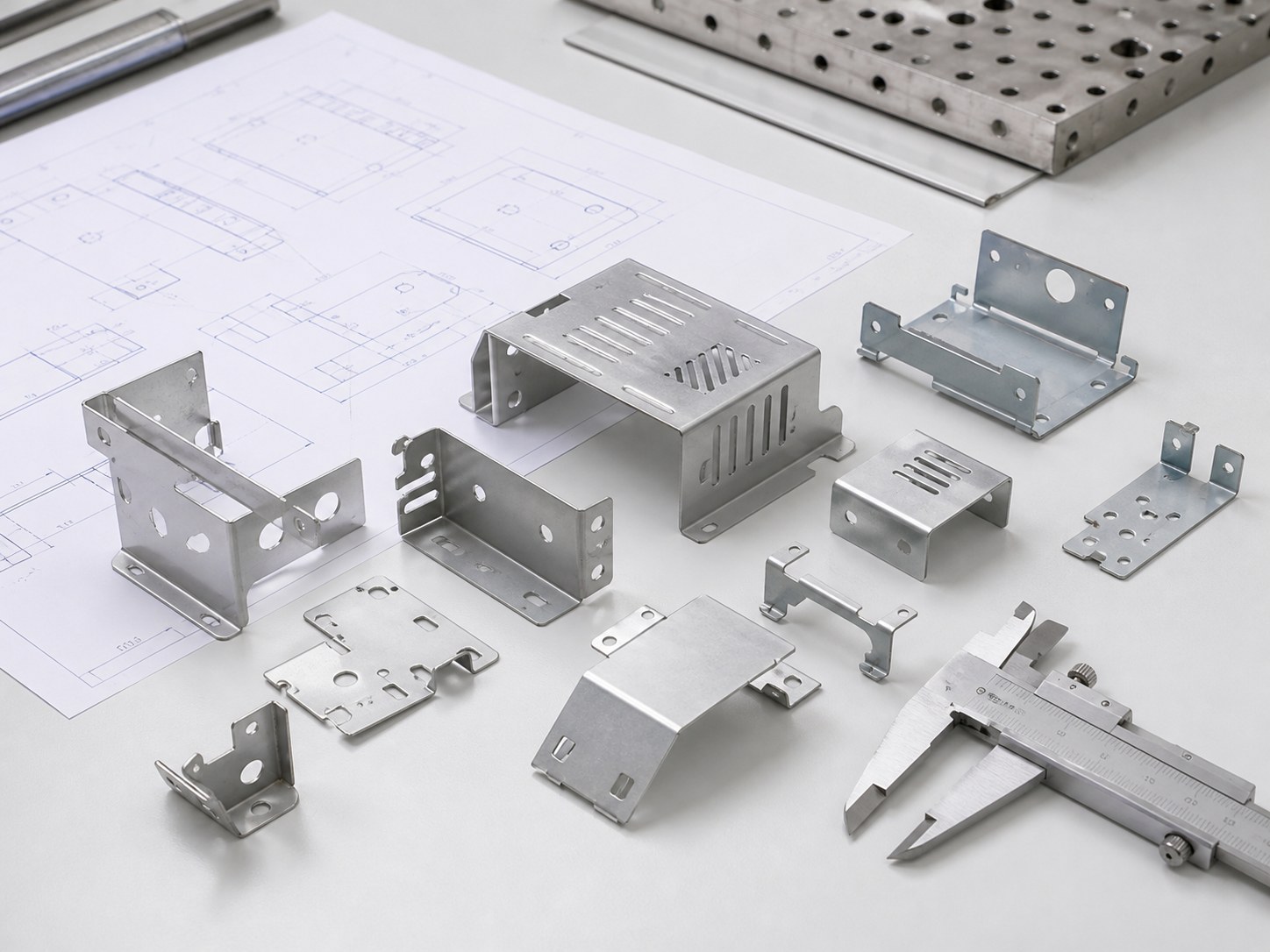
The short answer: complex miniature aluminum sheet metal parts can work well in 10-piece prototype batches when the design is built around bending limits, hole placement, flange length, finish risk and inspection notes from the start. The part may look simple in CAD, but a tiny bracket with two bends, close holes and a cosmetic anodized finish can become harder to quote than a larger cover with generous clearances.
Jingrui Proto supports sheet metal fabrication for prototype and small-batch projects where laser cutting, bending, welding and finishing may need to stay coordinated with CNC machining, 3D printing or assembly work. This guide is written for engineers and buyers who need miniature aluminum brackets, covers, shields, panels or housings without jumping straight into high-volume tooling.
Why Miniature Sheet Metal Parts Are Difficult at Low Volume
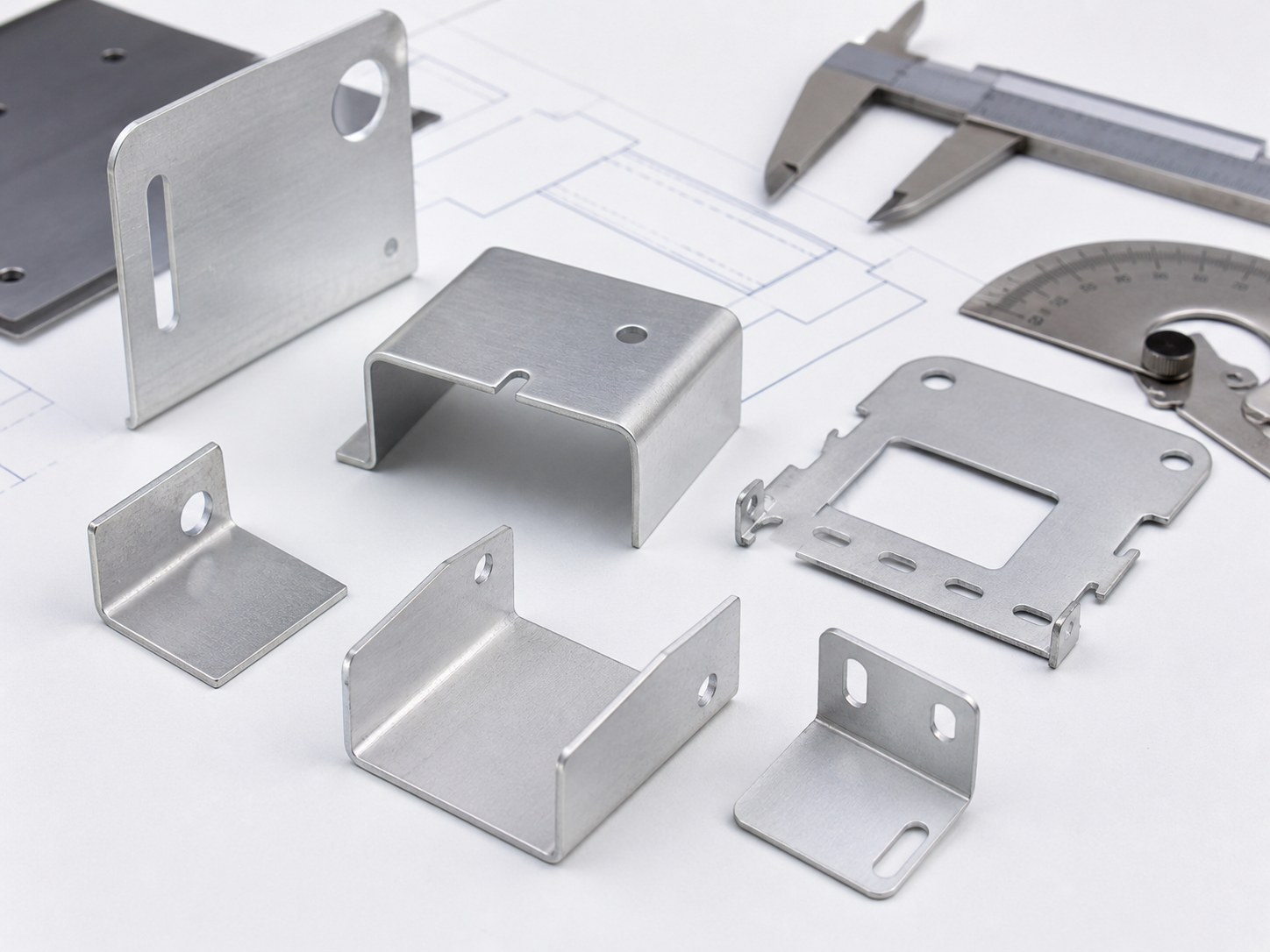
Miniature sheet metal work is not difficult because the parts are small. It is difficult because the useful features often compete for the same limited space. A hole may need to sit near a bend. A flange may be too short for stable forming. A tab may look strong in CAD but twist after bending. A cosmetic surface may reveal marks that a larger industrial bracket would hide.
For a prototype batch, the supplier also has less room to average out variation. If the order is 10 pieces, one bent corner, one scratched surface or one hole drifting after a bend is visible immediately. That is why miniature sheet metal RFQs should define the function of each feature, not only the outer dimensions.
Use this quick risk table before sending the file:
| Feature | Main risk on miniature parts | What to check before RFQ |
|---|---|---|
| Short flange | Deformed or inconsistent bend | Confirm the flange is long enough for press brake contact |
| Hole near bend | Hole distortion or location drift | Mark critical holes and allow bend clearance |
| Thin aluminum | Easy to scratch or warp | Confirm finish and handling expectation |
| Multiple bends | Tolerance stack-up across formed surfaces | Add drawing datums and inspection dimensions |
| Cosmetic finish | Visible tool marks or color mismatch | Provide finish sample or reference image |
When Sheet Metal Is Better Than CNC Machining for Small Aluminum Parts
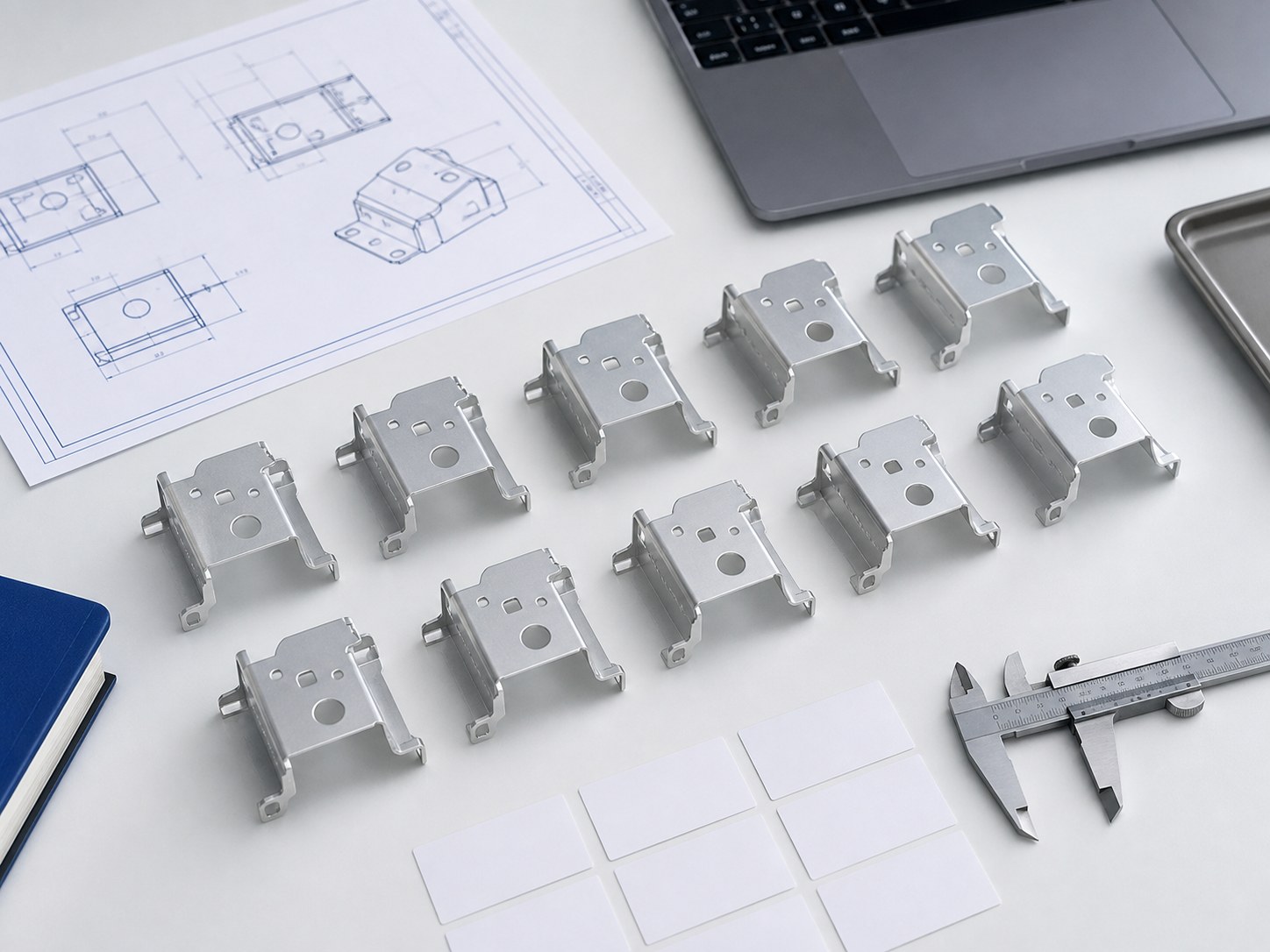
Sheet metal is usually the better route when the part is mainly thin-wall geometry: a bracket, shield, cover, panel, clip, mounting plate or light enclosure. It can be faster and more material-efficient than machining a thin shape from a solid aluminum block.
CNC machining becomes a better option when the design needs thick bosses, deep pockets, precise 3D contours, tight bearing seats or geometry that cannot be formed from one sheet. If the same assembly needs both styles, Jingrui Proto can review the sheet metal parts together with CNC machined prototype components so the interfaces still match.
| Decision point | Choose sheet metal when… | Consider CNC machining when… |
|---|---|---|
| Wall style | The part is mostly constant thickness | The part needs variable thickness or solid features |
| Quantity | 5-50 samples need repeatable bent parts | 1-10 samples need machined details or tight interfaces |
| Strength need | Bends and flanges provide enough stiffness | Bulk material or precision fits carry the load |
| Finish | Brushing, anodizing, powder coating or marking is acceptable | Machined edges or detailed surface control matter more |
DFM Checks Before You Quote Miniature Aluminum Sheet Metal
Start with bend geometry. Protolabs lists standard bend radius options of 0.030, 0.060, 0.090 and 0.120 in, and recommends that minimum flange length should be at least 4 times the material thickness. Those values are not Jingrui Proto promises for every project; they are useful external reference points for understanding why very short flanges and sharp bend expectations create risk.
For miniature aluminum parts, check these items in order:
- Material and thickness. Decide whether the part needs stiffness, light weight, corrosion resistance or cosmetic finish first.
- Bend radius. Keep radii consistent where possible. Different radii can require different tooling or extra setup.
- Flange length. Very short flanges may not contact the tooling properly during bending.
- Hole-to-bend distance. Holes too close to a bend may distort or move.
- Tabs and slots. Add clearance for fit, coating thickness and handling variation.
- Fasteners. Decide whether the part needs PEM hardware, tapped holes, inserts or separate assembly.
- Finish. Confirm the finish before quoting, because deburring, brushing, anodizing and powder coating affect cost and lead time.
Protolabs also lists sheet metal thickness from 0.024 in to 0.250 in across its material table. That range is a reference for manufacturability planning, not a substitute for supplier review. For a Jingrui Proto RFQ, send the exact material grade, thickness and drawing requirement instead of asking for a generic “thin aluminum” quote.
Tolerances and Inspection Notes for a 10-Piece Batch
The tolerance that matters most is not always the tightest number on the drawing. It is the tolerance that decides whether the part assembles, aligns or passes a visual check.
Protolabs states a +/- 1 degree bend angle tolerance in its sheet metal guideline. In miniature parts, that angle can affect hole alignment and edge position quickly because small parts have less room for compensation. If the bracket mounts to a sensor, PCB, motor or cover, mark the functional holes and datum surfaces clearly.
For a 10-piece prototype batch, use this drawing note structure:
| Drawing field | What to define | Why it matters |
|---|---|---|
| Datum | Which edge, face or hole controls inspection | Prevents measuring from a non-functional surface |
| Critical dimensions | Only the dimensions that affect assembly | Avoids over-tolerancing cosmetic features |
| Bend notes | Direction, angle and radius expectation | Reduces interpretation errors |
| Finish area | Cosmetic A-side, hidden side and acceptable marks | Prevents over-polishing non-visible areas |
| Batch consistency | What must match across all 10 pieces | Helps inspection focus on repeatability |
Avoid marking every dimension as critical. That slows review and can raise cost without improving the prototype. A better RFQ tells the supplier which two or three features decide whether the part works.
Finish Options for Miniature Aluminum Sheet Metal Parts
Finishing is where many miniature parts become surprisingly sensitive. A small bracket may need only deburring. A visible electronics cover may need brushing, anodizing, powder coating or silk-screen marking. A robot or medical device prototype may need multiple finishes across sheet metal, CNC plastic and printed parts.
Jingrui Proto supports surface finishing for prototype and low-volume parts as part of a one-stop workflow. For miniature sheet metal, define the finish in practical language:
- Deburred only: functional bracket, hidden support, internal shield.
- Brushed or bead-blasted: visible aluminum appearance with controlled texture.
- Anodized: metallic aluminum look with color or corrosion-resistance goals.
- Powder coated: thicker protective coating for covers or housings.
- Silk-screen or marking: labels, orientation marks, ports and assembly guidance.
If a dimension is tight, ask whether it should be inspected before or after finishing. Coatings and polishing can change edges, hole feel and fit.
RFQ Checklist for Miniature Aluminum Sheet Metal Parts
Send enough information for the engineer to quote the real part, not an imagined version of it.
| RFQ item | What to send |
|---|---|
| 3D CAD | STEP file for geometry review |
| 2D drawing | PDF with material, thickness, bend direction and critical dimensions |
| Quantity | Prototype count, such as 10 pieces, plus expected next batch |
| Material | Aluminum grade if known, or functional requirement if not |
| Finish | Deburr, brush, anodize, powder coat, paint or marking target |
| Critical features | Holes, bend angles, tabs, slots, PEM hardware and assembly interfaces |
| Inspection need | Which dimensions must be checked and how results should be reported |
| Application | Robotics, electronics, medical device, industrial fixture or enclosure |
The cleaner the RFQ, the faster the engineering feedback. If the supplier has to guess bend direction, finish priority or which hole controls assembly, the quote may look fast but the first sample can drift away from the real requirement.
Frequently Asked Questions
How small can a miniature aluminum sheet metal part be?
It depends on the supplier, tooling, material thickness and bend geometry. As an external reference, Protolabs lists minimum flat sheet metal dimensions of 0.250 in x 0.250 in and minimum formed part dimensions of 0.500 in x 0.500 in. For Jingrui Proto projects, send the STEP file and drawing so the engineer can review whether the part can be cut, bent, handled and inspected reliably.
Why do holes near bends cause problems?
Holes near bends can stretch, distort or shift during forming. The risk grows when the part is small because the hole, bend line and flange may all sit close together. If a hole controls assembly, mark it as critical and provide the mating part or interface dimension. The engineer can then suggest moving the hole, changing bend sequence or using CNC machining for that feature.
Is sheet metal better than CNC machining for 10 aluminum parts?
Sheet metal is often better for thin brackets, shields, covers and panels because the part starts from flat stock and gains stiffness through bends. CNC machining is better when the part needs thick features, precise pockets, complex 3D surfaces or very tight machined interfaces. For mixed assemblies, ask for process selection rather than forcing every part into one method.
What tolerance should I expect on prototype sheet metal bends?
Do not assume machined-part tolerances for bent sheet metal. Bend angle, material springback, tooling and measurement method all matter. Protolabs gives a +/- 1 degree bend angle reference in its guideline. Your own RFQ should separate functional dimensions from cosmetic dimensions and define datums for inspection.
Which finish should I choose for miniature aluminum sheet metal?
Choose the finish from the job of the surface. Deburring is enough for many internal brackets. Brushing or bead blasting helps visible aluminum parts look controlled. Anodizing works when the part should keep a metallic aluminum appearance. Powder coating or painting may fit housings and covers. Mark the visible A-side so the supplier knows where appearance matters.
What should I include in a 10-piece sheet metal RFQ?
Include a STEP file, 2D drawing, material, thickness, quantity, finish, critical dimensions, bend direction, hardware requirements and application notes. If the part is part of a robot, electronic device or equipment assembly, include the mating features. A good RFQ lets the engineer warn you about bend risk before parts are made.
Conclusion
Complex miniature aluminum sheet metal parts are workable in prototype batches, but they need practical DFM. Keep bend radii consistent, avoid holes too close to bends, define only the critical tolerances and decide the finish before quoting. For a 10-piece batch, the best result usually comes from a clear STEP file, a focused drawing and early engineering review.
For project support, send Jingrui Proto your CAD files, drawings, material target, quantity and finish requirement. Our team can review whether sheet metal, CNC machining or a mixed-process route is the better path.
Related Posts
- Large-Scale Prototypes: Process, Assembly and RFQ Guide
- Prototype Surface Finishing Guide: Pick the Right Finish
- CNC Plastic Prototypes: Material, Tolerance, Finishing and RFQ Guide
Author Box
Author Name: Jingrui Proto Engineering Team
Industry Experience: 20+ years in prototype manufacturing, CNC machining, sheet metal fabrication, 3D printing, vacuum casting and surface finishing.
Brief Bio: Jingrui Proto’s engineering team supports overseas hardware companies with prototype and low-volume manufacturing projects, from CAD review and process selection to finishing, inspection and delivery.
Have a Part to Manufacture?
Turn your design into a real part with JRProto.
Send your project details and tell us your material, quantity, tolerance, surface finish, and delivery requirements. Our engineering team will review your project and recommend a suitable manufacturing process.
Manufacturing Capabilities: 3D Printing · CNC Machining · Vacuum Casting · Sheet Metal · Surface Finishing
Request a Manufacturing Quote
Explore Sheet Metal Fabrication
Talk to an Engineer