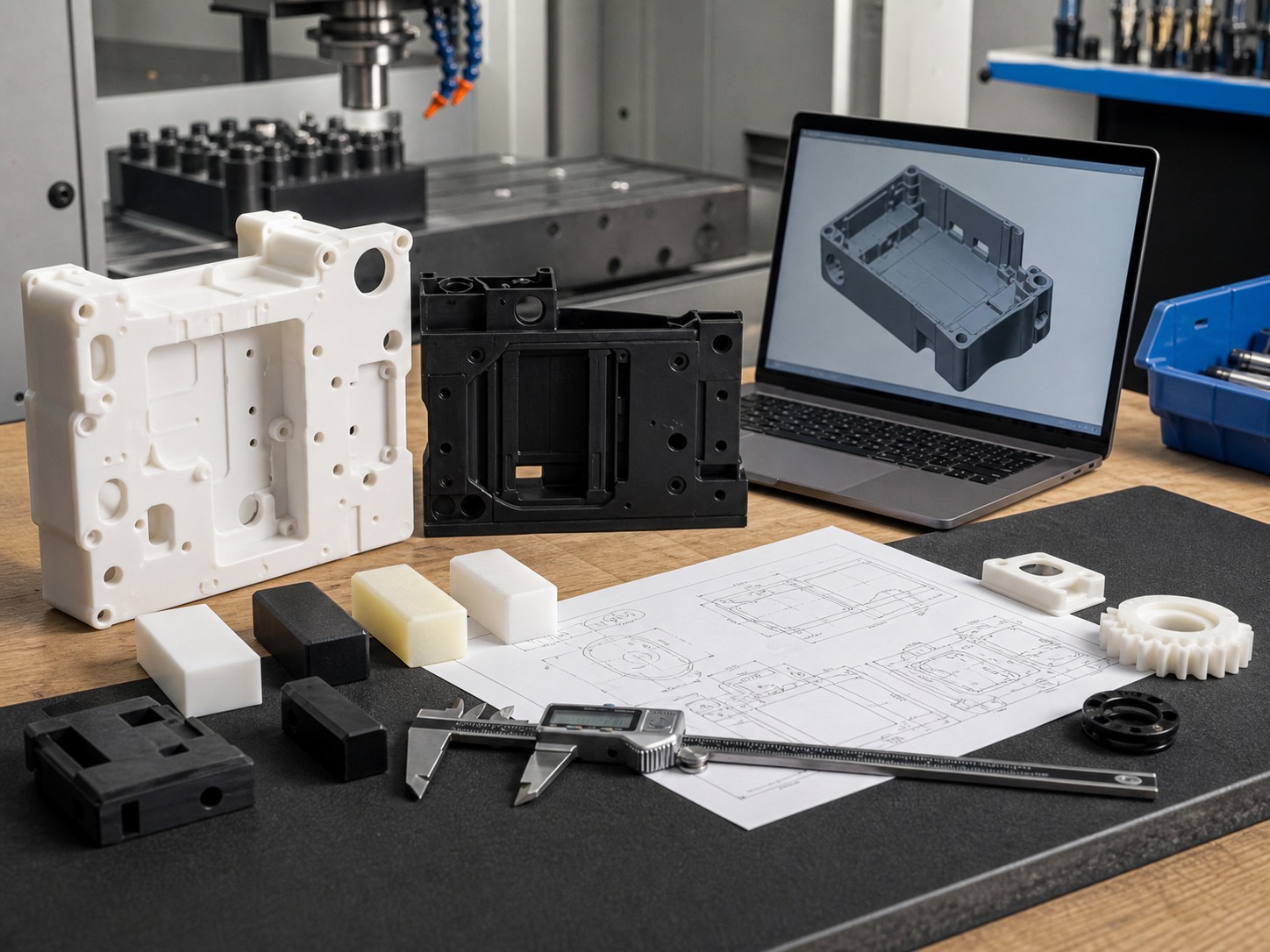
A plastic housing fits on the screen, but the screw bosses bind after the first CNC sample. Or the drawing says “tight tolerance” everywhere, yet the supplier still asks which faces actually control the assembly. A CNC plastic prototype works best when the material, tolerance, finish and RFQ package are planned together.
The short answer: use CNC plastic prototyping when you need real engineering plastic properties, machined holes, reliable assembly interfaces or a cleaner surface than many printed parts can provide. Choose the material from the function first, mark only critical tolerances on the drawing, define the finish before quoting and send a clean STEP file with a 2D drawing for inspected features.
Jingrui Proto supports CNC machining for prototype and low-volume projects as part of a one-stop workflow that can also include 3D printing, vacuum casting, sheet metal and surface finishing. That matters for plastic prototypes because the first question is often not “can this be machined?” It is “which route gives us the sample that answers the engineering question?”
When should a plastic prototype be CNC machined?
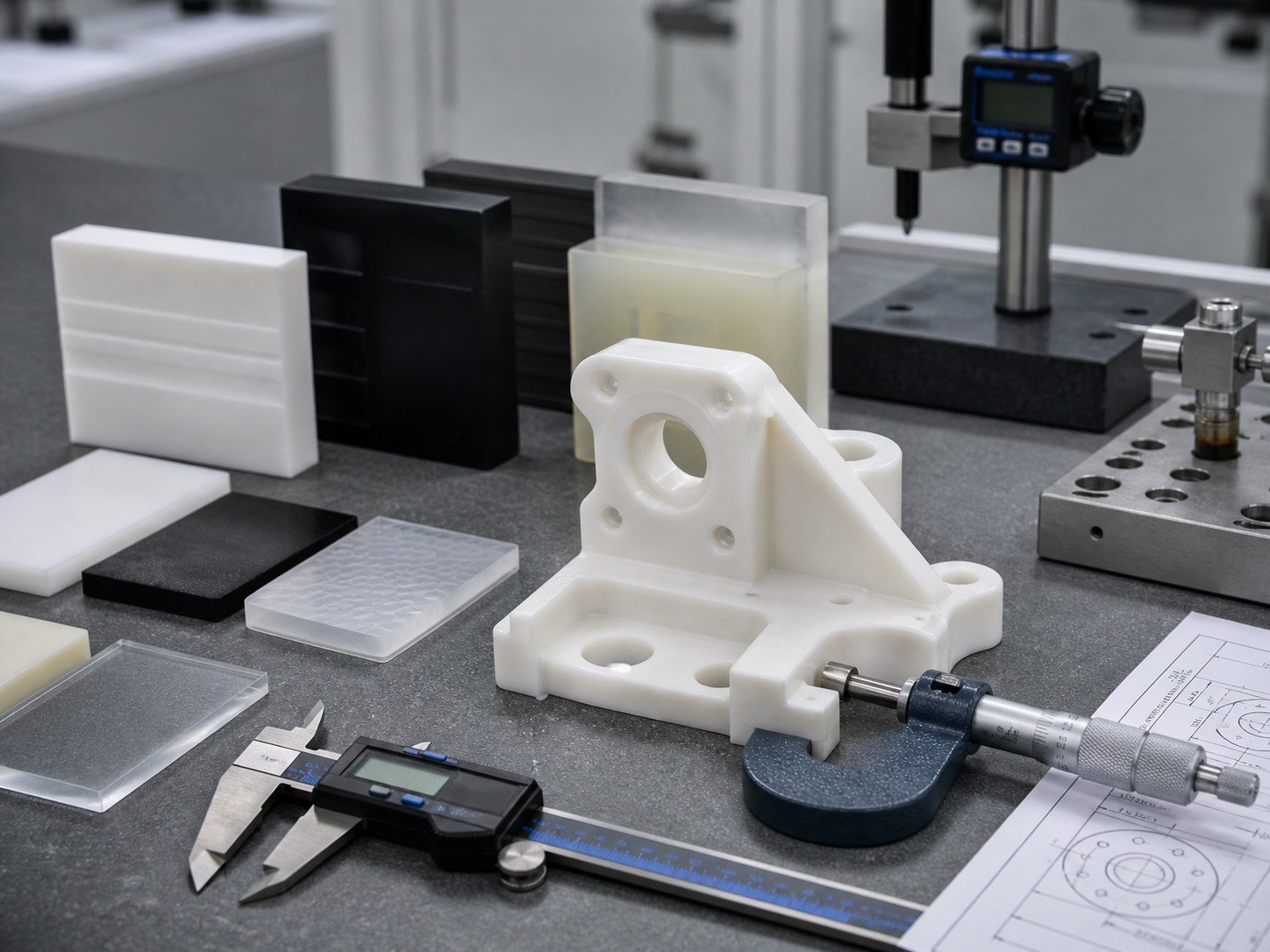
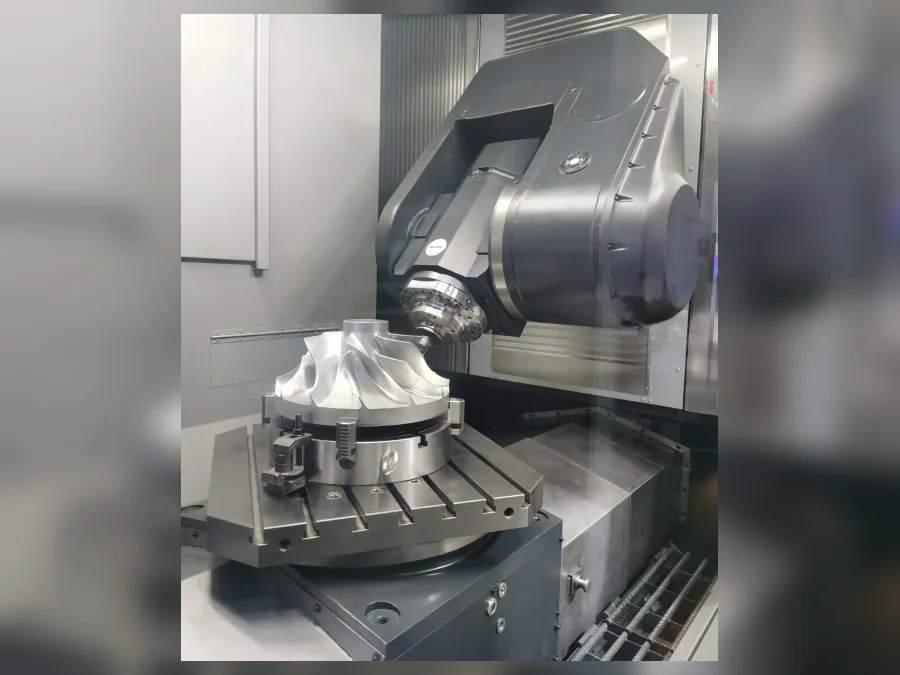
CNC machining is a subtractive process: the part is cut from solid stock rather than built layer by layer. That gives the prototype the behavior of the selected plastic sheet, rod or block. For functional tests, this is often the main reason to machine the part.
Choose CNC plastic machining when the prototype needs:
- Final-material behavior for load, wear, friction or temperature checks.
- Accurate holes, bores, slots or flat mounting faces.
- A small quantity of parts without injection mold tooling.
- A surface that can be polished, painted, textured or left as-machined.
- A direct bridge to low-volume fixtures, jigs or validation parts.
Use 3D printing first when the part has internal channels, very complex geometry, early form-only intent or a budget that favors fast shape iteration over material fidelity. Use vacuum casting or injection molding when the question is production-like molded plastic behavior, color matching or a larger batch of similar parts.
| Route | Best fit | Watch point |
|---|---|---|
| CNC plastic prototype | Functional plastic part, accurate interfaces, real stock material | Tool access, internal radii, material movement |
| SLA or SLS print | Fast design iteration, complex shapes, presentation or fit checks | Printed material may not match final plastic behavior |
| Vacuum casting | Tens to hundreds of molded-look urethane parts | Silicone tooling and cast material are still not the same as every thermoplastic |
| Injection molding | Production-intent material and geometry at higher volume | Tooling cost and design freeze happen earlier |
Which CNC plastic material should you choose?
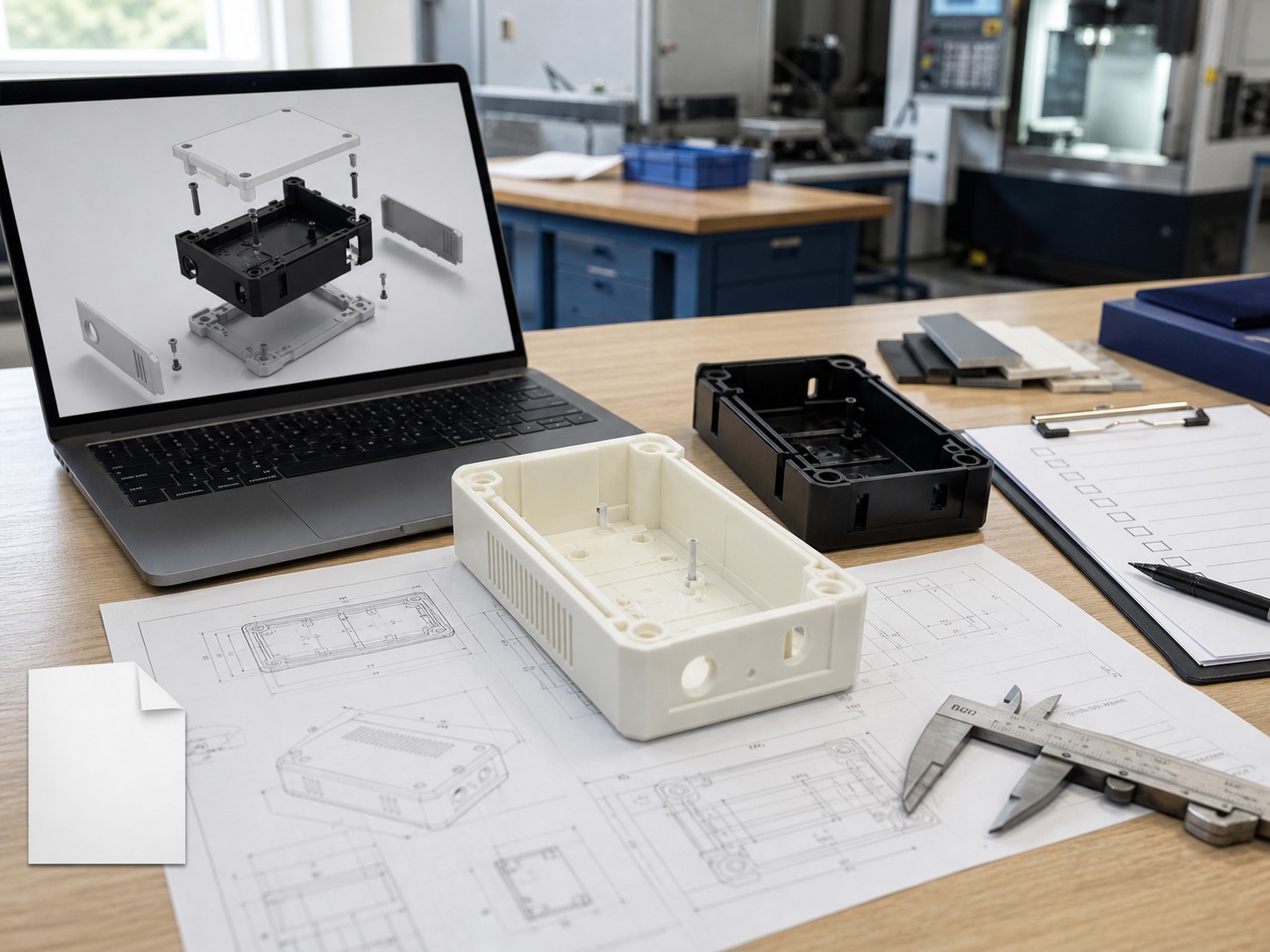
Start with the job of the part. A transparent display cover, a sliding gear, a medical device fixture and a high-temperature test bracket should not start from the same plastic. Protolabs’ material-selection guidance puts the same point simply: function, environment, mechanical behavior, cosmetics, size, cost and electrical requirements should come before material preference.
For a quick one-page comparison of typical ABS, POM, nylon, PC, acrylic, PEEK, PTFE and UHMW-PE properties with CNC machining notes, see the Jingrui Proto materials data sheet.
| Material family | Good uses in prototypes | RFQ notes |
|---|---|---|
| ABS | Housings, jigs, commercial-product mockups, general functional parts | Good first option when cost and impact resistance matter more than heat or UV exposure |
| Acetal / POM / Delrin | Gears, bushings, sliding parts, precision fixtures | Useful when low friction, wear resistance and moisture resistance matter |
| Polycarbonate | Tough covers, clips, impact-resistant transparent or translucent parts | Ask about stress, polishing and chemical exposure before choosing a clear finish |
| Acrylic / PMMA | Clear panels, lenses, display models | Can polish well, but sharp inside corners and stress cracking need review |
| Nylon / PA | Brackets, wear parts, functional components | Moisture and dimensional stability need discussion if the fit is tight |
| PEEK / high-performance plastics | Heat, chemical or demanding engineering tests | Material cost is high, so send complete drawings and quantity targets before quoting |
| PTFE / UHMW-PE / HDPE | Low-friction, chemical-resistant or impact applications | Softer plastics may move during machining and inspection |
The common mistake is to ask a supplier for “plastic” and wait for a recommendation. A better RFQ says what the part must survive: temperature range, load, wear contact, cosmetic review, chemical contact, outdoor exposure, flame rating if needed and whether the prototype must represent a future injection molded grade.
What tolerance should a CNC plastic prototype drawing use?
Plastic is not metal with a different color. It can move with heat, moisture, internal stress and workholding. That does not mean CNC plastic prototypes cannot be accurate. It means the tolerance plan has to be tied to the features that actually control function.
Use three levels:
- General tolerance for noncritical outside sizes, clearance features and cosmetic dimensions.
- Feature tolerance for holes, bearing fits, screw interfaces, slots, seal lands and alignment surfaces.
- Inspection notes for the dimensions that need a report, fixture check or mating-part fit check.
ISO 2768-1 exists to simplify drawing indications for linear and angular dimensions without individual tolerance callouts. It is useful as a drawing language, but it is not a substitute for engineering judgment. If every dimension is marked tight, the supplier has to machine and inspect as if every edge is critical. That slows quoting and may raise cost without improving the prototype.
For plastic CNC work, ask these questions before marking a number:
- Does this dimension locate another part?
- Does it control sealing, sliding, snap fit, bearing fit or electrical spacing?
- Is the dimension across a flexible wall, thin boss or long unsupported span?
- Will finishing, polishing or painting change the measured surface?
- Is the material stable enough for that tolerance in the use environment?
If the tolerance is important, include the mating part or explain the fit. A note such as “M3 insert boss must align with PCB hole pattern” gives the machinist more useful context than a tight number with no function.
How do finishing choices affect plastic CNC prototypes?
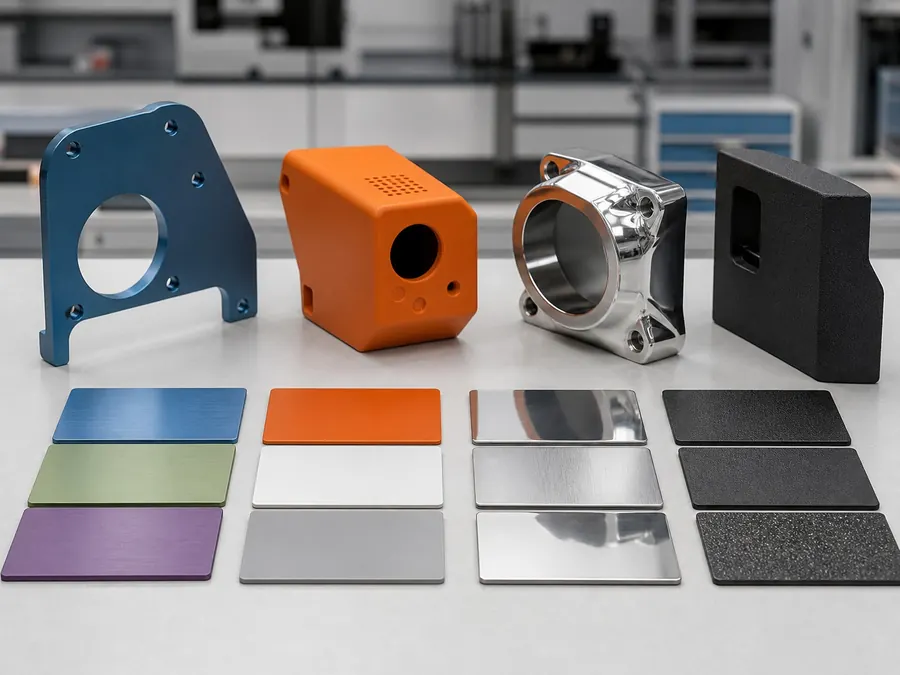
Plastic CNC parts can be delivered as-machined, deburred, sanded, polished, painted or textured, depending on the material and the purpose of the sample. The finish should be part of the quote, not a last-minute request after machining.
As-machined plastic may show tool paths. That can be acceptable for a fixture or internal bracket, but it may distract from a design review sample. Polishing can work well on acrylic and some clear plastics, while paint can help a housing match a product color or hide substrate variation. Texturing can reduce glare and fingerprints, but it also changes the inspection surface.
Use this rule: if the finish changes the surface that needs to fit, measure or seal, call it out on the drawing. If a bore, pocket, clip or mating face must stay bare, mark it for masking or post-machining review. The prior Jingrui Proto prototype surface finishing guide explains how finishing choices affect appearance, preparation, tolerance risk and inspection criteria.
Product whitepaper: CNC plastic prototype process, inputs and inspection
Jingrui Proto’s verified internal materials show CNC machining as a core capability covering milling, turning and related machining work, with plastic machining, tolerances and DFM assigned to cluster B in the knowledge graph. The verified brand record also states that Jingrui Proto operates an in-house factory with ISO 9001:2015, ISO 13485 and IATF 16949 certification.
For this topic, no current verified Jingrui Proto source file provides a universal CNC plastic tolerance table. This article therefore does not promise one number for every plastic part. The practical whitepaper boundary is:
| Area | What to provide | Why it matters |
|---|---|---|
| CAD | STEP file, plus native CAD if useful | STEP and IGES are common CNC quote formats; STEP is usually preferred for clean geometry exchange |
| Drawing | Critical dimensions, datums, threads, inserts, inspection notes | Drawings are needed when feature tolerances, masking or finish coating matter |
| Material | Exact grade if known, or functional requirements if not | ABS, POM, PC, acrylic, nylon, PEEK and PTFE behave differently under machining and use |
| Finish | As-machined, deburred, sanded, polished, painted, textured or masked areas | Finish can change appearance, measured surfaces and lead time |
| Quantity | Prototype quantity and likely next batch | Setup, fixturing and inspection approach change between 1 part and 50 parts |
| Use case | Fit check, functional test, appearance review, fixture, investor sample or bridge production | The supplier can protect the features that answer the test |
| Inspection | Which dimensions need reports, CMM checks or fit checks | Avoids inspecting every noncritical edge as if it controls function |
What should be in a CNC plastic prototype RFQ?
A fast RFQ is not just a file upload. It is a manufacturing conversation compressed into a clear package. Send:
- STEP file for each part.
- PDF drawing for critical tolerances, threads, inserts and finishes.
- Material choice or ranked requirements.
- Quantity for this prototype round and expected next round.
- Finish target, color reference, texture reference or “as-machined acceptable.”
- Mating parts, PCB outlines, fastener specs or assembly notes.
- Inspection requirements and any regulated-use context.
- Deadline and shipping destination.
If you are not sure whether to choose ABS, acetal, nylon or polycarbonate, say that directly and describe the function. A supplier can help choose material, but only if the RFQ explains what the part must do.
FAQ
When should I choose CNC plastic instead of 3D printing?
Choose CNC plastic when the test depends on real stock material behavior, machined surfaces, accurate holes, threaded features, sliding contact or assembly interfaces. Choose 3D printing when the main goal is fast geometry iteration, complex internal features or a low-cost form check. For many hardware teams, the right sequence is printed concept model first, CNC plastic prototype for functional validation and then vacuum casting or injection molding when the design is closer to production.
Which plastic is best for a CNC plastic prototype?
There is no single best plastic. ABS is a practical starting point for housings and general prototypes. Acetal or Delrin is strong for low-friction and wear parts. Polycarbonate helps when toughness matters. Acrylic is useful for clear visual parts. Nylon can be good for functional brackets, but humidity and dimensional stability need review. PEEK belongs in demanding thermal, chemical or mechanical applications where the higher material cost is justified.
Can CNC plastic prototypes hold tight tolerances?
They can hold controlled tolerances on the right material, geometry and setup, but plastic tolerance should be assigned feature by feature. Thin walls, large flat areas, soft plastics, moisture-sensitive plastics and finished surfaces can all affect measurement. Use a general tolerance for noncritical dimensions, then mark tighter tolerances only on the features that control fit or function. If a supplier advertises a tight number, still ask whether it applies to your material, part size and geometry.
Can machined plastic be polished or painted?
Yes, but finishing should be specified before quoting. Acrylic and some clear plastics can be polished for visual clarity. ABS and similar housing materials can be painted when color or cosmetic review matters. Sanding, polishing and paint preparation take time, and they may affect edges, bores and mating faces. If a finished surface is also a tolerance surface, call that out clearly and ask whether it should be masked, machined after finishing or inspected after finishing.
What files do I need for a CNC plastic RFQ?
Send a STEP file plus a PDF drawing when any feature tolerance, thread, insert, finish, masking or inspection requirement matters. The drawing does not need to tolerance every dimension. It should show the dimensions that control function, the general tolerance standard, material, finish, quantity and inspection notes. Add assembly context when a plastic part fits to a PCB, metal bracket, seal, shaft, bearing or molded part.
Why did my plastic CNC quote come back high?
The usual reasons are material cost, complex geometry, deep pockets, small inside radii, thin walls, tight tolerances, cosmetic finishing, short lead time or low quantity. Community machining discussions repeat the same lesson: small cosmetic fillets, unclear tolerances and difficult materials can push the quote up. Before changing suppliers, simplify nonfunctional features, identify truly critical tolerances and ask whether a different plastic or finish would answer the same prototype question.
Final RFQ checklist
Before sending a CNC plastic prototype for quote, write one sentence that explains what the sample must prove. Then attach the file package.
- The prototype’s job is clear.
- Material is selected or functional requirements are ranked.
- Only critical dimensions have tight tolerances.
- Finish, masking and cosmetic expectations are stated.
- Assembly context and mating parts are included.
- Inspection needs are limited to the features that matter.
- Quantity, deadline and shipping destination are included.
If the part is part of a broader prototype build, Jingrui Proto can connect CNC plastic machining with prototype surface finishing, 3D printing, vacuum casting and assembly support. The cleaner the RFQ, the faster the engineering review can separate real risk from guesswork.
Have a Part to Manufacture?
Turn your design into a real part with JRProto.
Send your project details and tell us your material, quantity, tolerance, surface finish, and delivery requirements. Our engineering team will review your project and recommend a suitable manufacturing process.
Manufacturing Capabilities: 3D Printing · CNC Machining · Vacuum Casting · Sheet Metal · Surface Finishing
Request a Manufacturing Quote
Explore CNC Machining Services
Talk to an Engineer