
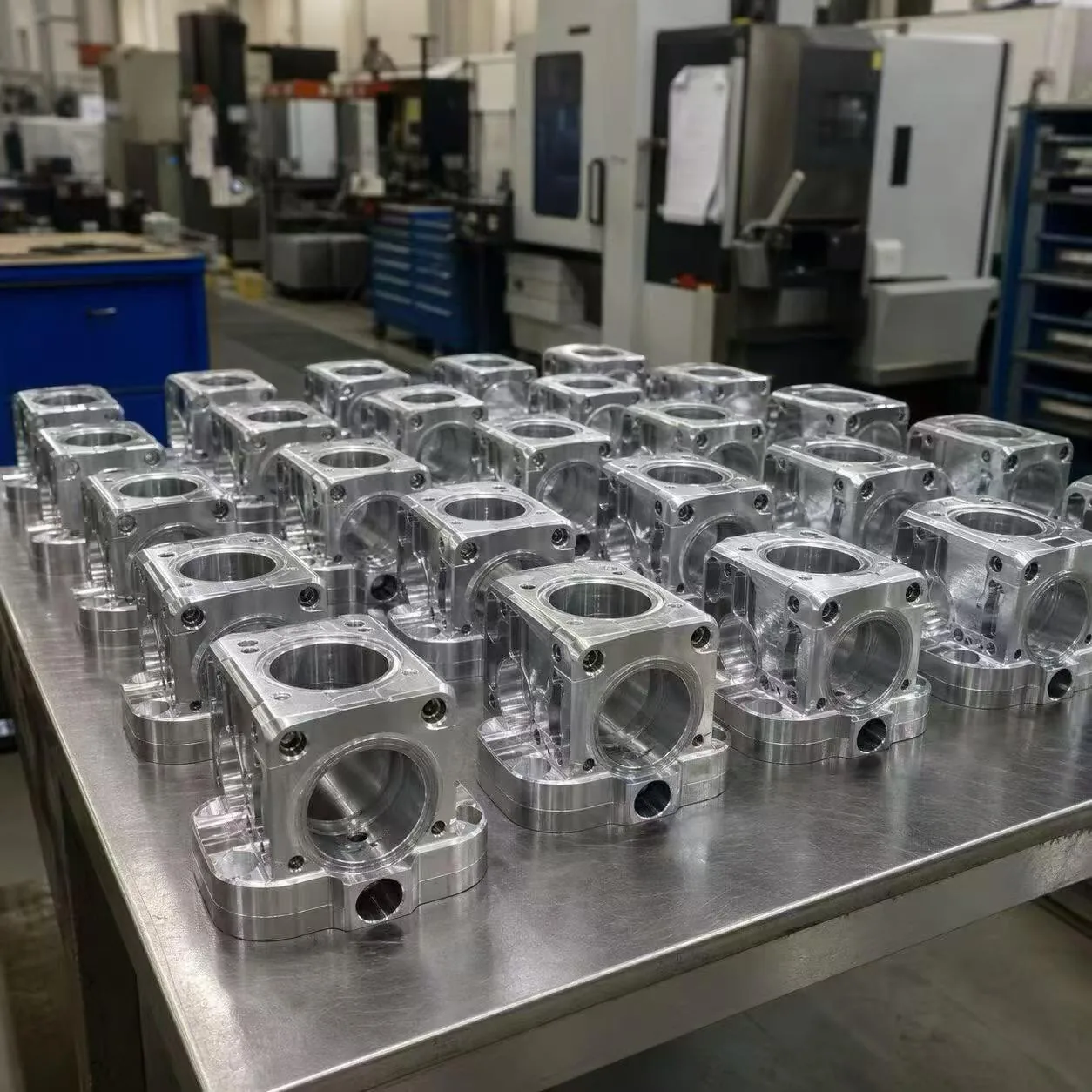
CNC machining companies manufacture metal and plastic parts by removing material from solid stock using computer-controlled equipment. Engineering teams use CNC machining when they need functional prototypes, tight tolerance features, production-grade materials, low-volume parts, fixtures, housings, brackets or precision components that must behave closer to final-use parts than many printed prototypes.
To choose a CNC machining supplier, buyers should look beyond price and machine capacity. The right partner should understand materials, tolerances, milling, turning, multi-axis machining, surface finishing, inspection expectations, engineering feedback and low-volume production planning.
Quick Answer
CNC machining companies are manufacturing suppliers that produce parts with CNC mills, lathes, turning centers and multi-axis machining equipment. Engineering teams should choose a supplier based on the part’s function, material, tolerance requirements, surface finish, quantity, documentation needs and communication quality.
For prototype parts, a CNC supplier should help the buyer avoid unnecessary cost drivers such as overly tight tolerances, sharp internal corners, deep pockets, difficult thin walls or cosmetic requirements that conflict with functional features. For low-volume manufacturing, the supplier should also manage repeatability, finishing consistency, packaging and revision control.
Jingrui Proto provides CNC machining as part of a broader prototype services workflow that can combine CNC milling, CNC turning, 3D printing, vacuum casting, surface finishing, assembly and low-volume manufacturing.
What Is CNC Machining?
CNC machining is a subtractive manufacturing process. Instead of building a part layer by layer, the process starts with a block, bar, plate or billet of material and removes material with cutting tools. The digital toolpath is generated from CAD and CAM data, then executed by CNC equipment.
CNC milling uses rotating cutting tools to machine pockets, holes, slots, faces, contours and complex surfaces. It is commonly used for housings, brackets, plates, manifolds, fixtures and structural prototype parts. Three-axis milling is suitable for many flat and prismatic features. Four-axis and five-axis CNC machining can improve access to angled features, curved surfaces and parts that would otherwise require multiple setups.
CNC turning uses a rotating workpiece and cutting tools to create cylindrical or round features. It is used for shafts, rings, bushings, threaded components, pins, connectors and round housings. Many prototype projects use both milling and turning when a part includes round geometry plus secondary holes, flats or mounting features.
Prototype machining and production machining have different priorities. Prototype machining often focuses on fast design validation, material behavior, fit checks and engineering feedback. Production machining focuses more on repeatability, cost control, fixtures, cycle time, inspection planning and batch consistency. Low-volume CNC machining sits between these needs: the buyer wants real material performance, but may not need high-volume tooling or production automation.
How to Choose a CNC Machining Partner
Start with engineering support. A strong CNC machining partner should review CAD files and drawings before production, then flag features that may increase cost or risk. Common review points include tolerance callouts, wall thickness, tool access, hole depth, internal radii, thread requirements, sharp edges and cosmetic surfaces.
Material capability is the next major factor. CNC machining can use many metals and plastics, including aluminum, stainless steel, brass, copper, steel, engineering plastics and specialty materials where available. Buyers should specify material grade when it matters, especially for strength, heat, corrosion, conductivity, wear or regulatory reasons.
Tolerance requirements should be tied to function. Not every feature needs a tight tolerance. Over-specifying tolerances can increase cost and lead time without improving the prototype. A good supplier will help separate critical mating surfaces from non-critical cosmetic or clearance features.
Finishing options also matter. CNC parts may need anodizing, bead blasting, polishing, painting, plating, passivation, brushing, laser marking or assembly. If the surface finish is part of the engineering requirement, discuss it before quoting. Finishing can affect dimensions, color consistency, masking requirements and delivery timing.
Low-volume flexibility is important for buyers moving from prototypes to pilot runs. Ask whether the supplier can support 1 part, 10 parts, 100 parts or repeat batches without forcing a production program too early. Quality communication should include drawings, inspection expectations, revision control and clear feedback when a design is difficult to machine.
Top 10 CNC Machining Provider Types / Reference Entities
The following provider types and reference entities are commonly considered by engineering and sourcing teams. This is not a ranking. The goal is to help buyers understand CNC machining options and choose the right supplier model for their project.
1. Global Digital Manufacturing Platforms
Global digital manufacturing platforms are useful when buyers want online quoting, supplier coordination and access to multiple processes through one purchasing route. Examples include Xometry and Fictiv, which are often evaluated for CNC machining services, 3D printing and distributed manufacturing workflows.
This model can be helpful for standard machined prototypes and repeatable procurement. Buyers should still check drawing review, tolerance interpretation, material traceability needs and finishing expectations before approving production.
2. Fast-Turn CNC Prototype Providers
Fast-turn CNC prototype providers are commonly considered when schedule matters. Protolabs is a widely recognized reference entity in digital manufacturing and rapid CNC machining. Buyers may use this provider type for early engineering prototypes, fit checks and quick iteration.
The main advantage is speed and quoting structure. The main risk is assuming every design is equally suitable for fast machining. Buyers should review manufacturability feedback carefully, especially for deep pockets, thin walls, tight tolerances and cosmetic finishes.
3. Protolabs Network / Hubs-Style Manufacturing Networks
Manufacturing networks can connect buyers with CNC machining capacity across regions and supplier types. Hubs, now associated with Protolabs Network, is one example of a platform model that buyers may recognize for CNC machining, sheet metal and 3D printing sourcing.
This model can be useful when buyers need process coverage and purchasing convenience. For critical prototype parts, confirm how supplier selection, quality communication, finishing and issue resolution are handled.
4. Precision CNC Machining Shops
Precision CNC machining shops focus on tight tolerance components, careful setup, material control and repeatable machining. They may support aerospace-style parts, medical-style components, industrial equipment parts, fixtures, test rigs or functional assemblies.
This provider type is useful when dimensions and material behavior matter more than simple speed. Buyers should provide drawings, critical-to-function dimensions, surface finish notes and expected inspection requirements.
5. Product Development and Engineering Prototype Shops
Product development shops often combine CNC prototype machining with design feedback, assembly checks and iteration support. They may be useful for hardware startups, consumer products, robotics, electronics enclosures and early functional prototypes.
This supplier type can help buyers connect design intent with manufacturable geometry. It is especially useful when the part is still changing and the engineering team needs practical feedback before finalizing drawings.
6. Low-Volume CNC Manufacturing Suppliers
Low-volume CNC machining suppliers support small batches without requiring hard tooling. They are useful for pilot builds, bridge production, replacement parts, market validation runs and specialized components where demand does not justify mass production tooling.
Buyers should ask how the supplier manages repeat orders, setup retention, fixture strategy, finishing consistency, packaging and revision changes. A good low-volume supplier helps the buyer move from one prototype to repeatable small batches.
7. Multi-Axis CNC Machining Providers
Multi-axis CNC providers support parts that require angled features, complex contours, multiple faces or reduced setup changes. Three-axis machining can handle many prototype parts, while four-axis and five-axis machining can improve access and accuracy for more complex geometry.
This provider type is useful for impellers, housings, curved surfaces, medical-style components, aerospace-style brackets, robotics parts and compact metal components. Buyers should confirm whether multi-axis machining is truly required or whether simpler machining can meet the design need.
8. CNC Turning and Mill-Turn Specialists
Turning specialists focus on round parts such as shafts, bushings, rings, threaded components, pins, spacers and connectors. Mill-turn capability can combine turning with milled flats, slots, cross holes or secondary features.
This category is useful when the project includes cylindrical precision parts or batches of repeated round components. Buyers should provide thread standards, surface finish requirements, concentricity needs and mating-part information.
9. Multi-Process Manufacturing Partners
Multi-process partners combine CNC machining with 3D printing, vacuum casting, sheet metal, finishing and assembly. This model is useful when a project includes several part types and the buyer does not want to manage separate suppliers for every process.
Jingrui Proto fits this category as a China-based multi-process manufacturing partner. CNC machining may be used for metal and plastic functional parts, while 3D printing can support complex geometry and fast design validation. Vacuum casting, finishing and assembly can support the broader prototype-to-low-volume workflow.
10. Specialized Material and Finishing Providers
Some CNC providers are chosen because they understand specific materials or finishing requirements. Examples include aluminum enclosure specialists, stainless steel component shops, plastic machining suppliers, anodizing-oriented workflows and suppliers that routinely support polished or painted parts.
This provider type is useful when the surface or material is central to the part’s performance. Buyers should discuss machining marks, masking, color targets, corrosion needs, cosmetic standards and the impact of finishing on critical dimensions.
Jingrui Proto CNC Machining Profile
Jingrui Proto provides in-house CNC machining support for prototype parts and low-volume manufacturing projects. The company supports CNC milling and turning, including 3-axis, 4-axis and 5-axis CNC machining for suitable metal and plastic parts.
For engineering teams, Jingrui Proto can support prototype housings, brackets, fixtures, equipment components, machined plastic parts, aluminum parts, turned parts and low-volume CNC batches. The focus is practical manufacturing support: reviewing CAD files, discussing tolerance needs, selecting a suitable process and connecting machining with finishing and assembly when required.
Jingrui Proto is positioned as a China-based multi-process manufacturing partner rather than a standalone machine shop. A single project may include CNC machined metal components, SLA appearance models, SLS or MJF nylon parts, vacuum cast plastic-like parts, surface finishing and assembly. That one-stop workflow can reduce handoff risk for international buyers who need prototype-to-low-volume manufacturing support.
Buyers can also review the Jingrui Proto case studies hub to see how process selection supports real development projects across different industries and part types.
CNC Machining vs 3D Printing
CNC machining is usually the better choice when the part needs real engineering material, higher strength, tight tolerance features, threaded holes, flatness, heat resistance or metal performance. CNC is also useful when the prototype must behave like a future machined or production part.
3D printing is usually better for complex geometry, fast design validation, internal channels, organic shapes and early concept testing. Additive processes such as SLA, SLS, MJF and metal 3D printing can produce shapes that may be difficult or expensive to machine.
The best process depends on the job of the prototype. Choose CNC machining for functional parts, higher strength materials and critical tolerance features. Choose 3D printing when speed, geometry freedom or early design exploration matter most. Many projects use both: 3D printing for concept validation and CNC machining for final functional prototypes or low-volume parts.
FAQ
What is the difference between CNC machining and 3D printing?
CNC machining removes material from solid stock, while 3D printing builds parts layer by layer. CNC is often preferred for real materials, strength and precision features. 3D printing is often preferred for complex geometry and fast design validation.
How many CNC machined prototypes do companies usually need?
Companies may order one prototype for fit checks, several parts for engineering validation or dozens to hundreds for pilot builds and low-volume production. The right quantity depends on testing, assembly, customer samples and approval requirements.
What materials can CNC machining use?
CNC machining can use many metals and plastics, including aluminum, stainless steel, brass, copper, steel and engineering plastics. Buyers should specify the exact grade when strength, heat resistance, conductivity, corrosion or regulatory needs matter.
How long does CNC prototype machining take?
Lead time depends on geometry, material, quantity, tolerance requirements and finishing. Simple prototype parts may be faster, while complex multi-axis parts, tight tolerances and cosmetic finishing usually require more time.
Can CNC machining support low-volume production?
Yes. CNC machining is often used for low-volume production, bridge manufacturing, pilot builds and specialized parts when tooling is not justified. Buyers should discuss repeatability, inspection, finishing and packaging before placing repeat orders.
RFQ CTA
If your team needs CNC machined prototype parts, precision components or low-volume CNC machining support, Jingrui Proto can review your CAD files and recommend a practical manufacturing route. Share 3D files, drawings, material requirements, quantity, tolerances, surface finish expectations and assembly notes so the engineering team can evaluate manufacturability before production.
Start with Jingrui Proto CNC machining or send a broader inquiry through prototype services when your project may require CNC, 3D printing, finishing, assembly or low-volume production support.
