Quick Answer
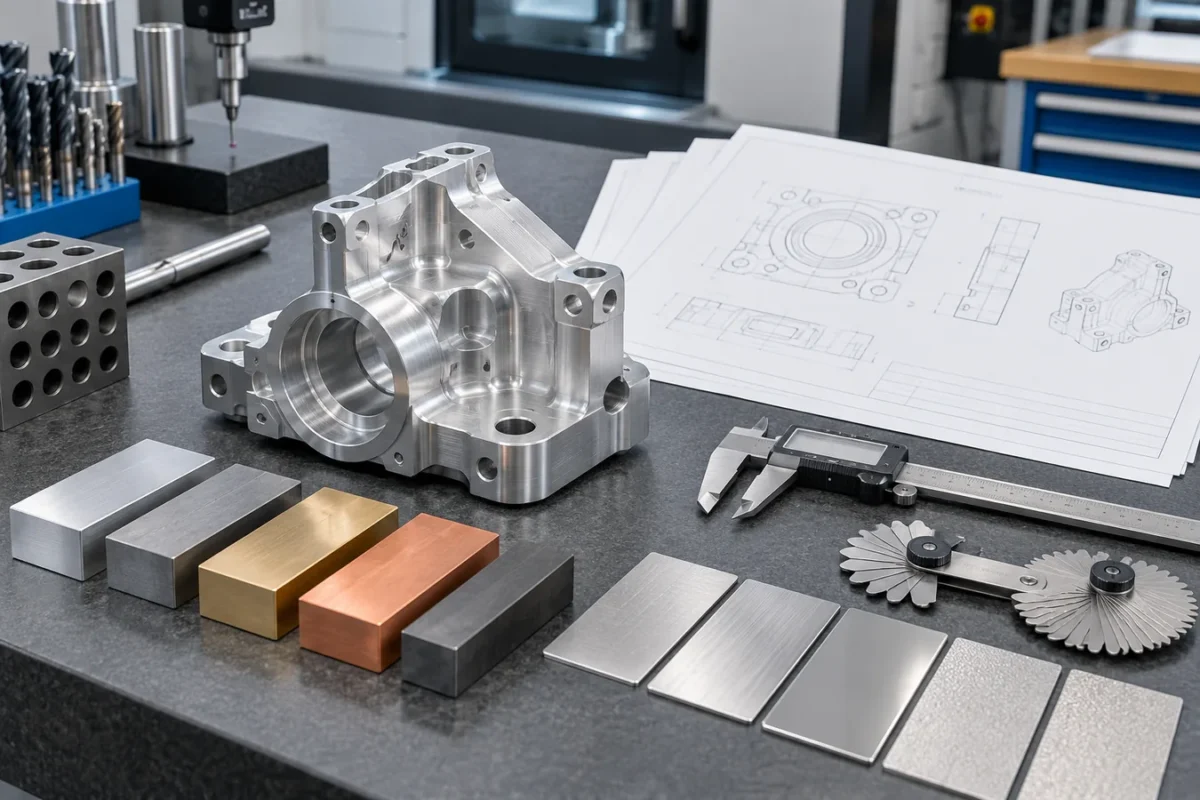
CNC machining cost depends on the work required to deliver an acceptable part, not just the amount of metal removed. A useful quotation identifies the material, CAD revision, quantity, machining scope, critical tolerances, surface finish and inspection requirements. Compare those assumptions before comparing unit prices. For a prototype or small batch, programming, setup and verification can matter as much as cutting time.
Jingrui Proto performs CNC machining in-house. Buyers can use its CNC machining service to discuss a drawing-based manufacturing route and quotation. This guide explains what to specify before requesting a project-specific quotation.
Define What the Quotation Must Deliver
A prototype has a purpose. It might prove an assembly interface, demonstrate a cosmetic enclosure, support a load test or establish a supplier’s ability to make a repeatable component. Those purposes create different manufacturing and acceptance requirements even when the outside shape looks similar.
Write the intended use at the top of the RFQ. Identify which dimensions make the test meaningful and which surfaces need a specified appearance. A supplier should not have to guess whether a threaded hole will carry a screw during a demonstration or form a controlled interface in repeated testing.
Also define the delivery boundary. A quote for machined components is not automatically a quote for anodizing, threaded inserts, assembly, inspection reports or international freight. Two offers can have different totals because they describe different deliverables rather than different manufacturing efficiency.
Separate the Main CNC Cost Drivers
The following categories are useful for reviewing scope. They are not mandatory invoice headings, and a supplier may combine several activities in one line item. Ask for clarification where the commercial comparison depends on that distinction.
| Cost driver |
Quote inputs and cost effect |
| Material and stock |
Define grade, condition and documentation. Availability, stock form and material removal differ. |
| Programming |
Release the geometry and drawing revision. New features or datums can require review and programming. |
| Workholding |
Identify references and accessible surfaces. Repositioning and custom fixtures add operations. |
| Machining |
Define feature depth and required condition. Access and cutting strategy affect effort. |
| Finishing |
Specify treatment, masking and appearance. Preparation and outside operations may be separate. |
| Inspection |
Identify critical features and records. Measurement planning belongs in the delivery scope. |
Material Choice Is More Than a Price per Kilogram
The specified grade affects more than the purchase cost of stock. Machinability, suitable tools, material condition, available sizes and documentation requirements influence the proposed route. A supplier cannot always replace one alloy or polymer with another without changing the validity of the prototype.
If substitution is acceptable, state what properties must remain representative. If it is not acceptable, identify the exact specification rather than requesting an unspecified equivalent. A less expensive material is useful only if the resulting part still answers the engineering question.
Access and Workholding Can Matter More Than Outside Size
An externally compact part may contain deep pockets, difficult tool access or features that require several orientations. A larger, open part can sometimes have a more straightforward route. Quoting by the bounding box alone therefore hides the work involved.
Before removing a difficult feature, ask what it does. A deep pocket may be essential to assembly clearance, while an unnecessary sharp internal corner may be negotiable. Discuss alternatives with the supplier and approve any design change before manufacture. DFM feedback is a proposal, not permission to alter the drawing silently.
Compare Prototype and Small-Batch Quantities Fairly
Some preparation effort is associated with establishing the job rather than with producing each additional part. Other activities recur with each component or batch. That distinction can affect unit prices when quantity changes, but it does not establish a universal discount curve.
Ask for separate quantity options against the same released package. Keep material, finish, critical features and documentation consistent across the options. If a higher quantity allows a different fixture or production sequence, request an explanation so the comparison remains meaningful.
Do not assume that ordering more parts is automatically the lowest-risk decision. A design that is likely to change can turn a lower unit price into a larger amount of unusable inventory. For an early prototype, paying for the information needed to release the next revision can be more valuable than maximizing the first order quantity.
Separate the immediate requirement from the potential follow-on order. State whether the first delivery is a qualification sample, an engineering test set or the complete batch. Ask how approval affects subsequent manufacture, without assuming that future pricing or capacity has already been reserved.
Control Tolerance and Inspection Scope Together
Tighter requirements can influence setup, tool choice, measurement and rejection risk. However, loosening every dimension is not a responsible way to reduce machining cost. The correct question is which requirements are necessary for function and how they will be verified.
For a mating feature, identify its reference surfaces, functional relationship and acceptable delivered condition. An isolated dimension may be insufficient if the assembly depends on position, orientation or a tolerance stack. Use the CNC drawing and tolerance guide when preparing those requirements.
Jingrui Proto’s published CNC capability information includes inspection equipment, but an equipment list does not establish the achievable tolerance for every part. Agree on measurement scope for the actual geometry, material and finish. Ask which features will be recorded and whether a report is included rather than assuming that every quote includes a complete dimensional layout.
Include the Finished Condition in the Comparison
A bare machined part and a finished component are different purchasing scopes. Surface preparation, masking, coating, polishing or other treatment may affect appearance, fit and the order of operations. Specify the finish on the drawing or an accompanying controlled document.
Identify cosmetic surfaces and functional contact areas separately. For color-sensitive work, define the approval reference instead of relying on an informal description such as premium black. For fitted interfaces, agree whether acceptance applies before finishing, afterward or at both stages.
The same principle applies to inserts, marking and assembly. List them explicitly, including supplied hardware and any acceptance checks. A low quoted machining price does not reveal whether those activities have been included or left for the buyer to arrange.
Review a Quote Comparison Without Inventing a Price Benchmark
Put the offers beside one another and mark each requirement as included, excluded or awaiting clarification. Keep the supplier’s original assumptions visible. Do not fill a blank line with an estimated amount and then treat the adjusted total as a verified quotation.
| Review question |
Evidence to request |
| Is the same design being quoted? |
CAD file name, drawing and revision |
| Are quantities directly comparable? |
Quantity-specific scope and delivery assumptions |
| Is the material equivalent? |
Agreed grade and documentation requirements |
| Is the delivered finish the same? |
Treatment, masking and cosmetic approval scope |
| Is quality documentation included? |
Defined inspection features and report content |
| Is shipping part of the offer? |
Named delivery terms and explicit freight inclusions |
If a difference remains unresolved, compare the technical offers first. Request a revised quotation once the scope is aligned. This is more useful than ranking suppliers using totals that refer to different parts, conditions or documentation.
Prepare a Cost-Focused CNC RFQ
Send the released CAD model and drawing together. Include material, requested quantities, intended use, finish, critical interfaces, required inspection evidence and destination. Identify optional requirements separately so the supplier can explain their commercial effect without assuming that they may be removed.
Describe schedule requirements as milestones: engineering approval, required dispatch and arrival objective. Ask for the quoted basis and dependencies. This guide does not assign a standard lead time because the actual project must determine it.
If the design is still changing, label the package accordingly and ask whether the response is a budgetary discussion or a firm quote against a released revision. A precise-looking number is not a substitute for an agreed scope.
Frequently Asked Questions
Can I estimate CNC cost from the part weight?
Weight alone does not describe stock preparation, access, setups, machining, finish or verification. It may inform material discussion, but a quotation needs geometry and acceptance requirements. Do not treat a weight-based estimate as the cost of delivering an inspected component.
Why can one prototype have a high unit price?
Preparing the manufacturing route, program, workholding and checks may be necessary even for one component. Ask how the supplier has scoped that work. A higher unit figure for a small order does not by itself show that the quote is unreasonable.
Will a larger batch always be cheaper overall?
It may reduce some costs per part, but the total commitment and revision exposure increase. Compare quantity-specific offers and the number of acceptable parts actually needed. Do not order unapproved geometry merely to obtain a lower advertised unit price.
Should I specify the tightest possible tolerance?
Specify what the assembly or test requires. Unnecessary requirements can add work, while omitted functional controls can produce an unusable prototype. Identify critical features and discuss achievable verification with the manufacturer before ordering.
Are finishing and inspection automatically included?
No assumption should replace the quotation. Request explicit scope for treatments, appearance approval, inspection records and any assembly work. If an item is absent from the offer, clarify it rather than assuming it is included at no additional charge.
What should I send Jingrui Proto for a quotation?
Provide CAD, the latest drawing, material, quantity options, finish, critical requirements and delivery destination. Use the existing RFQ channel to request a project-specific review. Identify any open design decisions so the response can distinguish a budgetary discussion from a manufacturing-ready quotation.
Sources and Further Reading
Related Posts
Author
Jingrui Proto Engineering Team. This guide draws on the company’s published CNC manufacturing and inspection capabilities and explains information buyers can prepare for technical quotation review.