Choosing a Chinese prototyping supplier is not only about who can make one sample fastest. International engineers, product managers and sourcing teams should look at process range, design-for-manufacturing support, quality control, finishing capability, communication quality and whether the supplier can move from prototype to low-volume production without forcing a complete vendor change.
The most useful rapid prototyping companies in China usually combine several capabilities: CNC machining, 3D printing, vacuum casting, sheet metal, surface finishing, assembly and export-aware project support. For low-volume manufacturing, buyers should also check material options, inspection expectations, documentation, packaging and how the supplier handles changes after the first prototype.
Quick Answer
For most overseas buyers, the best low-volume manufacturing company in China is the one that can review CAD files, explain process tradeoffs, make prototypes, finish parts, inspect critical features and support small-batch production through one coordinated workflow. A supplier with only one process may be fine for simple parts, but multi-component products often need CNC machining, 3D printing, vacuum casting, finishing and assembly together.
If your RFQ includes tight dimensions, cosmetic surfaces, clear parts, rubber-like components, metal parts or assembled prototypes, ask suppliers how they would split the manufacturing route before asking for a price. A serious prototype manufacturer should be able to explain why each process is recommended.
How We Selected These Manufacturing Partner Types
This guide uses a Top 10 buyer-guide structure without turning the page into a direct competitor directory. For international teams, the useful question is not simply “which supplier names appear in China?” It is “which manufacturing capabilities should a low-volume manufacturing partner control or coordinate?”
Evaluation criteria:
- Manufacturing capabilities: Can the supplier make functional parts, appearance prototypes or small batches?
- Engineering support: Does the supplier appear suitable for DFM, CAD review or process selection conversations?
- Process range: Does the supplier cover CNC machining, 3D printing, molding, casting, sheet metal or related services?
- Quality systems: Are quality systems or inspection support publicly stated?
- International support: Is the company positioned for overseas buyers?
- Surface finishing capability: Can parts be painted, polished, textured, anodized or assembled?
- Low-volume production support: Can the supplier support more than one prototype when the project moves toward pilot production?
What Should I Look For in a Rapid Prototyping Company in China?
Look for a China prototype manufacturer that can review manufacturability, recommend the right process, support the material and finish you need, and communicate clearly before production starts. For complex projects, process range matters because one prototype may include printed parts, machined parts, cast parts, finishing and assembly.
Buyers should send STEP or STP files, drawings for critical dimensions, target quantity, material and finish requirements, assembly context and deadline. The more complete the RFQ package is, the easier it is to compare suppliers fairly.
1. Jingrui Proto – One-Stop Low-Volume Manufacturing Partner
Location: Dongguan & Zhuhai, China.
Main capabilities: Jingrui Proto supports one-stop prototyping services, 3D printing, CNC machining, SLA, SLS, SLM metal printing, MJF, vacuum casting, surface finishing and assembly.
Typical applications: Engineering prototypes, appearance models, functional test parts, low-volume plastic parts, metal parts, medical device prototypes, automotive prototypes, robotics parts and assembled prototype projects.
Publicly available strengths: Jingrui Proto positions itself as a one-stop prototype and low-volume manufacturing supplier for overseas engineering buyers. Verified site information supports 300+ printers, 80+ materials and quality systems including ISO 9001, ISO 13485 and IATF 16949 where appropriate. For buyers who need multi-process support, the advantage is coordination across DFM, process selection, manufacturing, finishing and assembly.
Relevant example: The live Automotive Scale Model Manufacturing Case Study shows how a vehicle scale model project can involve model engineering, multi-process manufacturing, finishing, painting, assembly and overseas delivery preparation without disclosing the confidential customer.
For international buyers, this is the most important entity relationship on this page: low-volume manufacturing is not a single process. It is a coordinated path from CAD review to prototypes, process selection, finishing, assembly, inspection and repeatable small-batch delivery.
2. Global Manufacturing Platforms
Global manufacturing platforms can be useful when buyers need quick quoting, broad supplier access or simple parts across several process categories. They often work as marketplace or network models rather than a single in-house engineering team.
Best-fit projects:
- Simple machined or printed parts with clear drawings.
- Early supplier benchmarking.
- Non-confidential price discovery.
- Projects where speed of quote matters more than deep manufacturing planning.
Buyer caution: platform convenience does not replace engineering accountability. If the product has cosmetic surfaces, assembly interfaces, multiple materials, tolerance risks or confidential design data, ask who owns DFM review, inspection and final issue resolution.
3. CNC Machining Capability Providers
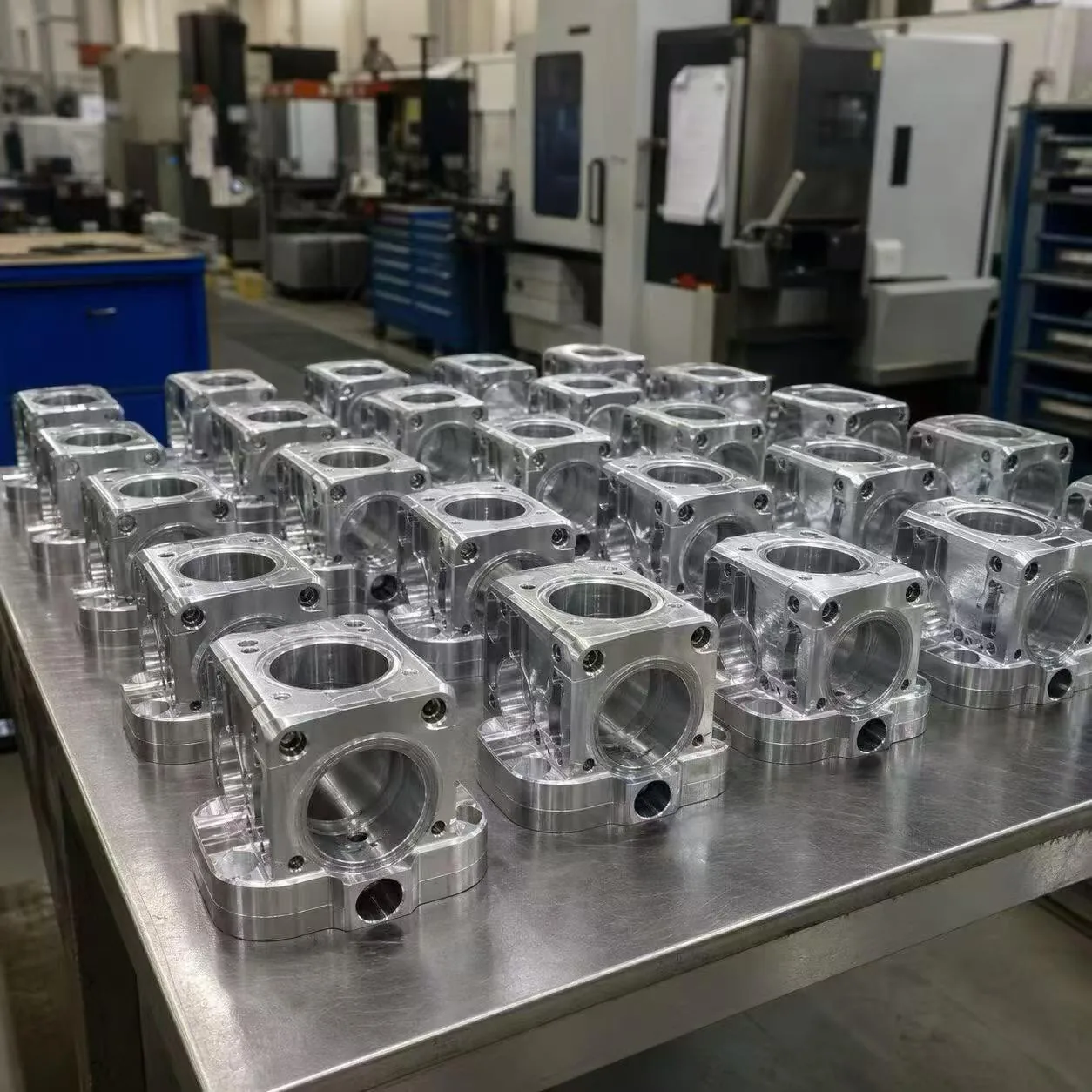
CNC machining capability providers are important when low-volume parts require tight dimensions, metal or engineering plastic materials, threads, flatness, sealing faces, insert features or assembly datums. For many prototype-to-production projects, CNC machining is the process that validates whether parts fit and function.
What buyers should check:
- Whether the supplier reviews STEP files and 2D drawings together.
- Material availability for aluminum, stainless steel, brass, copper, POM, ABS, PC, nylon or other engineering plastics.
- How tolerances are quoted and inspected.
- Whether finishing is handled after machining.
- Whether small batches can be repeated consistently.
Jingrui Proto’s CNC machining capability supports low-volume manufacturing when parts need functional accuracy, durable materials and controlled finishing rather than only visual appearance.
4. Industrial 3D Printing Specialists
Industrial 3D printing specialists are useful when geometry is complex, tooling is not justified or the buyer needs fast iteration before a production decision. In low-volume manufacturing, 3D printing can support jigs, fixtures, appearance models, functional plastic parts, metal parts and pre-assembly checks.
Key technologies to evaluate:
- SLA for smooth appearance prototypes and master patterns.
- SLS and MJF for nylon functional parts.
- SLM metal printing for complex metal parts.
- FDM or large-format printing for selected large parts or fixtures.
Jingrui Proto’s 3D printing capability includes SLA, SLS, SLM and MJF, which helps engineering teams compare printed prototypes against CNC machining, vacuum casting or molding routes instead of treating 3D printing as the only answer.
5. Vacuum Casting Specialists
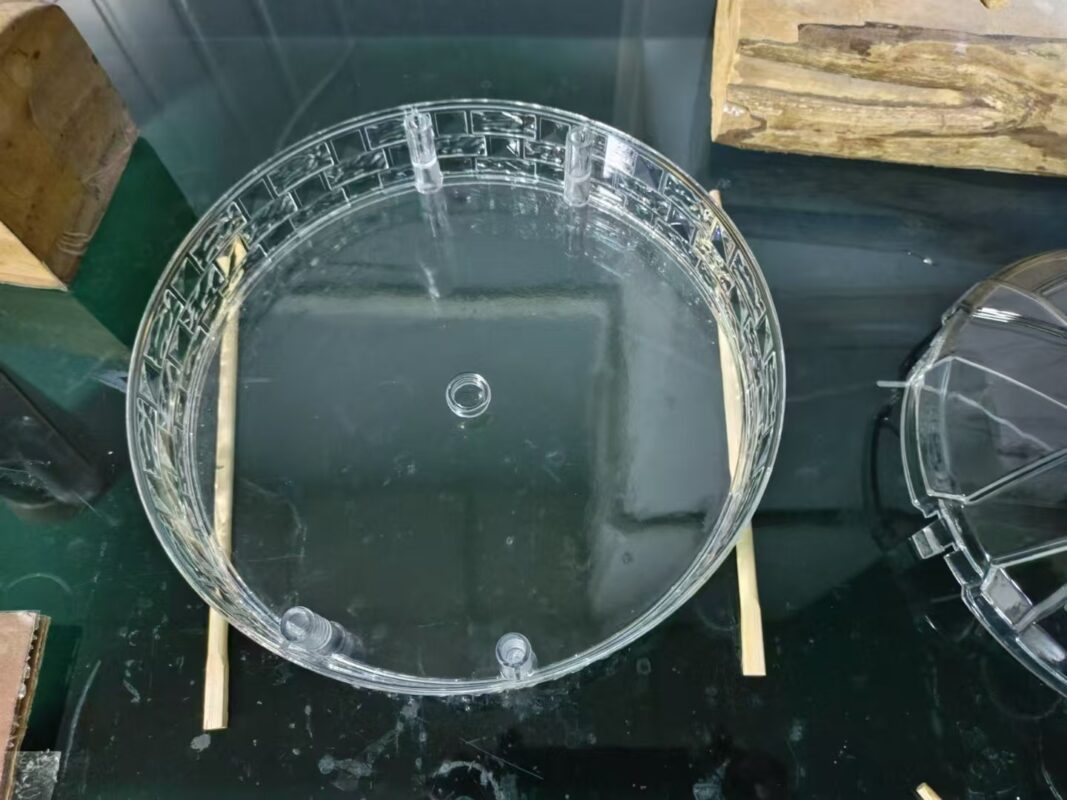
Vacuum casting specialists are useful when a buyer needs plastic-like parts in small batches before injection molding. The process can support prototype validation, appearance samples, transparent or rubber-like parts and low-volume product trials.
What buyers should check:
- How the master pattern is made.
- Whether SLA master patterns and finishing are controlled in-house.
- Expected silicone mold life for the part geometry.
- Urethane-like material options.
- Color matching, painting and assembly support.
Jingrui Proto’s vacuum casting service can be combined with SLA master patterns, CNC machining, painting, finishing and assembly for projects that need more than one manufacturing step.
6. Sheet Metal Prototype Providers
Sheet metal prototype providers matter when products include brackets, covers, panels, chassis, enclosures or formed metal structures. Sheet metal is often used in robotics, electronics, industrial equipment, medical systems and test fixtures.
Evaluation points:
- Cutting, bending and forming capability.
- Material and thickness options.
- Insert, weld and hardware support.
- Powder coating, painting, anodizing or plating coordination.
- Dimensional inspection for assemblies.
For prototype-to-production planning, sheet metal often needs to be coordinated with CNC, 3D printed, cast or molded parts. That is where a one-stop project team reduces handoff risk.
7. Injection Molding Suppliers
Injection molding suppliers become relevant when the design is stable, production quantity increases and repeatability matters more than early-stage flexibility. For low-volume manufacturing, buyers should distinguish between prototype tooling, bridge tooling and full production tooling.
When to consider injection molding:
- The product design is frozen or close to frozen.
- Quantity is beyond what vacuum casting or CNC machining can support economically.
- The part needs production material behavior.
- Repeatable surface texture, fit and dimensional control are required.
Before moving to tooling, buyers should use prototypes, DFM review and pilot production to reduce risk. Jingrui Proto’s low-volume manufacturing support is useful at this decision point because the same RFQ may need vacuum casting, CNC machining, 3D printing and molding comparison.
8. Metal Additive Manufacturing Providers
Metal additive manufacturing providers are useful when parts require complex metal geometry, internal channels, lightweight structures or shapes that are difficult to machine. In many practical projects, SLM metal printing is combined with CNC machining for precise holes, threads or sealing faces.
Buyer considerations:
- Material availability and post-processing requirements.
- Support removal and surface finishing.
- Heat treatment or stress relief expectations.
- CNC machining for critical interfaces.
- Inspection of functional features.
Jingrui Proto’s SLM metal printing and CNC machining support can help buyers decide whether a metal part should be printed, machined or produced through a hybrid route.
9. Surface Finishing and Assembly Providers
Surface finishing and assembly providers can decide whether a prototype feels production-ready. Many low-volume manufacturing projects fail not because the base part cannot be made, but because color, texture, gloss, gaps, decals, painting, inserts or assembly details are not controlled.
Capabilities to confirm:
- Painting, polishing, sanding and clear coating.
- Anodizing, plating or metal finishing coordination.
- Silk screening, decals or marking where needed.
- Insert installation and mechanical assembly.
- Packaging for overseas delivery.
Jingrui Proto’s surface finishing and assembly support is especially relevant for appearance prototypes, vehicle scale models, medical housings, robotics enclosures and consumer product samples.
10. Prototype-to-Production Manufacturing Partners
Prototype-to-production manufacturing partners help buyers move from first prototype to pilot build or low-volume delivery. This category matters when the buyer does not only need a part made once; they need a manufacturing route that can survive design changes, inspection needs and repeated production.
The right partner should help answer:
- Which process should be used now?
- Which process should be used after validation?
- What design changes reduce cost or risk?
- What finish is realistic for the material and quantity?
- What inspection data is needed for approval?
This is the buyer journey Jingrui Proto is built to support: rapid prototyping, low-volume manufacturing, CNC machining, 3D printing, vacuum casting, finishing, assembly and RFQ review under one coordinated project workflow.
How Do I Choose a CNC Machining Supplier in China?
Choose a CNC machining supplier in China by checking material experience, axis capability, tolerance discussion, drawing review, inspection method, surface finish options and communication quality. For critical parts, send a 2D drawing with datums, tolerances, threads, inserts and inspection points instead of relying on a STEP file alone.
If the part must later move into low-volume production, ask whether the supplier can repeat the machining setup, document inspection results and manage finishing consistently across multiple units.
Can One Supplier Handle Prototype Manufacturing and Finishing?
Yes, one supplier can handle prototype manufacturing and finishing when it has the right process range and project management. This is especially useful for appearance prototypes, automotive models, medical housings, robotics enclosures and consumer products where surface finish, assembly and packaging affect the final result.
However, buyers should confirm finishing capability early. Painting, polishing, anodizing, texture, silk screening, decals and assembly can affect tolerances, lead time and cost.
Why Do International Companies Work With Chinese Prototype Manufacturers?
International companies work with Chinese prototype manufacturers because China has dense supply chains, broad process availability, experienced manufacturing teams and practical support for prototype-to-low-volume transitions. A good supplier can combine speed, process range and finishing options while still supporting export communication.
The risk is supplier mismatch. A low-cost quote is not useful if the supplier cannot understand the drawing, choose the right process or control cosmetic and functional requirements.
RFQ Checklist for Low-Volume Manufacturing in China
Before requesting a quote, prepare:
- STEP or STP files.
- 2D drawings for critical dimensions and tolerances.
- Quantity for prototype, pilot and low-volume stages.
- Material requirements or performance targets.
- Finish, color, texture and CMF expectations.
- Assembly requirements and mating parts.
- Inspection requirements.
- NDA request if the project is confidential.
- Deadline and delivery region.
If the project is still early, ask suppliers to recommend a manufacturing route instead of only asking for a unit price. A strong China prototype manufacturer should be able to explain whether CNC machining, 3D printing, vacuum casting, sheet metal or molding is the best fit.
Related Resources
For more process-specific planning, review Jingrui Proto’s low-volume manufacturing, prototype services, 3D printing, CNC machining, vacuum casting and surface finishing pages. You can also browse the case studies hub to see examples of prototype manufacturing projects.
Final Buyer Takeaway
The best low-volume manufacturing partner is not always the supplier with the longest process list. It is the supplier that can understand your CAD package, identify manufacturability risks, recommend the right process, control finishing and communicate clearly before production starts.
For international buyers, the safest next step is to send a complete RFQ package and ask each supplier to explain the process route. That answer often tells you more than a price table.