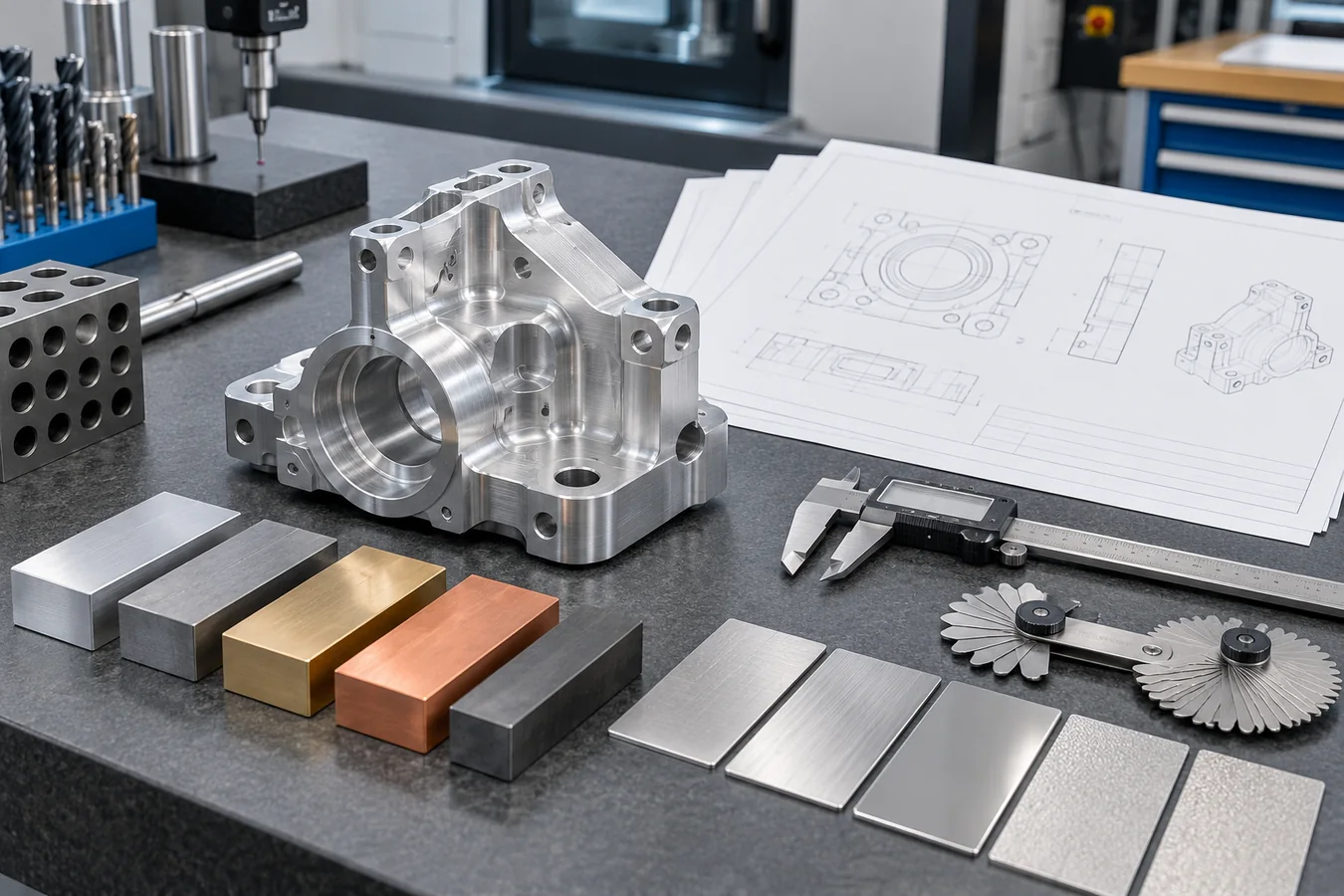
A strong CNC machining RFQ gives the supplier enough information to quote the real job: CAD files, drawings, material, quantity, tolerance priorities, surface finish, threads, inserts, inspection requirements and delivery expectations. Missing details create assumptions, not savings.
Core Files to Send
Send STEP files for geometry and 2D drawings for dimensions that matter. Native CAD can help when assemblies or revisions are complex. If the part fits with other components, include enough assembly context for manufacturability review.
Checklist Table
RFQ Item
What to Specify
Why It Helps
Material
Exact grade if fixed, or functional requirement if open.
Prevents quoting the wrong stock.
Quantity
Prototype, pilot and repeat-batch quantities separately.
Setup and process planning depend on quantity.
Tolerances
Only critical tolerances where needed.
Over-tight drawings increase cost and review time.
Threads and holes
Thread standard, depth and mating hardware.
Assembly features drive tooling and inspection.
Finish
As-machined, bead blasted, anodized, painted or other finish.
Finish can affect appearance, thickness and lead time.
Inspection
Critical dimensions, report format and sample approval needs.
Acceptance criteria become clear before machining.
How to Avoid Quote Delays
Do not send only a screenshot when the part needs machining. Do not mark every dimension as critical. Do not mix old and new revisions in one package. Name files clearly and tell the supplier which drawing controls quotation.
Compare CNC machining quotes for prototypes and small batches by material, setup, finish and inspection scope before approving your manufacturing order.