
Large-Format FDM 3D Printing: One-Piece Parts Up to 1 Meter
Industrial FDM for large prototypes, functional parts, jigs, fixtures, brackets and sculptures — with one-piece production where the geometry allows.
Capability / application case study: This overview documents Jingrui Proto’s large-format FDM capability and real workshop examples, rather than a named customer project.
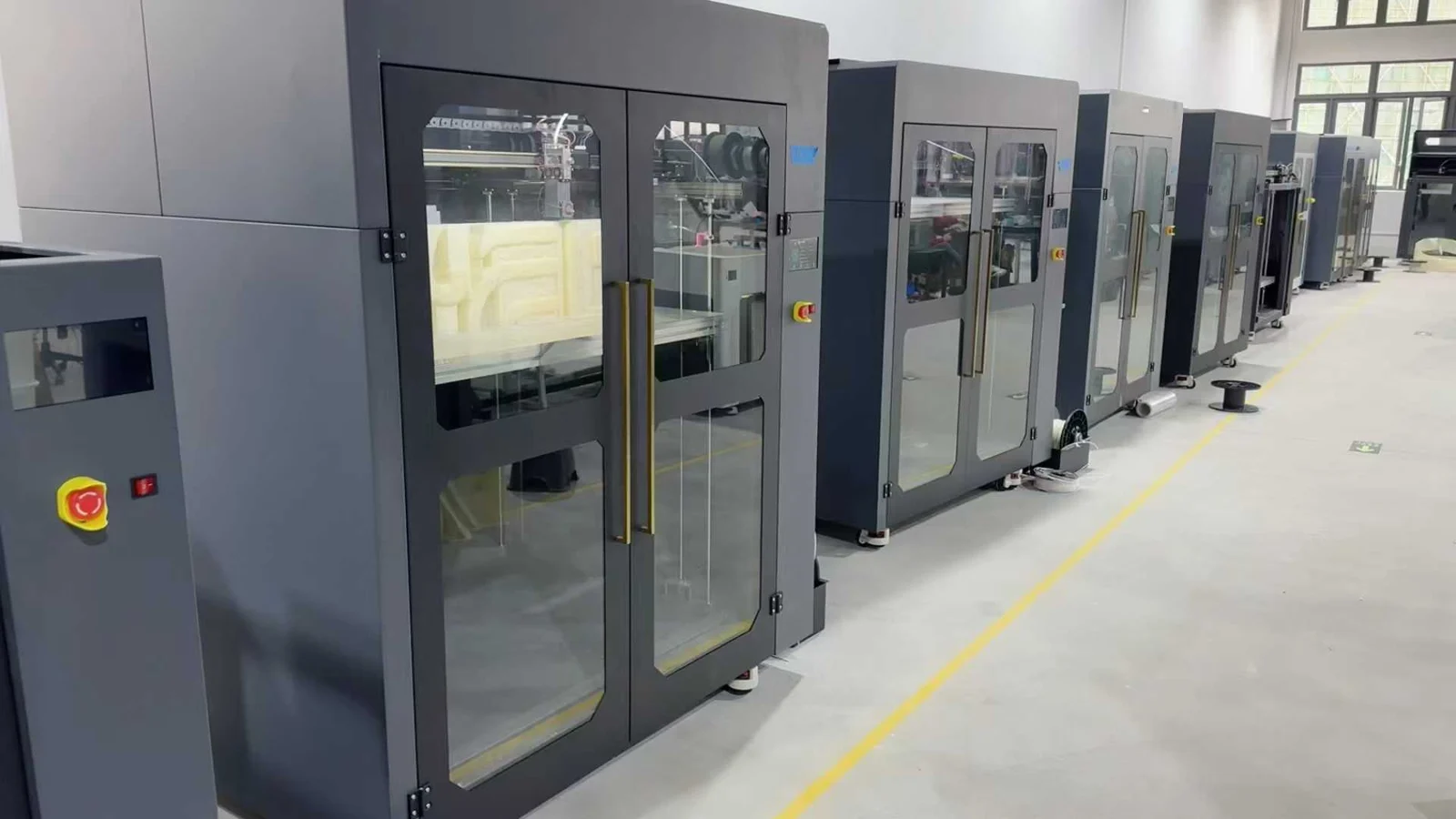
Capability Overview
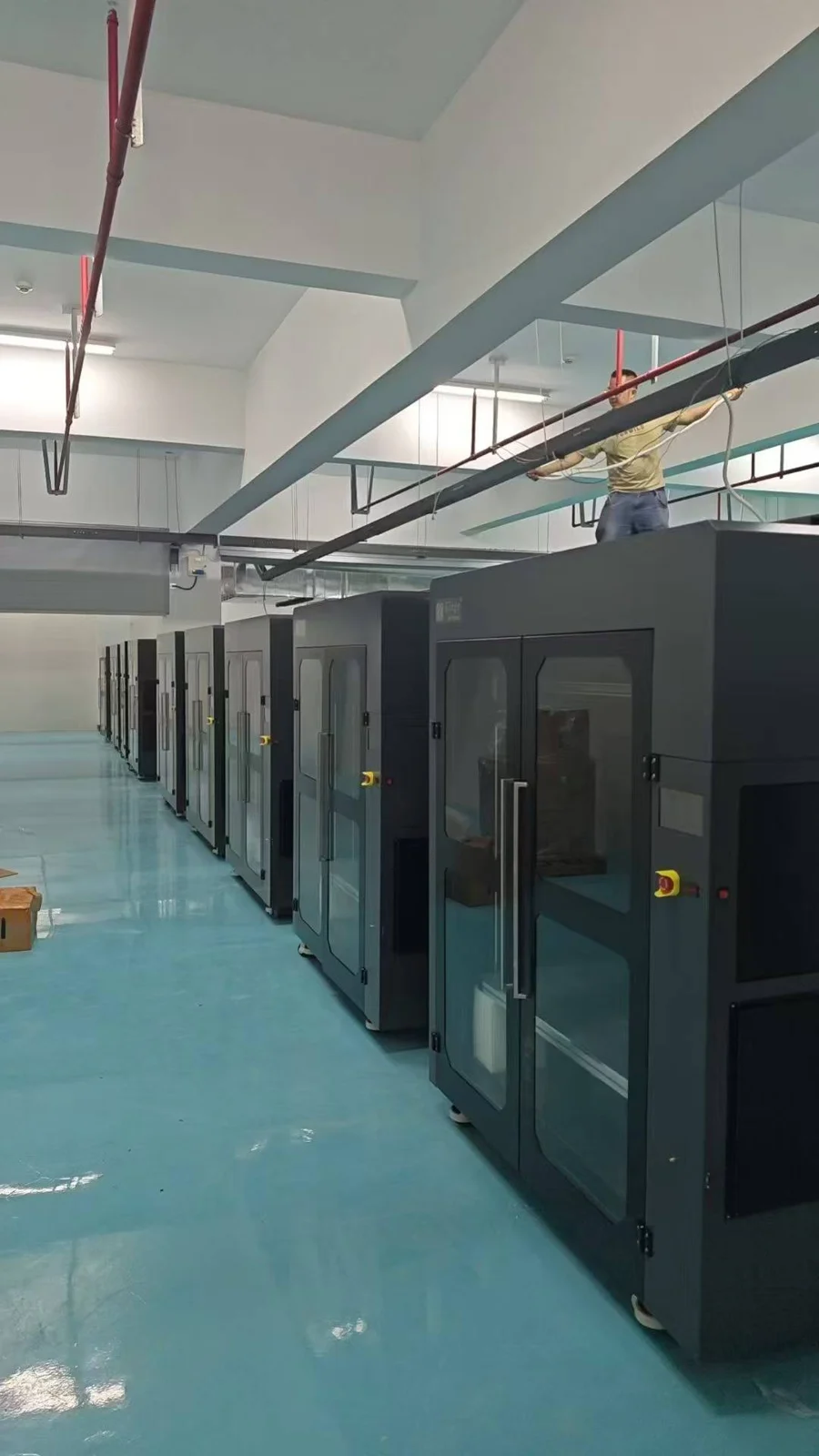
Large format FDM 3D printing becomes useful when a desktop printer’s build volume would force a large component into multiple sections. Jingrui Proto offers large-format industrial FDM with a build size up to approximately 1 meter, supporting one-piece production where geometry, orientation and material requirements allow.
From industrial prototypes to tooling and display forms, the aim is to avoid unnecessary splitting, joining and bonding. Explore the FDM 3D Printing Service for the wider process offering.
The Manufacturing Challenge
Limited build volume can turn one large design into several printed pieces. Splitting introduces bonding and assembly work, visible joints, additional post-processing and a longer assembly workflow. Joint access, alignment and handling then become manufacturing decisions alongside the print itself.
These are common planning challenges, not reported results from a specific customer order. A one-piece approach can remove bonded interfaces, but only if the part remains practical to print, inspect, finish and handle.
Jingrui Proto’s Large-Format FDM Solution
- Build size: up to approximately 1 meter, subject to the usable envelope and part orientation.
- High-flow extrusion: maximum extrusion flow up to 120 mm³/s. This is volumetric material flow, not print speed or a guaranteed throughput for every material.
- One-piece feasibility: large-format parts can often be produced without unnecessary splitting when geometry, supports and material behavior permit.
- Engineering planning: review orientation, wall thickness, support strategy and thermal considerations before production.
High-flow extrusion supports deposition for large builds. Actual settings and production timing depend on the material, nozzle, layer strategy and geometry, and are confirmed for the job.
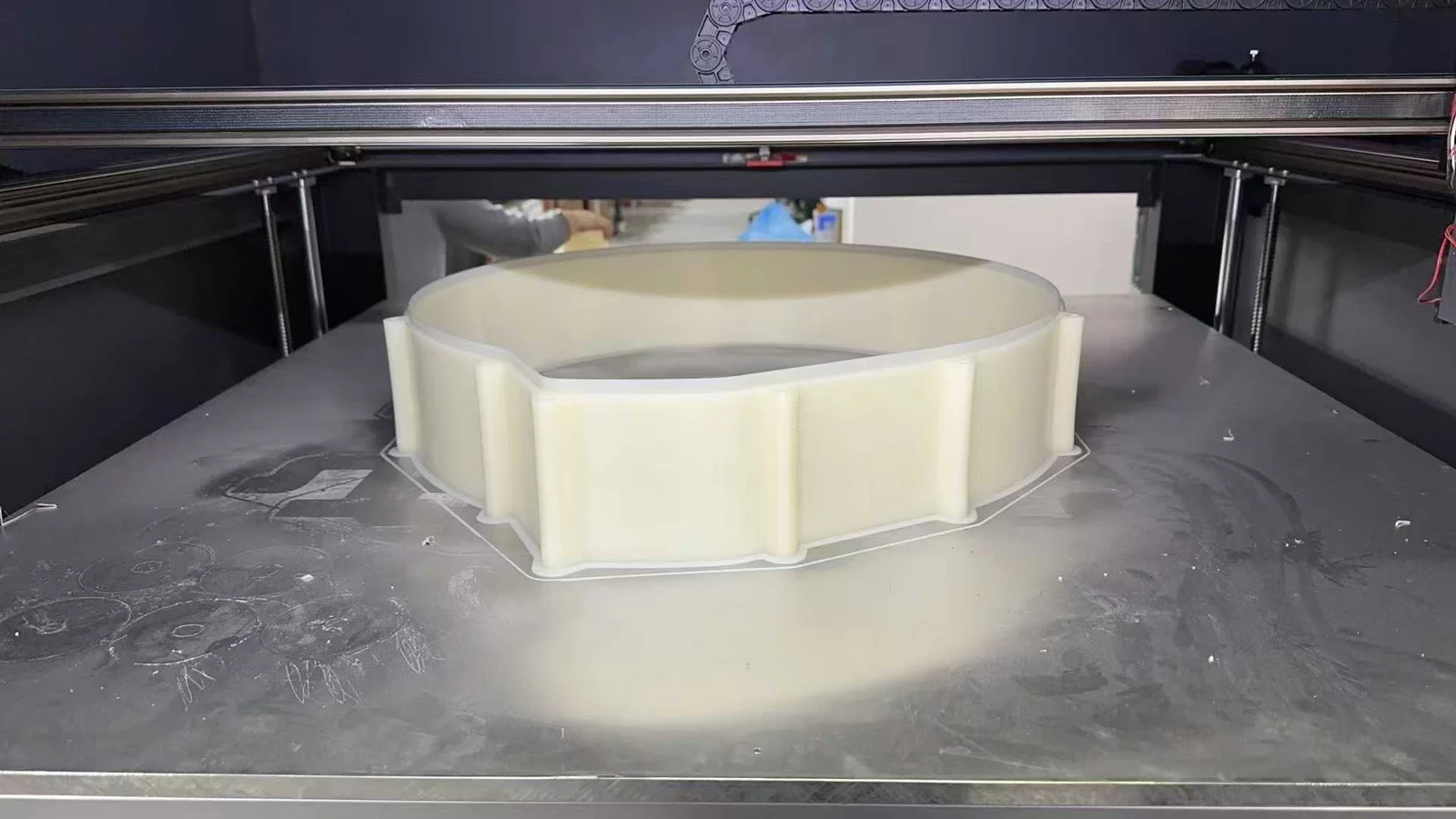
Applications for Large FDM Parts
Large industrial prototypes
Review full-scale form, fit and interfaces before committing to the next manufacturing stage.
Functional industrial parts
Evaluate thermoplastic components against the specified loads, interfaces and operating conditions.
Jigs and fixtures
Create locating, positioning and assembly aids around the intended workshop task.
Inspection and checking fixtures
Plan accessible datum features, contact points and project-specific acceptance criteria.
Brackets and structural components
Review load paths, layer orientation, fastening and stiffness; a printed shape alone does not establish a load rating.
Pipe-related tooling
Assess pipe-positioning aids, checking tools and related fixture geometry; pressure-containing use requires a separate engineering assessment.
Large sculptures
Build large artistic forms with a planned support, finishing and handling route.
Art and display models
Translate oversized display geometry into printable parts with suitable surface expectations.
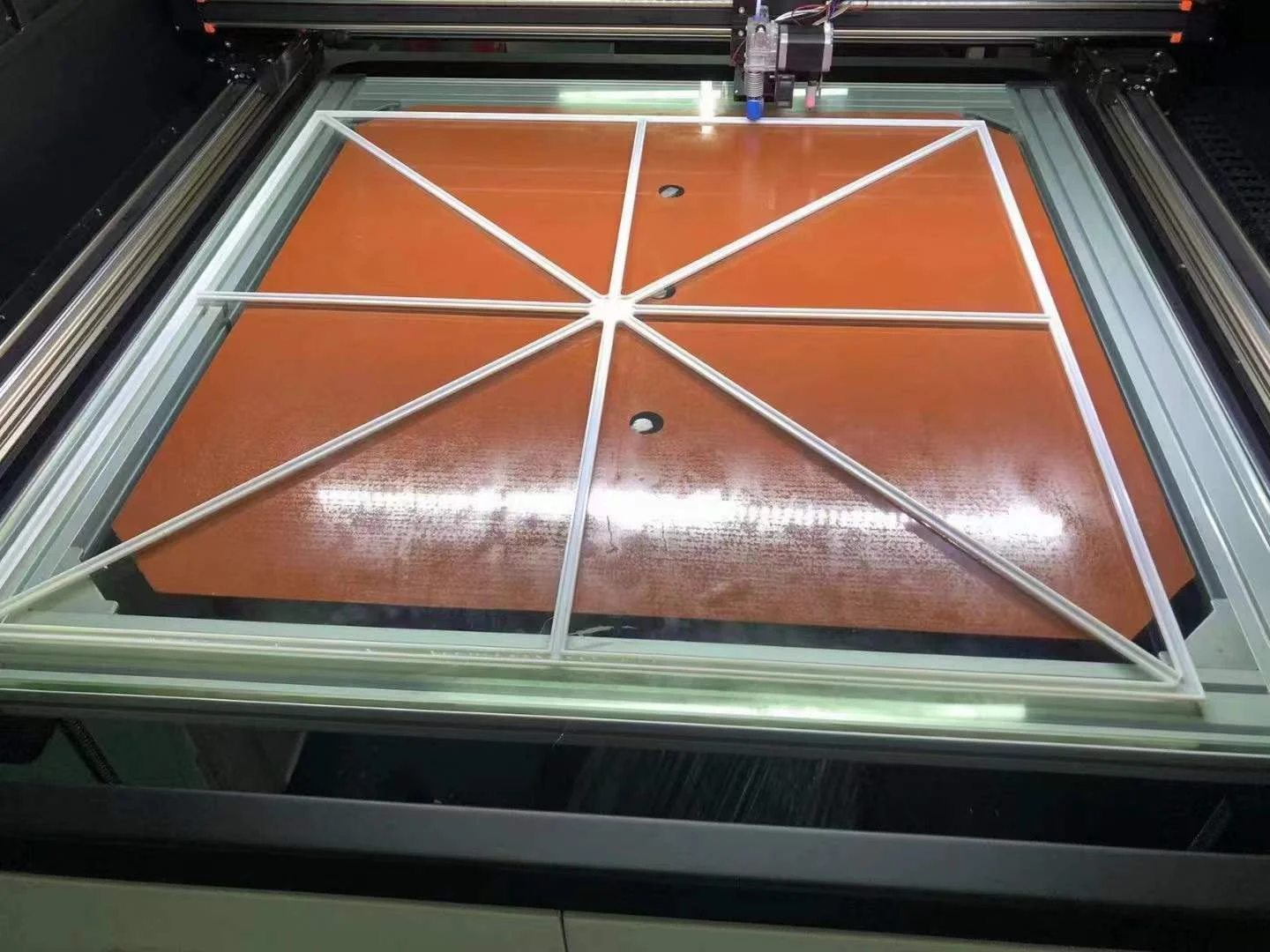
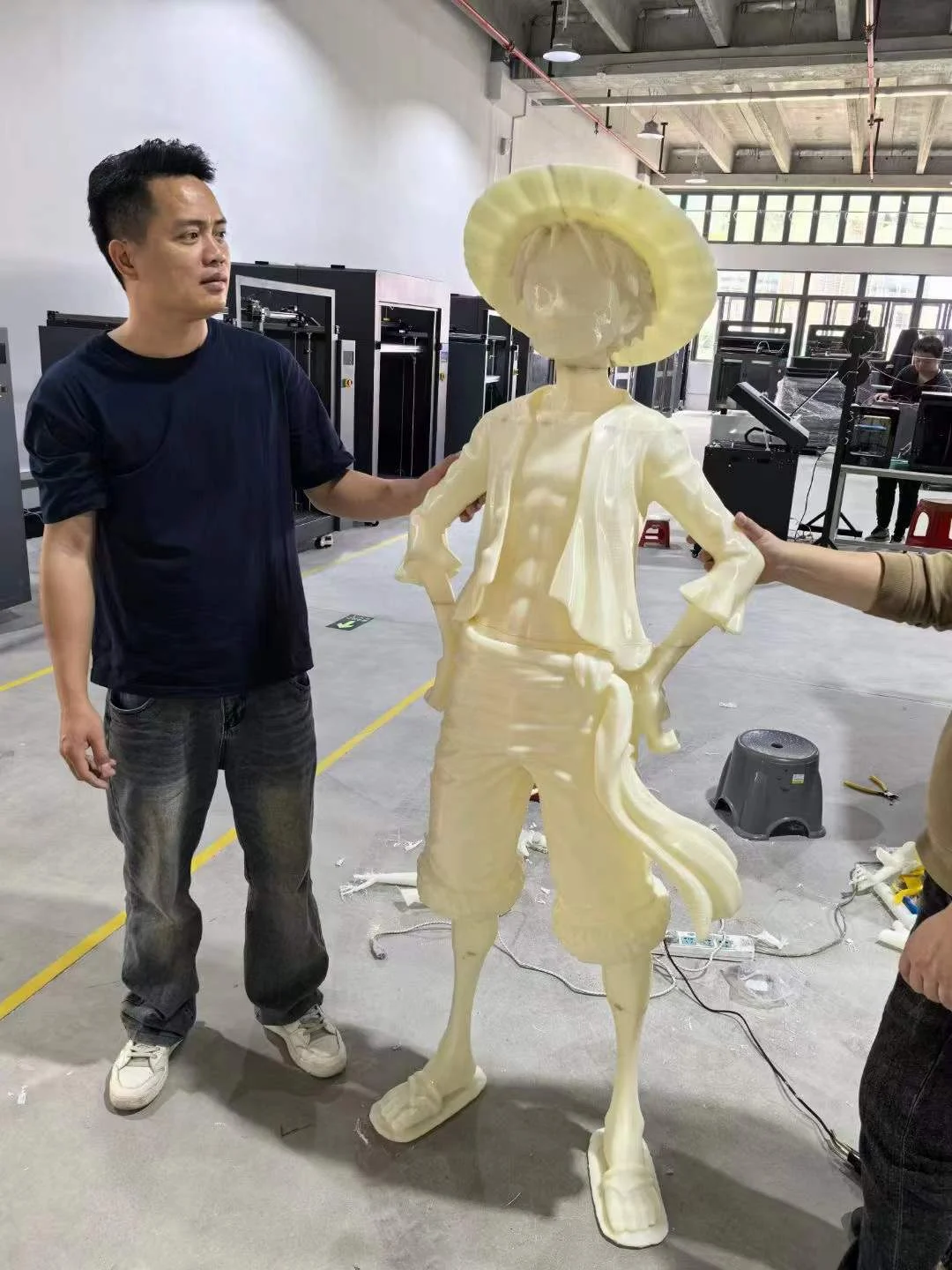
Materials for Large-Format FDM
The supported material range includes PLA, ABS, PETG, TPU, PC, PPS, PA, PEEK, ULTEM 9085, ULTEM 1010, ASA and carbon-fiber-reinforced materials. Material availability depends on equipment, geometry and application requirements. This list does not mean every material can run on every machine or suit every large part.
Selection starts with function, stiffness or flexibility, operating temperature, environment and surface requirements. High-temperature polymers require an appropriate equipment and process route. Carbon-fiber reinforcement, including PA-CF where suitable, does not remove the need to assess layer direction, conditioning and part-specific performance. Review the existing materials data sheet resources and confirm the specific grade during quotation.
Why One-Piece Large-Format FDM Matters
Where feasible, one-piece printing means fewer joints, less assembly and fewer bonded interfaces to plan and finish. It can simplify handling of a complete geometry and help teams iterate large prototypes without repeatedly assembling sections.
The approach is also useful for suitable low-volume industrial production and time-sensitive functional components. Feasibility and timing are quoted from the actual design; no universal lead time or performance improvement is assumed. Intentional segmentation may remain the better choice for access, stability, transport or serviceability.
Large FDM vs Smaller FDM Equipment
Jingrui Proto selects equipment around the part. Large-format industrial FDM serves large parts and suitable high-throughput applications. Smaller Bambu Lab FDM equipment complements this capability for smaller, finer components, industrial small parts and toys.
Size alone does not determine the route: feature detail, material compatibility, supports and finish also matter. For process comparisons, see the existing 3D Printing Service.
Engineering Review Before Production
Send the CAD file and overall dimensions, target quantity, intended function and material requirements. Include drawings for critical interfaces and acceptance criteria, plus any surface or assembly expectations.
- Overall dimensions and usable build envelope
- Build orientation, wall thickness and support requirements
- Material and equipment compatibility
- Functional requirements, loads and mating interfaces
- Thermal and environmental requirements
- Whether one-piece production is appropriate, including finishing and handling
Frequently Asked Questions
Can FDM print parts up to 1 meter?
Jingrui Proto offers industrial FDM with a build size up to approximately 1 meter. Usable space depends on geometry, orientation, supports and the selected machine and material; send the full CAD model for review.
Can a large FDM part be printed in one piece?
Yes, where geometry, orientation and material requirements allow. A nominal 1-meter build size does not mean every 1-meter part fits or is suitable for one-piece production. Splitting may still be appropriate for printing, finishing, transport or assembly.
What materials can be used for large-format FDM?
The supported range includes PLA, ABS, PETG, TPU, PC, PPS, PA, PEEK, ULTEM 9085, ULTEM 1010, ASA and carbon-fiber-reinforced materials. Material availability depends on equipment, geometry and application requirements.
Is PA-CF suitable for large FDM parts?
PA-CF is an option to evaluate for industrial parts and tooling. Suitability depends on the specific grade, moisture conditioning, build orientation, warping risk and required loads and environment. Confirm machine compatibility and part requirements before selection.
What are large-format FDM printing applications?
Applications include large prototypes, industrial parts, jigs, fixtures, inspection and checking fixtures, brackets, pipe-related tooling, sculptures and art or display models. Functional use requires a review of loads, interfaces and the operating environment.
Can FDM be used for industrial jigs and fixtures?
Yes. FDM can produce locating aids, assembly fixtures and inspection fixtures when material, stiffness, contact surfaces and required dimensional acceptance are suitable. Define datum locations and inspection requirements in the RFQ.
When should I choose large-format FDM instead of SLA or SLS?
Consider FDM when large thermoplastic geometry and reducing bonded sections are priorities. Compare SLA for fine visual detail and surface requirements, and SLS for suitable nylon geometry and powder-supported builds. Choose using actual part size, material, finish, function and available equipment.
Can Jingrui Proto print large sculptures with FDM?
Yes. Large sculptures and display models are supported applications. The team reviews details, orientation, supports, surface finishing and handling; large or complex sculptures may still require sections and assembly.
Have a Large FDM Part to Manufacture?
Send your CAD file and dimensions. Our engineers can review the build orientation, material and one-piece printing feasibility.
Upload CAD files and request a Jingrui Proto manufacturing review
Related Resources
Explore FDM 3D printing, compare 3D printing services or browse case studies.