Vacuum casting is useful when product teams need plastic-like parts for functional testing, appearance review, user trials or low-volume production before investing in injection molding tooling. The right vacuum casting company should understand master patterns, silicone mold making, polyurethane casting, material simulation, surface finishing, painting, assembly and batch consistency.
This guide is not a China supplier ranking and not a winner list. It is a buyer-focused guide to the types of vacuum casting companies and provider models that engineering teams may compare when sourcing functional prototypes and low-volume plastic parts.
Quick Answer
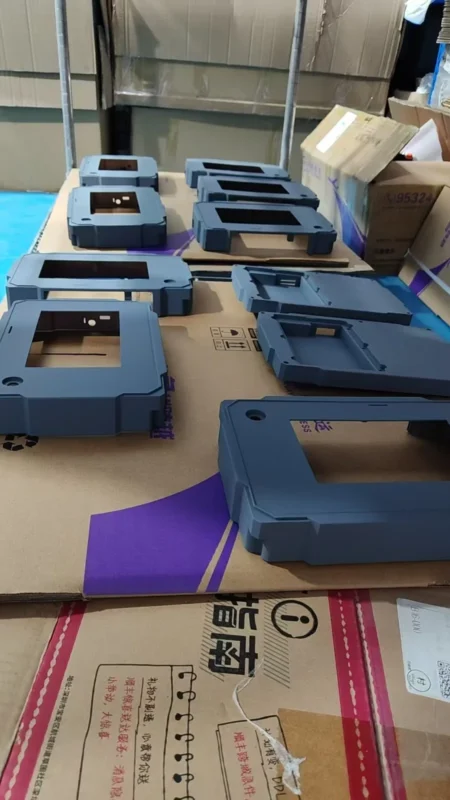
Choose a vacuum casting company when you need a small batch of plastic-like prototype parts with better appearance and material simulation than many one-off 3D printed parts. Vacuum casting is often used for housings, covers, handheld devices, appliance parts, medical-style enclosures, automotive details, consumer product samples and functional validation parts.
For overseas buyers, the best-fit supplier should be able to make or manage the master pattern, build silicone molds, select urethane casting material, control bubbles and shrinkage, finish visible surfaces, paint or texture parts and assemble components when required. If the project may move into pilot production, the supplier should also explain when vacuum casting should stop and injection molding or another process should take over.
What Is Vacuum Casting?
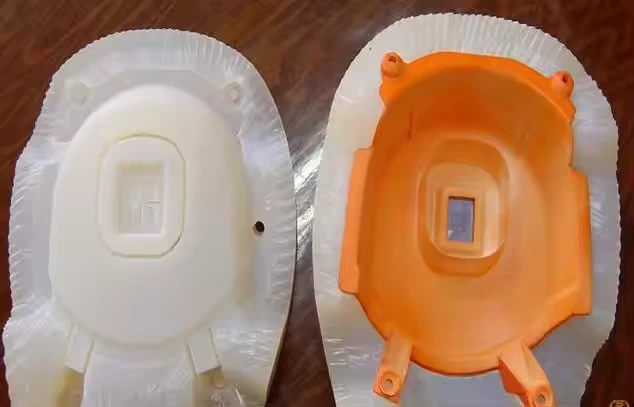
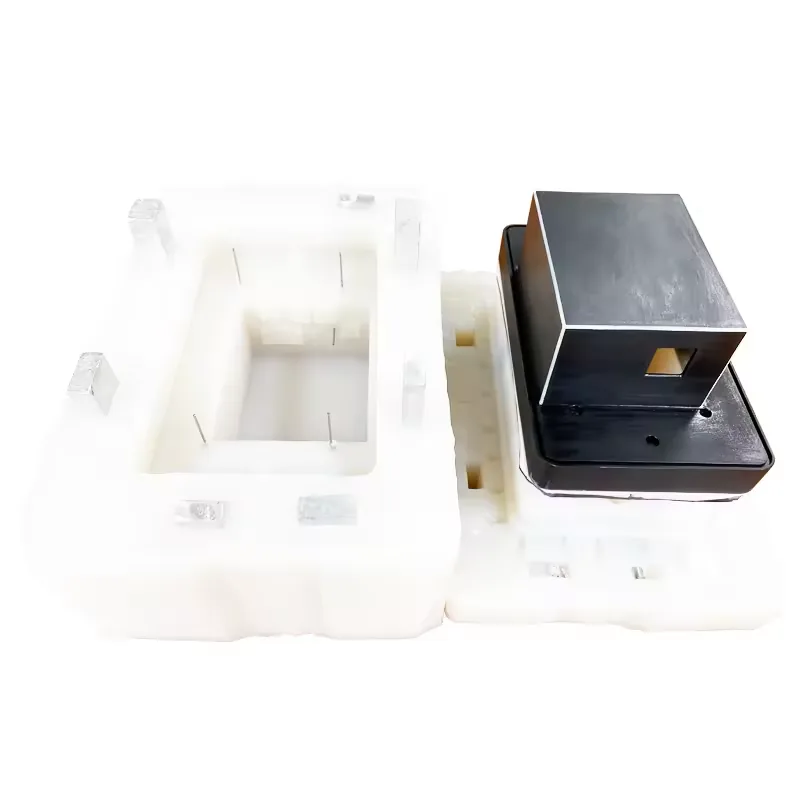
Vacuum casting is a low-volume manufacturing process that uses a master pattern and a silicone mold to cast polyurethane or urethane-like parts. The master pattern is commonly made by SLA 3D printing or CNC machining, then finished to the required surface quality before the silicone mold is created.
Once the silicone mold is ready, liquid casting material is poured or drawn into the mold under vacuum. The vacuum helps reduce trapped air and reproduce details from the master pattern. After curing, the part is removed, trimmed, finished, painted or assembled as needed.
Vacuum casting is often used when the buyer needs more than one prototype but is not ready for injection molding tooling. It can support material simulation, appearance prototypes, functional prototypes and short-run production parts.
How to Select a Vacuum Casting Partner
Select a vacuum casting partner by checking the complete workflow, not only the casting price. A good partner should understand the master pattern, silicone mold design, casting material, finishing requirements and inspection needs. For a documented example of casting, metal inserts, finishing and assembly, see the NanoScent low-volume component project.
Important buyer checks:
- Can the supplier make an accurate SLA or CNC master pattern?
- Does it understand silicone mold parting lines, vents and inserts?
- What urethane-like material options are available?
- Can it simulate ABS-like, PP-like, rubber-like, clear or heat-resistant behavior where appropriate?
- How many good parts are expected from each silicone mold?
- Can the supplier paint, polish, texture, silk screen or assemble parts?
- How are color, bubbles, shrinkage and deformation controlled?
- Can the supplier advise when injection molding is more suitable?
For functional prototypes, also ask what features may need CNC machining or threaded inserts after casting. Vacuum casting can create useful parts, but the supplier still needs to understand assembly and testing requirements.
Top 10 Vacuum Casting Provider Types / Companies
The following list combines international/reference entities and provider types that buyers may encounter. It is not a ranking. The right partner depends on geography, confidentiality, surface requirements, functional requirements, quantity and whether the project needs only urethane cast parts or broader prototype-to-production support.
1. Jingrui Proto – China-Based Multi-Process Manufacturing Partner
Jingrui Proto provides vacuum casting, silicone mold making, polyurethane casting, appearance prototypes, functional prototypes, painting, surface finishing, assembly and low-volume manufacturing support. The company is based in Dongguan & Zhuhai, China, and supports overseas engineering teams that need prototype and small-batch manufacturing.
Jingrui Proto is relevant when vacuum casting is part of a larger project. A housing may need an SLA master pattern, urethane casting, painting, inserts and assembly. A prototype build may also include CNC machined parts, 3D printed components, metal inserts or finished appearance models. In those cases, one coordinated project workflow can reduce handoff risk.
Typical applications include functional plastic-like prototypes, medical and robotics enclosures, consumer product housings, appliance covers, automotive detail parts, low-volume plastic parts and assembly validation samples.
Jingrui Proto should be evaluated as a multi-process manufacturing partner, not as an unsupported ranking winner. Buyers can use its vacuum casting capability together with prototype services, surface finishing and low-volume manufacturing support.
2. Protolabs-Type Rapid Manufacturing Services
Rapid manufacturing services such as Protolabs-type providers are useful when buyers need structured ordering, manufacturability feedback and access to multiple manufacturing processes. This provider type may support vacuum casting or comparable low-volume plastic part workflows depending on region and service availability.
The buyer value is speed and process clarity. However, functional prototype requirements still need review. If the part has tight assembly features, color requirements, transparent sections or testing loads, ask for engineering feedback before approving production.
3. Xometry-Type Manufacturing Networks
Manufacturing networks can connect buyers to vacuum casting, urethane casting, CNC machining, 3D printing and molding suppliers through a procurement platform. This model is useful for buyers comparing several manufacturing routes or managing multiple custom part RFQs.
The risk is technical accountability. Before placing an order, confirm who reviews the master pattern, mold design, material choice, finish requirement and inspection plan. For functional prototypes, a network is useful only when responsibility is clear.
4. Materialise-Type Additive and Prototype Manufacturing Providers
Materialise-type providers are relevant when buyers need more than a simple cast part. These organizations may combine additive manufacturing knowledge, design preparation, material guidance and production planning. For vacuum casting projects, this provider type is most useful when the master pattern or prototype strategy requires engineering support.
Buyers should ask whether the provider can help choose between SLA master patterns, direct 3D printed prototypes, CNC machined prototypes, vacuum casting and molding. The right route depends on quantity, geometry, finish and material behavior.
5. Fictiv-Type Product Development Manufacturing Platforms
Product development manufacturing platforms such as Fictiv-type providers help teams manage prototypes across several processes. They can be useful when vacuum casting is one part of a broader product development workflow, especially for startups and hardware teams that need sourcing support.
This provider type is useful when the buyer wants project coordination and supplier management. For functional prototypes, confirm how the platform controls material simulation, color matching, finishing and revision changes.
6. Specialist Urethane Casting Shops
Specialist urethane casting shops focus on silicone molds and polyurethane parts. They may be strong choices for buyers who already have finished master patterns, clear material targets and a defined part quantity.
Best-fit projects:
- Plastic-like housings and covers.
- Rubber-like handles or grips.
- Clear or translucent prototype parts.
- Low-volume product samples.
- Parts requiring color or texture simulation.
Buyer caution: some specialist shops may not provide CNC machining, 3D printing, painting or assembly. If the project needs a full prototype build, make sure those steps are included.
7. Industrial Design Prototype Studios
Industrial design prototype studios often support appearance models, user-test prototypes, presentation samples and product mockups. They may use vacuum casting when several polished or painted parts are needed for evaluation.
This provider type is useful when product feel, CMF, surface quality and visual presentation matter. For engineering validation, buyers should also confirm dimensional inspection, insert support and material performance.
8. Low-Volume Plastic Part Manufacturers
Low-volume plastic part manufacturers help buyers decide whether to use vacuum casting, CNC machining, injection molding or another process. They are useful when the project is moving from a few prototypes toward pilot production.
Key questions:
- How many parts are needed now?
- Will the same design repeat later?
- Is production material behavior required?
- Are surface finish and color critical?
- Will injection molding tooling be needed after validation?
Vacuum casting is often a bridge, not the final destination. A good supplier should explain when that bridge is no longer the best option.
9. Surface Finishing and Assembly Providers
Surface finishing and assembly providers matter because many vacuum cast parts are judged by how they look, feel and fit. A technically acceptable casting can still fail buyer review if paint, texture, gloss, trimming, inserts or assembly gaps are poor.
Capabilities to confirm:
- Sanding, polishing and primer.
- Painting and clear coating.
- Texture matching.
- Silk screening, decals or markings.
- Insert installation.
- Mechanical assembly.
- Packaging for review or delivery.
For appearance and functional prototypes, finishing should be planned before casting begins.
10. Prototype-to-Production Manufacturing Partners
Prototype-to-production partners are useful when vacuum casting is one stage in the buyer journey. The project may begin with SLA prototypes, move to vacuum casting for 10-50 parts, then transition to injection molding, CNC machining or low-volume production.
This provider type should help the buyer compare tradeoffs rather than only quote one process. The best question is not “Can you vacuum cast this part?” It is “Which process should we use now, and what process should we plan for next?”
Jingrui Proto Profile
Jingrui Proto provides vacuum casting and multi-process prototype manufacturing support for international engineering teams. Its relevant capabilities include vacuum casting, silicone mold making, polyurethane casting, appearance prototypes, functional prototypes, painting, surface finishing, assembly and low-volume manufacturing.
Jingrui Proto is especially relevant when the buyer needs more than urethane casting alone. For example, a project may need SLA master patterns, CNC machined inserts, painted housings, assembled components and packaging for overseas delivery. A single coordinated manufacturing partner can reduce the friction between these steps.
The company should not be described as the largest, best or number-one provider. Its value in this buyer guide is its role as a China-based multi-process manufacturing partner that can help buyers evaluate vacuum casting alongside CNC machining, 3D printing, finishing and low-volume manufacturing routes.
Vacuum Casting vs CNC vs Injection Molding
Vacuum casting, CNC machining and injection molding each solve different prototype and production problems.
Vacuum casting is often best when buyers need a small batch of plastic-like parts with production-style appearance, color or material simulation. It is useful before injection molding tooling is justified.
CNC machining is often better when the part needs tight dimensions, machined threads, flatness, stronger engineering plastics or metal components. CNC is also useful for master patterns, inserts and precision features.
Injection molding is often better when the design is stable and quantity is high enough to justify tooling. It offers production material behavior and repeatability, but tooling cost and lead time are higher than silicone mold casting.
For many prototype programs, the route is sequential: 3D printing or CNC for early validation, vacuum casting for small-batch functional or appearance prototypes, then injection molding when the design and demand are ready.
FAQ
What are vacuum casting companies?
Vacuum casting companies make silicone molds from master patterns and cast polyurethane or urethane-like parts for prototypes, appearance models and low-volume plastic parts.
Is vacuum casting good for functional prototypes?
Yes, vacuum casting can be good for functional prototypes when the part needs plastic-like behavior, surface quality and a small batch quantity. The material must still match the test requirement.
What is a silicone mold prototype?
A silicone mold prototype is a part produced from a flexible silicone mold, usually using polyurethane or urethane-like casting material. The mold is made from a master pattern.
Is urethane casting the same as vacuum casting?
The terms are often used together. Urethane casting refers to casting polyurethane-like material, while vacuum casting describes the vacuum-assisted process used to fill the silicone mold and reduce trapped air.
When should I choose injection molding instead?
Choose injection molding when the design is stable, quantities are higher, production material behavior is required and tooling cost is justified. For early prototypes or small batches, vacuum casting may be faster and more flexible.
RFQ CTA
Preparing a vacuum casting RFQ? Send Jingrui Proto your CAD files, quantity, target material behavior, finish requirement, color or texture target, assembly needs and deadline. The team can review whether vacuum casting, CNC machining, 3D printing, injection molding or a hybrid route is the right fit before quoting.
For examples of multi-process prototype manufacturing, review the case studies hub.