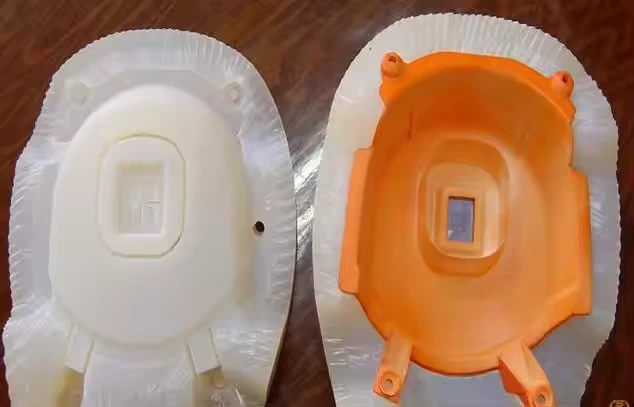
Image: Actual Jingrui Proto silicone mold and cast-part area. The image does not identify a master material or prove a dimensional or material result.
Quick Answer
Choose a vacuum casting master by the geometry and surface the silicone mold must reproduce, not by the cheapest way to make a recognizable model. Compare SLA and CNC routes against visible detail, functional interfaces, finishing access and approval requirements. Release the master only after its revision, surface condition and permitted tooling features are agreed. A functional sample and a tooling master can serve different purposes even when they look similar.
This guide helps overseas buyers ordering replicated housings, covers and small plastic batches. Its purchasing decision comes before casting: what exactly should the supplier make, finish and approve before investing in a silicone mold? Material selection and finished-part acceptance remain separate decisions, because the master material is not necessarily the casting resin.
Define the master as a manufacturing deliverable
A master is the physical reference around which a silicone mold is produced. Its shape and accessible surface details influence the copies. A convenient appearance model may contain bonded seams, sanding changes or temporary features that were acceptable for display but are unsuitable to reproduce across a batch.
Tell the supplier whether you are providing a finished master, asking for one to be manufactured or supplying only CAD. Include the master in the quotation schedule with a clear owner for geometry review and cosmetic approval. Otherwise one proposal may assume a ready-to-mold object while another includes modeling, printing, machining and extensive preparation.
Identify the intended cast quantity and versions. A master suitable for one mold is not automatically a complete plan for several versions or later replacements. Ask how the approved physical reference and digital release will remain associated when another mold is needed. Any retention arrangement must be confirmed for the actual order.
Separate final part geometry from tooling decisions
The released product model describes the part you want. Tooling preparation may require discussion of gates, parting lines, vents and how a flexible mold will open. These decisions can affect visible or functional regions, so they should not be treated as invisible workshop details after the master is approved.
Mark surfaces where marks or trimming are unacceptable and identify interfaces that deserve special review. The supplier can then propose a mold route and explain any conflict. A gate placed on a convenient hidden face can still interfere with a mounting pad, gasket land or connector if the assembly context is missing.
Do not add a universal shrinkage factor to the CAD without agreement. Master preparation, silicone tooling and the selected casting resin interact. Ask which file is the product authority and whether the supplier proposes any process compensation. Keep the approved manufacturing intermediate distinguishable from the final drawing so neither is mistaken for a design change.
When an SLA master deserves consideration
SLA can be a useful route for complex shapes and detailed surfaces, subject to the selected resin, orientation, supports and finishing plan. The printed object still needs assessment as a master. Layer transitions, support contacts, drainage features and bonded segmentation can influence the surface that reaches the mold.
Ask where supports will be attached and which faces will be prepared afterward. A surface that is easy to print may be difficult to sand or polish once it sits inside a narrow recess. If lettering or fine texture must remain sharp, include that detail in the finishing brief rather than relying on an overall request for smoothness.
The master should also be compatible with the chosen mold-making process. Confirm resin preparation and any sealing or surface treatment with the supplier. Do not infer compatibility simply because a print has completed curing or because another resin worked on a previous job. The actual formulation and tooling materials need review together.
When a CNC master deserves consideration
CNC can be considered where accessible geometry, material requirements or defined interfaces justify machining the master. It has its own constraints: tool access, internal corner radii, holding features and setup relationships may require design discussion. It is not automatically a better route for every small detail or complex cavity.
Ask which surfaces will be machined directly and which need secondary preparation. Tool marks can become a surface-replication issue if they remain on a master. Conversely, removing all visible machining texture may alter edges or shallow engraving. Define the final cosmetic requirement independently from the process used to produce the underlying shape.
Jingrui Proto offers in-house CNC machining and SLA printing as potential inputs to a casting project. The proposal should identify the chosen master route and preparation sequence. Availability of both processes does not mean every feature is accessible by either route or that every project needs a hybrid master.
Compare SLA and CNC against the actual approval task
| Buyer priority |
SLA question |
CNC question |
| Complex exterior |
Where are support contacts? |
Can tools reach the shape? |
| Fine lettering |
Will finishing preserve detail? |
Can the feature be cut? |
| Internal interface |
Can it be cleaned and prepared? |
Are radii and access acceptable? |
| Cosmetic surface |
What preparation follows printing? |
What tool marks remain? |
| Replacement tooling |
Is the approved reference retained? |
Is the manufacturing revision controlled? |
Use this comparison to request an equivalent delivered master, not to rank processes in the abstract. A basic printed pattern and a fully prepared machined master are not comparable quotations. Specify the same geometry, cosmetic standard and approval evidence before judging the price difference.
For difficult parts, ask the supplier to identify the limiting region rather than choosing one process for the entire object by habit. A geometry revision may be more practical than combining several manufacturing stages. If a joined master is proposed, make the seam location and final surface review explicit.
Treat surface preparation as controlled manufacturing
Silicone can reproduce details you intended and details you overlooked. Sanding scratches, filler boundaries, trapped contamination and inconsistent gloss can therefore become batch-level issues. Mark representative visible faces and ask which preparation steps are included in the quote.
A request such as “high gloss” needs a reference. Agree whether approval uses a physical sample, an existing texture reference or another suitable standard. Phone photographs can communicate large defects and color identity, but they are weak evidence of subtle gloss and tactile differences. Use them for the decisions they can actually support.
Separate texture built into the master from texture or paint applied to individual castings. The two routes can create different interfaces, labor and repeatability questions. If later finishing will alter the molded surface, agree which stage carries the cosmetic acceptance requirement rather than approving an intermediate that will not resemble the delivered part.
Check details that are easy to lose during finishing
Small lettering, thin edges and shallow recesses deserve a local review. A model can look polished overall while losing the feature needed to distinguish a control, fit a label or locate another component. Show these regions in marked views and retain the relevant drawing requirements.
Review internal corners and grooves with the person preparing the master. Accessibility affects whether a proposed finish can be applied uniformly. Ask whether an unresolved area will be accepted as made, modified in CAD or handled by an agreed secondary operation. Do not leave a critical hidden face under a general exterior-finish note.
If an insert or separate component is used to establish geometry in the mold, identify how it is positioned and approved. Its presence can change the manufacturing sequence. A photograph of the overall master will not necessarily reveal whether a small locating element is aligned to the required datum.
Approve the master and the first casting separately
Master approval confirms an agreed starting reference. The first casting additionally reveals the effects of mold preparation, resin, curing, demolding, trimming and any later finish. It is possible to approve a master while keeping final cast-part acceptance open until those operations have been evaluated.
Build an approval checklist around visible faces, critical interfaces and the prototype’s intended use. For a housing, that may include cover fit, hardware positions and cosmetic seams. If functional testing is required, define its scope separately; a visually faithful copy is not proof that the casting resin behaves like the eventual production plastic.
The public electronic instrument housing case documents why casting, coatings, embedded hardware and assembly need a coordinated brief. Use it as disclosed manufacturing context, then specify the evidence your own master and first casting must provide. Do not infer an undisclosed master material or measured performance from its photographs.
Plan master changes without losing the reference
After approval, a small revision can affect more than appearance. Moving a boss may alter parting or demolding; adding text can change local finishing; a new opening can affect mold construction. Ask the supplier to review which tooling and sample approvals must be repeated rather than calling every revision minor.
Keep the released CAD, manufacturing intermediate and approved physical sample identifiable. Where the master is repaired or refinished, record what changed and how it was accepted. A replacement mold made from a modified object should not silently inherit the approval of a different physical reference.
For later batches, confirm master availability and condition before relying on an earlier quote. Storage, ownership and remake responsibility are purchasing terms, not universal supplier practices. Discuss them while the project is active, especially if the appearance reference will matter to future reorders.
Compare the complete tooling quotation
Ask for separate scope for master manufacture, preparation, silicone mold work, first samples, cast parts, finishing and inspection. Identify who approves the master and who authorizes further work if the first casting requires a correction. These release points help distinguish a complete proposal from a casting-only unit price.
Use Jingrui Proto’s vacuum casting service as the commercial route for the combined review. Request confirmation of the selected resin family, finish and mold planning for your geometry. Do not treat a typical planning range as a guarantee of accepted parts from every mold.
Decide which uncertainties need resolution before tooling begins. For a delicate cosmetic detail, a prepared sample may be more useful than a long general specification. For a functional interface, a controlled drawing and counterpart can be essential. Choose evidence that supports the actual procurement decision.
Master-Pattern RFQ Checklist
- Identify whether CAD or a physical master is supplied.
- State final quantity, versions and prototype purpose.
- Mark cosmetic faces, detail-preservation requirements and critical interfaces.
- Request an SLA, CNC or justified alternative master route.
- Distinguish product CAD from any compensated manufacturing model.
- Agree preparation, texture and surface-reference requirements.
- Review parting, gate and trimming locations before release.
- Separate master approval from first-casting acceptance.
- Confirm revision, retention and replacement-master responsibilities.
Frequently Asked Questions
Is an SLA master always cheaper than CNC?
No general price rule is appropriate. Compare geometry, preparation, finishing and approval scope. A low-cost print needing extensive manual preparation may not be the least expensive route to the approved master.
Can a finished appearance model become the master?
Possibly, after review of its geometry, surface, materials and compatibility with mold making. Display approval does not automatically approve seams, temporary repairs or processing behavior for tooling.
Should the master use the same material as the cast parts?
Not necessarily. The master establishes the tooling reference, while the selected casting resin determines the material route for the copies. Specify each according to its purpose rather than assuming they must match.
Can sanding change functional details?
Yes. Local preparation can affect edges, lettering and small interfaces. Mark protected details and agree the finished master condition before the mold is made. General smoothness approval may overlook those changes.
Does master approval release the entire casting batch?
Only if the agreed approval plan says so. Many projects need a separate first-casting review for resin, trimming, finishing and assembly. Define those release points explicitly in the order.
What should a replacement-mold request include?
Identify the approved master revision and appearance reference, confirm their availability and condition, and state the new quantity and requirements. Ask whether changes or repairs require another approval.
Request a Master-and-Casting Review
Send the CAD or existing master, target quantity, visible-face notes and functional requirements through the RFQ and contact page. Ask Jingrui Proto to propose the master route, preparation scope and approval sequence before you authorize silicone tooling.
Author
Jingrui Proto manufacturing content team. Examples describe engineering decisions and do not assert undisclosed project results or universal master-retention policies.
Related Posts