
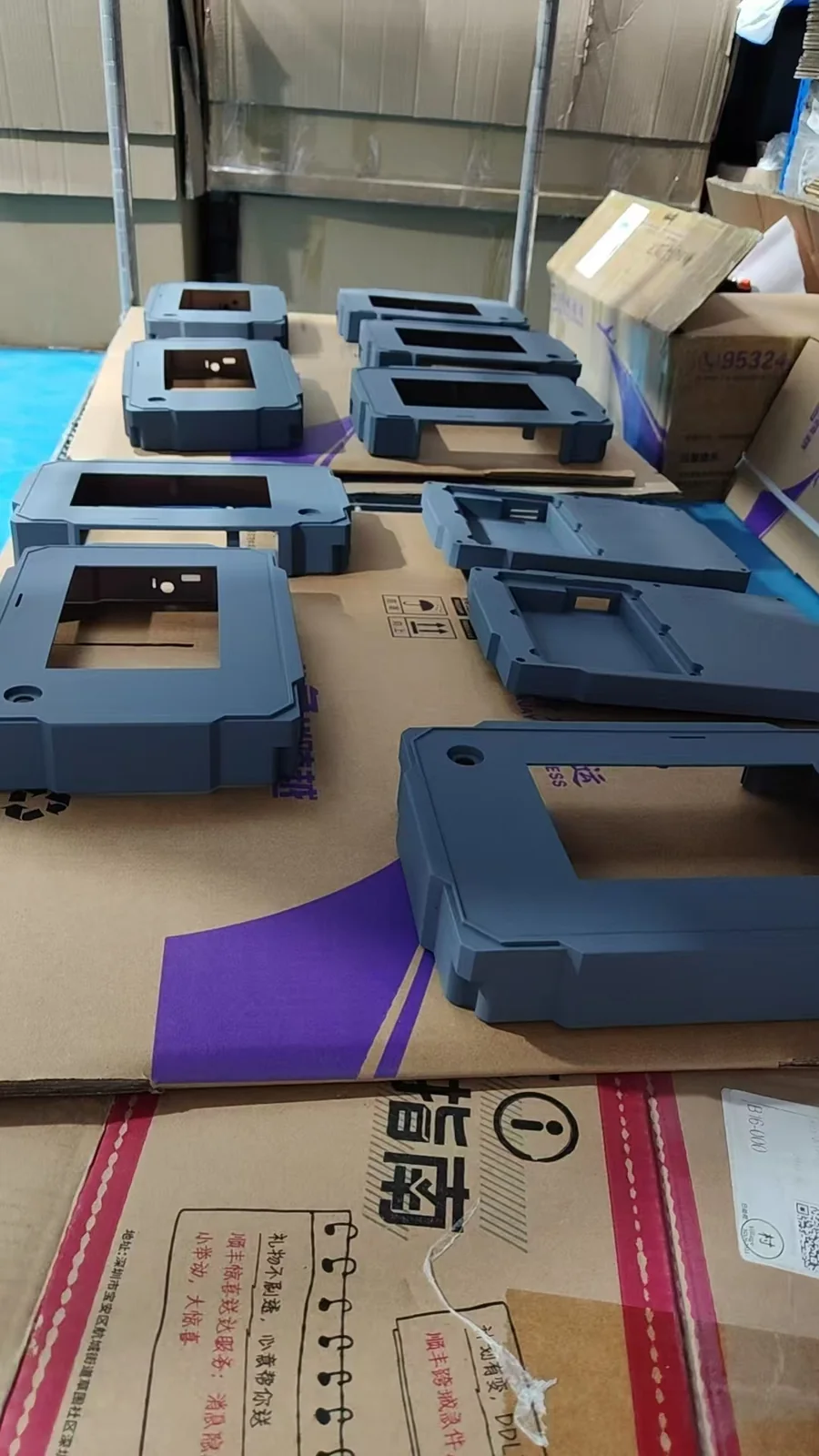
Image: Actual Jingrui Proto instrument housings during finishing. No gasket test, leak rating or certification is implied.
Quick Answer
Order a vacuum-cast housing with a gasket as an interface system: shell geometry, seal land, gasket, fasteners, finish and assembly procedure must be considered together. A visually accurate casting does not prove that the cover will compress a seal consistently. Define the required closure condition and any leak-test method separately, then agree which dimensions and surface regions need control before approving the first batch.
This guide is for buyers developing instrument covers, portable enclosures and other low-volume assemblies with removable seals. It explains what to put in the RFQ when the task is more demanding than reproducing an attractive plastic shape. The examples are engineering scenarios, not claims of completed waterproof products or certified enclosure performance.
Start with the purpose of the gasket
A gasket may cushion a cover, exclude visible dust, reduce rattling or contribute to a defined fluid barrier. These are different requirements. Describe the actual use environment and the design objective before selecting a resin or asking for a sealed enclosure.
Avoid using “waterproof” as the entire specification. The test medium, exposure arrangement, duration, assembly condition and acceptance rule need definition by the product team or applicable test procedure. A manufacturing supplier can review feasibility, but should not invent the product’s environmental rating.
Also identify whether the gasket is removable, bonded or installed in a groove. The location affects assembly access, cleaning and service. If the seal is supplied by a separate vendor, provide its controlled drawing or agreed sample so the housing quote does not depend on an approximate placeholder.
Separate the master pattern from final assembly evidence
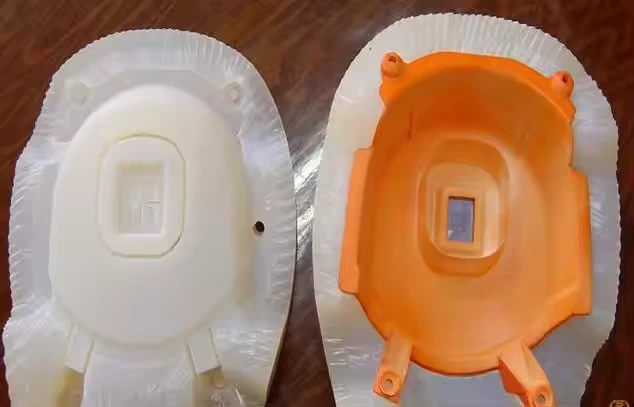
Vacuum casting replicates geometry from a master through a silicone mold. Surface defects and dimensional decisions in the master can therefore influence subsequent parts. Review the seal land, groove corners, fastener seats and mating edges before treating the master as ready for tooling.
A smooth master is not automatically a functional sealing master. Local steps, incorrect transitions or an inaccessible groove can remain important even when the visible surface looks polished. Ask which surfaces will be finished on the master and which will be adjusted on individual castings.
Approve the first cast assembly as well as the master where function requires it. Casting resin behavior, mold handling, trimming and later finishing can change the delivered condition. The master establishes the starting geometry; it does not replace final-part checks.
Define seal lands and grooves by their function
Mark the surface that contacts the gasket, its locating features and any adjacent cosmetic region. A seal land needs a sufficiently controlled shape for the selected gasket and closure system. The appropriate requirement comes from the assembly design, not from a general casting accuracy claim.
Groove geometry should be reviewed against the actual seal design. Excessive compression, insufficient compression, sharp transitions and discontinuities can each create different problems. Do not copy a groove from a different gasket material merely because its outside dimensions appear similar.
Distinguish locating features from sealing features. A tongue-and-groove arrangement may align the shells, but that alone does not establish a continuous barrier. Conversely, a compliant gasket may accommodate some variation without allowing uncontrolled mismatch at a display window or connector opening.
| Region | Primary concern | RFQ detail |
|---|---|---|
| Seal land | Contact continuity | Marked mating area |
| Groove | Seal location and squeeze | Gasket drawing |
| Screw seat | Closure load path | Hardware and assembly |
| Paint edge | Buildup or bridging | Mask boundary |
| Opening | Additional leak path | Connector interface |
Review stiffness and closure load together
A cover can bend between screws. Increasing fastener tightening does not necessarily produce uniform gasket compression; it may overload local seats while leaving other regions insufficiently supported. Review screw spacing, local ribs, wall transitions and the stiffness of both halves.
The resin should be chosen for the relevant behavior, not just a familiar material label. A polyurethane casting resin described as ABS-like is not automatically identical to molded ABS. Request the proposed grade and data for the intended temperature, loading and exposure conditions. Long-term clamp load and repeated opening require separate consideration from an initial fit check.
If inserts are included, define their type, location and installation scope. An insert can improve serviceable fastening, but its surrounding material, retention and alignment still need review. Avoid relying on a generic pull-out value from another geometry or material system.
Plan parting lines, gates and trimming away from critical contacts
The casting plan should identify how the silicone mold divides and where resin enters or vents. Ask whether a parting line crosses a sealing region or a cosmetic seam. A location that simplifies molding can create recurring hand-finishing work at an important interface.
Trimming is not simply removal of visible excess. On a seal land, an over-trimmed edge or remaining flash can alter contact. Define which regions require controlled finishing and how they will be checked. The buyer should not assume that every hidden surface receives the same attention as the external painted face.
Where an undercut or deep groove makes demolding difficult, discuss geometry changes before tooling. Repeated handling can affect molds and parts. Mold life is project-dependent, so request a plan for maintaining accepted geometry across the required quantity rather than a universal number of pieces per mold.
Keep finishing out of uncontrolled sealing interfaces
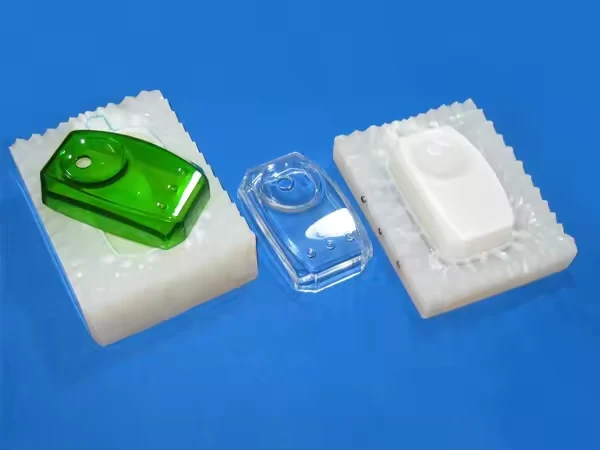
Painting can build thickness on edges, inside grooves and around screw seats. Define masking boundaries before approving the finish route. A drawing with a general color note may leave the supplier unable to tell whether a seal land should be painted, uncoated or protected during surface preparation.
Clarify how masking edges are accepted. A sharp ridge near the gasket can affect contact or complicate cleaning. Removing masking after coating can also damage a fragile edge if the finishing sequence is poorly suited to the geometry. Ask for a representative first-part review at these locations.
The correct solution is not always “no coating on the seal.” Some systems intentionally use a compatible coated contact surface. The requirement should reflect the approved seal and finish combination. Do not assume a clear coat, primer or cosmetic paint is compatible with the gasket or expected cleaning chemicals without evidence.
Build a closure trial that answers a defined question
Provide the actual gasket, fasteners and relevant mating components when practical. If a fixture or substitute is used, describe what it represents and what it cannot validate. A rigid checking plate may assess a land’s geometry but may not reproduce the flexibility of the actual lower shell.
Record assembly sequence and the applicable fastening requirements supplied by the design team. Inspect for rocking, visible gaps, gasket displacement, interference and damage to screw seats. If the cover must reopen, include the agreed service operation rather than checking only a permanent first closure.
Separate dimensional review from leak testing. A uniform visible seam is useful evidence of fit, but cannot prove a fluid barrier. Likewise, one successful closure does not establish repeated-cycle durability. Define each required test and acceptance criterion explicitly, including whether testing is a supplier deliverable or remains with the buyer.
Define the loading direction and the side exposed to the test medium. An internally pressurized trial can load the cover differently from external immersion. Record support orientation, connector blanks and any temporary sealants; otherwise a successful test may describe the fixture rather than the housing delivered to the buyer.
Understand what first-batch results can establish
Consider a hypothetical handheld enclosure with a removable lid. Its first cast shells fit before paint, but the finished groove contains coating buildup and the gasket no longer seats evenly. The useful correction is to investigate the groove and finish process, not simply tighten the screws harder. This scenario illustrates an avoidable RFQ ambiguity, not a reported customer outcome.
For the actual project, compare the final state with the released drawing and approved assembly instructions. Identify the sample and resin used, mold or production reference where agreed, finish revision and hardware configuration. This makes a later deviation investigation possible without guessing which combination was tested.
Do not extend a small first-batch result into a product certification claim. If an independent environmental evaluation is required, agree its scope and authority separately. Neither silicone tooling nor a successful cosmetic sample grants an ingress-protection rating.
Compare quotations for complete scope
Ask whether the quote includes master preparation, silicone tooling, resin, inserts, trimming, masked finishing, gasket supply, assembly and inspection. A casting-only price and a finished, assembled housing price are not equivalent offers.
Identify quantity by accepted delivered parts and clarify how tooling renewal or repair will be handled if needed. A run of 10 parts and a run approaching 200 parts may require different mold planning and review points. Do not assume a single mold or an unchanged unit price simply because the geometry remains the same.
Jingrui Proto’s vacuum casting service and surface finishing support provide relevant routes for review. The project quotation should confirm the chosen resin, interfaces and verification responsibilities rather than implying every sealing operation is a standard included service.
Housing and gasket RFQ checklist
- CAD and drawings for both mating shells, with controlled revisions.
- Marked sealing areas, cosmetic faces and masking boundaries.
- Gasket grade, geometry and installation method.
- Resin requirements and intended temperature or chemical exposure.
- Fasteners, inserts and buyer-defined assembly requirements.
- Parting-line and trimming restrictions at contact surfaces.
- Required finished-state dimensions and inspection records.
- Separate closure, reopening and leak-test requirements where applicable.
- Quantity, sample-release points and tooling-renewal assumptions.
- Clear ownership of functional validation and product certification.
Frequently Asked Questions
Can vacuum casting make a waterproof housing?
It can be considered for housing projects, but watertightness depends on the complete design, material, finish and assembly. A waterproof claim requires the specified test evidence; the manufacturing process alone cannot establish it.
Should the gasket groove be painted?
That depends on the approved interface. Specify whether the groove is coated or masked and consider coating buildup, adhesion and chemical compatibility. Do not leave this decision to a general cosmetic color note.
Does a silicone mold preserve every critical dimension?
No universal claim is appropriate. The master, resin, mold geometry, casting conditions and finishing influence the result. Identify functional features and agree how final castings will be evaluated.
Can ABS-like resin replace molded ABS in testing?
Only to the extent justified by the actual material data and test objective. Similar appearance or a supplier description does not establish identical creep, temperature behavior or chemical resistance.
Is a fit check enough before a low-volume order?
It may support geometric approval, but it does not replace required leak, exposure or repeated-opening tests. Agree which questions the prototype must answer before approving the batch.
What if the buyer has not selected a gasket yet?
The supplier can review preliminary housing geometry, but final sealing-interface approval should remain open. Identify the unresolved seal decision in the quote and avoid releasing critical tooling assumptions as confirmed requirements.
Request a sealing-interface quotation
Send both shell models, gasket information, finish zones, quantities and the intended validation plan. Mark what must be checked after painting and assembly. Contact Jingrui Proto for a coordinated casting review that separates component manufacture from the evidence needed to approve the complete enclosure.
Author
Jingrui Proto manufacturing content team. Hypothetical engineering examples and public process photographs are not customer test reports or product certification evidence.





