
Low Volume Manufacturing Company in China
Low Volume Manufacturing for Prototype-to-Production Buyers
Jingrui Proto helps overseas engineering, product development and sourcing teams move from validated prototypes to small-batch manufacturing with one China-based team for process selection, DFM feedback, production, surface finishing, assembly-related coordination and inspection planning.
Answer first: low volume manufacturing is the bridge between prototype validation and mass production. It is the right route when you need functional, appearance-ready or pilot-production parts before committing to full tooling, or when demand is real but still too flexible for a mass-production program.
From Prototype to Low-Volume Production
Jingrui Proto supports the practical transition from prototype to validation to low-volume production. A buyer can start with one or a few parts for fit, function and appearance review, then use the same CAD package and engineering feedback to choose the most suitable route for repeatable small-batch manufacturing.
Choose the Right Manufacturing Process
Low-volume manufacturing is not one process. The best route depends on geometry, material behavior, surface finish, critical dimensions, assembly risk, quantity and whether future production tooling is planned.
| Process | Best-fit use case | Prototype vs low-volume suitability | Typical buyer reason |
|---|---|---|---|
| CNC Machining | Metal or engineering-plastic parts with real material behavior, threads, bores, flatness or controlled interfaces. | Strong for functional prototypes, first articles and repeatable low-volume metal/plastic parts. | Choose it when dimensions, material properties and assembled fit matter more than tooling economics. |
| SLA | Visual models, smooth surfaces, large appearance prototypes and fast geometry checks. | Useful for prototypes and validation models; low-volume use depends on function and material expectations. | Choose it for speed, surface detail and appearance review before production decisions. |
| SLS | Nylon functional prototypes, housings, clips, ducts and geometry that benefits from support-free printing. | Useful from prototypes to short runs when nylon performance and design flexibility fit the application. | Choose it when functional nylon parts are needed without hard tooling. |
| MJF | Functional PA nylon parts, brackets, clips, enclosures and nested batches. | Strong for repeatable nylon prototypes and low-volume production where batch consistency matters. | Choose it when multiple durable polymer parts are needed quickly without injection tooling. |
| Metal 3D Printing / SLM | Complex metal geometry, lightweight structures, internal channels and parts difficult to machine conventionally. | Useful for metal prototypes and specialized small-batch metal parts after engineering review. | Choose it when design complexity is the manufacturing driver. |
| Vacuum Casting | Plastic-like housings, covers and appearance parts from silicone molds. | Useful after prototype validation when repeated small batches are needed before injection tooling. | Choose it when molded appearance and small-batch flexibility matter. |
| Injection Molding | Production-like plastic parts when design stability and expected demand support tooling review. | Less flexible for early prototypes; suitable when the project is closer to stable production. | Choose it when tooling investment starts to make sense for the production plan. |
| Sheet Metal Fabrication | Enclosures, panels, brackets, covers and formed metal assemblies. | Strong for functional prototypes and repeat low-volume fabricated metal parts. | Choose it when bend design, flat patterns, welding, hardware and finish drive the part. |
Quantity matters, but it should not be the only decision point. Send the CAD, drawings, target quantity, material, finish and critical dimensions so the route can be reviewed as a manufacturing decision.
Prototype vs Low-Volume Decision Support
Continue with 3D printing when
Geometry is still changing, tooling is premature, complex features matter, or nylon/metal printed parts are acceptable for testing and short runs.
Use CNC when
The part must be made from real metal or engineering plastic, with machined holes, threads, flatness, mating surfaces or tighter interfaces.
Use vacuum casting when
You need repeated plastic-like appearance parts, customer samples or pilot housings before committing to injection tooling.
Consider injection molding when
The design is stable enough for tooling review and the expected demand justifies moving beyond prototype processes.
Use sheet metal when
The product needs bent, cut, welded or finished metal enclosures, panels, brackets or structural covers.
Use a mixed route when
A product combines printed shells, CNC inserts, sheet metal brackets, cast housings, finishing and assembly-related work.
Materials, Finishing and Assembly Support
Jingrui Proto reviews material and finishing requirements by process instead of forcing every project into one standard list. Common project categories include machined metals and engineering plastics, SLA resins, nylon powder-bed parts, metal printed parts, polyurethane vacuum-cast parts, molded plastics and sheet metal components.
Finishing options may include painting, anodizing, polishing, sandblasting, dyeing, laser marking, inserts, bonding and assembly-related coordination when suitable for the selected process. For a broader overview, see Surface Finishing.
Quality and Inspection Support
For low-volume manufacturing, inspection should follow the buyer’s actual drawing and acceptance criteria. Jingrui Proto can review critical dimensions, visible surfaces, assembly interfaces and inspection points during DFM and quoting, then align production and finishing around those requirements.
Verified inspection support includes Coordinate Measuring Machine (CMM) inspection, 2.5D optical measurement and surface roughness checking where applicable. Ordering, quality and confidentiality questions are also covered in the Ordering & Quality FAQ.
Real Manufacturing Proof
These published Jingrui Proto case studies show real prototype-to-low-volume and mixed-process manufacturing contexts without exposing confidential project details.
- YOGO ROBOT KAGO 5 small-batch manufacturing shows robotics small-batch work with finishing and assembly needs.
- Industrial automation end-of-arm tooling shows CNC aluminum prototypes moving into a pilot-build context.
- Medical wearable device housing vacuum casting shows low-volume pilot production using silicone molds, finishing and assembly review.
- SLA unmanned survey boat prototype shows large prototype production with printing, fitting, bonding, sanding and finishing.
Why Jingrui Proto
- Multi-process manufacturing: CNC machining, industrial 3D printing, MJF, SLM, vacuum casting, injection molding, sheet metal fabrication and finishing can be reviewed under one RFQ.
- Prototype-to-production support: The same buyer conversation can cover prototype validation, first articles, pilot builds and low-volume repeat production.
- Practical quality planning: Inspection is aligned to drawings, critical features and buyer acceptance criteria instead of generic claims.
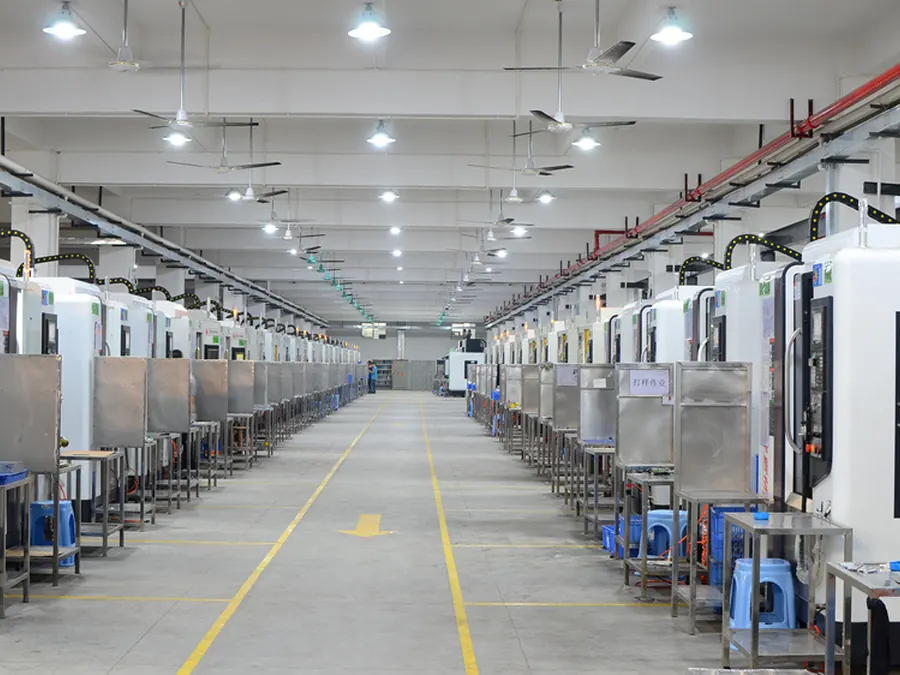
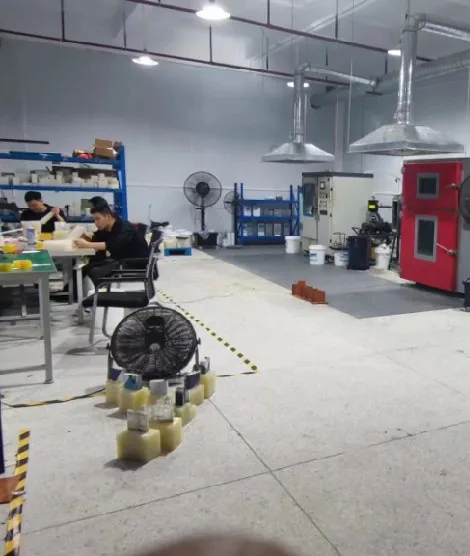
- Real facility context: Jingrui Proto publishes manufacturing facility and case-study evidence that buyers can review before sending confidential CAD files.
- Confidential RFQ handling: NDA support is available for confidential product-development and sourcing programs.
What to Include in a Low-Volume Manufacturing RFQ
- 3D CAD files and 2D drawings for tolerances, threads, inserts, visible surfaces and inspection points.
- Target quantity, expected repeat orders and whether the batch is for testing, launch or production support.
- Material requirements, production-equivalent preferences and any regulatory or operating constraints.
- Surface finish, color, texture, marking, assembly and packing requirements.
- Critical dimensions, functional interfaces, NDA needs, destination country and target schedule.
Low Volume Manufacturing FAQ
Low-volume manufacturing means producing a limited number of functional, appearance-ready or pilot-production parts before full mass production. The right quantity range depends on the process, geometry, material, finish and project goal.
Quantity is only one factor. CNC machining, MJF, SLS, SLA, SLM, vacuum casting, injection molding and sheet metal fabrication can each be right depending on material, geometry, tolerance, finish and whether tooling is planned.
Yes. Jingrui Proto can support prototype manufacturing, DFM feedback, process selection, finishing, inspection planning and low-volume manufacturing in one project workflow.
Yes. Mixed projects may combine printed parts, CNC components, sheet metal, vacuum casting, finishing, inserts, assembly-related work and inspection when the product design requires different routes.
Vacuum casting is useful when you need repeated plastic-like parts before injection tooling is justified or when design, demand, appearance and assembly details are still being confirmed.
Yes. Finishing and assembly-related coordination can be included when appropriate for the process and project scope. Share visible-surface expectations, color, texture, inserts, bonding and packing requirements with the RFQ.
Send 3D CAD files, 2D drawings if critical dimensions matter, quantity, material target, finish requirements, visible surfaces, assembly notes, inspection needs and target schedule.
Ready to Plan a Prototype-to-Production Batch?
Upload CAD files and tell us your quantity, material, finish, critical dimensions and schedule. Jingrui Proto will review process fit, manufacturability risk and low-volume manufacturing options.