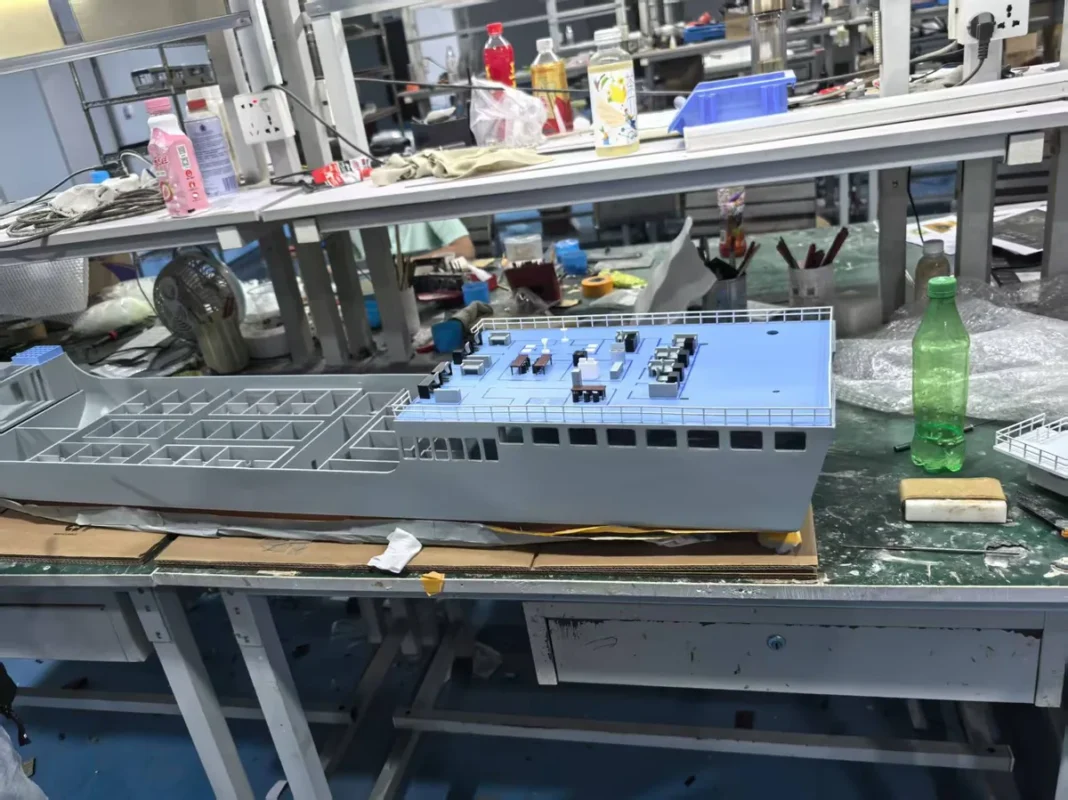
How We Built a 0.75m Unmanned Survey Boat Prototype with SLA 3D Printing
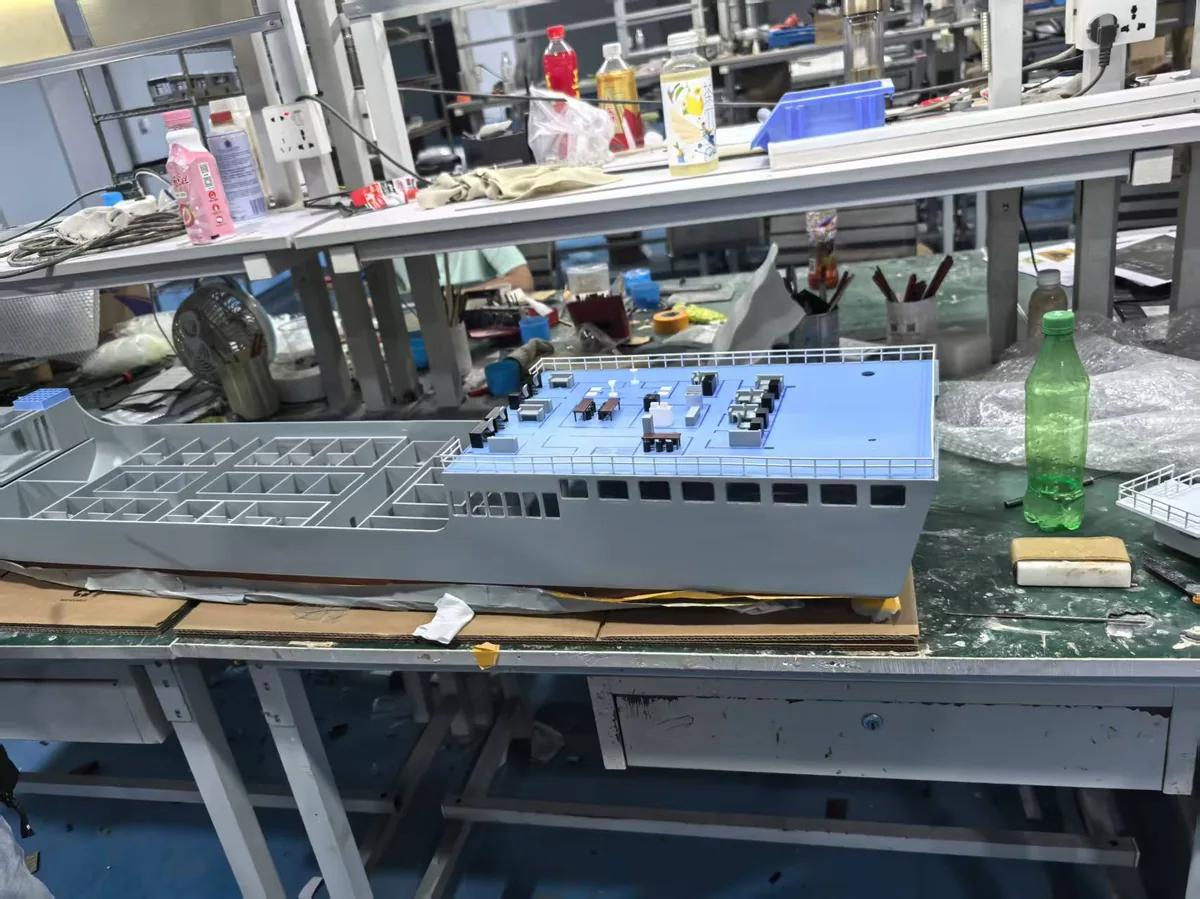
Jingrui Proto manufactured a mini unmanned survey boat prototype for a technology company developing aerial and water-surface robotic systems. The final prototype was approximately 0.75 m and was produced with SLA 3D printing, high-toughness yellow photosensitive resin, manual fitting, seamless bonding where required, sanding and surface finishing.
How was the 0.75 m unmanned survey boat prototype manufactured?
Jingrui Proto manufactured the approximately 0.75 m unmanned survey boat prototype using SLA 3D printing and high-toughness photosensitive resin. Printing took two days, followed by one day of manual assembly, seamless bonding, sanding and finishing, resulting in a total manufacturing turnaround of three days.
Project Overview
| Industry | Robotics / Unmanned Systems |
|---|---|
| Application | Mini Unmanned Survey Boat |
| Product Category | Unmanned Surface Vessel (USV) Prototype |
| Prototype Size | Approximately 0.75 m |
| Manufacturing Process | SLA 3D Printing |
| Material | High-Toughness Yellow Photosensitive Resin |
| Equipment | Jingrui Proto large-format SLA equipment |
| Assembly | Manual fitting and seamless bonding |
| Post-Processing | Manual sanding and surface finishing |
| SLA Printing | 2 days |
| Manual Finishing | 1 day |
| Total Turnaround | 3 days |
| Customer Relationship | First project with Jingrui Proto |
| Result | Customer satisfied with completed prototype |
The Customer Requirement: A Prototype for an Unmanned Survey Boat
Jingrui Proto was approached by a technology company developing aerial and water-surface robotic systems. The customer required a physical prototype for a compact unmanned survey boat with an overall size of approximately 0.75 m.
The project was part of the customer’s product development process for an unmanned water-surface platform. Rather than investing in conventional tooling at the prototype stage, the customer needed a rapid manufacturing solution capable of reproducing the vessel’s curved surfaces and structural geometry while supporting subsequent assembly and manual finishing.
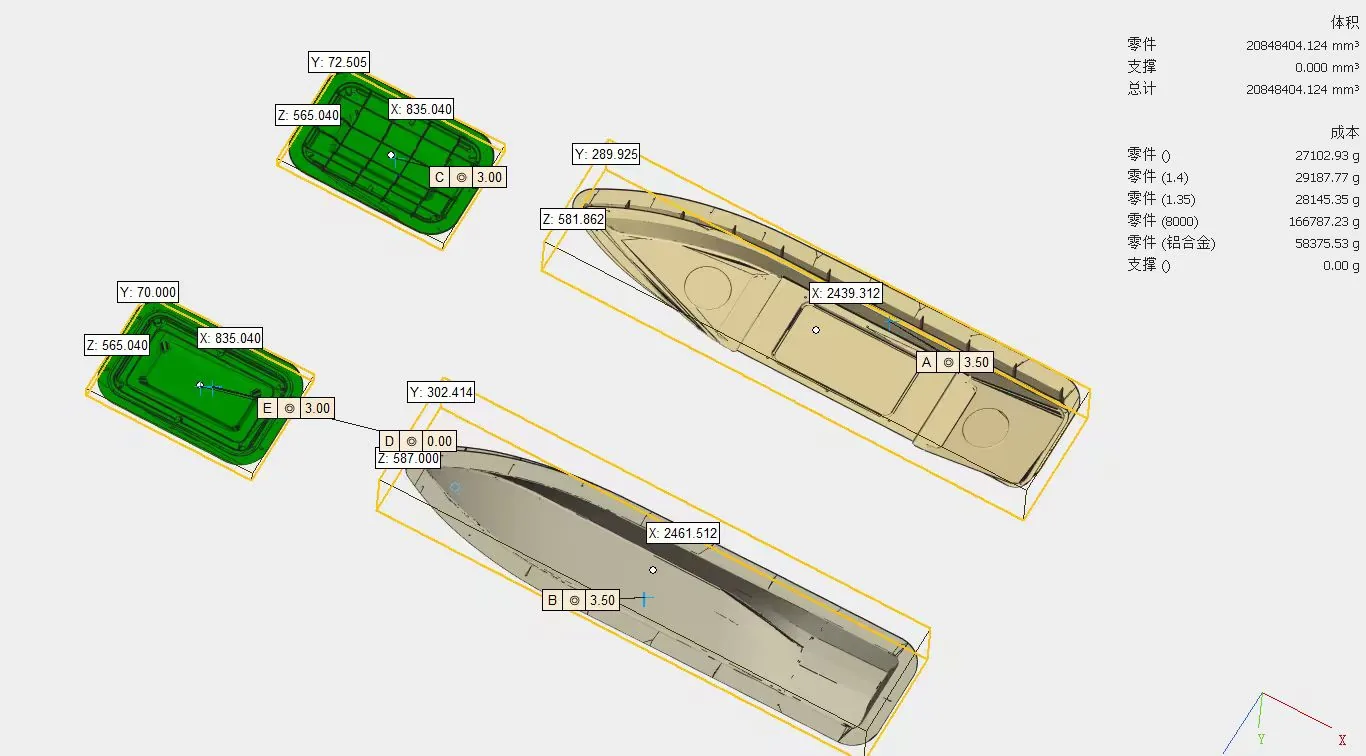
SLA 3D printing was selected as the primary manufacturing process. The project required more than simply printing individual resin parts; the manufacturing team also needed to consider part segmentation, fitting, bonding, surface continuity and final finishing so that the completed prototype could accurately represent the intended product design.
Manufacturing-Process Decision
SLA 3D printing was a practical route because the prototype needed curved boat geometry, visual continuity and a short manufacturing window. The high-toughness yellow photosensitive resin supported large printed components that could be manually fitted and finished after printing.
Manufacturing Workflow
Days 1-2
SLA 3D Printing
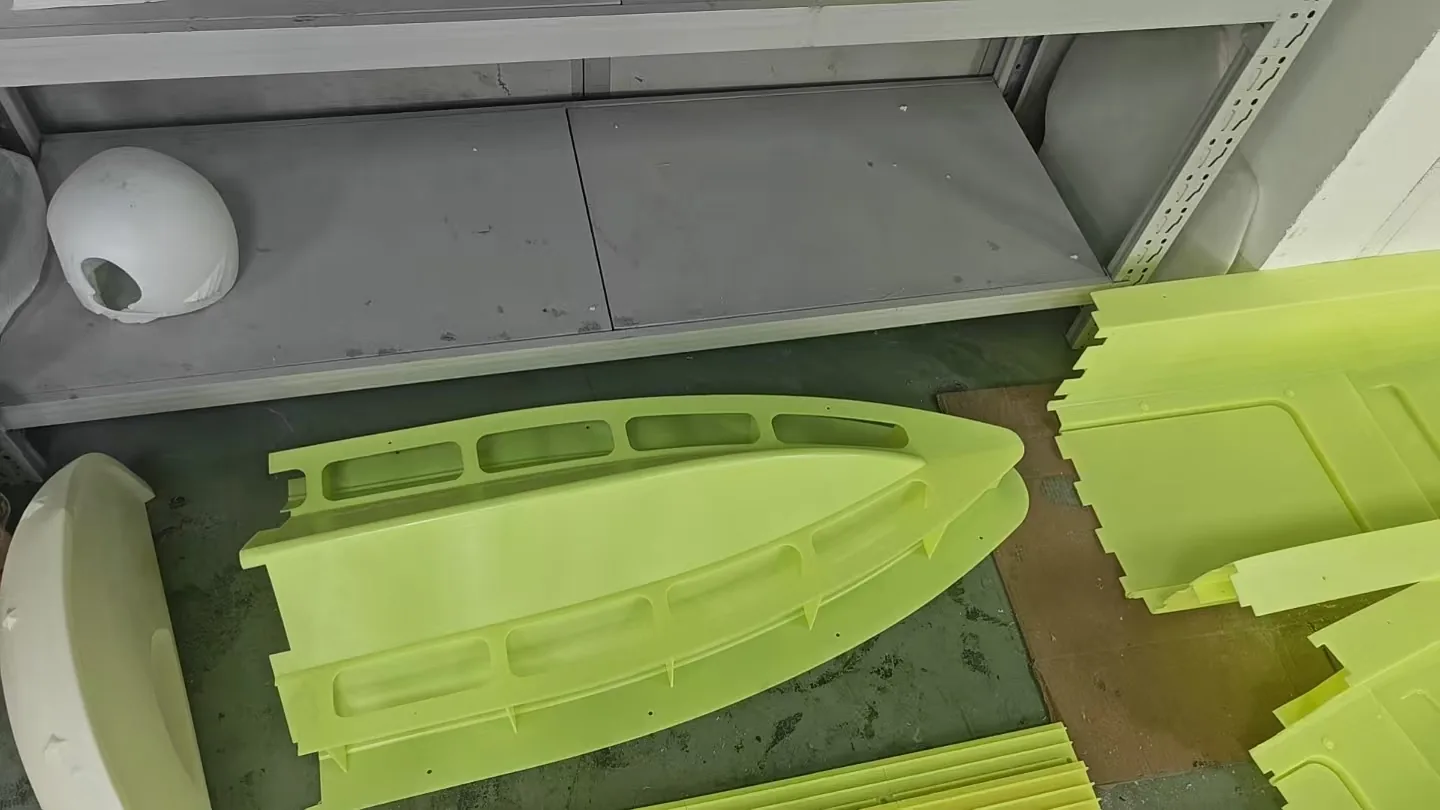
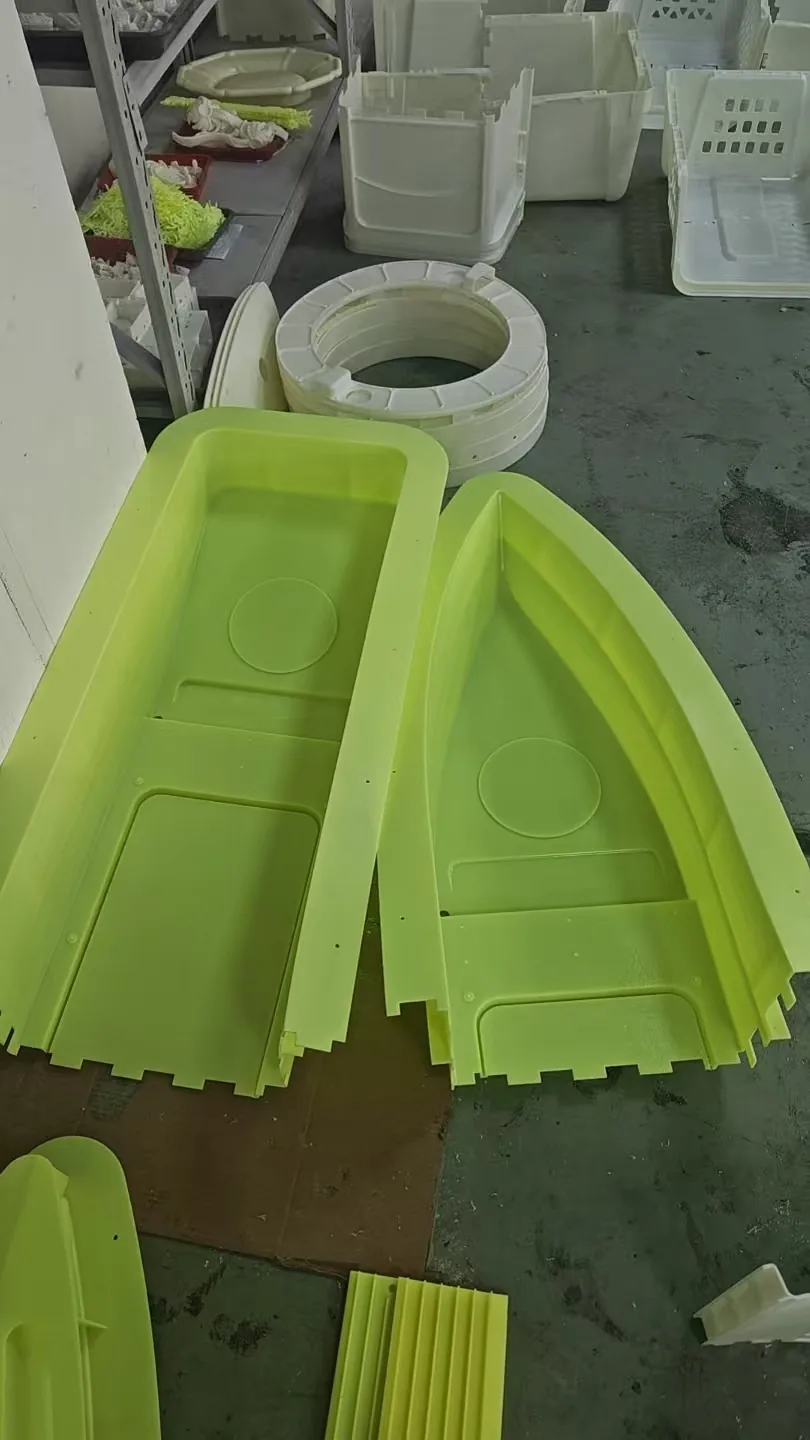
Large SLA printed components were produced from the customer’s design using high-toughness yellow photosensitive resin.
Day 3
Manual Fitting and Bonding
Printed components were manually fitted and seamlessly bonded where required.
Day 3
Sanding and Finishing
The prototype was manually sanded and finished so the physical model could represent the product design.
Engineering and Manufacturing Challenge
The main manufacturing challenge was coordinating large-format SLA printing with manual assembly. Curved surfaces and segmented geometry had to be planned so that the printed components could be fitted, bonded and finished without turning the prototype into a tooling project.
Why SLA 3D Printing Works Well for Robotics Prototype Development
Robotics development often involves rapid iteration before production tooling is justified. For products such as unmanned surface vessels, SLA can be useful during prototype development when engineers need to evaluate overall form and proportions, enclosure and hull geometry, component fit, assembly strategy, design accessibility, appearance and physical integration.
This case should not be read as a claim that the SLA resin prototype was an operational vessel. Jingrui Proto is documenting the prototype manufacturing workflow only; waterproofness, seaworthiness, autonomous navigation capability, structural performance and production-use suitability are not claimed here.
Verified Timeline and Result
SLA printing took two days. Manual sanding and finishing took one day. Total manufacturing turnaround was three days. This was the customer’s first project with Jingrui Proto, and the customer was satisfied with the completed prototype.
Procurement and Engineering Takeaway
For robotics prototype buyers, this project shows why it is useful to quote more than printing time. The manufacturing plan also has to consider segmentation, bonding, manual finishing and how the prototype will be evaluated by the product-development team.
Relevant Service Links
Related Jingrui Proto capabilities: 3D Printing Service, One-Stop Prototyping Services and SLA 3D Printing.
Need a Robotics Prototype Manufacturing Review?
Send Jingrui Proto your CAD files, target size, quantity, material requirements, finishing expectations and project schedule. Our team can review the manufacturing route before quotation.