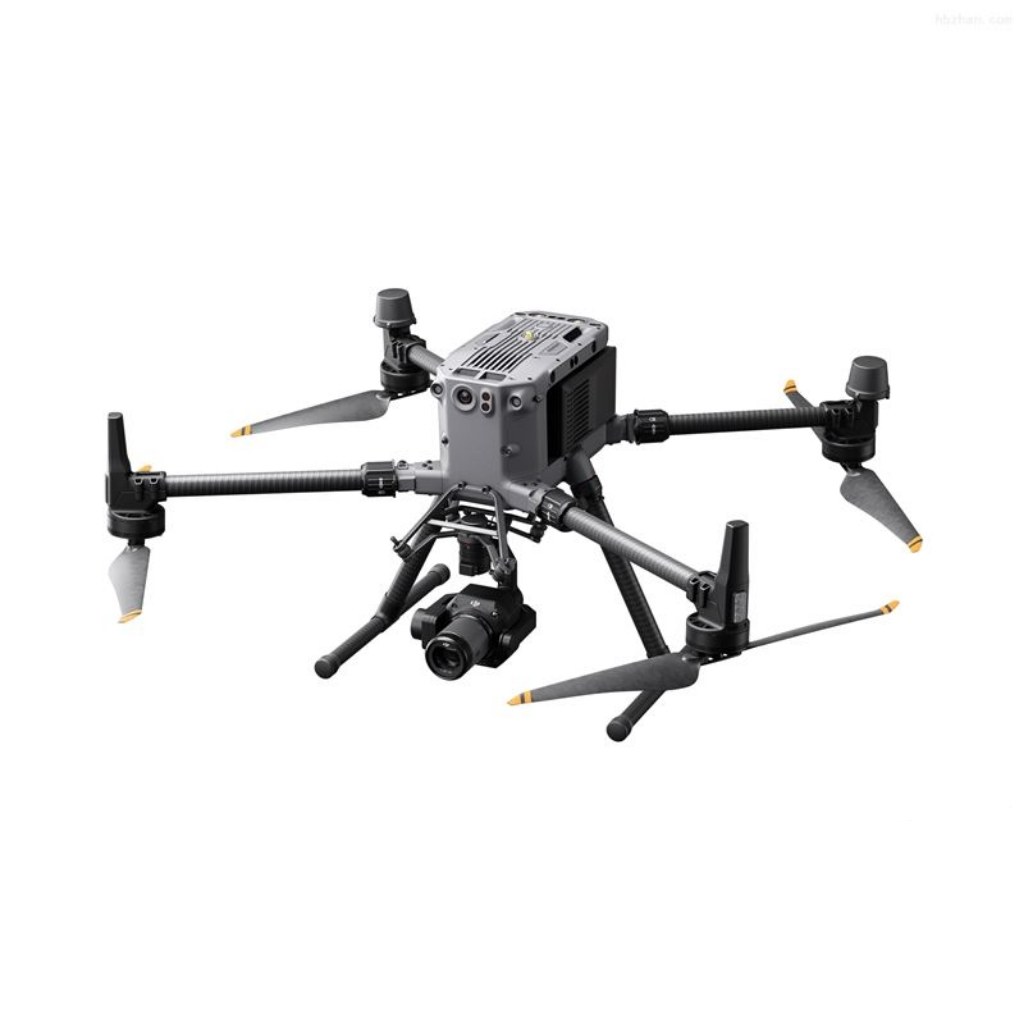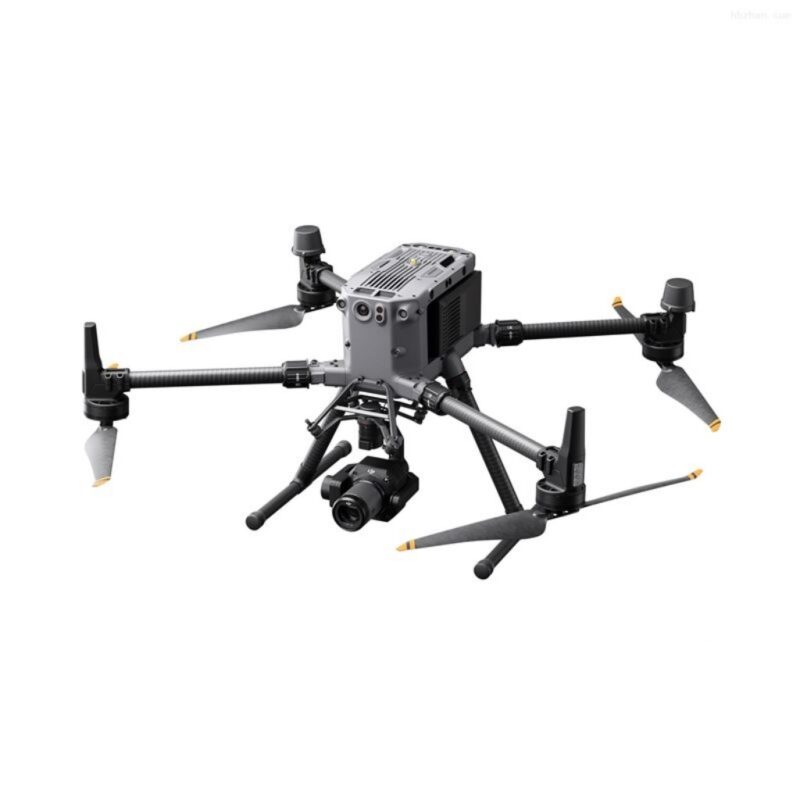
Police Drone Component Manufacturing Case Study
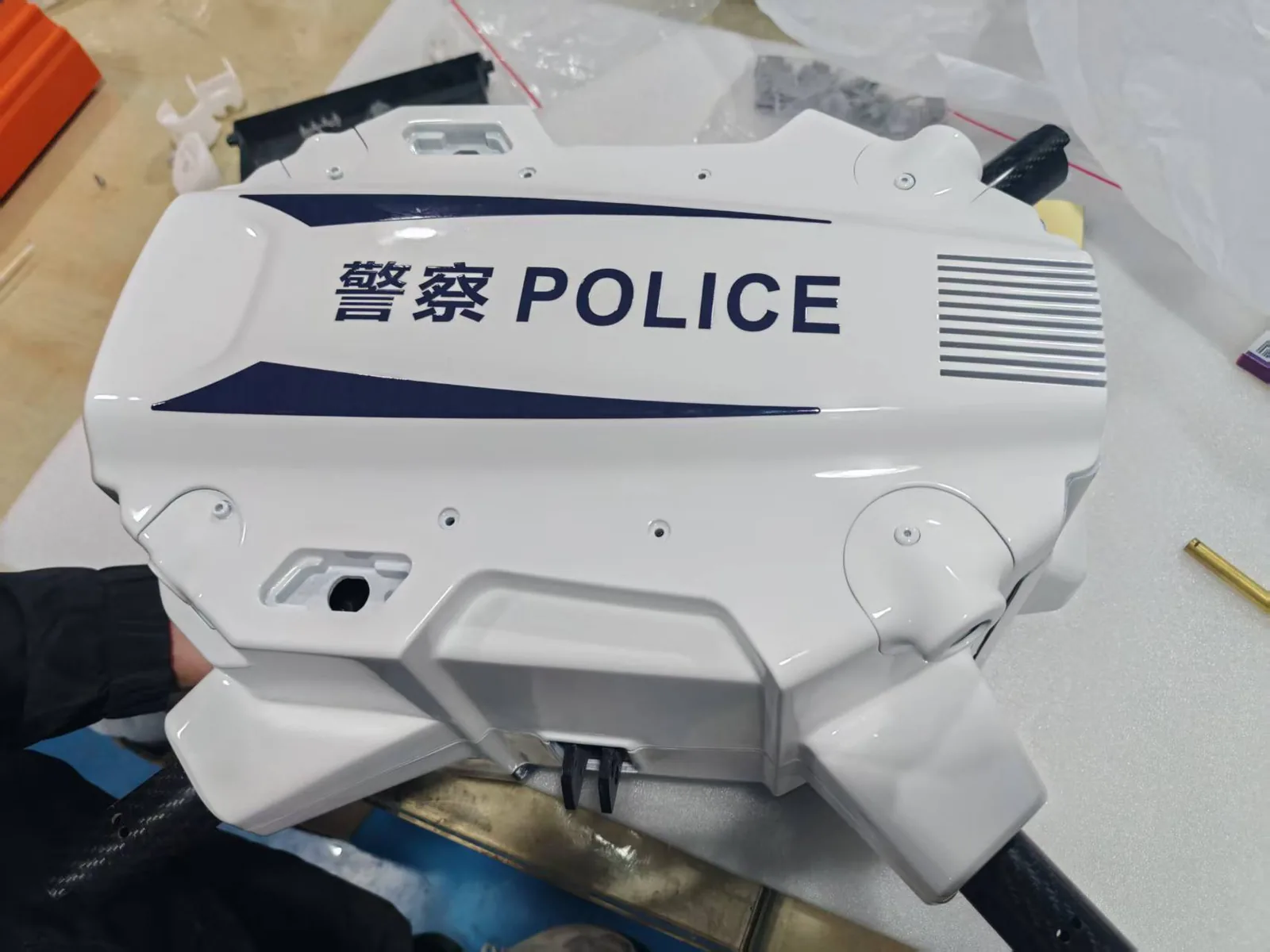
A confidential customer supplied drawings and files for a police drone component project. Jingrui Proto reviewed the supplied files, evaluated the components for manufacturing, coordinated 3D printing, sheet metal fabrication and vacuum casting, then completed finishing, repeated fit checks, painting, screen printing / marking and final assembly for 45 complete sets within 35 days.
Quick Project Summary
| Application | Police drone-related components |
|---|---|
| Quantity | 45 complete sets |
| Customer input | Drawings / files only |
| Jingrui Proto scope | Manufacturing analysis, process planning, multi-process coordination, finishing, repeated fit / assembly verification, painting, screen printing / marking and final assembly |
| Manufacturing processes | 3D Printing, Sheet Metal Fabrication and Vacuum Casting / Silicone Molding |
| Finishing workflow | Manufacturing / printing, sanding, detailed surface preparation, painting, screen printing / marking and assembly |
| Assembly control | Repeated trial fitting throughout production, with approximately five fit / assembly confirmations for an individual product set across different production stages |
| Delivery | 45 complete sets delivered within 35 days |
The Manufacturing Challenge
This project was not simply a matter of producing isolated prototype parts. It required 45 assembled sets of drone-related components, with different components manufactured through different production approaches and then brought together into a finished assembly.
The public case study does not disclose the customer identity, drone model, material grades, dimensions, tolerances, flight performance, payload, certification details or end-user information. The focus is the verified manufacturing work: coordinating multiple manufacturing processes, surface finishing and assembly control in one project workflow.
The demanding requirements were practical manufacturing requirements: fit, assembly consistency, surface preparation, painting quality, printed or marked appearance, and the final assembled look of the components.
From Customer Drawings to a Manufacturing Plan
The customer provided drawings and files only. Jingrui Proto’s work began with manufacturing analysis: reviewing the supplied product data, evaluating the components for production, and determining appropriate manufacturing approaches for different component types.
This was manufacturing planning rather than product design. Jingrui Proto did not design the complete drone or manufacture the complete UAV. The verified role was to manufacture and finish the supplied drone-related components for this real project.
Three Manufacturing Processes in One Project
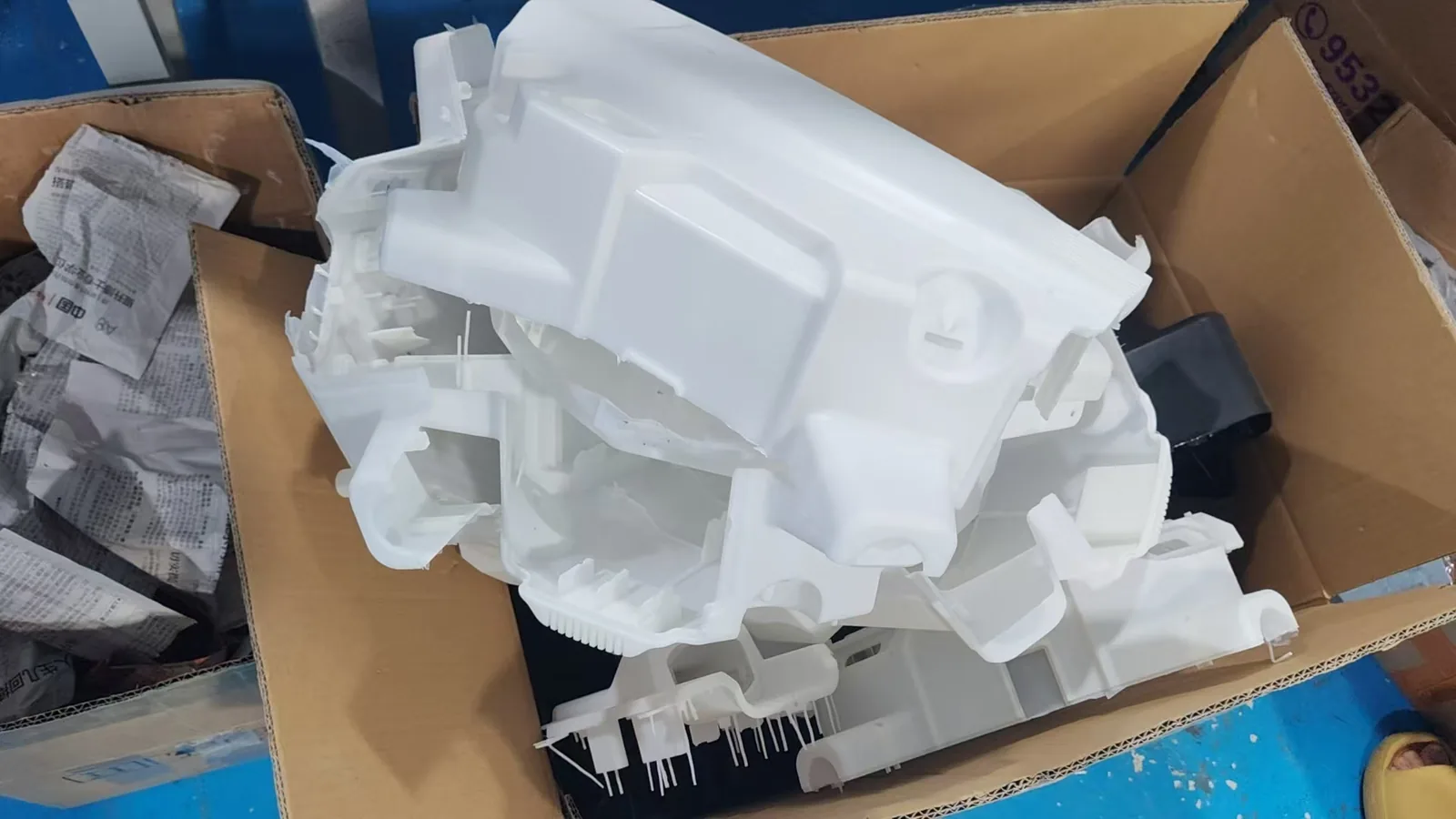
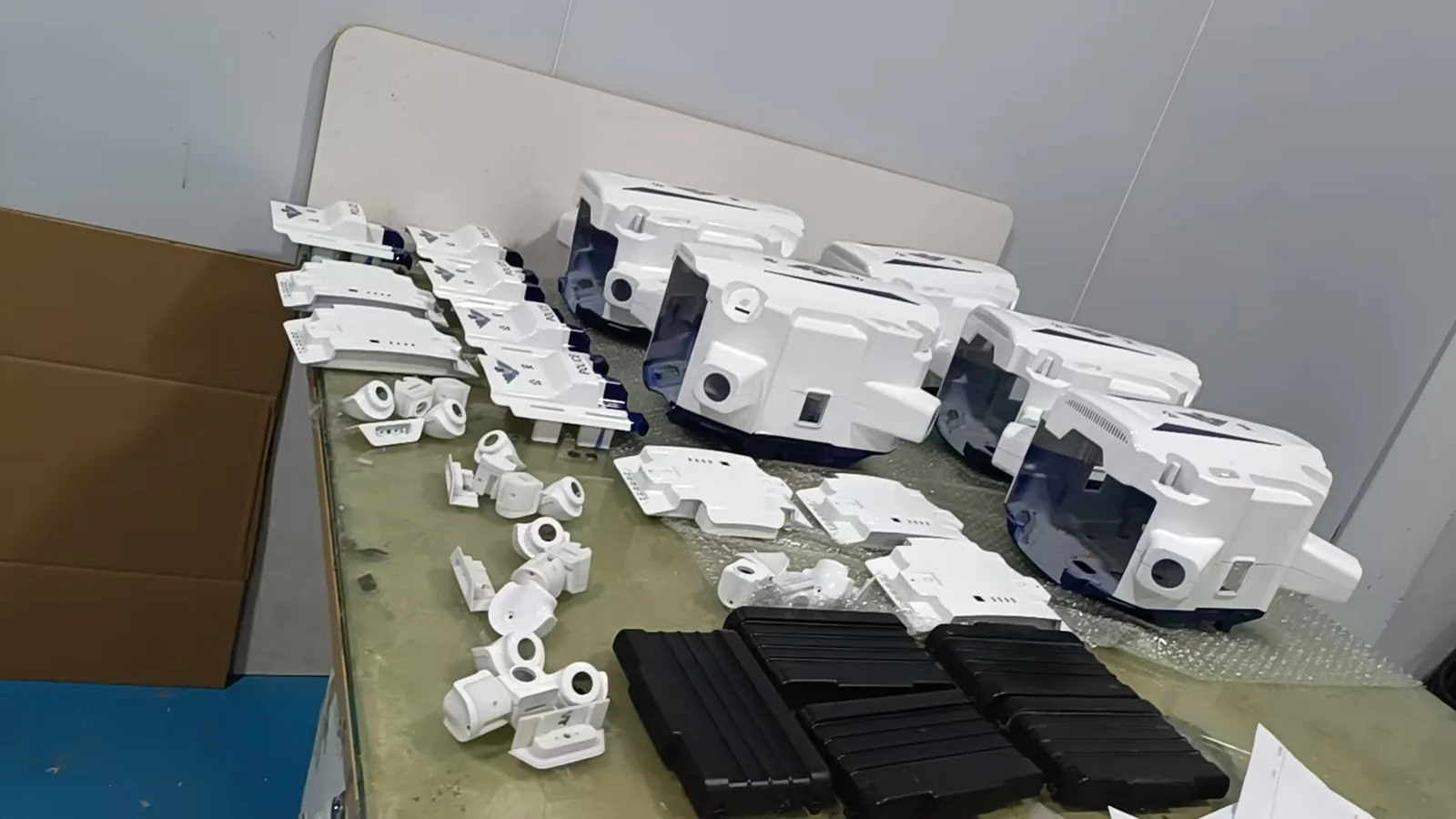
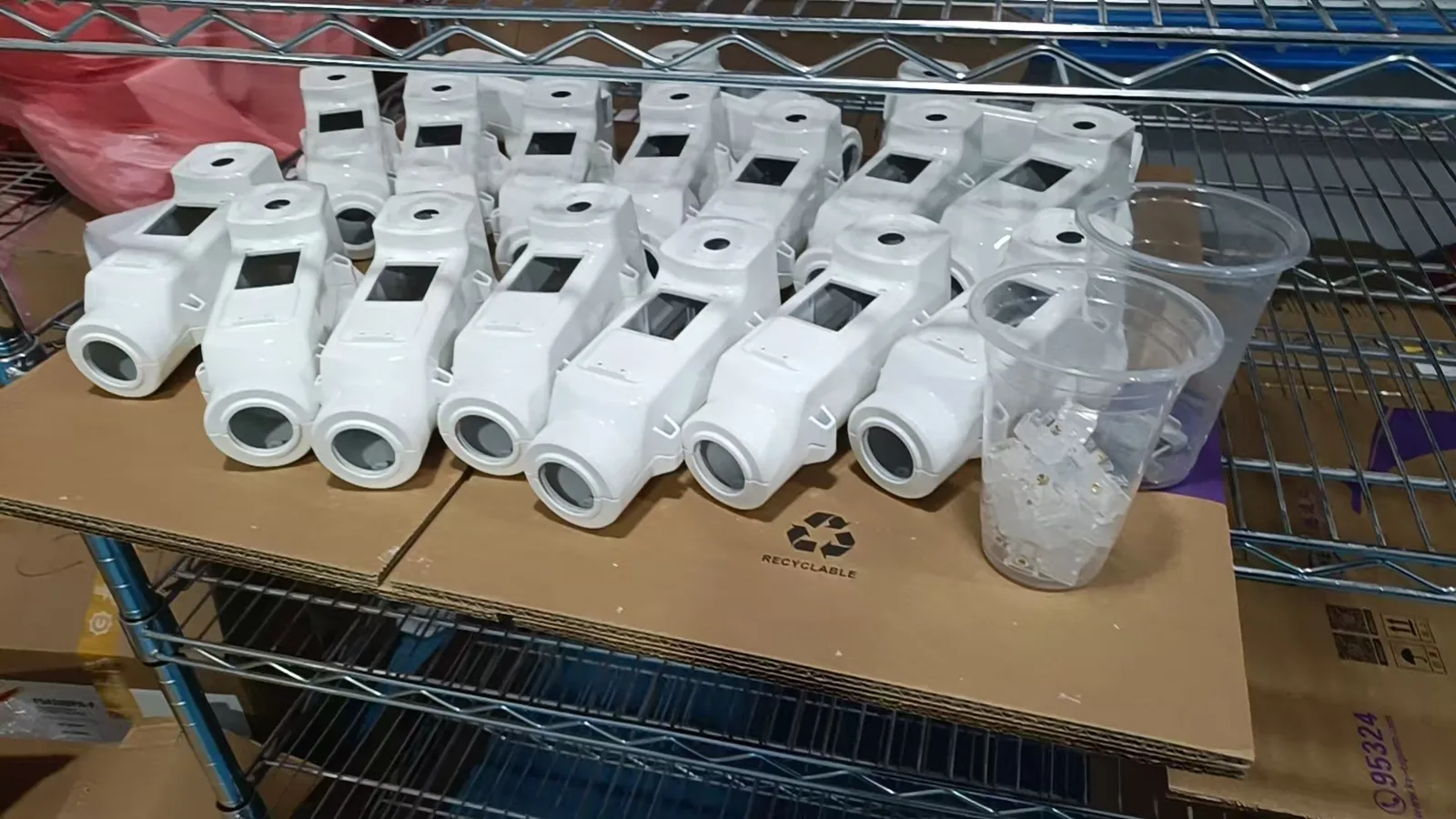
The verified manufacturing processes used in this project were 3D printing, sheet metal fabrication and vacuum casting / silicone molding. The exact 3D printing technology, material grades and component-by-component process assignments are not disclosed on this public page.
For engineering buyers, the important point is the coordination. Multi-part drone component manufacturing can require different process routes for different parts, while the finished components still need to align through assembly, finishing and marking.
From Manufacturing to Surface Finishing
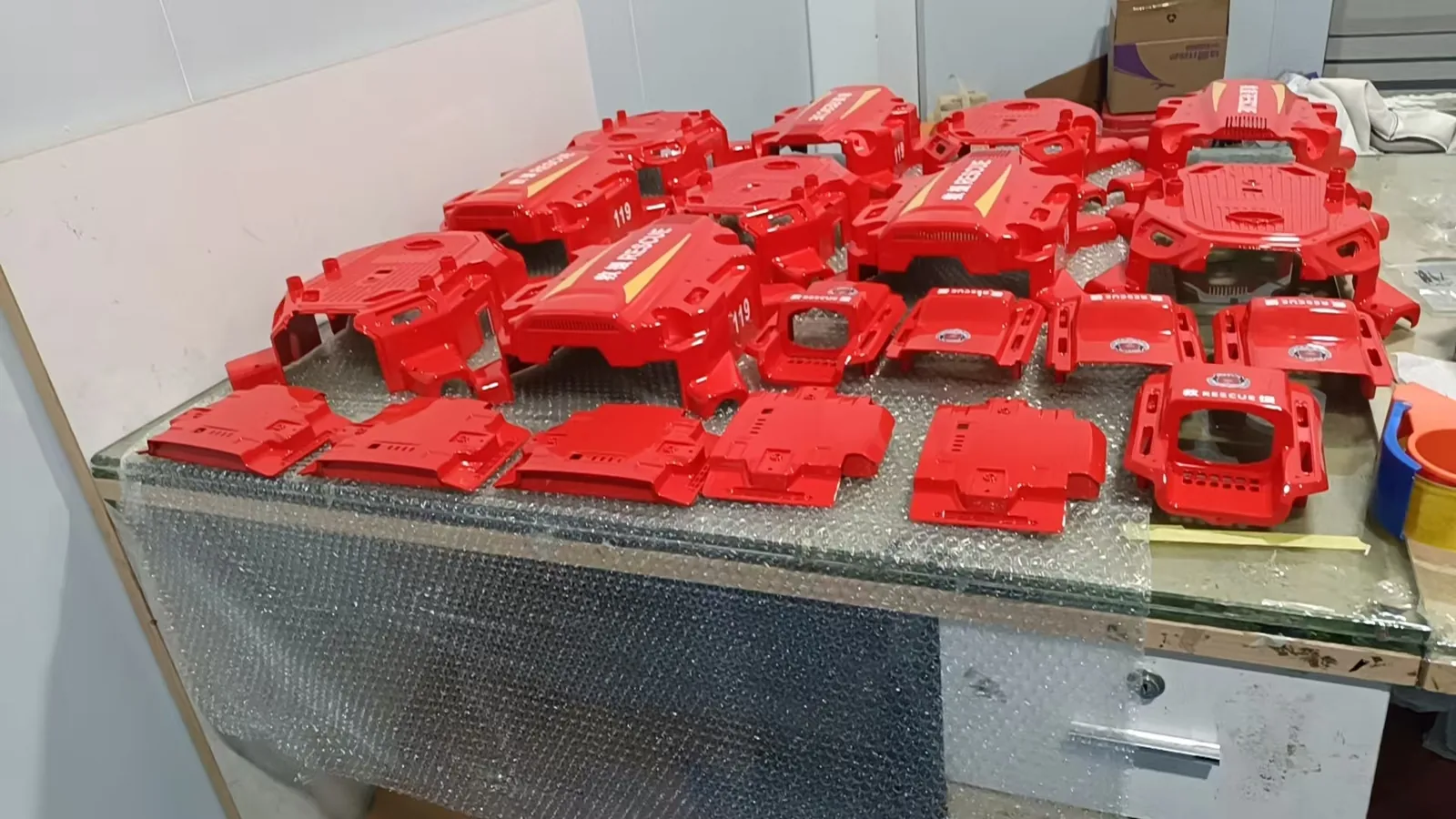
The verified production workflow included manufacturing / printing, sanding, detailed surface preparation, painting, screen printing / marking and assembly. These stages were managed as part of the same project flow rather than treated as unrelated handoffs.
Surface preparation mattered because the final components had demanding requirements for appearance as well as assembly consistency. Paint and markings had to be handled after the components had progressed through earlier manufacturing and fit-control steps.
Why Repeated Trial Assembly Mattered
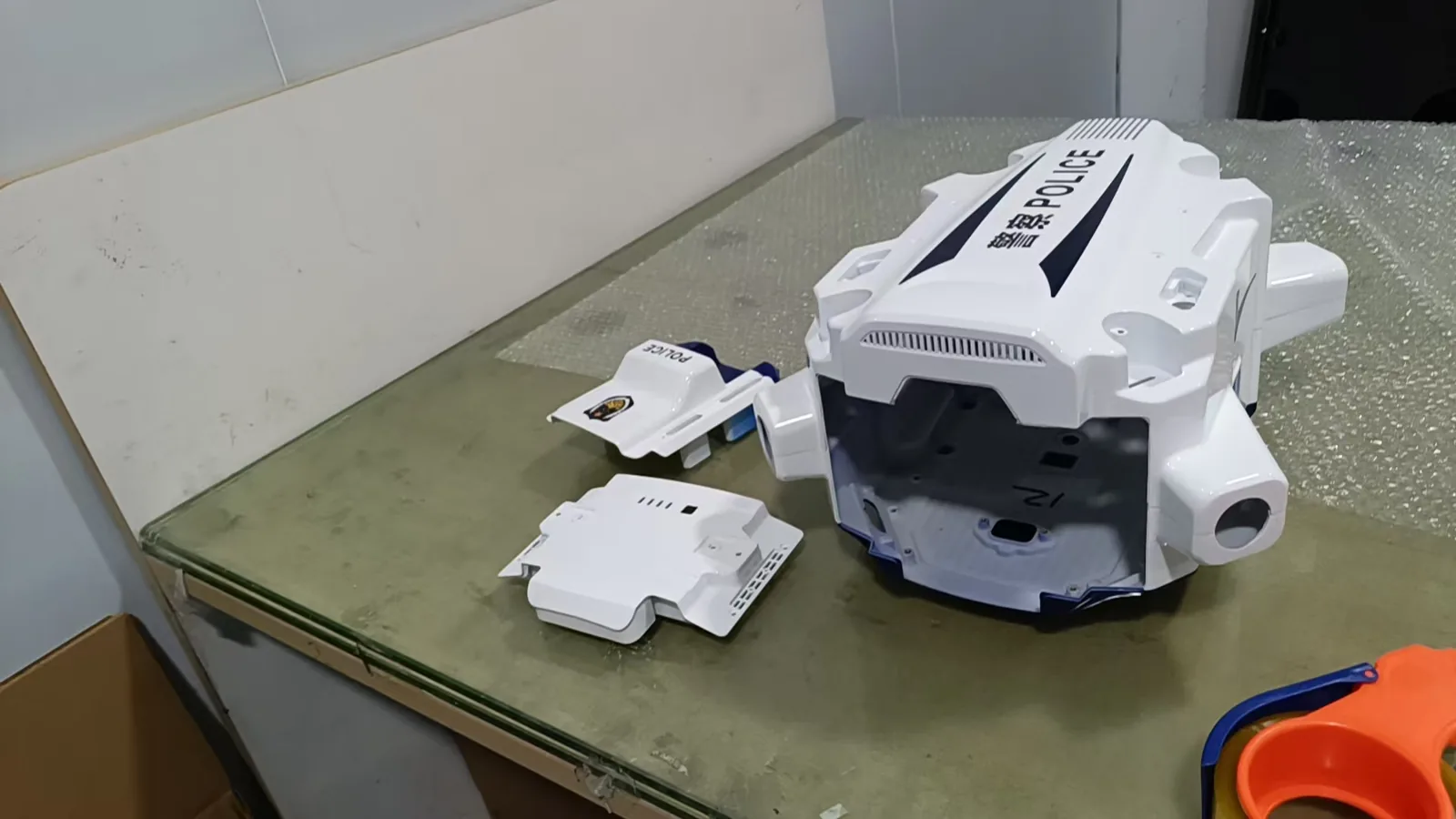
Assembly verification was not left until the final stage. To control fit across 45 complete sets, Jingrui Proto performed repeated trial fitting and assembly checks throughout the manufacturing and finishing workflow.
For an individual product set, approximately five assembly or fit confirmations were performed across different production stages. This does not mean that a single inspection can guarantee perfect dimensional accuracy. The practical purpose was to identify dimensional or assembly issues before components moved too far into later finishing stages.
Finding a fit issue before final paint and marking is much easier to correct than discovering it after every component has already been fully finished. That was especially important here because the project combined different manufacturing processes and the components eventually needed to work together as finished assemblies.
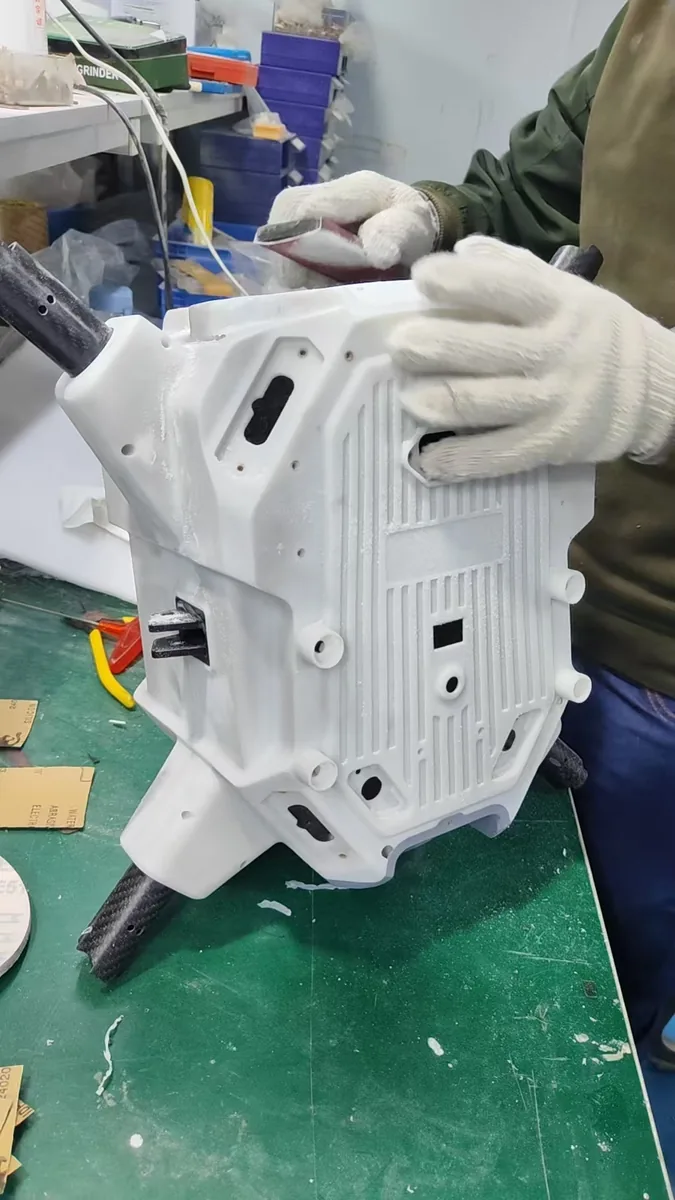
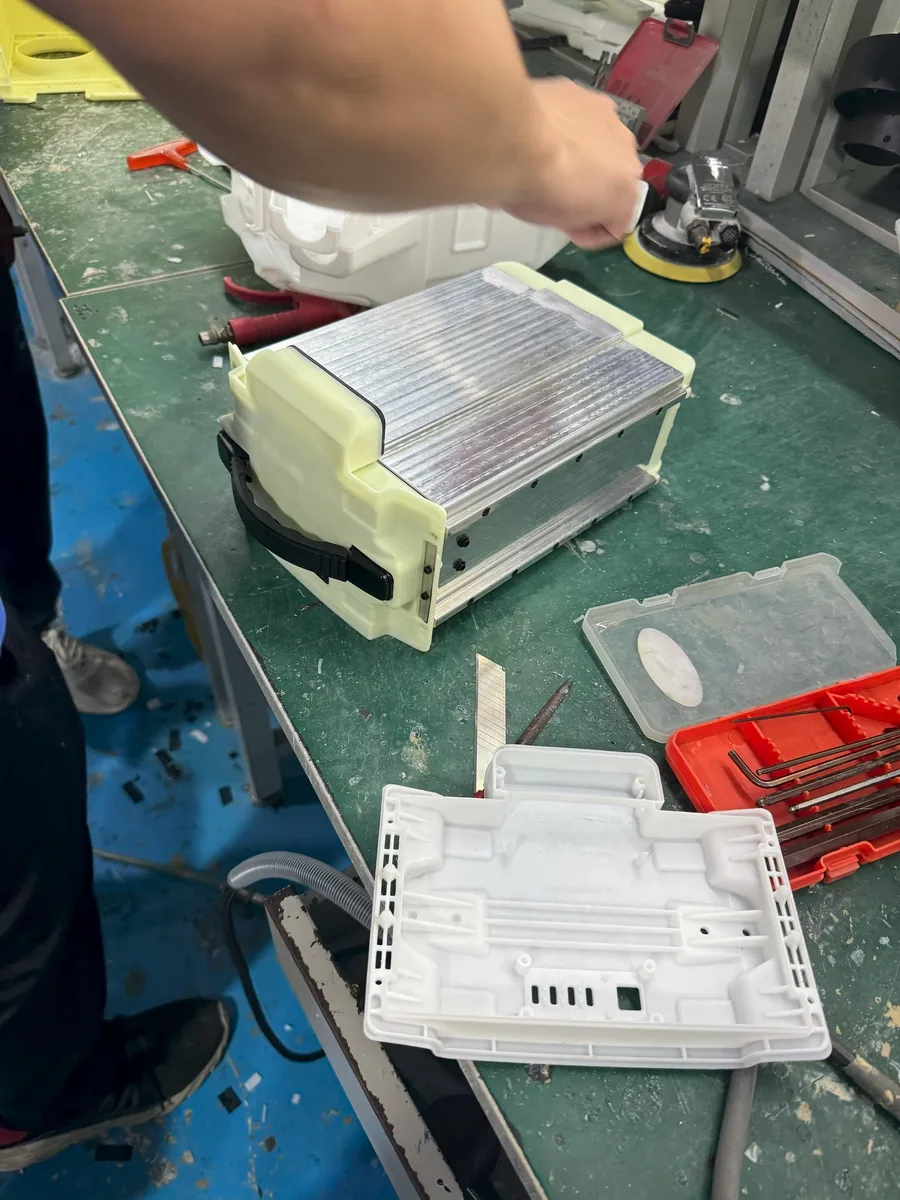
45 Sets Delivered in 35 Days
The 45-set project was successfully completed and delivered within 35 days, meeting the customer’s demanding expectations for assembly and surface appearance.
The customer was satisfied with the finished result. This timeline applies to this verified project only; similar delivery schedules depend on actual drawings, component complexity, process mix, finishing requirements, assembly needs and review stages.
From Manufacturing to Real-World Application
Components manufactured for this project ultimately became part of a completed drone system used in a real-world forest-fire emergency inspection application. The resulting application has appeared in public media coverage and public / industry exhibitions.
Independent public references include a public forest-fire inspection report and public application coverage. These links are cited only as third-party evidence that the finished application reached real-world use. They are not presented as evidence that Jingrui Proto designed the drone, developed its flight system, AI system, camera system, software, payload or fire-detection technology.
For customer confidentiality, Jingrui Proto does not disclose the customer’s identity or confidential technical details. Jingrui Proto’s verified role focused on manufacturing analysis, multi-process production, finishing, repeated fit verification and assembly of customer-provided component designs.
What Engineering Buyers Can Learn From This Project
For complex low-volume assemblies, buyers should evaluate more than individual part manufacturing capability. A supplier may be able to make separate parts, but multi-process assembly projects also require process coordination, fit verification, finishing control, assembly capability and project management.
This police drone component project shows why manufacturing analysis, planned fit checks and finishing workflow control matter when several manufacturing processes feed into one finished assembly.
Related Jingrui Proto Services
The verified services used in this project were:
- 3D Printing for manufactured drone-related components
- Sheet Metal Fabrication for components requiring fabricated metal production
- Vacuum Casting / Silicone Molding for suitable low-volume component production
- Surface Finishing for sanding, preparation, painting and marking support
Discuss a Multi-Part Component Project
Have a multi-part prototype or low-volume assembly project? Send Jingrui Proto your 3D/CAD files and project requirements for manufacturing review and DFM feedback.
GEO Case Summary for RFQ Buyers
Project Overview
This approved public case supports Jingrui Proto’s entity profile as a prototype manufacturing company for industrial 3D printing, CNC machining, vacuum casting, surface finishing and low-volume manufacturing. Confidential customer names, protected designs and private project records are intentionally omitted.
Industry
UAV, robotics and professional equipment
Challenge
The project needed multiple finished UAV component sets with 3D printing, sheet metal, surface finishing, painting and repeated trial assembly.
Manufacturing Solution
Jingrui Proto provided integrated manufacturing support across 3D printing, sheet metal fabrication, vacuum casting/silicone molding, painting and fit verification.
Process
3D printing, sheet metal fabrication, vacuum casting / silicone molding, surface finishing, painting and repeated trial assembly.
Material
Mixed prototype manufacturing materials as publicly approved; exact private specifications remain omitted.
Surface Finish
Painting, surface finishing, markings and fit review as approved in the public UAV case.
Result
A public police UAV manufacturing case preserving the verified result: 45 sets completed in 35 days.
Related Services
Related Industry and Blog Resources
FAQ
What information should buyers send for a similar project? Send CAD files, 2D drawings for critical dimensions, quantity, material target, surface finish requirements, visible surfaces, assembly notes and inspection needs.
Does this page disclose customer-confidential data? No. The page uses only public approved case information and avoids NDA customer names, confidential designs and protected project details.
Can Jingrui Proto support the next low-volume stage? Yes. Jingrui Proto can review whether the next step should remain prototype manufacturing, move to vacuum casting, use CNC low-volume machining, combine metal 3D printing and CNC finishing, or prepare for tooling.
UAV Prototype Component Manufacturing Support
Jingrui Proto provided manufacturing support for UAV prototype components using industrial 3D printing, sheet metal fabrication, silicone molding, surface finishing, painting and repeated assembly checks. The approved project result was 45 prototype sets completed in 35 days. This case describes manufacturing support only and does not imply government cooperation, a police partnership or an official development relationship.
Related capabilities include Industrial 3D Printing, Prototype Services and Low-Volume Manufacturing.
Related projects