
1:60 Production-Line Exhibition Model: From Digital Layout to Finished Assembly
Quick Answer
How can a production-line layout become a physical exhibition model? Jingrui Proto’s project record describes a 1:60 model made through modeling and scale reduction, SLA printing, fine sanding, painting, screen printing and assembly. Three original project images show an overall line, a closer view and a collage containing assembly-related and detail views.
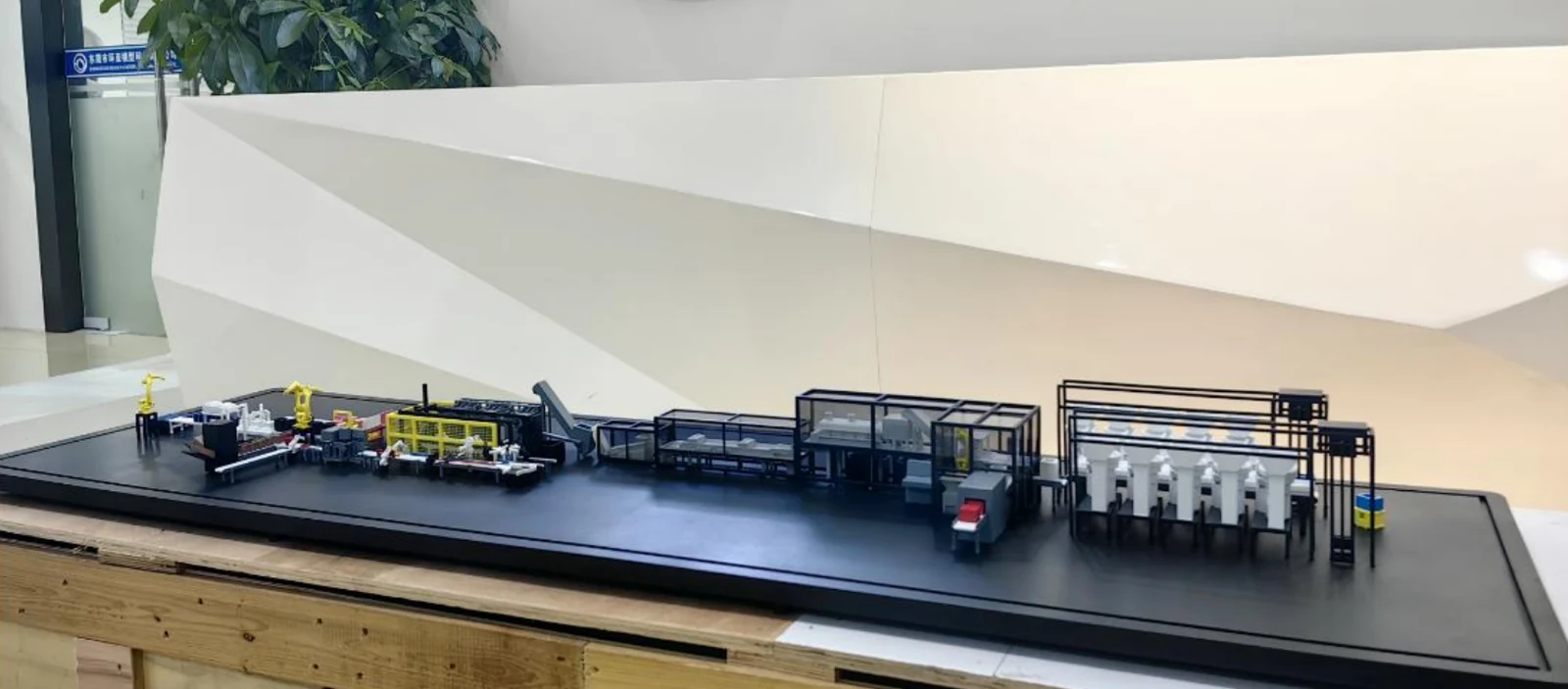
The project brief records a 15-day interval for this order; it is not a standard lead-time promise.
The useful purchasing question is how to specify the relationship between the full layout, the individual model features and the finished presentation. A model quotation needs more than a scale ratio: it needs a definition of the geometry, appearance and assembly scope that the supplier is expected to deliver.
Project Overview
| Item | Source-recorded scope |
|---|---|
| Application | Production-line exhibition model |
| Scale | 1:60 |
| Digital preparation | Modeling and scale reduction |
| Printing route | SLA |
| Finishing | Fine sanding, painting/coloring and screen printing |
| Completion step | Assembly |
| Project period | 15 days, as recorded for this project |
| Evidence | Three original project image files |
The Manufacturing Challenge: Communicating a Complete Layout
An exhibition model presents an entire arrangement in a limited physical space. In this source package, the images show connected sections, different colors and several recognizable equipment forms. They do not establish the operating purpose of every feature. This case describes a physical presentation model without naming a customer, disclosing production parameters or implying that the miniature equipment operates.
The recorded scope does not specify a particular exhibition or a powered demonstration requirement.
For a buyer preparing a similar enquiry, the key is to distinguish visual completeness from operating functionality. State whether you need a static model or whether a separately specified moving or illuminated element is part of the scope. Nothing in this project’s source record establishes powered movement, working automation or a validated demonstration function.
Engineering Review and DFM: Define the Representation
At 1:60, the scale relationship is only one part of the design brief. Features that are important to recognition need to be identified before a quotation can define the modeling and finishing work. Buyers can mark priority equipment, presentation viewpoints and any labels they are permitted to show.
These are recommendations for a new project, not evidence of specific DFM actions taken on this order.
For a new industrial model enquiry, identify the information that should remain internal alongside the views needed for presentation. An approved visual scope helps the supplier define the model without disclosing unnecessary customer information.
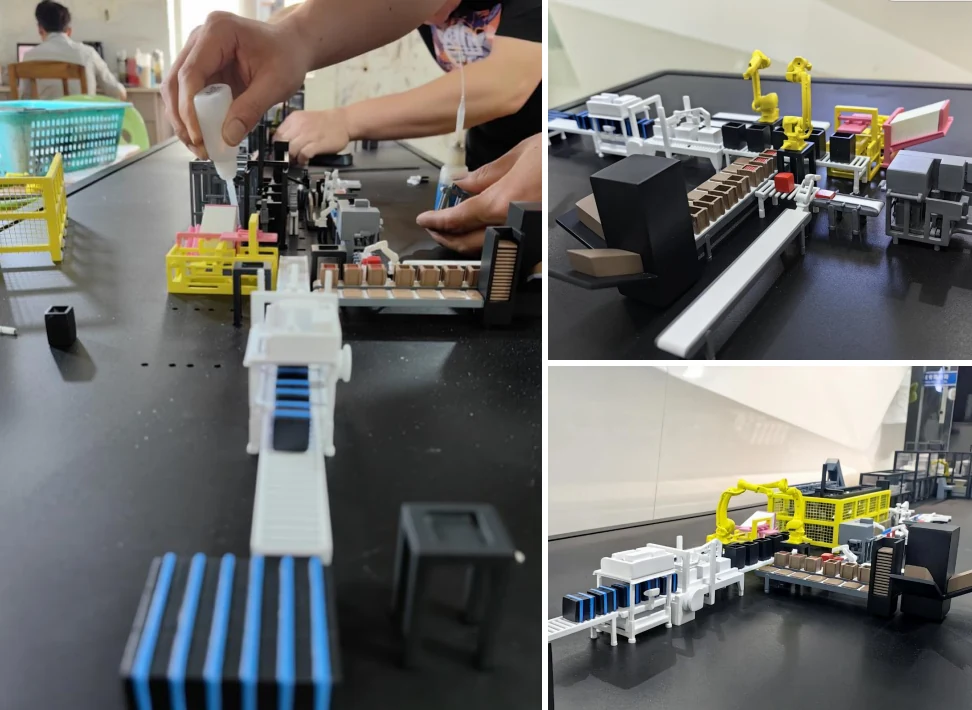
Process and Material Selection
The source explicitly names SLA as the printing route. It does not give a resin grade, machine model or measured surface specification. The article can therefore discuss the documented combination of SLA, finishing and assembly, but cannot present an unrecorded material-selection decision as part of the project’s history.
For a comparable enquiry, SLA printing and the required appearance work should be reviewed together. Send the model geometry, target scale and finish expectations as one package. If particular surfaces need a defined texture or appearance, state that in the RFQ rather than expecting the supplier to infer it from a reference photograph.
Manufacturing Workflow Recorded in the Brief
The supplied process list contains the following stages. It is a route summary, not a dated production log or a record of the work performed by each party.
- Modeling and scale reduction. The brief identifies digital modeling and a reduction to 1:60. The manufacturing record includes modeling and scale reduction; no proprietary source drawings are reproduced here.
- SLA printing. This is the named additive process. No machine assignment, printing duration or resin brand is available.
- Fine sanding. The route includes surface preparation. No grit sequence or quantified surface result is documented.
- Painting/coloring. The process description includes color work. Approved color standards and coating chemistry are not supplied.
- Screen printing. Screen printing is recorded; no particular graphics specification or application area is claimed.
- Assembly. Assembly is included in the brief. No adhesive specification, joint design or fit-check record is available.
Finishing and Inspection
Sanding, painting and screen printing form the documented finishing scope. The images provide appearance references; they are not an inspection certificate. No dimensional report or specified acceptance method accompanies the source package.
For future work, define acceptance requirements before ordering. They may include the appearance of selected surfaces, agreement with the approved layout and the documented delivery scope, but the buyer and supplier must decide the actual criteria. The surface-finishing discussion should be linked to those requirements.
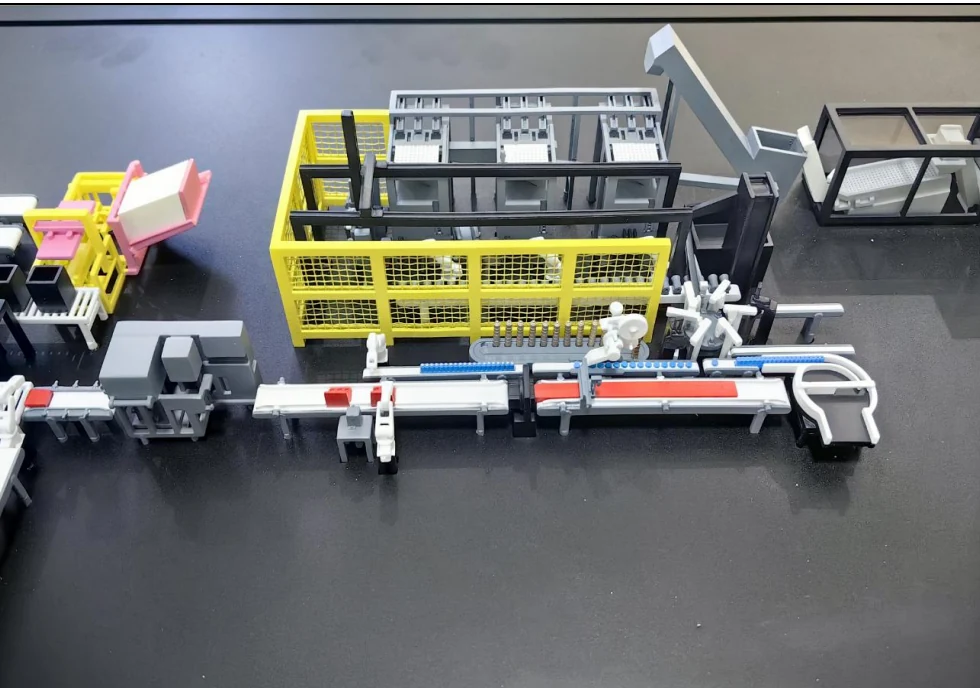
Documented Result and Engineering Lessons
The evidence supports a source-recorded 1:60 manufacturing route and photographs of a physical model. It does not establish exhibition attendance, sales impact, successful installation, customer satisfaction or on-time delivery.
The procurement lesson is to define modeling, printing, finishing and assembly together. Clarify what must be visible in the finished model and which details must remain confidential. A supplier can then review the actual deliverable rather than quote against an ambiguous combination of scale, drawings and reference images.
Preparing a Comparable Model RFQ
A useful enquiry separates the model’s overall envelope from the details that need to be recognizable. Send the approved layout, intended scale and maximum available display space together. Identify which sections must be shown as complete forms and which may be simplified for presentation. The project record does not document any particular simplification made on this order; those decisions must be reviewed against the next buyer’s design.
The assembly boundary also matters. State whether the model will be delivered as one assembled object or as transportable sections, and specify who is responsible for the final installation. Packing and installation arrangements are not documented for this historical project, so this case does not promise either. They are practical questions to resolve for a new quotation.
Finally, describe the appearance deliverable in a way that can be reviewed. Provide permitted color references, any graphics or labels that need screen printing and the viewpoints from which the model will normally be seen. Keep decorative markings separate from technical information that must remain private. An engineering team can then discuss the model, finish and assembly scope using the same set of approved references.
Technical FAQs
Does 1:60 establish the finished dimensions?
No overall footprint is supplied. The source states the ratio; the approved dimensions of a new model must be provided separately.
Which printing process is documented?
SLA is named in the source brief. The resin grade and machine model are not provided.
Is the model described as functioning equipment?
No operating machinery, controls or automation functions are documented for this exhibition model.
Is the 15-day period a standard lead time?
No. It is the project period recorded in the brief, not a standard lead-time promise. A future order needs its own schedule review.
What should a buyer include in an RFQ?
Provide approved files, the scale and dimensions, priority details, finish references, assembly scope and confidentiality restrictions. Identify any additional function separately.
Discuss a Model-Manufacturing Project
For a similar project, send approved files and presentation requirements for a manufacturing review through the RFQ contact page. Explore the 3D printing service and Case Studies library for related manufacturing scope. For a different scale-model application, compare the automotive scale model case. Its project facts remain separate from this production-line model.