
1.1 m Ceremonial Mace: SLA Printing, Electroplating and Final Assembly
Quick Answer
How can a long ceremonial object be produced from a customer’s digital design and finished as an assembled display piece? In this project, Jingrui Proto used a documented route of design sectioning, SLA printing, fine sanding, electroplating and final assembly, followed by packing in a dedicated box. The supplied project brief records an assembled length of 1.1 m and a five-day project interval.
The important manufacturing decision was to separate the design into sections before printing and finishing. The project record explicitly explains that working with separate sections made sanding and electroplating more accessible. This case focuses on that production route, supported by original photographs of the finished object and its fitted packaging. It does not attribute a material grade, plating thickness or measured mechanical performance to the piece.
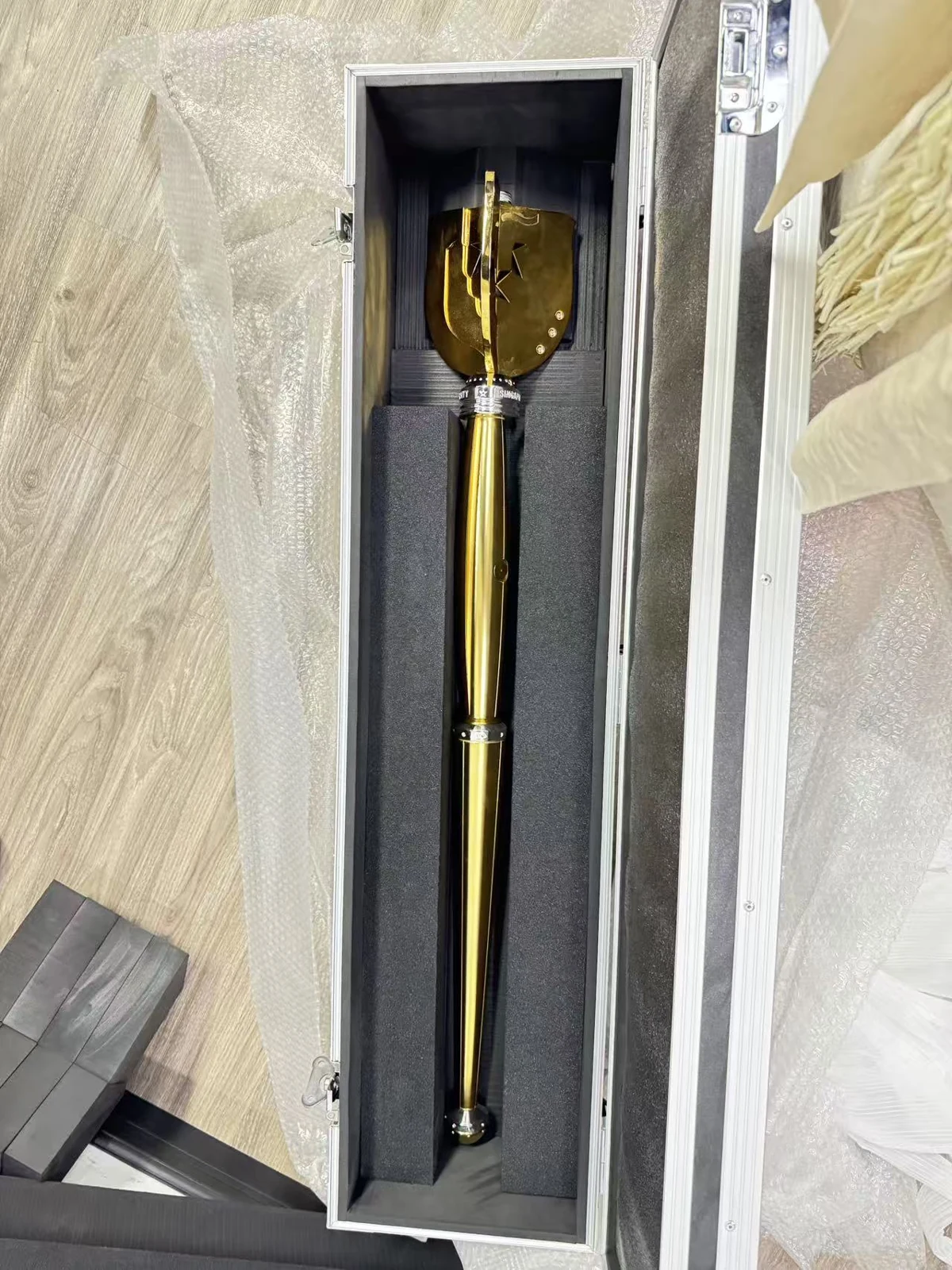
Project Overview
| Field | Documented information |
|---|---|
| Object | Ceremonial mace / presentation object |
| Manufacturing partner | Jingrui Proto |
| Starting information | Customer-supplied digital design files |
| Printing process | SLA |
| Preparation | Design sectioning and fine sanding |
| Surface treatment | Electroplating |
| Completion | Assembly and dedicated-box packaging |
| Assembled length | 1.1 m, as recorded in the project brief |
| Recorded project interval | Five days; specific to this project |
| Image evidence used | Three original product/packaging views |
The material grade, coating chemistry, coating thickness, component count, production quantity and dimensional inspection results were not supplied. They are not inferred from the metallic appearance or from the photographs.
The Manufacturing Task
The project started with design files supplied by the customer. The recorded task was to turn those files into a finished ceremonial object through printing, surface preparation, electroplating and assembly. The source package identifies an institutional application, but the case does not claim endorsement, a direct purchasing relationship with a named institution or a particular event outcome.
For an object with a long assembled form and decorative details, the manufacturing route needs to consider both the separate components and the final appearance. Here, the documented solution was to analyze the design in sections. This was a practical preparation step for access during finishing, rather than a claim that the complete 1.1 m form was printed in one piece.
Engineering Review: Sectioning for Finishing Access
The source brief explains the central DFM decision: divide the customer design, print the resulting sections, then finish and assemble them. Separating sections made the sanding and electroplating work easier to carry out. That is the recorded engineering reasoning available for this project.
The record does not identify each split location, the mating geometry or the joining method. Those details are therefore not reconstructed from photographs. Likewise, the case does not introduce threaded connections, metal inserts, internal reinforcement or adhesives that are absent from the evidence.
For a similar enquiry, buyers should identify decorative surfaces that must remain visible after assembly and ask how the proposed sectioning affects those surfaces. Interfaces, joint visibility and assembly order should be reviewed together with the finish specification. These are questions for the next design review, not additional historical decisions claimed for this order.
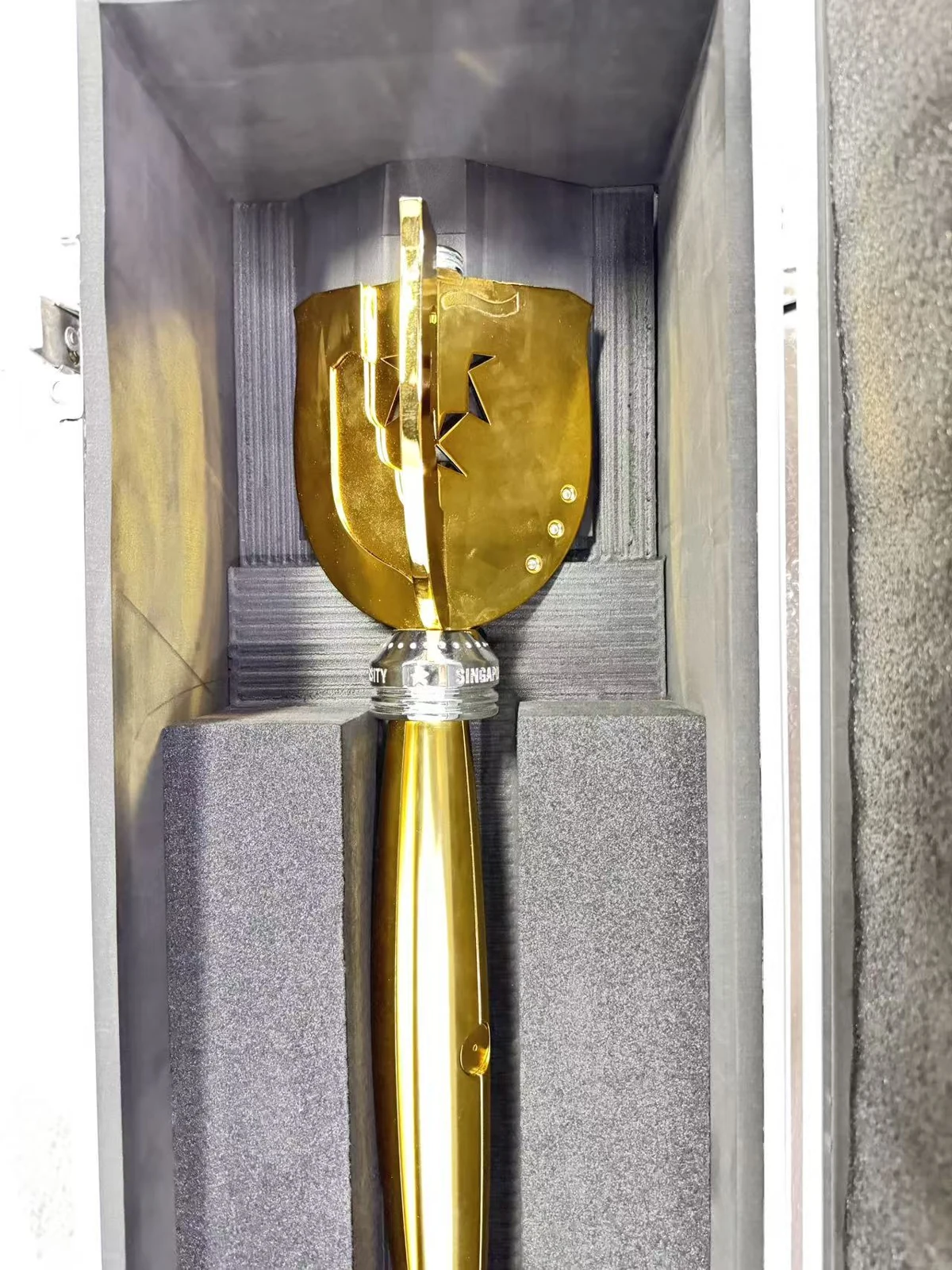
Why Printing and Surface Treatment Were Reviewed Together
SLA is the documented printing process. Fine sanding and electroplating follow in the recorded manufacturing route. The useful lesson is that the printing and surface-treatment scope should be discussed as one deliverable: a printed component prepared for finishing is not the same specification as an untouched printed part.
The project brief does not state why a particular resin or plating system was selected. No resin trade name, metal layer, preparation chemistry or coating thickness is claimed here. A metallic finish also does not establish that the object is a solid-metal component.
For a comparable project, discuss the SLA printing route with the required surface finish. Include approved appearance references and any application requirements in the RFQ. If a material property or coating performance matters, specify the required evidence rather than assuming it from the appearance of this previous project.
Manufacturing Workflow
1. Review the Customer-Supplied Design
The customer supplied the design files. Jingrui Proto’s recorded scope began with analyzing how to divide the design for manufacture. This case does not reproduce the original CAD or introduce an unverified design revision history.
2. Divide the Design into Sections
Sectioning was used to make the subsequent sanding and electroplating work easier. The actual number of printed sections is not documented, so the article does not assign a part count or propose a split map as though it were the customer’s approved design.
3. Produce the SLA Components
SLA printing is stated in the source brief. The record does not provide a printer assignment, build orientation, layer setting or machine operating time. Those details are not needed to describe the verified route and are not filled with typical values.
4. Carry Out Fine Sanding
Fine sanding was recorded before the electroplating stage. The project-specific sanding sequence and any measured surface value were not supplied. The supported claim is the preparation stage itself and its role in the recorded route.
5. Apply the Electroplated Finish
The manufacturing brief names electroplating. The finished photographs provide an appearance reference for the result, while the plating composition and thickness remain unspecified. No corrosion test, adhesion test or durability rating is implied.
6. Assemble the Finished Sections
After electroplating, the sections were assembled. The source records the completed length as 1.1 m. This is the assembled-object dimension stated in the brief, not a measurement taken from the photo and not a printing-machine capacity claim.
7. Pack in a Dedicated Box
The brief records packing in a dedicated box, and the original photographs show the object in fitted protective packaging. No shipping date, transit test or arrival result is available. Packing is described as a documented project step rather than a guarantee of a particular transport outcome.
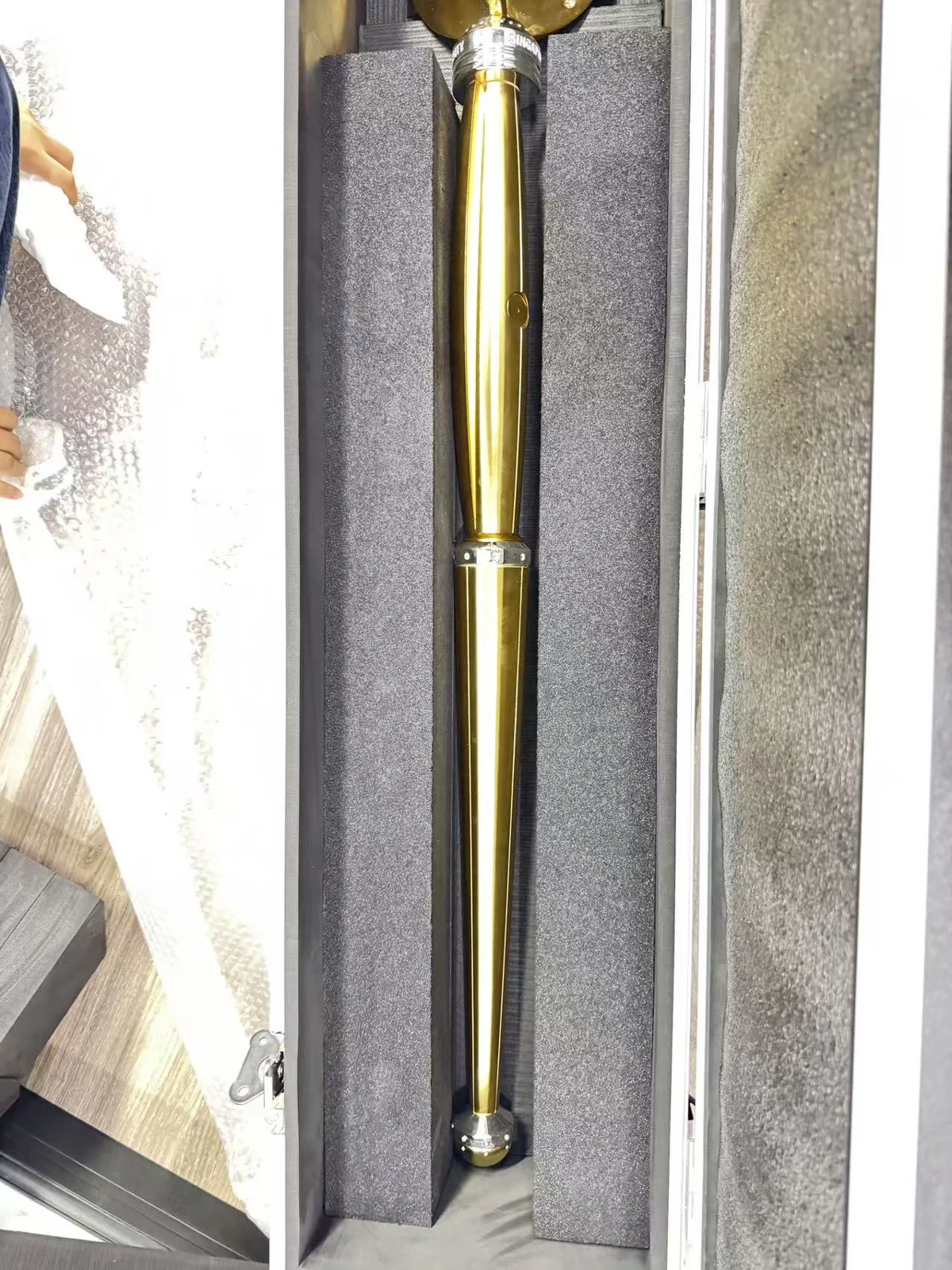
Finishing, Inspection Evidence and Handover
The supported finishing scope is fine sanding and electroplating, followed by assembly. The three selected photographs show the finished form, a decorative detail and the boxed object. Two additional source files primarily show institutional markings on the packaging and are not needed as separate manufacturing illustrations.
No inspection report or measurement method accompanies the supplied record. The case therefore makes no assertion that a dimensional, plating or load test was performed. For a new RFQ, agree the appearance references, any critical assembly requirements and the inspection evidence needed for acceptance before production starts.
A ceremonial object also needs a clearly defined handling and delivery scope. The dedicated packaging in this case is documented, but handling instructions, structural load limits and long-term service requirements are not. Buyers should identify their actual use conditions instead of treating a finished photograph as a performance specification.
Result and Procurement Lessons
The documented outcome is an assembled ceremonial object produced through the stated SLA, sanding and electroplating route, with a recorded 1.1 m assembled length and dedicated-box packaging. The source records a five-day project interval. That interval belongs to this project and is not a standard future lead-time commitment.
For engineering and sourcing teams, the transferable lesson is to plan segmentation, finishing and assembly together. A quotation should define the final object, the finish references, the assembly boundary and the packaging requirements. The supplier can then review how the separate stages contribute to one finished deliverable.
The photographs support the physical form and packaging. They do not establish customer satisfaction, event success or quantified commercial benefit. Those outcomes are not added to make the case sound stronger.
Technical FAQs
Was the entire 1.1 m object printed in one piece?
No such claim is made. The source explicitly records design sectioning before printing, finishing and assembly.
What material and plating thickness were used?
Those specifications were not supplied. A new order needs its own material and finishing review; the gold-colored appearance does not identify the coating chemistry or thickness.
Why were the sections finished before assembly?
The project brief states that sectioning made sanding and electroplating easier. It does not provide a more detailed split or joint specification.
Is the five-day period available for every similar project?
No. It is the period recorded for this order. A new schedule depends on the approved geometry, manufacturing scope, finish and acceptance requirements.
Does the case establish a load-bearing or outdoor-use rating?
No. No structural, environmental or durability test evidence was supplied. Application requirements must be reviewed separately.
What should be included in a comparable RFQ?
Send approved design files, assembled dimensions, quantity, finish references, assembly and packaging requirements, and any required acceptance evidence. Identify whether any institution’s design or markings may be shown publicly.
Related Cases and RFQ
For another finished display-object application, view the custom gold Pegasus trophy model. For a different large-object assembly route, compare the segmented SLA sculpture case. Their materials, dimensions and project circumstances are separate from this ceremonial mace.
Planning a presentation model or a finished ceremonial object? Send your approved design files to Jingrui Proto for a manufacturing review. The Case Studies library provides other documented applications to help define the scope of your enquiry.