
Clear SLA Resin Prototypes: From Supported Prints to Transparent Display Surfaces
What Does This Clear SLA Manufacturing Case Demonstrate?
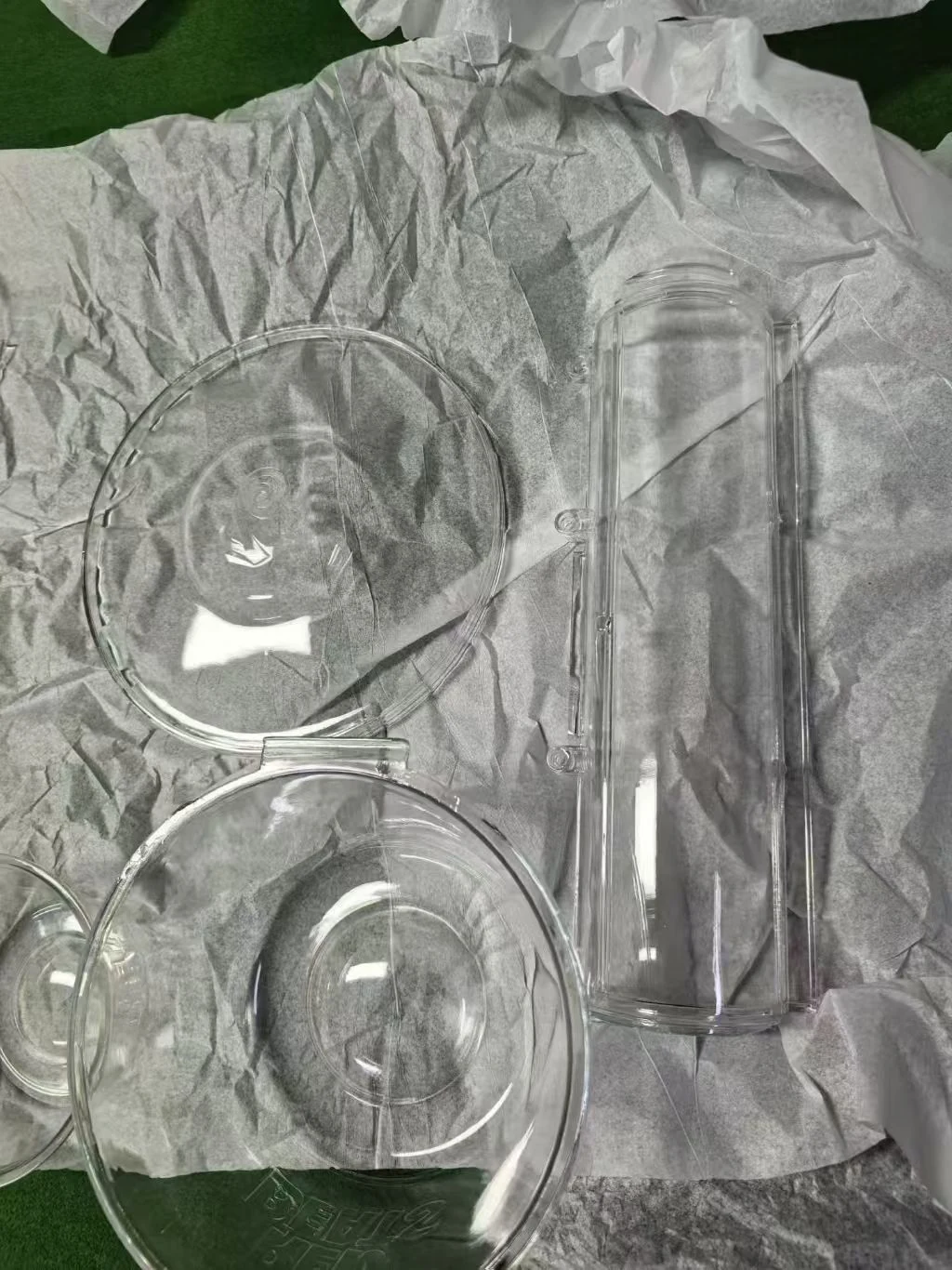
Jingrui Proto’s supplied clear-resin sample collection illustrates SLA printing work and the appearance targets associated with a multi-stage finishing route. The owner-confirmed process is SLA photosensitive resin printing, fine manual sanding, precision polishing, transparent clear-coat spraying and controlled oven drying. Finishing and clear-coat processing take place in a dust-free workshop to minimize surface contamination and protect appearance.
This is a review of a manufacturing sample collection, not a claim that all pictured objects were made for one customer order. The collection contains different product forms and applications. The proposed images illustrate separate stages or sample types; they are not presented as a before-and-after sequence of the same component.
Transparent appearance is the central engineering question: how can a printed resin surface be prepared and finished for a clear or tinted display requirement? The documented answer is a coordinated printing and finishing route, with contamination control during clear-coat processing. No optical-grade transparency or measured optical performance is asserted.
What Is the Verified Manufacturing Scope?
The verified scope is SLA resin printing followed by the owner-confirmed finishing operations. Exact resin grades, part dimensions, customer quantities and production times are not assigned to this sample collection.
| Field | Confirmed scope |
|---|---|
| Printing process | SLA photosensitive resin 3D printing |
| Material family | Transparent resin; exact grade not specified |
| Surface preparation | Fine manual sanding and precision polishing |
| Clear surface finish | Transparent clear-coat spraying |
| Environment | Dust-free workshop for finishing and clear-coat processing |
| Subsequent operation | Controlled oven drying after spraying |
| Appearance options | Clear or colored transparent appearance through approved material and finishing choices |
| Evidence boundary | Multiple samples; no single customer order or measured optical result claimed |
What Appearance Requirement Does Clear SLA Finishing Address?
The appearance requirement is a transparent or tinted presentation surface rather than an unfinished printed appearance. For display models, artistic objects and visual props, the surface is part of the intended visual result. The confirmed operations address that surface through successive preparation, polishing and coating steps.
A buyer should separate the appearance target from an optical specification. A part that looks clear in a photograph has not thereby passed a transmittance, haze or imaging test. Crystal-like or glass-like describes a visual effect here, not the material’s composition or a guarantee that it behaves like glass.
Museum exhibits and film or television props are possible applications of this capability. They are not identified as delivered customer projects within this sample review. No museum approval, conservation suitability or archival-life claim follows from an attractive display surface.
How Is the Confirmed SLA and Finishing Route Organized?
The confirmed sequence moves from SLA resin printing through manual surface preparation to a sprayed clear finish and oven drying. Each operation has a different role, so the finish should be considered alongside the printed geometry rather than as an unspecified final touch.
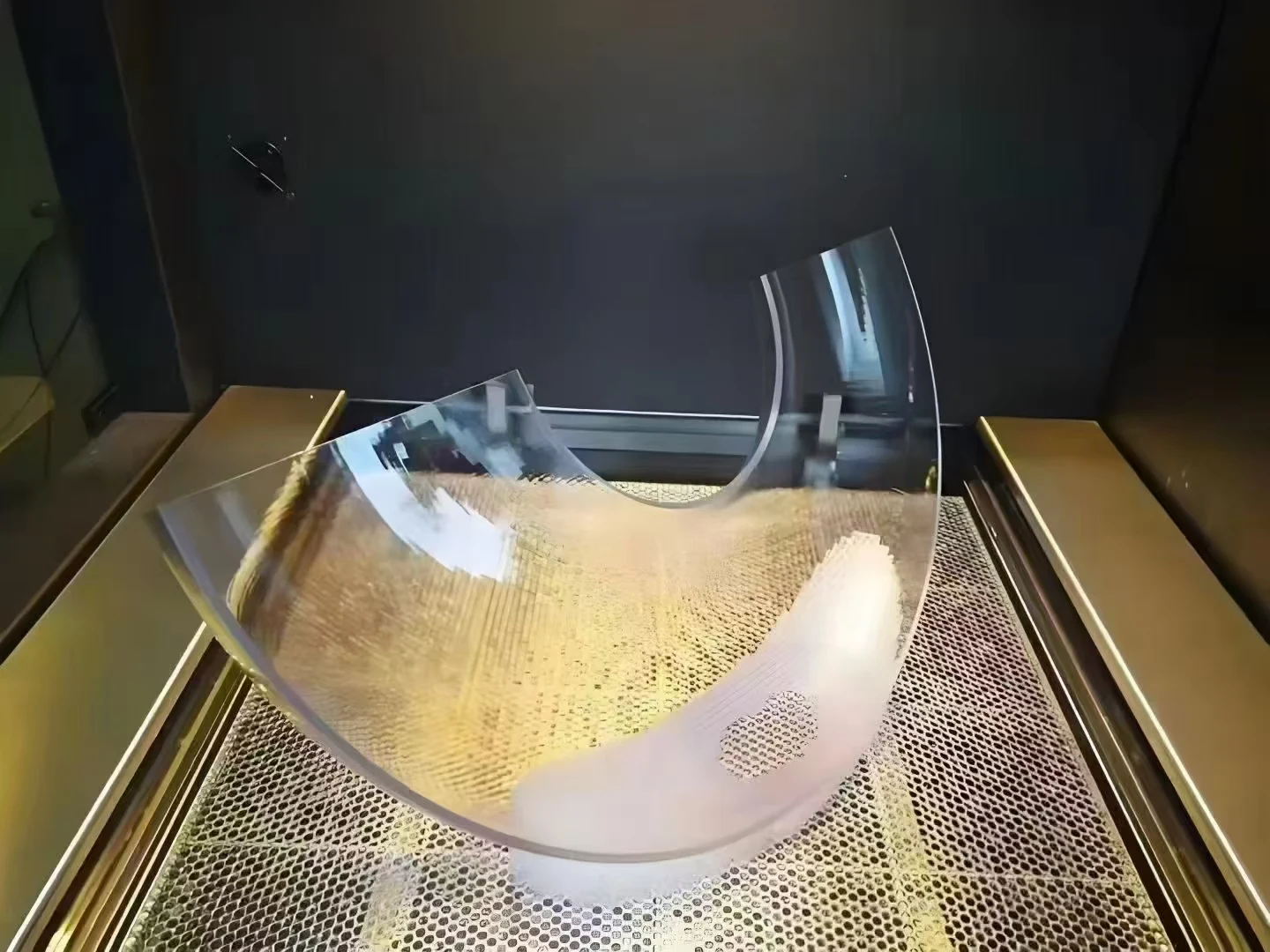
- SLA resin printing: manufacture the resin form. The supplied collection includes objects photographed with supports on equipment platforms, as well as finished-looking samples.
- Fine manual sanding: prepare the surface by addressing visible texture and unevenness. No sanding grit, dimensional allowance or removal rate is specified for these samples.
- Precision polishing: further refine the prepared surface before the clear-coat stage. No surface-roughness measurement is available.
- Transparent clear-coat spraying: apply the documented clear finish under the required dust-free workshop conditions.
- Controlled oven drying: dry the sprayed finish. Temperature, duration and completion criteria must come from the actual material and coating procedure; none is invented for this case.
The oven operation is not described as an additional UV resin-curing stage. A photograph of a printing chamber also cannot be substituted for an oven photograph. The current image collection does not directly show the sanding, polishing, spraying or drying actions.
Why Are Sanding and Polishing Separate Steps?
Sanding prepares the printed surface, while polishing further refines that prepared surface. In general surface-optics terms, surface irregularities can scatter light and affect the perceived clarity of a transparent object. This explains why successive surface-preparation operations matter without claiming that a specific measured improvement was achieved on these samples.
The practical trade-off is that appearance preparation must remain compatible with the geometry. Thin edges, small details and critical interfaces should be identified in a new enquiry so that the finish requirement is reviewed alongside the part design. These are buyer considerations, not a record that any particular feature was modified or repaired in this collection.
Polishing does not establish the resin’s internal optical uniformity. It also does not prove dimensional compliance. An appearance requirement and a dimensional requirement need separate acceptance criteria when both matter to the buyer.
Why Must Clear-Coat Processing Take Place in a Dust-Free Workshop?
Dust-free processing is required to minimize particles settling on the prepared or coated surface and protect its final appearance. Transparent surfaces can make contamination visually distracting, so environmental control is part of the owner-confirmed finishing requirement, not merely a claim that a workshop looks tidy.
The supplied photographs do not verify a cleanroom classification. No ISO cleanliness class, particle count, certification or environmental test is claimed. The dust-free requirement is confirmed by the owner; it is not inferred from a desk, a packaging area or a machine enclosure in a photograph.
The engineering lesson is to discuss the required appearance and contamination control together. A well-prepared part can still present an unacceptable visual surface if contamination is introduced later. This is an explanation of the process requirement, not a claim that such a defect occurred in the pictured work.
How Can Transparent SLA Parts Acquire Color?
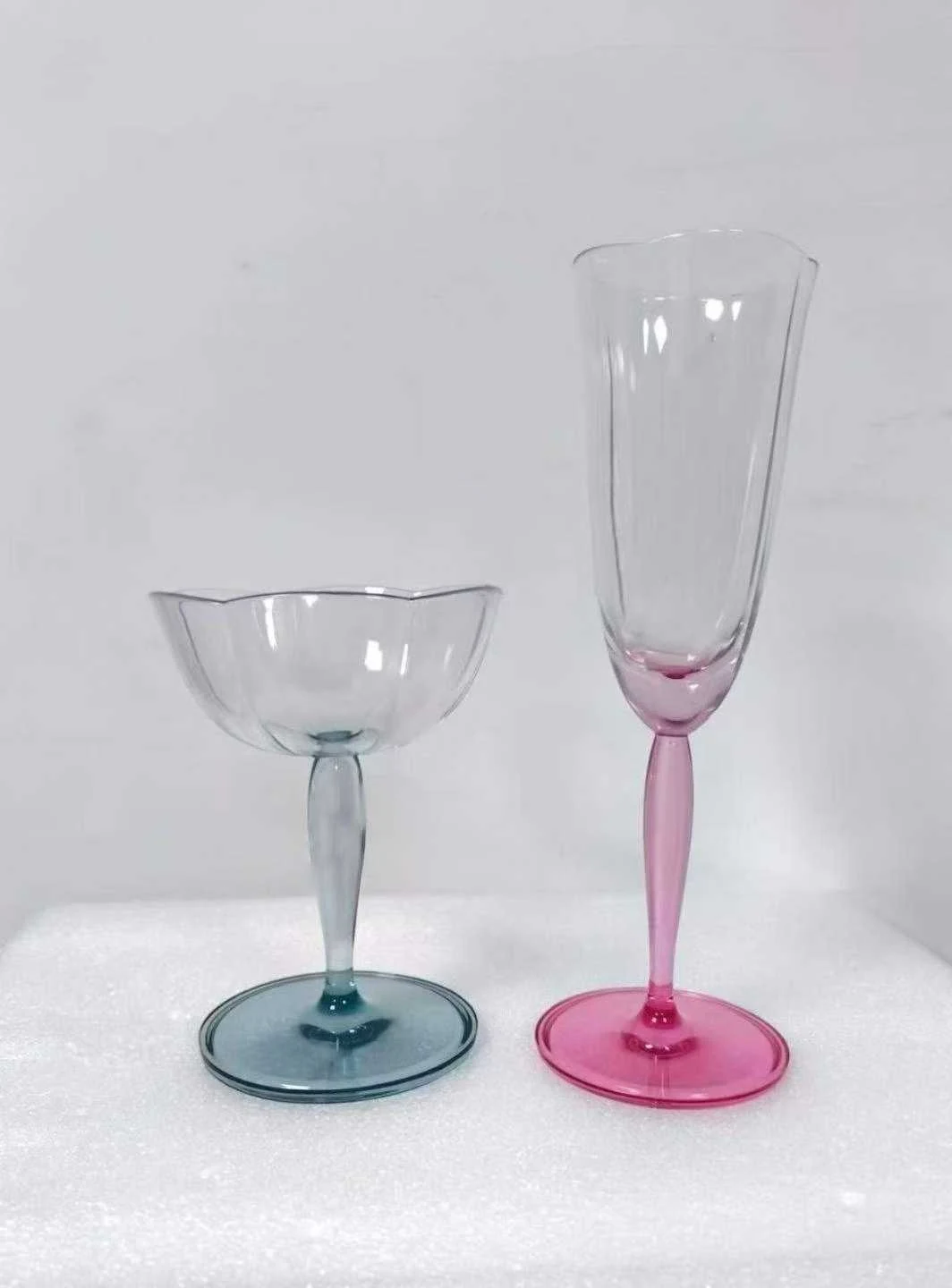
The owner confirms that spraying and dyeing can be used to create colored transparent appearances. Material and coating choices may produce crystal-like, glass-like or agate-like visual effects, depending on the design and finishing requirement. These are appearance descriptions, not claims that the objects are made of crystal, glass or agate.
The sample collection includes colored transparent objects, but a photograph alone does not identify whether a particular object was colored in the resin, by dyeing, through a coating, or through a combination. No per-image coloration method is assigned without confirmation. Formulation, dye concentration and coating chemistry are not supplied.
What Inspection Results and Limitations Are Available?
No dimensional or optical inspection results are supplied for this collection. The photographs can support a discussion of visible shape, color and apparent surface condition; they cannot establish quantified transparency, color accuracy, coating thickness or a tolerance result.
There is also no documented before-and-after measurement, customer acceptance report or service-life result. The case therefore does not claim a numerical improvement, repeatability level, scratch resistance, UV stability or chemical resistance. Those requirements should be defined for a new project and evaluated against the chosen resin and finish.
For a quotation, identify which surfaces are visually important, whether tint consistency matters, and which dimensions or interfaces require inspection. This is recommended RFQ preparation, not a retrospective assertion that those checks were performed on every sample pictured here.
What Is the Result Illustrated by the Sample Collection?
The collection illustrates owner-confirmed SLA resin work in supported-print and transparent or tinted presentation forms. It supports a manufacturing-capability discussion with explicit limits, rather than a single-order delivery story or an optical-performance validation.
The photographs selected for review are intended to show that distinction clearly: a transparent finished-looking sample as the proposed hero, an equipment-platform image for manufacturing context, and a separate tinted sample for appearance options. They must not be captioned as successive stages of one product unless a later project-specific confirmation establishes that relationship.
What Should Buyers Ask About Clear SLA Parts?
The most useful questions distinguish visual intent, material requirements and verification needs before a quotation is finalized.
Is a clear SLA part automatically optical grade?
No. Optical-grade language requires suitable specifications and verified testing. A transparent appearance or a polished surface is not enough.
Are the illustrated parts made from glass or crystal?
No such material claim is made. The confirmed manufacturing family is SLA photosensitive resin; glass-like and crystal-like refer only to appearance.
Does every photograph show the complete finishing route?
No. The owner confirms the process, but the photographs do not directly document every operation. The collection is not one shared customer order.
Can a tinted transparent appearance be requested?
Yes. The owner confirms spraying and dyeing capability. A new enquiry should describe the desired color and transparency effect without assuming a particular recipe or exact color match.
Does oven drying prove a specific thermal performance?
No. Drying is part of the finishing sequence. It does not establish a resin temperature rating or the finished part’s service-temperature capability.
What information is needed for a similar project?
Provide approved part files, quantity, intended use, appearance references, important surfaces and any material, dimensional or optical acceptance requirements. Identify confidentiality restrictions before selecting public photographs.
How Can Jingrui Proto Review a Clear SLA Requirement?
Use Jingrui Proto’s SLA 3D Printing service to discuss the design and intended appearance. Send the part files and finishing requirements through the Contact Us page, distinguishing visual expectations from any specifications that require measurement.
The enquiry should make clear whether the requirement is a display model, artistic object, visual prop or another application. That allows printing, surface preparation, clear-coat processing and verification needs to be considered together without promising an unsupported optical result.