
Resin 3D-Printed Automotive Prototypes for Carbon-Fiber Conversion
What Did Jingrui Proto Supply for This Automotive Modification Project?
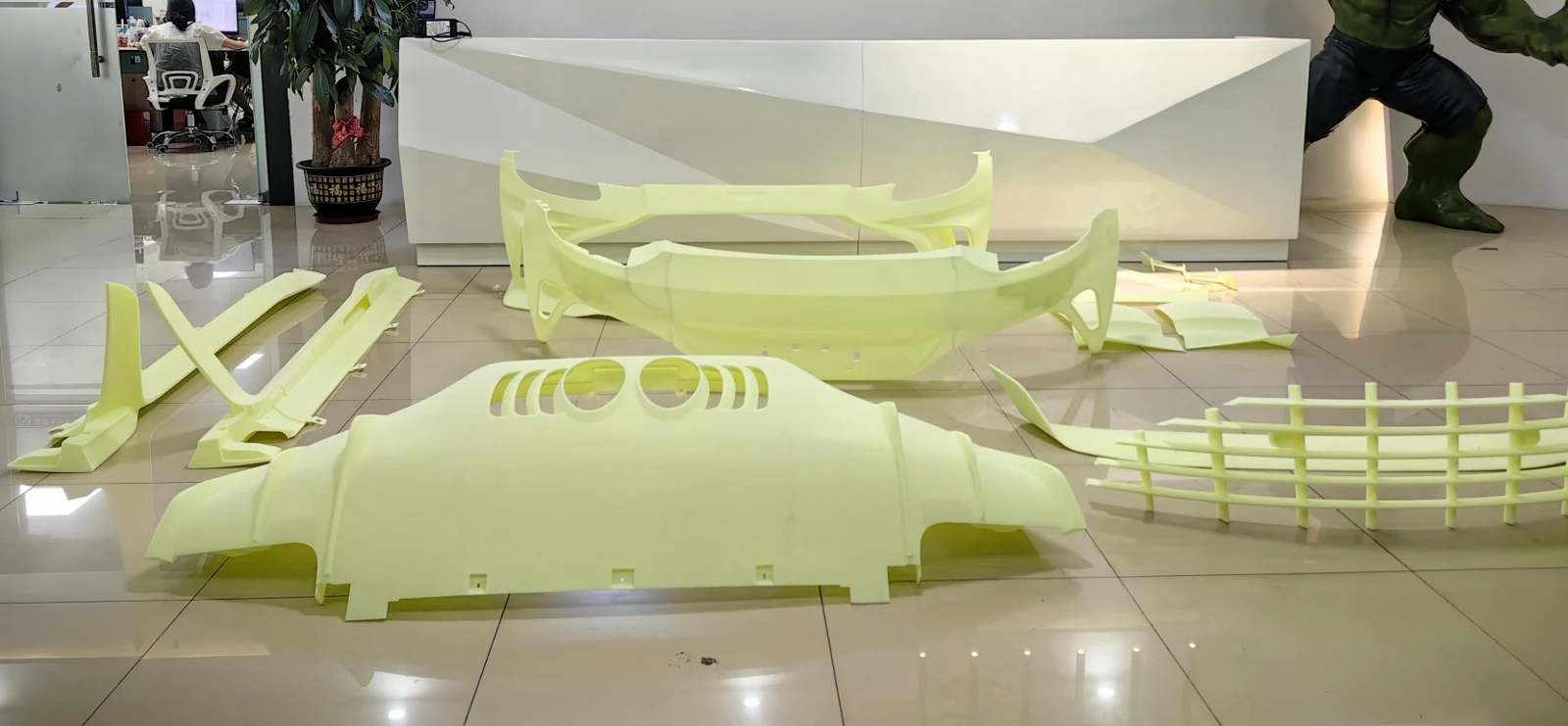
Jingrui Proto supplied one set of resin 3D-printed parts to an automotive modification workshop. The workshop subsequently made the finished carbon-fiber components itself. This case therefore documents a printing supply scope within a wider modification project, rather than a carbon-fiber manufacturing service delivered by Jingrui Proto.
The project brief records “yellow material,” one set and a five-day project period. This historical order dates from approximately 2023. The customer remains unnamed, and no vehicle model is identified.
| Project field | Documented information |
|---|---|
| Customer type | Automotive modification workshop |
| Intended application | Printed automotive prototypes for subsequent carbon-fiber conversion |
| Jingrui Proto responsibility | Supply of printed parts only |
| Recorded printing route | Resin 3D printing; specific technology not stated |
| Recorded material | “Yellow material”; resin grade not specified |
| Recorded quantity | One set; component count not specified |
| Recorded project period | Five days; interval boundaries not specified |
| Subsequent carbon-fiber work | Performed by the modification workshop itself |
What Did the Modification Workshop Need from the Printing Supplier?
The workshop needed printed parts before undertaking its own carbon-fiber conversion work. That relationship is the confirmed requirement: Jingrui Proto provided the printed components, while the modification workshop was responsible for producing the later composite components.
The available record does not define whether a particular printed component was used directly as a pattern, as an intermediate reference, or within another tooling arrangement. Those are different manufacturing roles. The case does not label the printed set as a qualified mold, production tool or ready-to-use composite layup surface without evidence of that role.
For buyers, the useful distinction is between ordering a printed shape and ordering a fully specified manufacturing aid. An enquiry should describe what happens to the print after receipt. That allows the parties to discuss the required handover condition without treating every printed automotive component as interchangeable tooling.
Why Does the Printing-to-Composite Handover Matter?
The handover matters because two different manufacturers were responsible for different outputs: Jingrui Proto supplied printed parts, and the customer workshop manufactured the carbon-fiber parts. Keeping those responsibilities clear prevents the finished composite photographs from being mistaken for evidence that the printing supplier performed the composite work.
This is a scope and communication lesson supported by the project. It is not a claim that a particular defect, tooling failure or assembly problem occurred. No project-specific engineering incident or corrective-action record is available, so the case does not reconstruct one from the appearance of the parts.
For a comparable order, buyer and supplier should agree which geometry must be preserved, which surfaces will be used in the next operation, and who will prepare them. These are recommended questions for a new RFQ, rather than undocumented decisions attributed to this historical customer.
Which Printing Process and Material Are Actually Documented?
Resin 3D printing is the documented manufacturing process, and “yellow material” is the material wording in the brief. An exact printing technology, resin manufacturer or grade is not supplied. The case therefore makes no SLA, DLP, temperature-resistance, strength or chemical-compatibility claim for this set.
The choice rationale is also not recorded. It would be misleading to explain an assumed resin-selection decision as if it came from a manufacturing review. Buyers evaluating a new application should instead provide the conditions relevant to their next operation and request a material recommendation against those conditions.
The original yellow-toned component photograph is useful for understanding the supplied shapes. Color alone cannot identify a resin formulation or demonstrate suitability for a particular composite-production route. Discuss a new requirement through Jingrui Proto’s 3D printing service with the intended use clearly stated.
How Did the Documented Work Move from Printed Parts to Composite Components?
The confirmed sequence is printing supply by Jingrui Proto followed by carbon-fiber manufacture by the automotive modification workshop. The project record supports these responsibility-level stages; it does not provide a detailed printing job log or the workshop’s composite-production instructions.
- The workshop required printed parts for its automotive modification work.
- Jingrui Proto supplied the printed set described in the project brief.
- The workshop carried out the subsequent carbon-fiber work itself.
No molding, layup, curing or composite trimming operation is assigned to Jingrui Proto. Likewise, no undocumented printing orientation, splitting strategy, bonding operation or finishing sequence is added to make the workflow appear more complete. The five-day interval remains a source-recorded project period, not a promise for future orders or proof of the total composite-production schedule.
What Finishing, Assembly and Inspection Can This Case Demonstrate?
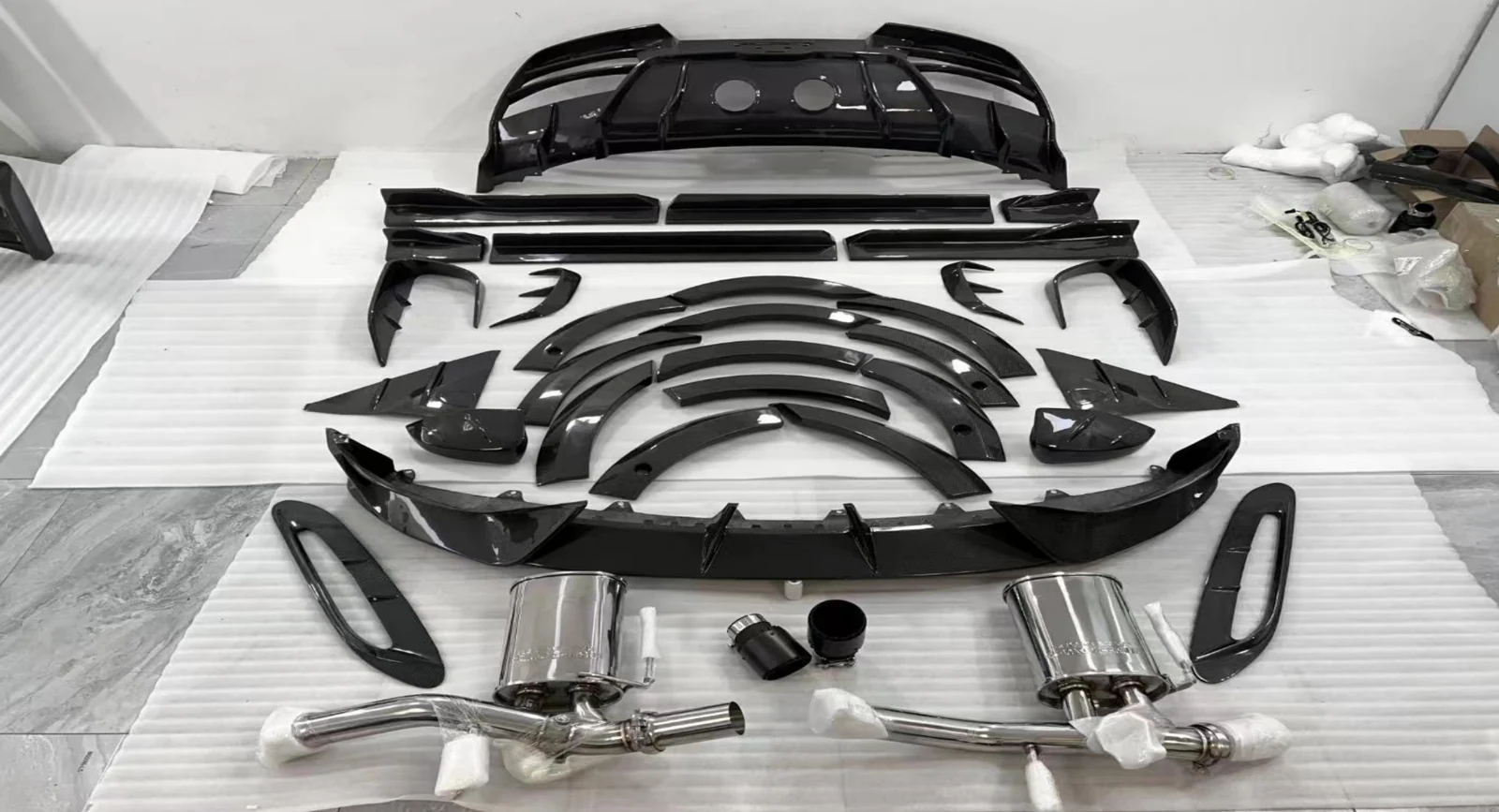
The available evidence does not establish specific finishing, assembly or inspection operations performed on Jingrui Proto’s printed set. The photographs show appearance and part layouts, but they do not supply a dimensional inspection report, an assembly acceptance record or a functional result.
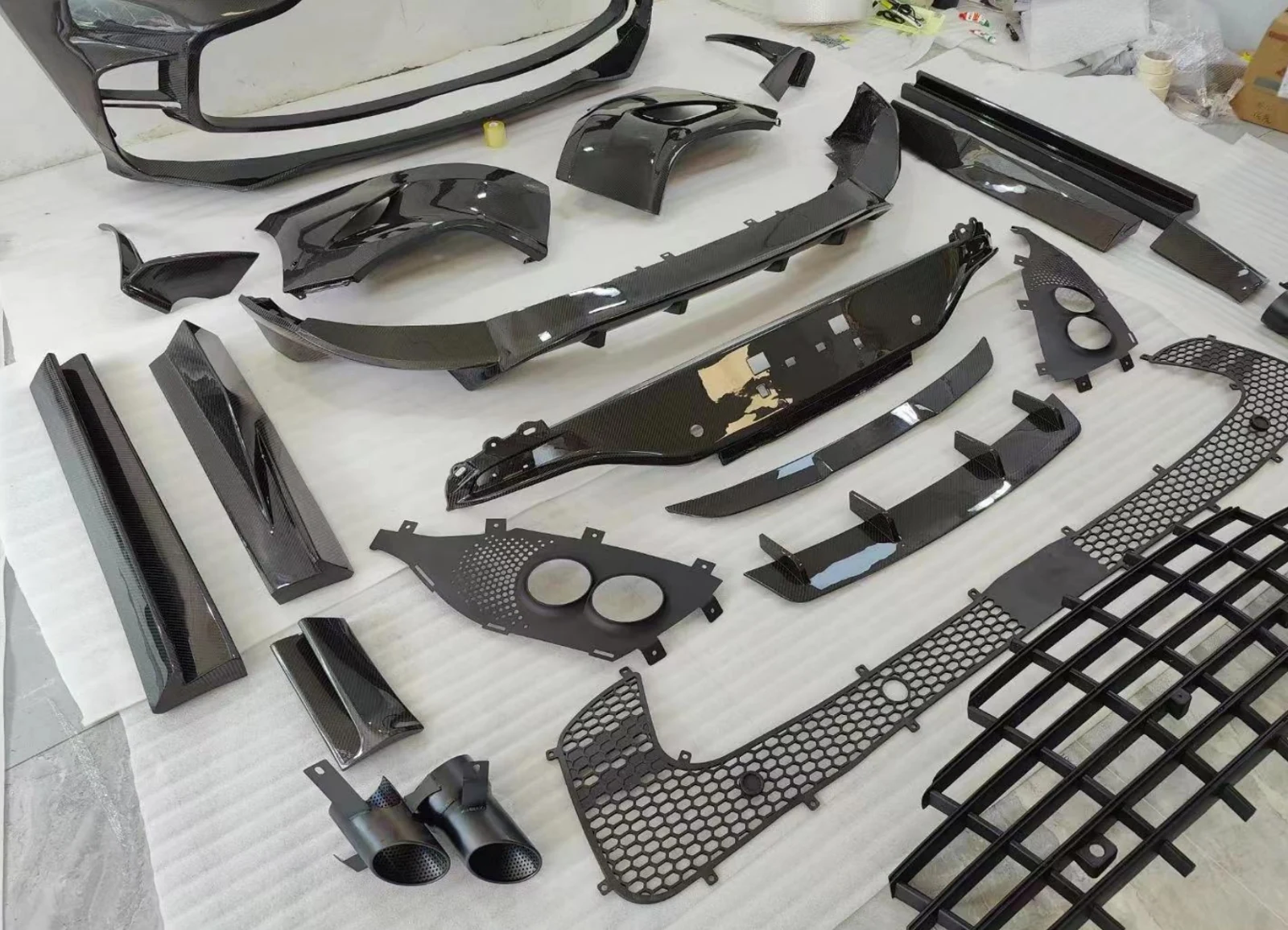
The glossy appearance of the customer workshop’s finished components does not prove that Jingrui Proto applied a coating, polished those surfaces or produced the underlying composite. The customer’s later work must remain separate from the printing scope throughout captions and technical descriptions.
For a new order, agree any required checks and reports before manufacture. If additional surface preparation is required, specify who will perform it and what condition is expected at handover. Jingrui Proto’s surface-finishing service can be discussed for a new quotation; its inclusion here does not establish that those operations were performed on this historical set.
What Was the Result, and What Does It Not Prove?
The confirmed result is that Jingrui Proto provided printed parts and the modification workshop subsequently produced its own finished carbon-fiber components. The original project photographs show the printed parts and the workshop’s subsequent components from the same independent order, with each manufacturer’s responsibility identified.
The record does not demonstrate road-use approval, vehicle fit validation, durability testing, a tolerance achievement or a quantified improvement in cost or time. None of those outcomes is inferred from a completed component photograph. The project’s value as a case study is the clearly bounded printing contribution and its place in the customer’s subsequent manufacturing work.
What Should Buyers Specify for a Similar Automotive Printing RFQ?
Buyers should specify the printed deliverable and the next manufacturing operation separately. Include the part files, quantity, any critical dimensions, the intended use of the printed surfaces, and the required handover condition. If a material grade is mandatory, name it rather than relying on a color description.
Also identify who will perform any further tooling, composite processing, finishing and inspection. A part list helps define what constitutes a set; a written handover requirement helps distinguish a print-only quotation from a broader manufacturing package. These recommendations apply to new enquiries and do not imply that those documents were supplied for this order.
What Are the Main Technical Questions About This Project?
The central questions concern process specificity, manufacturing responsibility and the limits of photographic evidence.
Did Jingrui Proto manufacture the finished carbon-fiber components?
No. Jingrui Proto supplied printed parts only. The automotive modification workshop made the finished carbon-fiber components itself.
Was SLA the confirmed printing process?
The brief says resin 3D printing without identifying the exact technology. SLA is not asserted for this case.
Does “yellow material” identify a technical resin grade?
No. It is the source description, not a chemical specification or performance rating.
Does the five-day period cover all composite manufacturing?
The period is recorded in the printing-project brief, but its boundaries are not stated. It is not presented as the workshop’s complete composite-production schedule.
Is this the previously published automotive customization case?
This is an independent order. Its facts and photographs remain separate from the other published project.
How Can Buyers Request a Comparable Printed-Part Supply Scope?
Send the approved part files, set breakdown, intended subsequent operation and any material, finishing or inspection requirements through Jingrui Proto’s RFQ contact page. State clearly whether you need printed parts only or additional manufacturing services, so the quotation can define the responsibility at each stage.
Browse the Case Studies library for other manufacturing scopes. The separate automotive customization case describes a different order; its customer details, process combination and timing do not apply to this project.