
Discontinued Automotive Parts: 3D-Printed Masters and Silicone-Mold Casting
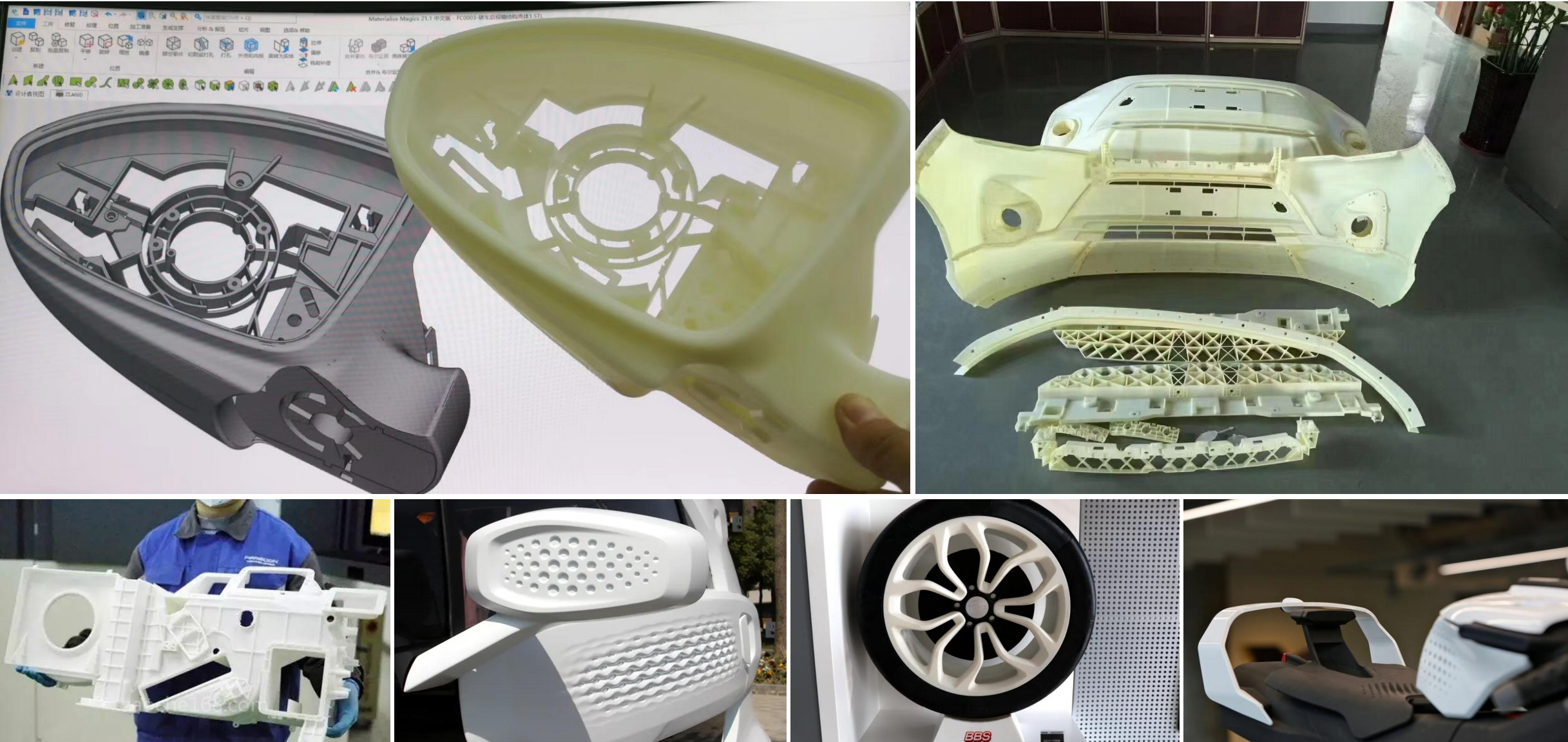
Jingrui Proto reproduced discontinued automotive components using 3D-printed masters followed by silicone-mold casting. The owner confirms that the products in the supplied project collage belong to an independent order, separate from the automotive customization projects previously documented on this website. The material is recorded as PP, as confirmed by the owner; no grade or measured material properties are claimed.
The historical project note describes the difficulty of obtaining replacement parts for an older vehicle, records a five-day project period, and states that the reproduced parts were used. This case concerns that replacement-part manufacturing requirement. It does not present a carbon-fiber conversion project or claim an automotive qualification program.
What Automotive Replacement-Part Requirement Did This Project Address?
The project addressed a need to reproduce automotive components that were no longer readily available for an older vehicle.
The original note identifies unavailable replacement parts as the reason for considering a manufacturing route instead of purchasing an existing spare. It describes a combination of 3D printing and silicone molding and records a resulting part that was used. The owner subsequently confirmed the manufacturing route and material for the products shown in the supplied collage.
The customer and vehicle model are not identified in the article. No component-by-component delivered quantity, dimension or drawing revision is available for public reporting. The collage is retained as a project reference rather than treated as a complete shipping list.
What Manufacturing Scope and Material Are Confirmed for This Order?
Jingrui Proto’s confirmed scope was 3D printing the original masters and then using silicone-mold casting, with PP identified by the owner as the material.
| Project field | Supported information |
|---|---|
| Application | Reproduction of discontinued automotive components |
| Manufacturer | Jingrui Proto |
| Master preparation | 3D-printed originals / masters |
| Subsequent process | Silicone-mold casting |
| Material | PP, owner-confirmed; grade not specified |
| Historical project period | Five days, as recorded in the project note |
| Documented result | The note states that the reproduced parts were used |
| Order identity | Independent order, confirmed by the owner |
PP is reported using the owner’s terminology. The available records do not identify a trade name, resin formulation, molding temperature or material test report. The article does not substitute a different material description or use the stated material to imply a particular performance rating.
Why Did the Project Combine a Printed Master with Silicone Molding?
The project combined printing and silicone molding to reproduce parts for intended use, rather than stopping at an appearance-only printed model.
The source note explicitly distinguishes a visual model from the customer’s requirement for a usable replacement. That is the documented reason for discussing a route beyond a display print. It is not evidence that any particular printing material failed a test or that the casting route met an external standard.
The engineering buying question is therefore the required supplied state. A request for a shape to review and a request for a component intended for use need different definitions of material, acceptance and responsibility. This project records the latter intention without providing a measured service-life or durability result.
For a new project, the intended application and required material should be reviewed together. Buyers can discuss silicone-mold and vacuum casting services with Jingrui Proto; the service link does not add a vacuum-processing step to the historical record, which confirms silicone molding without identifying the equipment used.
How Did the Confirmed Manufacturing Route Progress from Master to Part?
The confirmed route began with 3D-printed masters and continued with silicone-mold casting to produce the replacement components.
The owner identifies that sequence for the products in the project collage. It establishes the role of the printed original within the route. It does not identify whether the masters used SLA, SLS, FDM or another printing technology, so the article does not select one from the appearance of the photographs.
Likewise, the record does not identify the mold count, mold life, gating arrangement, curing conditions or equipment. No trimming, painting, bonding, insert installation or final assembly operation is added without a corresponding project record. The manufacturing description stays at the level of the actual confirmed work.
The supplied collage contains physical-product photographs together with a digital design/reference view. These serve different purposes. The digital view is not counted as a production photograph, and the arrangement of the collage is not presented as a step-by-step sequence or a before-and-after comparison.
What Engineering Challenge and Solution Can Be Reported Accurately?
The supported challenge was obtaining an unavailable replacement component, and the documented response was reproduction through printing and silicone molding.
This is a sourcing and manufacturing problem with a concrete process response. The source record does not describe a dimensional correction, reverse-engineering measurement campaign, shrinkage-compensation exercise or tooling failure. None is invented to make the project appear more technically dramatic.
For a similar enquiry, the useful information is the component’s identity, intended use, available geometry and required interface with the existing product. If only a damaged original is available, the scope of data preparation must be agreed separately. These are questions for a future RFQ, not additional operations claimed for this historical order.
What Quality-Control Process Applies Before Shipment?
Jingrui Proto inspects every customer order before shipment, as confirmed by the owner.
That company process is included without assigning an undocumented inspection instrument or acceptance criterion to this order. There is no supplied CMM report, numerical tolerance, sampling plan or component-specific functional-test result for this case.
The statement that the reproduced parts were used also does not establish an impact test, water-resistance test, UV-exposure test or automotive certification. Although the historical note discusses desired outdoor-use characteristics, this article does not publish those as tested performance claims.
For a new replacement component, any required dimensional report, fit review or application-specific validation should be defined in the enquiry. The parties should distinguish the manufacturing supplier’s checks from the customer’s responsibility for validating use in the final application.
What Delivery Result and Schedule Does the Historical Record Support?
The historical record states that the component was reproduced and used, and records a five-day project period.
The five-day figure describes this retained project note. Its exact start and end milestones are not specified, and it is not offered as a standard turnaround for future automotive parts. No delivery quantity, shipping date, service mileage or customer satisfaction statement is added.
The practical project value is the documented use of a printed-master and silicone-molding route when an existing replacement was difficult to source. It demonstrates a manufacturing option for a particular order, not a guarantee that every discontinued component can be reproduced by the same route or used without further validation.
What Should Buyers Specify for a Similar Discontinued-Part Project?
Buyers should identify the unavailable component, its intended use, the available design or reference information and the required supplied state.
Include any mandated material, dimensions to verify, mating-part information, quantity and finish requirements. State which checks or reports are required and who will validate the component in the final application. These details let the manufacturing discussion focus on the actual part rather than a generic promise of an interchangeable replacement.
The prototype manufacturing service provides a relevant starting point. The guide to vacuum casting versus injection molding discusses a related sourcing decision; this case does not claim that injection molding was performed. For a different application with its own documented finishing requirements, see the electronic instrument housing case. Its finishes, inserts and assembly details are not transferred to this automotive order.
What Questions Define the Evidence for This Automotive Parts Case?
The main questions distinguish the confirmed route and material from unverified performance or component-level specifications.
What manufacturing sequence is confirmed?
The owner confirms 3D-printed masters followed by silicone-mold casting.
What material is recorded?
The owner identifies PP. No grade, formulation or measured properties are supplied.
Is the project an appearance-only model order?
The source note describes replacement parts that were reproduced and used, rather than only a shape for visual review. This is not a claim of certified automotive performance.
Were all images in the collage captured during production?
No. The collage includes a digital design/reference view as well as physical-product photographs. It is not a manufacturing-sequence photo set.
Is five days a guaranteed lead time?
No. Five days is a historical project figure. A new schedule requires review of the actual scope.
How Can Buyers Request a Similar Automotive Component Review?
Buyers can send the component reference, available geometry and intended application to Jingrui Proto for a project-specific manufacturing review.
Identify the material and inspection requirements where specified, together with the requested quantity and delivery scope. Request a Similar Project Quote or talk to our engineers on WhatsApp. A quotation and process recommendation should be based on the actual component, not inferred from another project’s photographs.