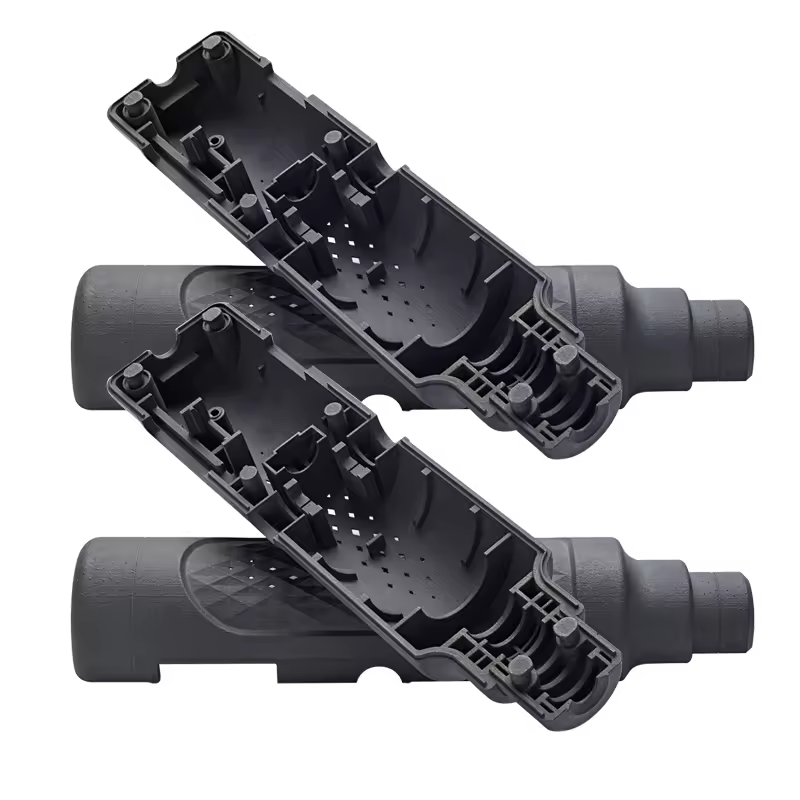
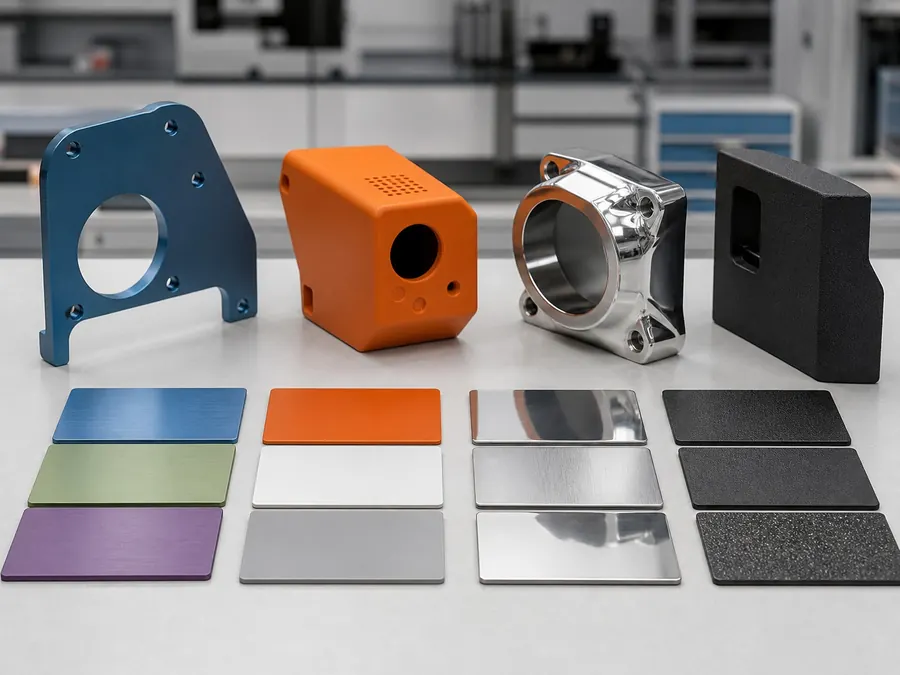
Choose vacuum casting when a limited batch must support appearance, assembly, or user evaluation while the design is still changing. Choose injection molding when the project requires validation in the specified molded material and process, or when a stable design and credible repeat demand justify dedicated tooling. Quantity matters, but there is no universal order size at which injection molding automatically becomes the better purchase.
This comparison concerns typical polyurethane-resin vacuum casting in silicone tooling versus thermoplastic injection molding in rigid tooling. Other casting chemistries and injection-molding systems exist, but are outside this comparison. Vacuum casting commits to a master pattern, silicone tooling, and a curing resin system. Thermoplastic injection molding commits to a mold design and a melt-processing route. Compare the evidence each can provide, the changes still likely to occur, and the total cost of accepted parts before deciding.
How do silicone vacuum-casting tools differ from injection-molding tools?
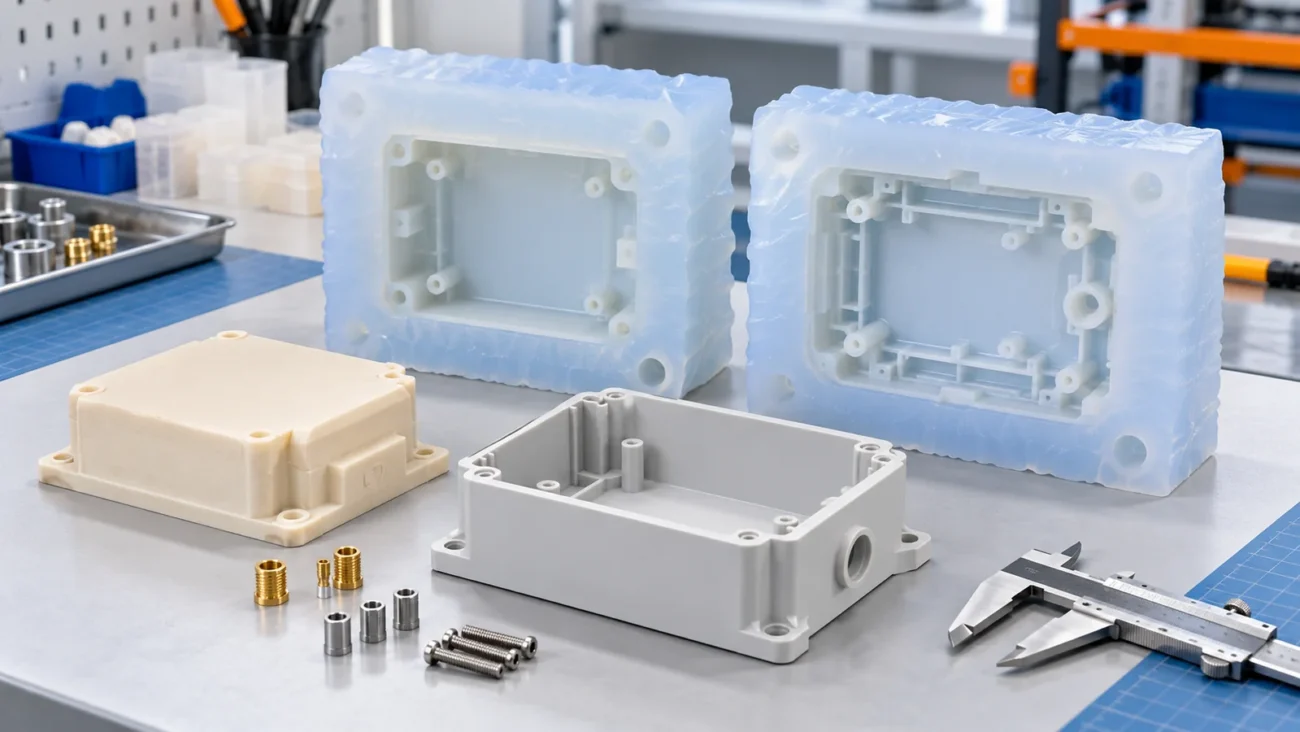
Silicone casting tooling reproduces a master for a curing resin system, whereas thermoplastic injection tooling must support filling, cooling and ejection of the specified polymer.
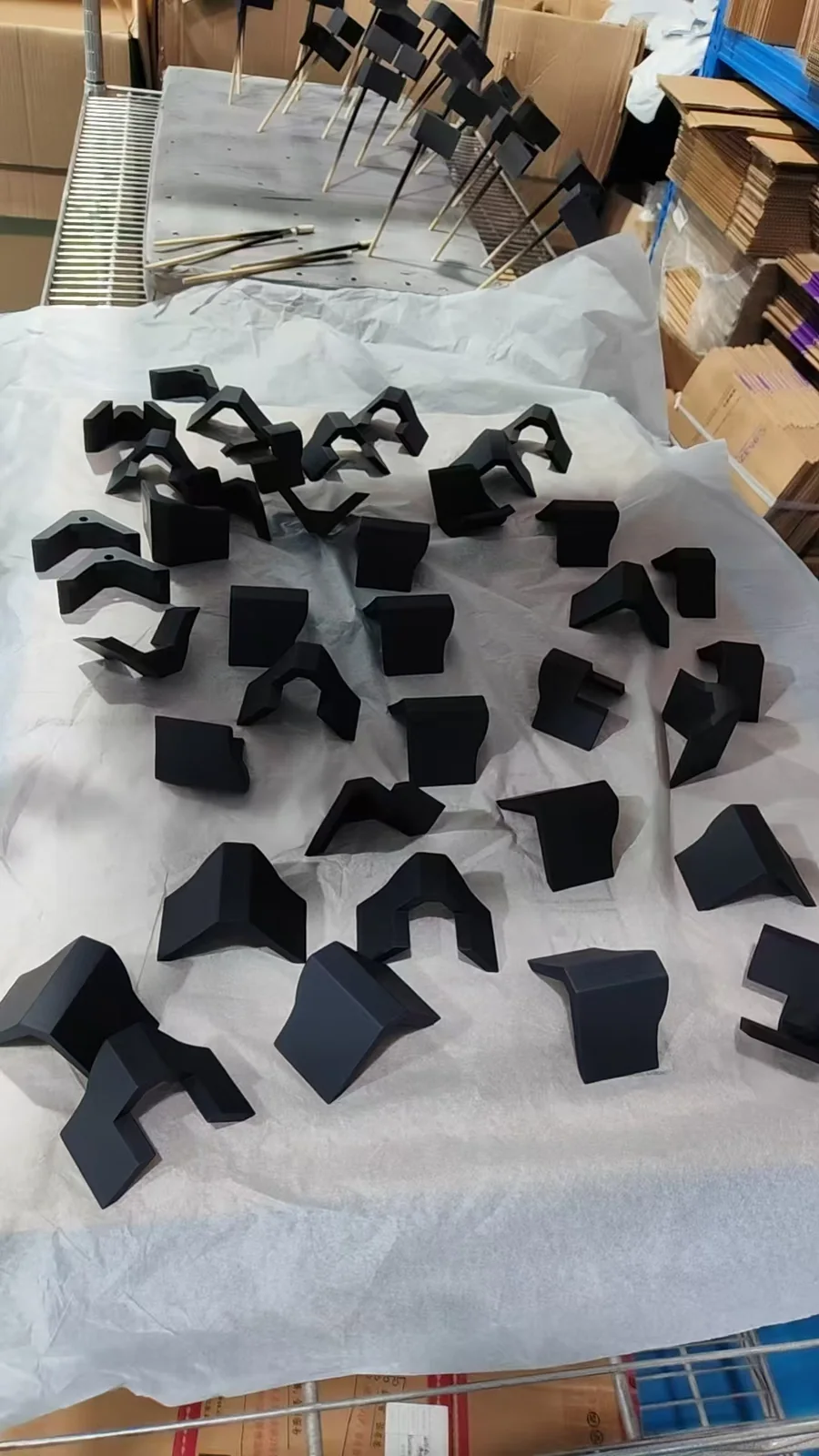
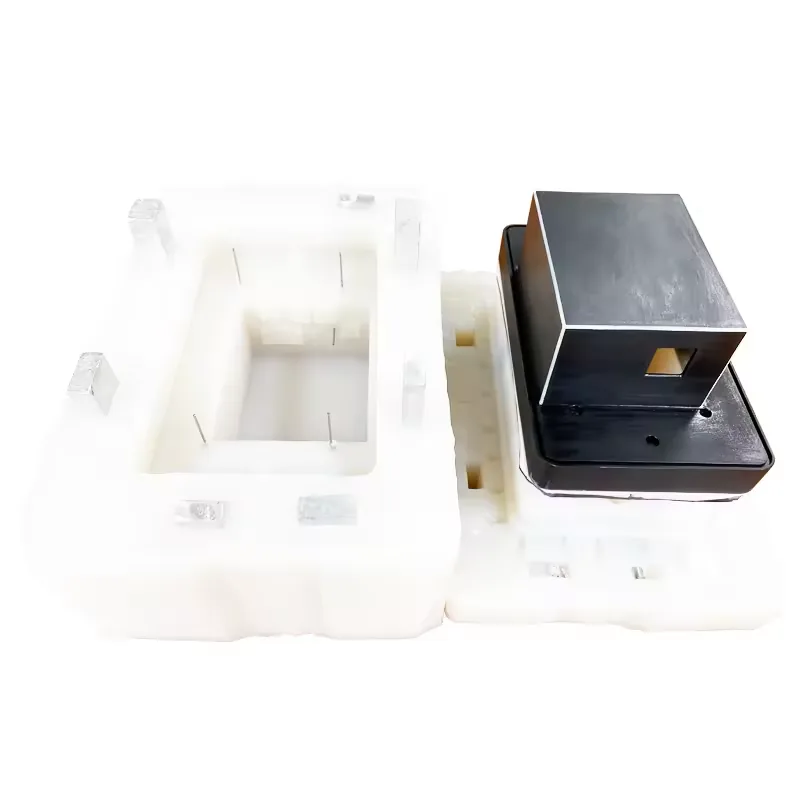
In polyurethane vacuum casting, a master pattern defines the geometry of a silicone mold. Reactive liquid components are mixed, introduced into the mold, and chemically cured to form the part; vacuum assists in managing trapped air. Mixing, working time, cure conditions, and any required post-cure belong to the manufacturing plan. The master, mold construction, resin behavior, and demolding method all influence the finished part.
Thermoplastic injection molding introduces heated polymer melt into a tool cavity under controlled processing conditions. The part solidifies as it cools sufficiently for ejection, rather than forming through the polyurethane resin’s chemical cure. Filling, packing, cooling, gate location, parting lines, and ejection therefore become part of the manufacturing definition. Cooling and shrinkage can influence final geometry; a cast sample cannot reproduce that molding history.
A Prototype Can Answer the Wrong Question
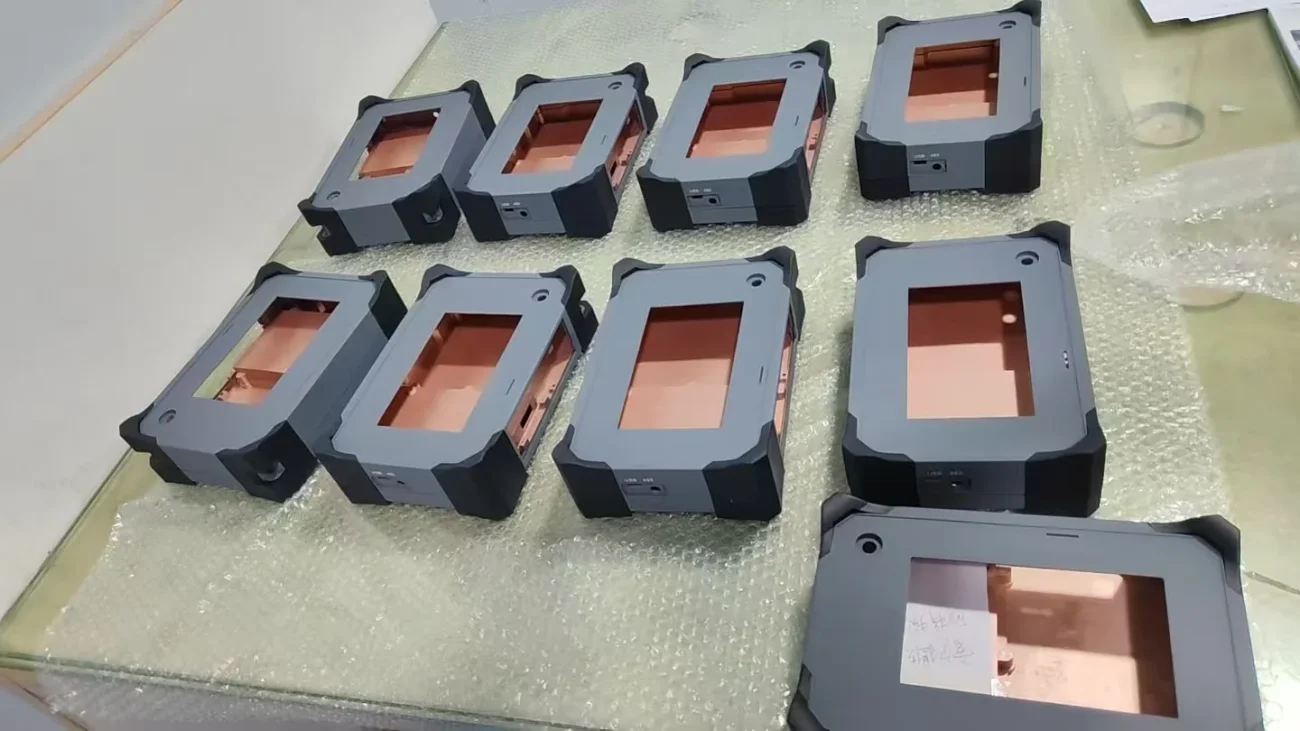
A cast enclosure may establish whether the electronics fit and whether users like the shape. It does not automatically establish that an injection-molded enclosure will fill successfully, resist warpage, or meet the same mechanical requirement. Different processes can produce similar external geometry while creating different material behavior and manufacturing risks.
Before requesting either route, write down what the batch must prove. Separate appearance approval, dimensional assembly, mechanical testing, environmental testing, and production-process validation. That distinction prevents a successful demonstration sample from being treated as evidence for an untested production route.
Which validation goals favor vacuum casting or injection molding?
Use casting to evaluate an agreed representation of appearance and assembly, and assess injection molding separately when the validation depends on the intended molded material or process.
| Buyer requirement |
Vacuum casting consideration |
Injection molding consideration |
Decision evidence |
| Design still changing |
New masters and molds may accommodate revisions |
Tool changes can affect cost and schedule |
List unresolved design decisions |
| Customer appearance trial |
Master and finish determine visual representation |
Mold surface and molding conditions determine appearance |
Approve a representative sample |
| Final material testing |
Cast resin may represent selected properties only |
Specified molding grade can support relevant validation |
Define material-dependent tests |
| Uncertain repeat demand |
Tool replacement and manual work remain relevant |
Tool investment depends on credible future orders |
Compare realistic demand scenarios |
| Complex undercuts |
Flexible tooling can help, subject to demolding limits |
Tool actions or geometry changes may be required |
Obtain a feature-level review |
| Long-term repeat supply |
Mold aging and replacement need a plan |
Tool maintenance and process control need a plan |
Agree traceability and repeat-order controls |
Neither column should be read as a supplier promise. The decision requires a quotation and manufacturability review for the actual part, material, finish, and acceptance criteria.
Can polyurethane vacuum-cast parts validate an injection-molded material?
No: a cast polyurethane can support only the agreed evaluation objectives and cannot automatically establish the behavior of an injection-molded thermoplastic.
Polyurethane casting resins are sometimes described as ABS-like, rubber-like, or similar to another familiar material. Those descriptions can be useful for initial selection, but they do not turn a cured polyurethane into an injection-molded thermoplastic. The resulting polymer structure and processing history differ. Similar appearance or a selected datasheet property does not establish chemical identity or equivalent behavior under every load and environment.
A resin that produces a convincing appearance model may behave differently under sustained loading, repeated flexing, elevated temperature, moisture, ultraviolet exposure, or chemical contact. Ask for the exact proposed resin and relevant data, then identify which properties must be demonstrated on the finished component.
Define What the Cast Batch Is Allowed to Prove
If the test is electronics packaging, a substitute material may be acceptable provided it does not invalidate fit or handling. If the test concerns a living hinge, solvent resistance, or long-term dimensional stability, material substitution can change the meaning of the result.
Write the permitted conclusions into the validation plan. For example, a cast housing may be approved for assembly evaluation while production-material testing remains open. That is a useful result when documented clearly; it becomes a risk when the distinction disappears from procurement records.
Injection molding also requires qualification. Naming a production polymer does not establish that the proposed grade, processing conditions, additives, and component design will satisfy the application. Require project-specific confirmation instead of treating “production material” as a complete acceptance standard.
What design features require separate casting and injection-molding reviews?
Review undercuts, mold separation, gates, wall transitions and ejection separately because flexible silicone demolding does not establish suitability for rigid injection tooling.
Vacuum-cast geometry inherits details from the master. Surface defects or dimensional errors in that pattern can be repeated in subsequent parts. Inspect and approve the master or a representative first casting before releasing the rest of the batch.
Silicone flexibility can assist removal of some undercuts, but it does not make all geometries practical. Thin projections, deep recesses, delicate ribs, and difficult mold separation can increase tearing, damage, or manual intervention. Ask how the proposed part will be removed and which features are vulnerable.
Casting Details That Affect Assembly
Discuss mold split locations, fill and vent arrangements, resin shrinkage considerations, and treatment of inserts. Identify visible areas where witness lines or trimming marks would be unacceptable. State whether the specified dimensions apply before or after trimming and any agreed finishing.
For inserts, provide the exact component and its function. A threaded insert, decorative element, and loaded mounting insert have different requirements. Define whether the supplier is being asked to incorporate it during casting or install it afterward, and what verification the joint needs.
Injection-Molded Geometry Needs a Separate Review
Review draft, wall transitions, ribs, bosses, undercuts, gate location, and ejection strategy with the molding supplier. A design that can be removed from flexible silicone may require tool actions or redesign in rigid tooling. Address these differences before using cast samples to freeze the production geometry.
Where a machined prototype can answer a material or interface question more directly, consider CNC machining as a separate evaluation route. Jingrui Proto offers CNC machining, but suitability depends on geometry, accessible features, and the requested material; machining also does not reproduce injection-molding behavior.
How should buyers compare the total cost of accepted cast and molded parts?
Compare preparation, production, finishing, inspection, tool replacement and realistic revisions for the same accepted deliverable, rather than comparing tooling or unit prices in isolation.
A vacuum casting quotation may include the master, silicone molds, casting work, trimming, finishing, inspection, and packaging. Future orders may need replacement molds or a new master if the design changes. Ask which items are included and which are charged separately.
An injection molding quotation may include tool design and manufacture, sampling, revisions, material, molding setup, production, inspection, and packaging. Tool ownership, maintenance, storage, and transfer terms can materially affect the commercial decision even when the initial unit price looks attractive.
Build a Crossover Model From Your Actual Quotations
Compare fixed preparation costs plus the variable cost of accepted parts for each realistic demand scenario. Include mold replacement, setup, inspection, finishing, logistics, expected revisions, and any agreed allowance for rejects. Avoid calculating a crossover using a quoted unit price that omits required operations.
Separate confirmed purchase quantity from forecast demand. If a team orders a pilot batch but only hopes for repeat sales, amortizing injection tooling across an optimistic forecast can conceal the risk. Conversely, repeated casting orders can become expensive if manual work and replacement molds are ignored.
Ask suppliers to quote a validation batch and credible repeat-order scenarios. Use the same drawing, finish, packaging, and quality requirements so the comparison reflects deliverables rather than inconsistent scope.
Which approval stages determine casting and injection-molding delivery?
Master or tool review, representative sample approval and any corrections must be included before committing to delivery of accepted parts.
Vacuum casting includes master preparation, master finishing when required, mold production, casting cycles, curing, demolding, trimming, inspection, and shipping. A complicated appearance requirement or a failed first sample can govern the schedule more than the basic molding step.
Injection molding includes design review, tooling, sampling, evaluation, possible tool correction, and production scheduling. A tool can be physically complete while the parts still await approval. Distinguish tool-completion dates from approved-part delivery dates.
Identify the Critical Path Before Issuing the Order
Ask which decisions must be closed to start work and what happens if the CAD changes afterward. Confirm whether the quoted timing includes sample approval, finishing, inspection reports, and transportation. Agree who responds to engineering questions and who has authority to approve changes.
A phased purchase can reduce uncertainty: review geometry, approve representative samples, then release the remaining batch. The approval stages should match the risk and deadline. Adding an approval stage without allocating time for review can create a delay rather than useful control.
How does the validation objective change the casting-versus-molding decision?
A handling trial and a production-material test can justify different manufacturing routes even when the part geometry and initial quantities are similar. The examples below are hypothetical purchasing scenarios, not Jingrui Proto project evidence.
Illustrative Example: A Product Team Evaluating a New Enclosure
A team needs customer-facing housings for a supervised usability trial. Internal mounting positions may change, and demand is not yet established. The trial mainly evaluates handling, access, and assembly rather than long-term material performance.
Vacuum casting could be a sensible candidate if the proposed resin, geometry, and finish meet those limited objectives. The buyer records that the batch does not validate final polymer behavior or injection-tool manufacturability. A representative assembly and appearance sample are approved before the remaining housings are released.
This is a hypothetical purchasing example, not a customer case or a promise about cost, delivery, or supplier capabilities.
Illustrative Example: A Stable Cover With Material-Dependent Tests
Another team has a stable cover design and must evaluate repeated exposure to a specified cleaning chemical. Its test plan depends on the final molding grade and the condition of the finished component. A visually similar cast resin would leave the central test question unanswered.
The buyer therefore evaluates an injection-molded validation route with the molding supplier, even if the immediate order is limited. Vacuum-cast parts could still support an earlier assembly review, but they would not replace the material-dependent test. This hypothetical example shows why a small quantity alone cannot determine process selection.
What tooling and repeat-order controls should a buyer agree?
For vacuum casting, agree who retains the master, how revisions are identified, and how mold replacement is handled. Ask whether repeat orders will require renewed sample approval and how changes in resin or finishing will be communicated. Silicone tooling should not be assumed to last indefinitely or reproduce unlimited orders without review.
For injection tooling, clarify ownership, permitted use, storage, maintenance, modification approval, and transfer rights. Identify responsibility for tool corrections and define what counts as a design change versus correction of an agreed requirement. These terms should be settled before investment creates dependence on a single supplier.
Make Acceptance Measurable
Use a drawing with functional dimensions and datums, an agreed appearance reference, and a defined inspection scope. Specify whether measurements apply after curing, conditioning, trimming, or finishing. Define treatment of nonconforming parts and whether replacements must come from the same approved route.
Separate cosmetic acceptance from functional acceptance. A part may pass a visual check and still fail a fastener pull test; another may function correctly while showing an unacceptable mark on a display surface. Agree which evidence releases the order and who signs off each requirement.
Should buyers choose CNC machining, vacuum casting or injection molding for 50–500 parts?
For an order of 50–500 parts, choose the route by material requirements, geometry, design maturity and the cost of accepted parts; the quantity range alone does not establish a universal winner. Use the same CAD revision and acceptance requirements when requesting alternative quotations.
| Procurement question |
CNC machining |
Vacuum casting |
Injection molding |
| What material evidence is needed? |
Specify the actual stock grade and delivered condition. |
Confirm the proposed casting resin and permitted validation purpose. |
Specify the molding grade and required validation scope. |
| Which geometry needs review? |
Tool access, deep features and repeated setups. |
Master quality, mold split and safe demolding. |
Draft, gating, cooling, ejection and tool actions. |
| What must the quotation include? |
Setup, machining, finishing and inspection. |
Master, molds, replacement assumptions, casting and finishing. |
Tooling, sampling, corrections, molding and maintenance terms. |
For a housing with a few critical interfaces, compare whether machining those features directly answers the functional question more clearly than approving a substitute casting resin. Conversely, a form with inaccessible cutting features may need redesign or another route. Neither observation is a blanket promise that CNC is cheaper or more accurate for every part.
For a casting order, ask the supplier to explain how mold replacement and renewed sample approval will be handled across the committed quantity. Do not divide the order quantity by an assumed universal mold life. Changes in resin, geometry, finish or acceptance requirements can change the proposed mold plan.
For injection molding, separate the immediate order from forecast repeat demand. Request tooling and sampling costs independently of the unit price, and confirm who owns the tool and approves later modifications. A lower quoted unit price does not settle the purchase if the tooling or design-change exposure is omitted.
A useful RFQ includes the committed quantity, optional repeat-order scenarios, permitted material substitutions, critical drawing features, cosmetic references and approval stages. Ask for exclusions and inspection scope in writing. Jingrui Proto can discuss in-house CNC machining and vacuum casting; send the CAD revision and validation objective for a route assessment rather than requesting a price against quantity alone.
What should buyers confirm before ordering cast or injection-molded parts?
Confirm the validation objective, proposed material, tooling assumptions and acceptance evidence before comparing the two quotations. The following questions define the main purchasing boundaries.
Is There a Fixed Quantity Where Injection Molding Becomes Cheaper?
No. Tool complexity, part size, material, manual work, finishing, inspection, replacement molds, and repeat demand all affect the comparison. Calculate the crossover from equivalent quotations and realistic scenarios instead of applying a generic threshold.
Can Vacuum Casting Use the Same Material as Injection Molding?
Do not assume equivalence. A cast resin described as similar to a thermoplastic may reproduce selected characteristics without matching its chemistry or performance. Request the exact material and decide whether it answers the intended test question.
Will a Successful Cast Prototype Guarantee a Moldable Design?
No. Flexible silicone demolding differs from part removal in rigid injection tooling. Filling, cooling, gates, draft, and ejection introduce additional considerations. Complete an injection-molding design review before treating a cast prototype as a production-ready design.
How Many Parts Can One Silicone Mold Produce?
There is no responsible universal promise. Mold geometry, resin, curing conditions, demolding difficulty, handling, and required appearance influence usable mold life. Ask for a project-specific mold plan, replacement assumptions, and the acceptance checks used as the mold ages.
What Should I Send for a Comparable Quotation?
Provide CAD and revision, functional drawing, quantities, validation objective, material requirements, cosmetic surfaces, inserts, inspection needs, delivery destination, and required approval stages. Identify future demand separately from the committed order and ask suppliers to list assumptions and exclusions.
What should buyers send Jingrui Proto for a vacuum-casting assessment?
Send the CAD revision, drawing, committed quantity, proposed material, finish references and validation objective so the casting scope can be assessed.
Jingrui Proto offers vacuum casting. Send your CAD, quantity, assembly drawing, appearance references, and intended validation objective for a project discussion. Specify whether you need visual representation, assembly evaluation, or a material-dependent test so the suitability of the proposed casting route can be assessed.
Request confirmation of the proposed resin, master approval, mold plan, finishing scope, and inspection criteria. If the final decision involves injection molding, obtain a separate tooling and molding assessment from the relevant supplier. A useful purchase decision connects the process to the evidence you need before the next design or production commitment.
Upload CAD & Request a Quote
Related Engineering Guides
Jingrui Proto Engineering Editorial Team
Manufacturing guidance for overseas engineers and procurement teams preparing prototype and low-volume RFQs. Final process, material and acceptance requirements are confirmed during project review.