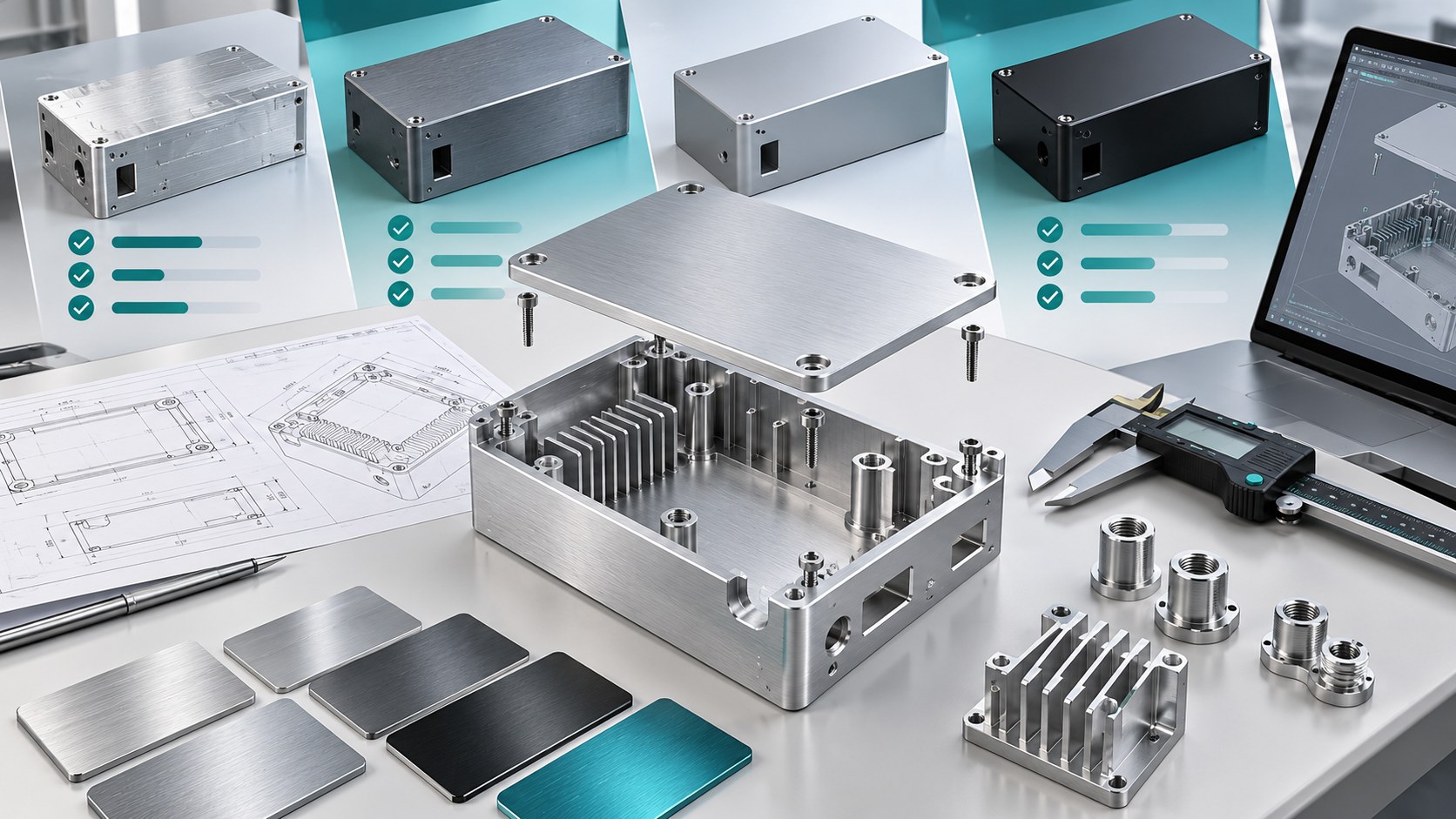
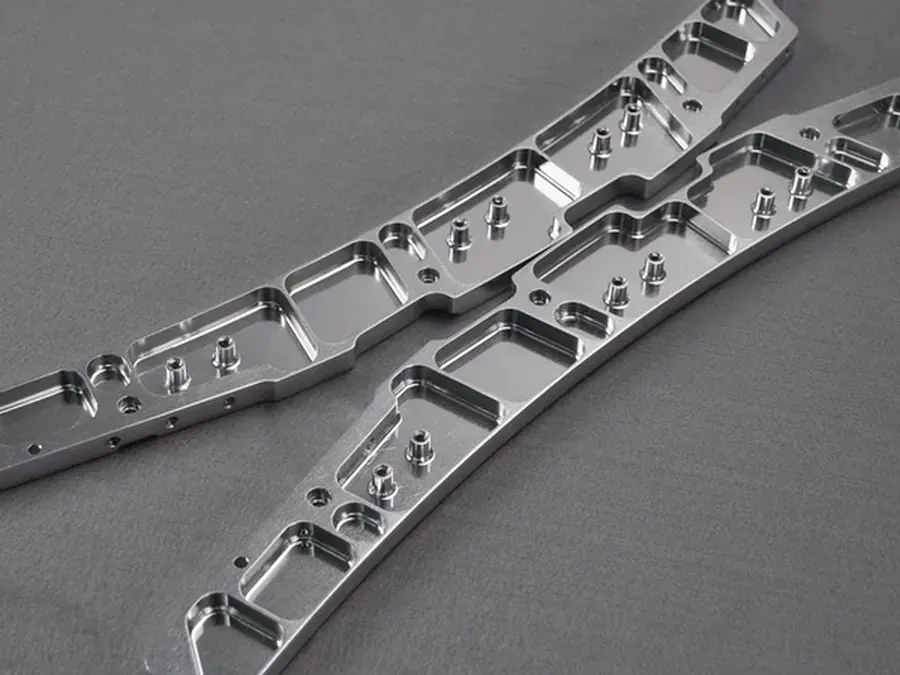
CNC aluminum enclosures look simple until the details arrive: thin walls, heat-sink ribs, threaded bosses, sealing faces, connector cutouts, cosmetic anodizing and assembly tolerances.
Disclosure: this article is published by Jingrui Proto, a prototype and low-volume manufacturing supplier. When Jingrui Proto appears in the shortlist, it is included as the publisher’s own service option, not as an independently audited third-party ranking.
This is an editorial buyer guide, not an independent award, certification list or customer-review ranking. The order reflects practical RFQ fit for overseas engineering buyers based on public capability signals and typical prototype purchasing risks. Capabilities can change, and each supplier should be checked against your CAD file, drawings, material, quantity, tolerance, finish and inspection requirements before purchase.
Selection Criteria
This comparison focuses on suppliers that publicly support CNC machining, custom parts, finishing and prototype or low-volume manufacturing workflows relevant to aluminum housings and electronics enclosures.
The shortlist favors suppliers that can help a buyer answer practical questions before ordering:
- Can the supplier make the geometry and material required by the design?
- Can it explain process limits instead of only quoting a part?
- Can it coordinate finishing, inspection and delivery for overseas RFQs?
- Does the supplier’s public information support the category being discussed?
- What should the buyer verify before placing a purchase order?
Quick Comparison
| Company |
Best-fit project |
Public capability signal |
What to verify |
| Jingrui Proto |
Mixed enclosure builds with machining, finishing and assembly checks |
CNC machining, surface finishing, 3D printing and low-volume prototype services |
Wall thickness, thread strategy, sealing faces and finish masking |
| Protolabs |
Structured digital CNC quotes and fast machined prototypes |
Public CNC machining and finishing capabilities |
Available stock materials, finishes and tolerance assumptions |
| Xometry |
Procurement teams comparing CNC suppliers through a network |
Public CNC machining marketplace and finish options |
Supplier selection, revision path and inspection responsibility |
| Fictiv |
Engineering teams needing managed CNC sourcing and DFM support |
Public CNC machining and injection/molding platform services |
DFM depth, supplier controls and finish acceptance |
| 3ERP |
China-based CNC enclosure prototypes with broader process support |
Public CNC machining, finishing and rapid manufacturing services |
In-house operations, finishing route and batch consistency |
1. Jingrui Proto
Jingrui Proto fits enclosure projects where the buyer needs machined aluminum parts plus finishing, labels, inserts, plastic covers or assembly checks. This is useful when a single enclosure project includes a CNC aluminum base, a printed or vacuum-cast cover and a cosmetic finish standard.
Best fit: Prototype and low-volume aluminum enclosures that need coordinated finishing
Verify before ordering: Confirm heat-sink details, threaded features, coating thickness, masked areas and assembly inspection.
2. Protolabs
Protolabs is a strong comparison point for buyers who want fast structured CNC quoting and clear manufacturability constraints. Its public CNC service information makes it relevant when the enclosure geometry fits standard digital manufacturing rules.
Best fit: Fast CNC aluminum enclosure prototypes
Verify before ordering: Confirm finish options, material selection and whether your tolerances are standard or require a special review.
3. Xometry
Xometry is relevant when procurement wants a broad supplier network and multiple CNC options. For an aluminum electronics box, this can be efficient if the drawing package is complete and the finish/inspection requirements are explicit.
Best fit: Network-based CNC sourcing
Verify before ordering: Verify who owns nonconformance handling, cosmetic acceptance and supplier communication.
4. Fictiv
Fictiv is useful for engineering teams that want managed sourcing rather than a simple directory search. It can be a good comparison when the project benefits from DFM feedback and supplier management across prototype and later low-volume work.
Best fit: Managed CNC sourcing for hardware teams
Verify before ordering: Ask how DFM feedback is documented and how finish or tolerance disputes are resolved.
5. 3ERP
3ERP belongs in the comparison for buyers considering China-based CNC machining with finishing and other prototype processes. It can fit when an enclosure is part of a broader product-development package.
Best fit: China CNC machining and finishing package RFQs
Verify before ordering: Confirm machining route, inspection plan, anodizing or painting details and communication cadence.
Buyer Guidance: How to Use This Shortlist
Do not send a vague request such as “quote this prototype” and expect a reliable comparison. Send a CAD file, 2D drawings for critical dimensions, target material, quantity, finish, visible surfaces, tolerance notes, assembly requirements and the reason for the build. A prototype for appearance review, investor demo, thermal testing and pilot production may require different suppliers even when the part name sounds similar.
Use this shortlist to ask sharper RFQ questions:
- Which process would you recommend and why?
- Which dimensions or cosmetic surfaces are risky?
- What tolerance or finish can you inspect consistently?
- Which operations are in-house and which are coordinated with partners?
- What will change if we move from 5 samples to 50 or 200 parts?
Internal Jingrui Proto Resources
Relevant Jingrui Proto resources include CNC machining, surface finishing, 3D printing and one-stop prototype manufacturing.
For a quote, send CAD files, drawings, target quantity, material, finish and application notes through the Jingrui Proto RFQ contact page.
FAQ
What makes CNC aluminum enclosures risky?
Thin walls, deep pockets, tapped holes, sealing faces, connector cutouts and finish thickness can all affect assembly.
Is anodizing always the best finish?
No. Anodizing is common for aluminum, but painting, bead blasting or bare machined finish may be better depending on appearance, wear and masking needs.
What should be in the RFQ?
Include STEP files, 2D drawings, alloy, quantity, finish, threaded inserts, sealing requirements, visible surfaces and critical inspection dimensions.
Author Box
Jingrui Proto publishes practical prototype manufacturing guides for overseas product developers, engineering buyers and sourcing teams. The goal is to help buyers compare processes, understand manufacturability risks and prepare clearer RFQ packages before ordering prototype or low-volume parts.