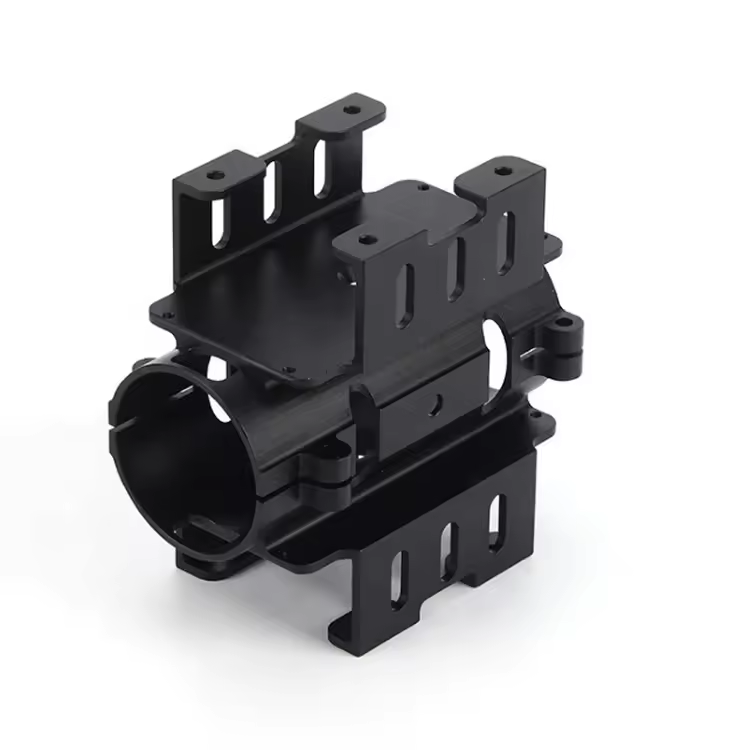
Image: Actual Jingrui Proto nylon mounting bracket. This is material-route context, not a photographed snap-fit test or retention-performance result.
Quick Answer
Choose a snap-fit prototype process by the behavior you need to evaluate: assembly access, insertion effort, retention, reopening or repeated use. Specify the actual material and joint geometry, then agree what the sample can demonstrate. A clip that engages once is useful evidence, but it does not automatically validate production durability or an alternative material route.
For overseas buyers of housings, covers and replaceable modules, the procurement challenge is obtaining a meaningful sample rather than simply reproducing a hook. Compare nylon printing, SLA resin, vacuum casting and machining against the same joint requirements. Keep visual approval, dimensional fit and mechanical behavior separate so one successful demonstration does not silently approve all three.
Define the assembly task before choosing the process
Describe how the parts are brought together and who will operate them. A one-time factory assembly can justify different requirements from a cover opened repeatedly by an end user. Access for a release tool, the ability to see engagement and the risk of damaging adjacent components can matter as much as the clip itself.
Provide both mating parts or enough geometry to understand the relationship. A clip printed in isolation may flex convincingly while failing when surrounding walls prevent the intended movement. Include nearby ribs, finish thickness and the surfaces that stop or guide assembly. These can change the behavior without changing the visible hook shape.
State the question the sample must answer. It may establish that a person can reach the latch, that two revisions mate, or that an approved material route merits further testing. An RFQ asking only for a working snap fit leaves the manufacturer to guess which of those decisions controls acceptance.
Separate beam movement from hook engagement
A cantilever-style snap generally needs space for deflection during assembly and a defined engagement condition afterward. The flexible region, root transition, lead-in and retaining face serve different purposes. A shape that is strong in the engaged state may require excessive movement or force to get there.
Review length, thickness and the required deflection together. Increasing one feature to improve stiffness can alter the strain needed during insertion. A small CAD change near the root can matter more than a visually obvious change to the outer enclosure. Ask the design team to identify the joint’s intended load path before requesting manufacturing adjustments.
The Formlabs snap-fit design guide provides technical examples of printed joint geometry and material considerations. Its platform-specific recommendations should not be treated as proof that another resin, printer or orientation will reproduce the same behavior. Use the concepts to define a sample review for the actual route being quoted.
Compare process routes by the evidence required
| Route |
Useful question |
Limitation to review |
| SLS or MJF nylon |
Can complex functional geometry engage? |
Grade, orientation and final condition |
| SLA resin |
Can detailed shape and assembly be assessed? |
Formulation and cure-dependent behavior |
| Cast polyurethane |
Can several replicated joints be evaluated? |
Resin difference and demolding plan |
| CNC plastic |
Can a specified stock material be assessed? |
Access, radii and material form |
Compare equivalent deliverables. A rough printed clip, a fully finished resin cover and a cast set with installed hardware answer different questions. Request the proposed material, processing condition and relevant checks with each quote instead of assuming that a process label defines a standard functional sample.
Where the first design is uncertain, consider a small controlled variant set. Each version should change a defined feature and retain the same counterpart and evaluation method where practical. An uncontrolled collection of clips made from unrelated materials can create observations without revealing which design decision caused them.
When nylon printing is worth reviewing
SLS and MJF nylon can be considered for complex housings and compliant features, with grade and processing requirements confirmed. Avoid treating every nylon formulation as mechanically interchangeable. A family name, color or marketing description does not establish the deflection or repeated-use behavior of a particular joint.
Discuss orientation and the delivered surface at engagement regions. A joint’s insertion behavior can be influenced by geometry and local surface condition, so a single measurement of the outer shell may be insufficient. Ask what post-processing is proposed and whether it changes the mating or flexible regions.
Jingrui Proto offers SLS printing and MJF capabilities. Those routes allow a project-specific review, not a universal promise of snap-fit life. Specify the intended operation and agree what evidence the selected sample will provide before extending a successful engagement into a broader approval.
When an SLA sample is useful
SLA can provide detailed geometry for evaluating access, engagement and appearance. Select the actual resin formulation for the task rather than assuming all resin samples are brittle or all tough-labeled materials behave like the eventual molded plastic. Review the relevant property data and processing condition with the supplier.
Support placement and preparation matter at small flexible features. A contact or local finishing operation near a root can alter the joint being evaluated. Mark important regions and ask how they will be produced and prepared. A smooth exterior is not evidence that the flexible region remains unchanged.
Use the SLA service for a scoped proposal when the geometry and sample objective fit. Record whether the sample is intended to establish assembly sequence, appearance or a particular mechanical question. This prevents a useful layout model from becoming unsupported evidence of production fatigue behavior.
When cast or machined plastic deserves comparison
Vacuum casting can provide repeated copies after an approved master, but the casting resin must be selected for the intended behavior. ABS-like or PP-like descriptions do not mean the material is the corresponding injection-molding thermoplastic. Request the actual grade and identify which conclusions are transferable to the product decision.
Review the clip’s undercuts and demolding needs before approving the master and silicone mold. A flexible mold can help reproduce some geometries, but it does not remove every risk to thin or delicate features. Agree how the joint will be released and which surfaces may be trimmed or prepared afterward.
CNC machining can be considered when accessible geometry and a specified stock material justify it. Tool access and internal radii may constrain the joint. A machined plastic sample can provide useful material-specific evidence, but it does not reproduce every aspect of an injection-molded component’s geometry or manufacturing history.
Include the finish in the joint definition
Coloring, coating, smoothing and local preparation can affect the delivered interface. Specify which regions receive treatment and which acceptance condition applies afterward. A successful pre-finish engagement should not automatically release a batch that will undergo another operation at its mating surfaces.
Separate cosmetic changes from functional ones. If the buyer wants an attractive outer cover and a predictable clip response, mark both requirements. The supplier may need a selective finishing approach or a discussion of material alternatives. An overall instruction to make everything smooth can conceal different needs at the visible and engaging faces.
For repeat samples, retain the same finish reference and record any route changes. A visually similar replacement is not necessarily equivalent for insertion or release behavior. Ask the supplier to identify changes affecting the joint before assuming an earlier sample approval still applies.
Design an evaluation that produces useful evidence
Use the intended counterpart and assembly path where practical. Record whether the sample is installed by hand, with a tool or in a representative fixture. Note interference, visible engagement, unexpected deformation and damage. If the setup uses a substitute counterpart, state what that substitute does and does not represent.
Distinguish insertion, retention and reopening. An easy insertion does not prove adequate retention, while a strong lock may be unsuitable for a serviceable cover. Define the relevant acceptance questions and, where needed, the measurement method and conditions. Do not invent a force target from the process name.
For repeated-use evaluation, the product team should define the operation sequence, loading, environment and acceptance criteria. A successful initial demonstration is not a cycle-life result. Photographs can document visible conditions, but measured behavior needs an agreed method and a record linked to the actual sample.
Diagnose failures before changing every variable
If a clip does not engage, first review the assembly path, clearances and counterpart revision. If it engages but breaks, review the deformation region and material route. If it retains poorly, inspect the engagement geometry and delivered condition. These observations guide investigation; none identifies a universal remedy on its own.
Consider a hypothetical cover that works before painting but requires much higher effort afterward. Increasing the clip thickness may make the problem worse if the interface changed through coating buildup. The useful next step is to compare the finished condition and contact regions, not immediately to replace every material and dimension.
When variants are needed, label them clearly and change features deliberately. Keep the evaluation conditions comparable. That allows engineering to connect observations with a design or process decision rather than relying on memory of which sample seemed better during an informal demonstration.
Purchase the complete joint review
Ask quotations to identify material, route, counterpart supply, finishing, assembly and any agreed testing. A price for a standalone clip cannot be compared directly with a proposal including both shells, hardware and a documented trial. Confirm who owns functional validation and which deliverables are manufacturing checks only.
The public MJF functional housing case provides an example of disclosed nylon manufacturing work. It does not establish retention forces or repeated-opening performance for a different clip. Use real cases to assess context, then request evidence specific to the joint being developed.
For a later low-volume batch, confirm which approved revision, material and finish govern the order. Ask what changes require review and how the delivered samples are identified. A geometric file alone may not capture all the accepted manufacturing and evaluation conditions.
Snap-Fit Prototype RFQ Checklist
- Provide both mating models and controlled drawings.
- Describe insertion, retention and release requirements separately.
- State whether the joint is one-time or repeatedly opened.
- Mark the flexible region, protected details and important faces.
- Request a specific material proposal rather than a generic family label.
- Define support, trimming and finishing restrictions.
- Identify the counterpart, tools and representative evaluation setup.
- Separate manufacturing inspection from buyer product validation.
- Agree variant labeling, test records and change-review responsibility.
Frequently Asked Questions
Is nylon always the best material for a snap prototype?
No. The geometry, use, material grade and evaluation objective determine the useful route. Compare nylon with appropriate resin, casting or machining proposals against the same requirements rather than choosing by material reputation alone.
Can an SLA clip demonstrate final product life?
Not automatically. It can answer selected questions when the formulation and processing condition suit the task. A different production material or manufacturing route may require separate validation, especially for repeated use.
Does an easy snap-in prove a good design?
It establishes only one aspect of the assembly. Retention, reopening, damage and relevant environmental behavior may need separate evaluation. Define the conclusions the sample is intended to support.
Should I test the clip separately from the enclosure?
A separate clip can help investigate a feature, but the complete surroundings may constrain deflection and assembly. Use a representative assembly when those interactions affect the purchasing or design decision.
Can finishing change the fit?
It can change the delivered interface or surface condition. State the finishing route and evaluate the condition that will actually be supplied. Do not silently extend an unfinished sample’s approval to a treated batch.
What if no force or cycle target has been defined?
Start with the functional objectives and an agreed exploratory sample scope. Keep quantitative acceptance open until the product team defines the relevant conditions. The manufacturer should not invent a durability claim to fill the gap.
Request a Joint-Focused Prototype Quote
Send both mating CAD files, quantity, intended use and the assembly questions through the RFQ and contact page. Ask Jingrui Proto to compare suitable process and material routes, clarify finishing assumptions and identify the evidence needed before a larger order.
Author
Jingrui Proto manufacturing content team. Engineering scenarios are explanatory and do not assert completed retention tests, cycle results or undisclosed customer projects.
Related Posts