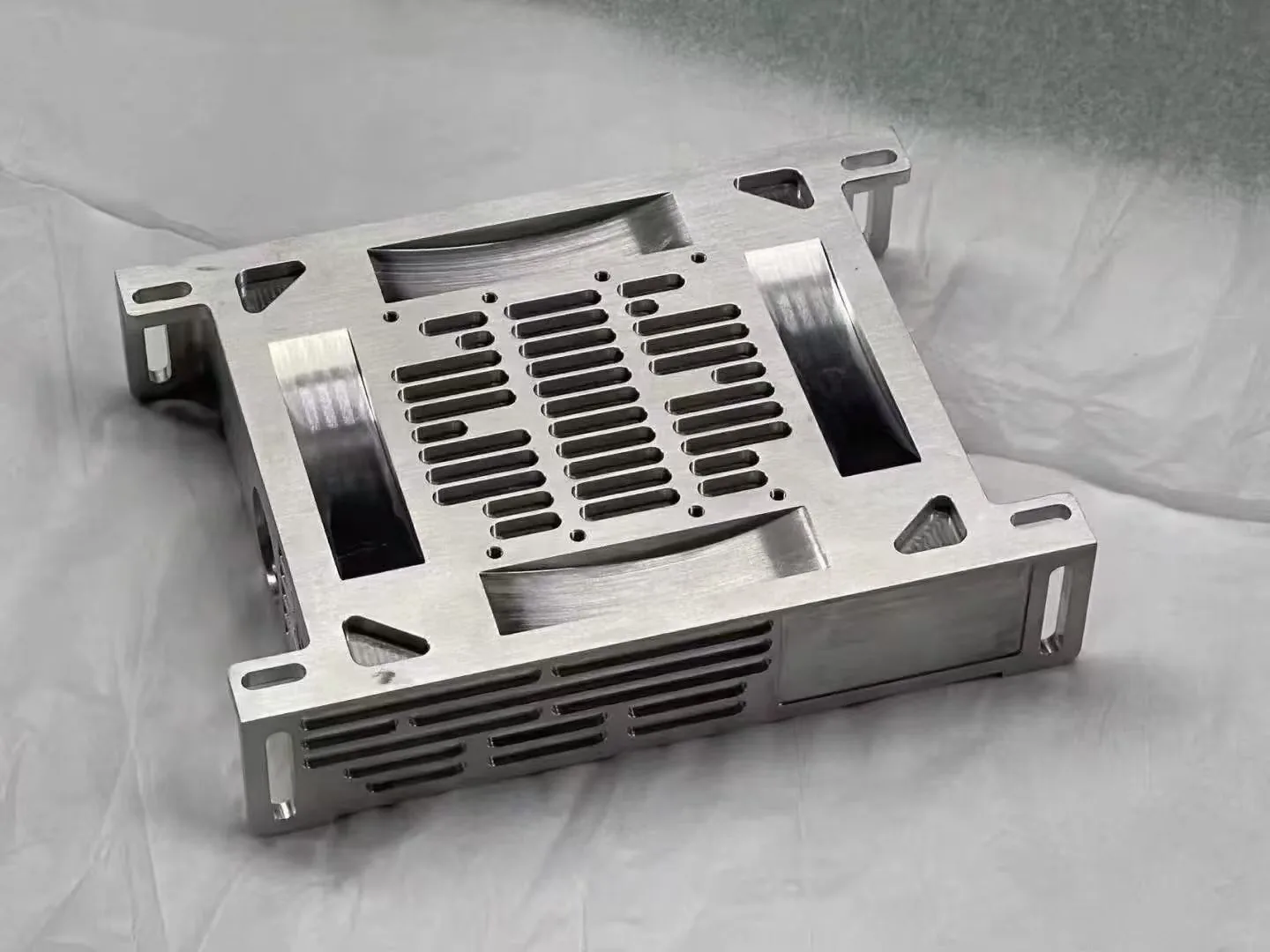
Image: Actual Jingrui Proto CNC machined metal enclosure. It illustrates a possible component type, not a photographed mixed-process kit or completed assembly test.
How should buyers order a complete mixed-process prototype kit?
Order the kit against a controlled bill of materials, a defined assembly state and a receiving checklist that links every supplied item to its revision and required evidence. A kit is more than several good parts shipped in one box. The buyer must know whether the delivery contains loose components, matched sets, a partially assembled product or a tested assembly.
This guide concerns small prototype and pilot-production orders combining processes such as CNC machining, nylon printing, vacuum casting and finishing. It addresses delivery completeness and acceptance, not a universal assembly test or a finished-product certification. The goal is to prevent a technically successful individual part order from arriving as an unusable development kit.
Jingrui Proto offers multi-process manufacturing and assembly services, including in-house CNC machining. Ask the team to confirm the scope for your particular kit; do not assume that every purchased component, specialist treatment or test is manufactured or performed in-house. A clear responsibility map is more useful than a broad one-stop claim.
Why can individually acceptable prototype parts still form an unusable kit?
The kit can fail its purpose through missing items, incompatible revisions, unagreed assembly work or damaged interfaces even when each inspected part meets its own drawing. These are different problems from basic process selection. Acceptance therefore needs both component-level and kit-level checks.
For example, an illustrative equipment prototype could contain a machined mounting plate, printed supports, a cast cover and purchased fasteners. If the fasteners belong to an earlier cover revision, the delivery may be complete by item count yet unsuitable for assembly. This is a hypothetical procurement scenario, not a reported Jingrui Proto customer case.
Separate quantity completeness from engineering compatibility. A packing list can confirm that four supports were shipped, but it cannot establish that they are the correct handed versions or that their revision matches the plate. The records should identify both the required item and its intended relationship to the assembly.
Likewise, a kit labelled “assembled” may still leave the buyer responsible for inserts, adhesive cure, wiring or adjustment. Define those boundaries before accepting a quote. The supplier should be able to explain what arrives ready to use and what work remains, without relying on an ambiguous photograph of an assembled concept.
What fields should a prototype-kit BOM contain?
A useful BOM identifies each item, revision, quantity per kit, total order quantity, supplied state and responsibility. Add process or material information where it controls the order, but avoid turning the BOM into a second conflicting drawing. Link the released technical documents instead of maintaining incompatible descriptions in several places.
BOM field
Purchasing purpose
Ambiguity it prevents
Item and part number
Connects component to assembly
Similar-looking items being substituted
Drawing or model revision
Identifies released geometry
Old and new versions being mixed
Quantity per kit
Establishes set completeness
Total pieces confused with complete sets
Required delivered state
Defines finish and assembly status
Loose and finished parts compared as equals
Supply responsibility
Identifies who provides the item
Purchased hardware omitted by both parties
Acceptance reference
Connects checks to the item
Generic approval covering unspecified features
Include bought-in items even when the buyer supplies them. Mark them clearly as buyer-furnished and identify the handoff. A supplier cannot complete an assembly trial with missing mating hardware, and the resulting delay should not be discovered only after manufactured parts are finished.
Define the assembly revision separately where appropriate. A component drawing can remain unchanged while the kit configuration changes. Conversely, a revised component may require a new compatibility review even if the overall product name is unchanged. Use a released configuration rather than a folder of files called “latest.”
How should loose parts, matched sets and assembled kits be compared?
Compare their delivered states and evidence because each transfers different work to the buyer. Loose parts offer flexibility for development. Matched sets help preserve grouping. An assembled kit can support a defined fit check, but only if the scope and acceptance method are agreed.
For loose delivery, specify identification and protection of individual components. For matched sets, define how grouping is maintained and whether interchangeability is required. A matched assembly that works only with its original counterpart answers a different question from a set of interchangeable production parts.
For assembly, list installed hardware, torque or adjustment requirements where supplied by engineering, consumables and any curing or handling restrictions. Do not invent those values in the RFQ. Ask for unresolved items to be reviewed and confirmed rather than allowing the workshop to select an undocumented critical setting.
Also state what “checked” means. Visual assembly, dimensional fit, basic motion and functional performance are separate activities. A photograph can show the assembled configuration, but it does not establish electrical performance, load capacity or environmental resistance. Specify only tests that have a method, acceptance basis and agreed responsibility.
Which interfaces need cross-process review in a mixed-process prototype kit?
Review locating features, fasteners, sliding regions and enclosure closures where different kit materials, finishes or manufacturing routes meet. The kit decision depends on the combined assembly rather than the nominal accuracy of any one process.
A CNC metal plate and a nylon support may respond differently to clamping or the environment. A painted cast cover may need protected contact surfaces. These possibilities should prompt a focused interface review, not blanket tighter tolerances on every feature. Provide the intended counterpart and assembly state.
Identify which dimensions control location and which provide clearance. If the supplier proposes a process substitution for a noncritical component, ask whether that substitution changes the interface or validation purpose. A lower-cost route can be suitable, but only when the part still serves the intended development question.
The existing assembly fit-check guide covers geometric assessment in more detail. This kit guide adds a separate logistics and acceptance layer: how to ensure that the correct, approved components and records arrive together for that assessment.
How should prototype parts be identified without damaging them?
Choose identification that remains readable through the intended handling while respecting cosmetic and functional restrictions. The method could be packaging labels, removable tags or agreed part marking. It should not be assumed that every surface can receive engraving, ink or adhesive.
Mark the permitted identification location on sensitive components. Adhesive on a visible finish, a precision contact or a surface later used for bonding can create a problem unrelated to manufacturing geometry. If removable labels are proposed, discuss residue and removal expectations for the actual finish.
Distinguish kit identification from individual serialisation. A development order may need only part number and revision, while an evaluation program may require individual specimen tracking. Specify the level needed for the evidence being collected instead of requesting serial numbers without a use plan.
If photographs are included in the delivery records, identify the relevant kit or item in the record. A general workshop image is not proof of completeness for a particular shipment. Protect confidential designs and do not request public case-study photography as an automatic condition of a private prototype order.
What should a prototype-kit packout checklist verify?
The packout checklist should verify configuration, completeness, protection and accompanying records before shipment. It is a final delivery control, not a replacement for component inspection or assembly testing. Its checks should be simple enough to perform consistently and specific enough to identify a missing or wrong item.
Start with the required number of complete kits. Then reconcile every BOM line, including hardware, accessories and spares. Separate spare quantities from parts needed to build the ordered kits; otherwise a shortage can be hidden by an apparently sufficient total piece count.
Define protections around finished surfaces and fragile features. Components that are harmless when packed separately can damage one another when loosely combined. Ask for a proposed packing approach appropriate to geometry and handling, without claiming that an untested packout is certified for every shipping hazard.
List the required documents and where they are supplied. Drawings, inspection records and accepted exceptions should reference the same configuration as the shipped items. If a report follows later, record it as outstanding rather than marking the kit’s evidence package complete. Shipment and engineering release can remain separate decisions.
How should incoming inspection accept or hold a prototype kit?
Incoming inspection should reconcile the received kit against its controlled configuration, check condition and review required records before declaring it ready for the planned use. Do not assume that opening a box and recognizing the product is equivalent to acceptance.
Record shortages, identification problems and visible damage before altering the delivery. Preserve the relationship between parts, packaging and supplied records. If a sensitive component is cleaned, adjusted or reworked immediately, the original received condition can become difficult to establish.
Use a defined disposition for incomplete kits. The buyer may choose to accept a partial delivery for development while holding the remaining work open. That is a commercial and engineering decision requiring clear records, not a reason to silently count an incomplete kit as complete.
For a fit concern, compare the actual supplied revisions and assembly method before attributing the issue to process capability. A wrong counterpart, missing spacer or reversed handed part can resemble a dimensional error. The engineering change-control guide explains the adjacent revision-control decision; kit acceptance checks whether that release reached the delivered set correctly.
What should a mixed-process kit RFQ ask the supplier to confirm?
Request one scope matrix covering manufactured parts, purchased items, finishing, assembly, inspection, identification and packout. A combined price is useful only when the included work is clear. Ask the supplier to identify exclusions and dependencies before the purchase order is issued.
Supply the released BOM, assembly view and component documents.
State complete-kit quantity and separately identify spares.
Identify buyer-furnished hardware and its required availability.
Define loose, matched-set or assembled delivery.
Mark critical interfaces, cosmetic restrictions and identification locations.
List required checks and the records that must accompany shipment.
Request packing protections and any special handling requirements.
Define treatment of partial shipments, deviations and missing records.
Compare quotations against the same matrix. A low component total may exclude hardware sourcing, labelling or assembly work that another quote includes. Also ask whether the proposed process alternatives change the purpose of the kit, particularly when the order supports functional testing rather than appearance review.
Do not automatically require all operations to be internal to one factory. Instead, ask who is responsible for each deliverable and what evidence is available. Jingrui Proto’s confirmed in-house CNC capability should not be expanded into an unsupported statement that every specialty process or bought-in item is produced internally.
Which prototype-kit delivery assumptions should buyers resolve before ordering?
Distinguish consolidated shipping from verified kit completeness, loose from assembled delivery and matched sets from interchangeability, then define hardware, inspection and partial-release responsibilities. Project-specific acceptance still depends on the released configuration and intended evaluation.
Is consolidated shipping the same as a verified kit?
No. Consolidation means items travel together. Kit verification requires a controlled configuration, quantity reconciliation and agreed records.
Should every prototype kit be assembled before shipment?
Not necessarily. Loose delivery may suit iterative development. Choose the assembly state that supports the buyer’s work and make the remaining tasks explicit.
Does a matched set demonstrate interchangeability?
No. Matching can preserve a particular pairing. Interchangeability requires an appropriate requirement and evaluation across components, not just one successful assembly.
Can a supplier select missing fasteners automatically?
Only within an agreed scope. Critical hardware and installation requirements need engineering approval. An undocumented substitution can change fit or function.
Does a packout photograph replace inspection reports?
No. It can support identification and completeness but cannot establish every dimensional, material or functional requirement.
Can an incomplete kit be accepted for development?
Yes, if the buyer deliberately approves the limitation and records the outstanding items. Do not label that partial release as full configuration acceptance.
How can buyers request a complete prototype-kit quotation?
Send the BOM, assembly view, CAD files, quantity and required delivery state through the RFQ and contact page. Ask Jingrui Proto to confirm the relevant CNC machining and vacuum-casting scope, bought-in items, assembly work and packout responsibilities.
This guide offers a procurement framework, not a new customer assembly case or a claimed shipping-validation result. Its purpose is to turn “one complete prototype” into a set of clear, quotable and inspectable deliverables before manufacturing begins.
Which related guides help buyers source multi-process prototypes?
Use the serviceable-product, material-traceability and snap-fit procurement guides to review component routes, evidence records and joint behavior before kit acceptance.
What evidence distinguishes a complete prototype kit from a component photograph?
A controlled BOM, item-to-revision reconciliation and agreed packout or assembly records support kit completeness; a photograph of one enclosure does not establish a complete accepted kit.
For prototype kits, reconcile the complete BOM, quantities, supplied revisions and remaining assembly work before treating a shipment as ready for its intended evaluation.
This guide is published by Jingrui Proto for engineering and purchasing teams. It explains procurement decisions and limitations; it is not a customer case report, independent laboratory result or application certification.
Choose inspection for low-volume prototypes by critical features, lot definition, sample selection, measurement suitability and clear acceptance decisions.
Review SLM machining-stock deviations against datums, final interfaces and inspection evidence before approving CNC continuation, concessions or remakes.
Plan vacuum-cast pilot lots around assembly trials, destructive evaluations, usable samples and retained references with a practical purchasing checklist.
Approve ABS-like vacuum casting resin by grade, datasheet conditions, assembly needs and validation scope before transferring decisions to production ABS.
Prepare small full-color models with a scale-aware review of fragile details, texture versus geometry, support removal, bases, packing and sample approval.
Plan silicone mold replacement around accepted vacuum-cast parts, with wear checks, resin limitations, quotation scope and a practical buyer RFQ checklist.