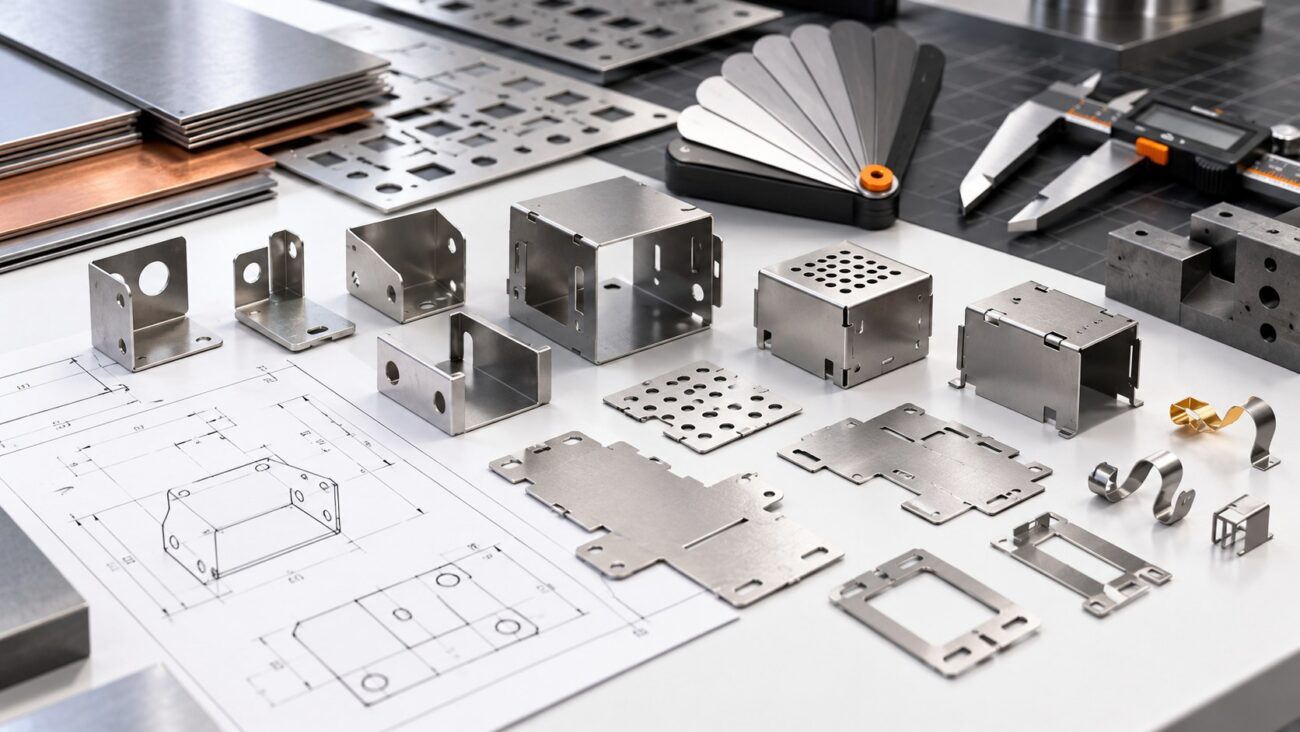
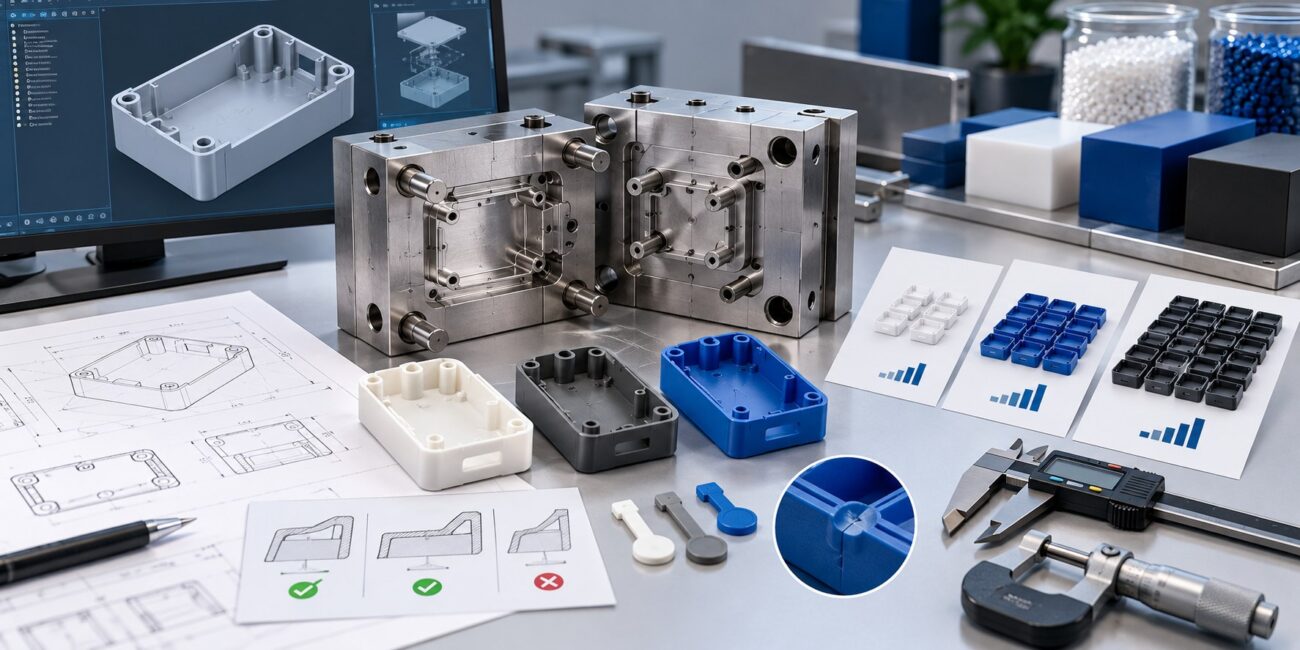
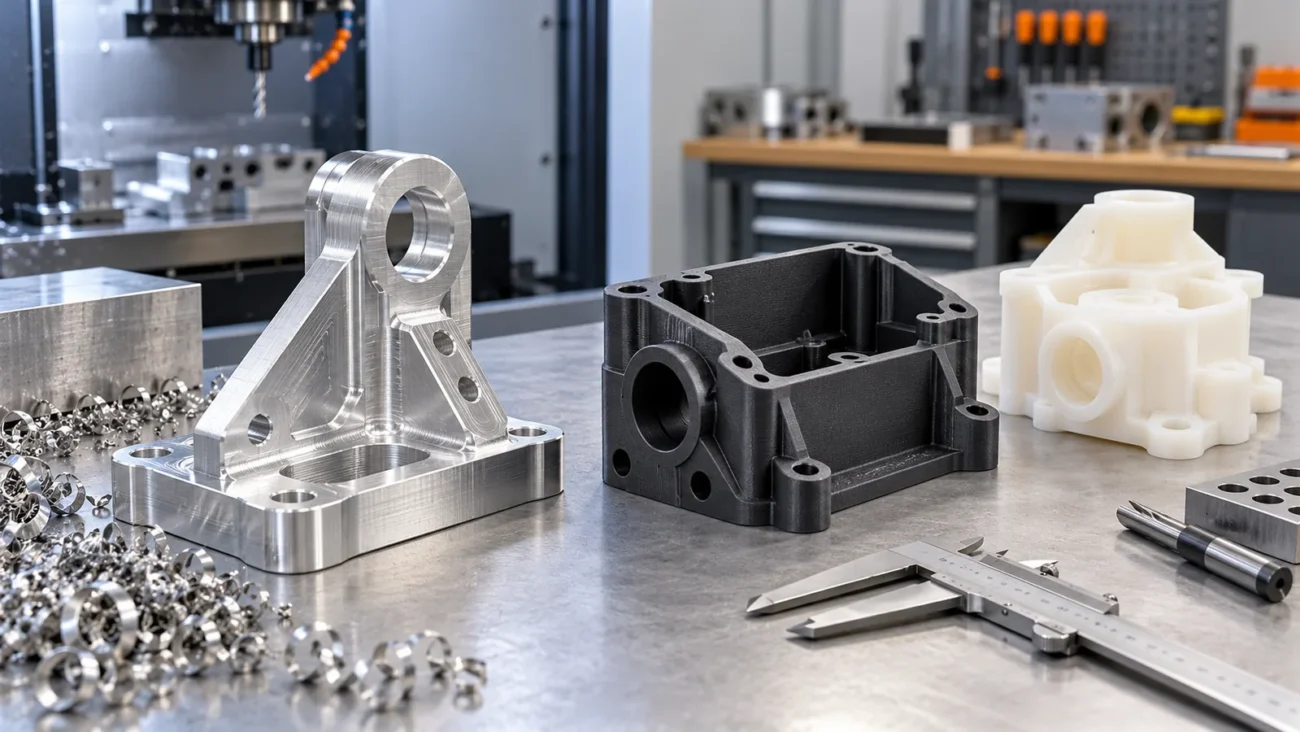
A supplier flags an inaccessible pocket, an uncertain sliding fit and a finish that may change the clearance. A useful DFM review before prototype manufacturing turns those findings into decisions before material is cut or a master is made. Send the CAD, drawing and intended test, then identify which features must remain fixed, which changes are acceptable and who can approve them.
Why a DFM Review Belongs Before the Quote
A quote based only on a 3D model can miss thin walls, trapped powder, unreachable cutter paths, cosmetic faces, insert conflicts and inspection questions. Those issues do not always block manufacturing, but they affect cost, lead time and acceptance criteria. Jingrui Proto treats DFM review as a practical engineering filter: identify what must change, what can be made as designed and what needs buyer confirmation before production starts.
Files That Make the Review Faster
Send STEP files where possible, plus a PDF drawing for critical dimensions. Add quantity, target material, finish, color, assembly context and deadline. If the part is only for fit check, say so. If it will be shown to investors or customers, mark cosmetic surfaces. If the part will be measured, mark the features that need inspection reports.
What Buyers Should Not Hide
Do not hide functional risk to keep the RFQ short. Tell the supplier about snap fits, sealing faces, bearing seats, threaded inserts, sliding surfaces, heat exposure and any previous failed prototype. Those details help the engineering team recommend CNC machining, SLA, SLS, MJF, vacuum casting or finishing routes with fewer surprises.
How to Read DFM Feedback
Good DFM feedback should separate hard blockers from trade-offs. A hard blocker might be an internal corner that no selected cutter can reach. A trade-off might be a cosmetic surface that can be improved by sanding and painting, with extra cost and lead time. Ask the supplier to explain the consequence, not just the rule.
Buyer Decision Table
| Item |
Review |
| STEP CAD |
Gives geometry for manufacturing review; Send the latest revision and name it clearly |
| PDF drawing |
Defines critical dimensions and tolerances; Mark only function-critical features tightly |
| Finish notes |
Changes process, masking and inspection; Mark cosmetic faces, color and texture expectations |
| Use case |
Guides process choice and risk review; Explain fit check, display, load test or pilot use |
Use Verified CNC Capability as a Review Starting Point
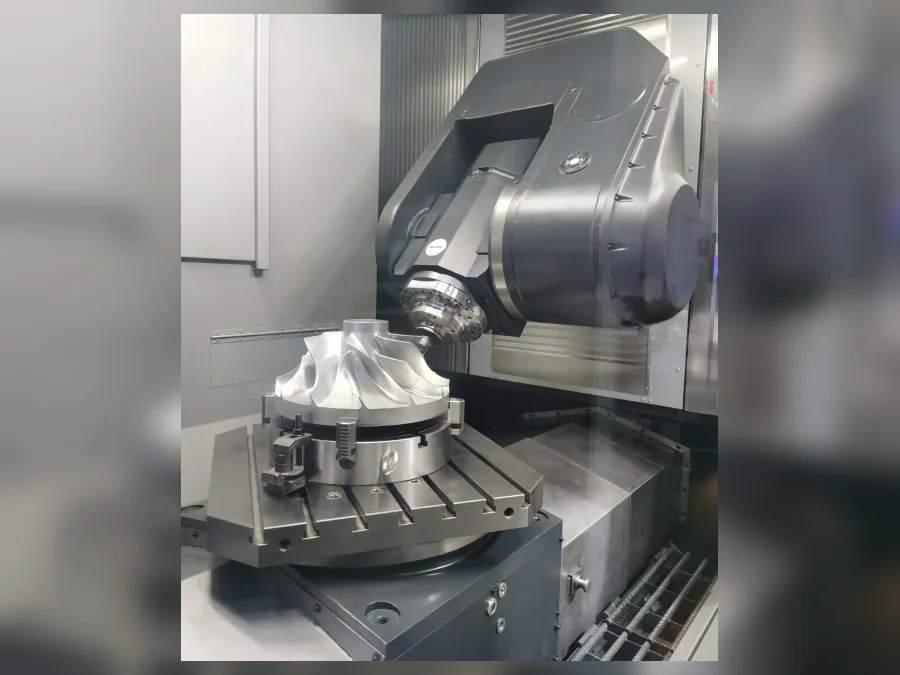
Jingrui Proto performs CNC machining in-house, as documented on its canonical CNC service page. The project review still needs to establish tool access, fixturing, critical features and inspection for the actual part. Other manufacturing and finishing operations should be confirmed in the quotation rather than assumed to follow the same route. An equipment list helps screen feasibility; the approved DFM record defines what the supplier is being asked to deliver.
Turn the Review into a Release Decision
A useful review ends with a decision for each manufacturing risk. Ask the supplier to classify findings as a blocker, an acceptable trade-off or a missing requirement. A blocker prevents the proposed route from delivering the released design. A trade-off may be acceptable if the buyer understands its effect. A missing requirement belongs with the design owner before production starts.
Record the affected feature, proposed action, functional consequence and person responsible for approval. This creates a short issue register that procurement can follow. An email saying “DFM approved” is difficult to use when the drawing still contains an unresolved interface. Close the relevant issue or identify the exact scope being released while another decision remains open.
Review Tool Access and Escape Paths
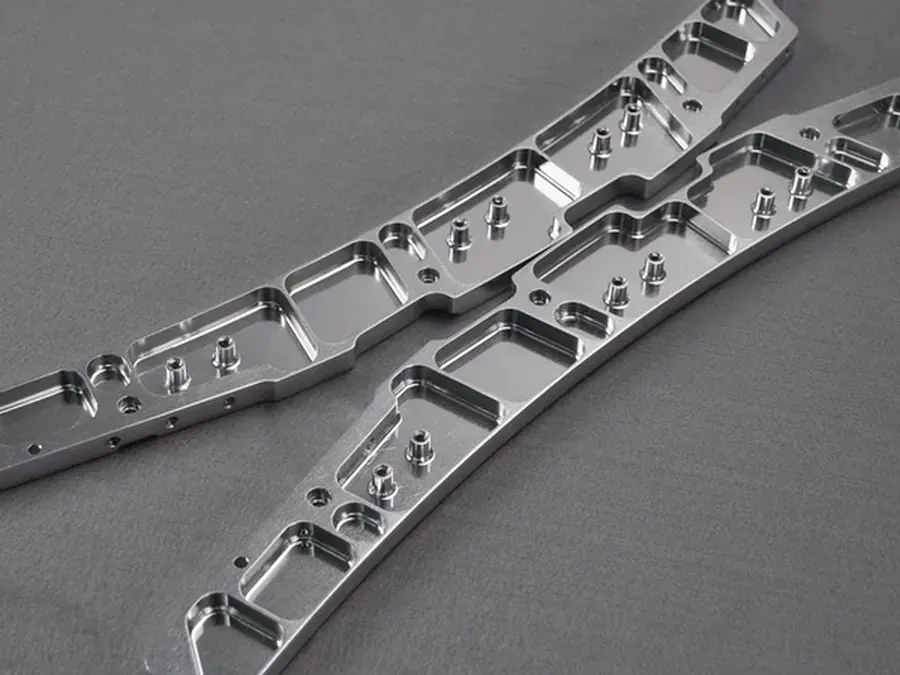
For a machined part, consider whether the cutting tool can reach the required surface without colliding with nearby geometry. Deep pockets, narrow slots and small internal corners can require a change in cutter, setup or geometry. Ask which option preserves function with the least manufacturing risk. A tool-access sketch is often more useful than a general request to make the design easier.
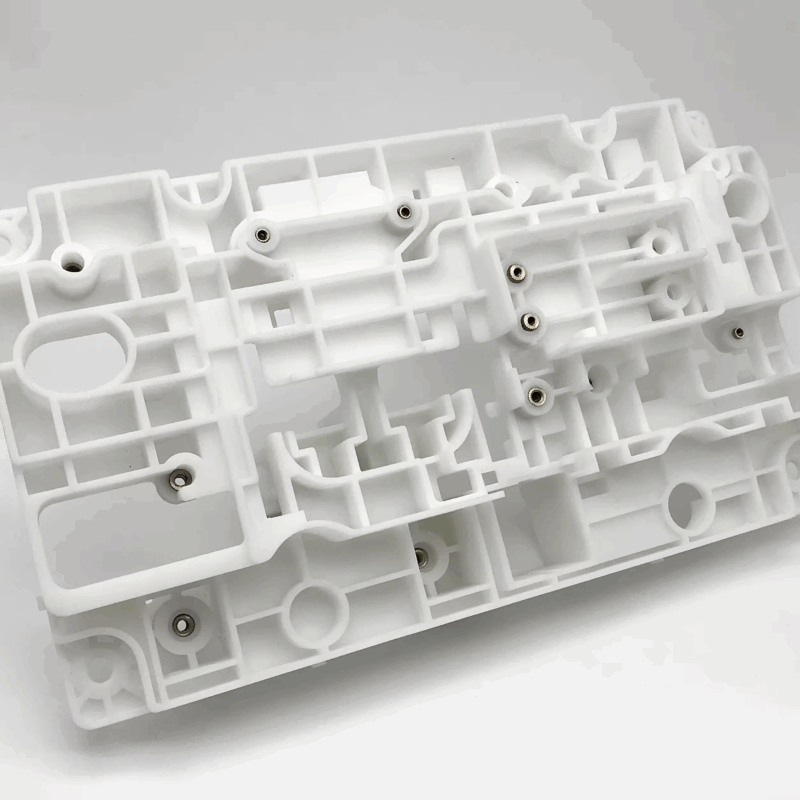
For an additively manufactured part, review how supports, uncured material or powder will be removed where applicable. A cavity can exist in CAD while lacking a practical cleaning path. Identify openings that must remain accessible and ask whether assembly after printing is preferable to a closed geometry. Do not approve a cosmetic plug or bonded joint without reviewing its effect on the intended test.
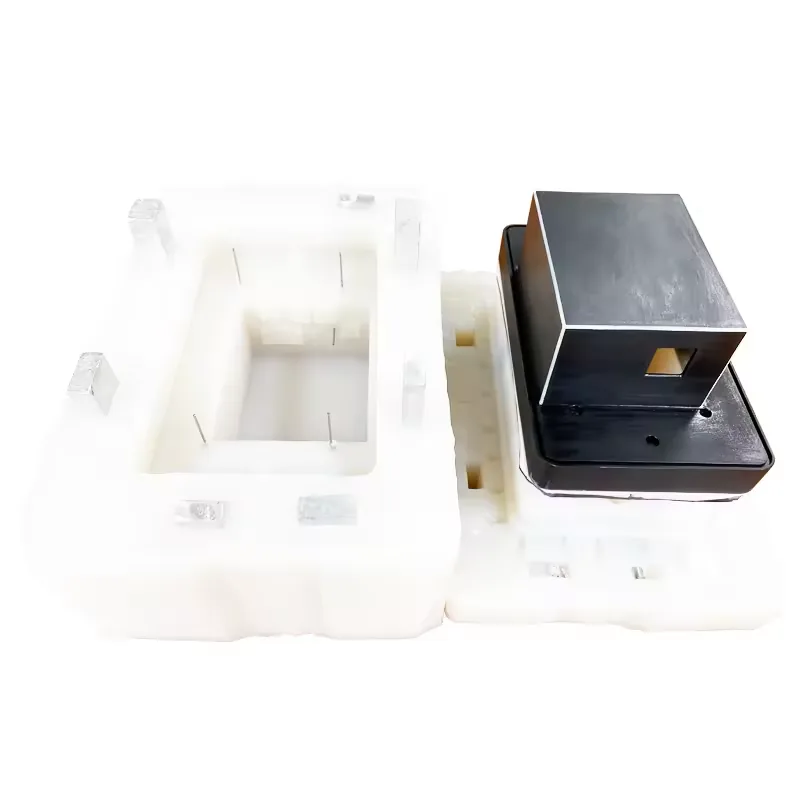
For casting, discuss the master, mold split, gate cleanup and access for releasing the part. The same geometric change can help one route and harm another. Keep the review tied to the selected process and use conditions. A feature should not be changed solely to satisfy a rule copied from an unrelated manufacturing method.
Separate Functional Constraints from Preferences
Explain why a demanding requirement exists. A narrow internal radius may be an essential mating feature, or it may simply reflect the default CAD tool. A smooth outer surface may be important for appearance while its hidden underside needs no cosmetic work. The supplier can propose better options when these priorities are explicit.
Use a protected-feature list for interfaces that cannot change without design approval. Identify allowable areas for local thickening, corner relief, part splitting or support contact. That gives the supplier room to solve access and handling problems without moving the features that define assembly performance. It also makes a revised quotation easier to compare with the original proposal.
Do not use an undifferentiated instruction such as “all dimensions critical.” Identify the consequence of each important deviation: interference, lost alignment, inadequate sealing or a visible mismatch. If several dimensions contribute to one fit, flag the relationship. Tightening one isolated dimension may add cost while leaving the real assembly risk unresolved.
Treat Material and Finish as Coupled Decisions
The proposed material must support the test objective, not merely resemble the finished product. A resin appearance model may answer an ergonomic question while leaving impact behavior open. A cast material described as ABS-like does not automatically reproduce production ABS. Ask which conclusions the prototype can support and identify the tests that require another material or process.
Finishing belongs in the review because it can change dimensions and access. Mark surfaces that require masking, polishing or special handling. State whether an interface is accepted before or after the final finish. If a coating changes a clearance, record the compensation or inspection requirement instead of relying on the workshop to infer the intended allowance.
Keep substitutions controlled. A different grade, adhesive, coating or insert may change the basis of the original review. Ask the supplier to identify those proposals before manufacture. Approval should reference the agreed combination of geometry, material and delivered condition rather than a process name alone.
Application Example: A Housing with a Sliding Cover
Consider an illustrative enclosure with a painted exterior and a sliding cover. The CAD model shows a clearance, but the drawing does not state whether it applies after painting. One supplier quotes machining only, while another includes finishing. Their prices describe different risks even though both received the same geometry.
The DFM review should identify the rail surfaces, paint boundaries, desired sliding behavior and inspection condition. The buyer can then decide whether to mask the rails, adjust the geometry or evaluate a different finish. Each option has consequences for appearance, wear and repeat assembly. Those consequences should be reviewed before approving the route.
The release record might permit the supplier to change an inaccessible hidden corner while protecting the rail datums. It would also state how the finished cover will be checked. This example is a decision framework, not a Jingrui Proto customer case or a claim that one clearance works for every enclosure.
Decide What Inspection Will Prove
An inspection plan should answer the questions that drove the review. If the concern is hole alignment, identify the locating features and measurement references. If the concern is a finished sliding fit, include the mating condition. If the prototype is for appearance only, explain which dimensional requirements can be relaxed without undermining the review purpose.
Check whether the proposed method can reach and evaluate the feature. An inaccessible internal surface may need a design change, an alternative verification method or a clearly recorded limitation. The absence of a practical check is a manufacturing risk in its own right. Resolve it before creating a requirement that neither party can verify convincingly.
For report acceptance after manufacture, use the separate CNC dimensional inspection report guide. This DFM article owns the earlier decision: what the supplier must plan to make and verify before production is released.
Questions to Close Before Issuing the Purchase Order
- Which drawing and CAD revisions control, and how are conflicts resolved?
- Which proposed geometry changes have explicit design approval?
- Which material, finish and hardware remain conditional?
- Which features require inspection, and in what delivered condition?
- Which decisions affect the price or schedule if changed later?
- Who can authorize a deviation once production has started?
Attach the closed review register to the order or identify its controlled location. Retain the supplier’s assumptions as well as the buyer’s answers. For file organization, the separate RFQ package guide covers the document package; this review determines whether that package is ready to manufacture.
When a Finding Appears After Release
Ask the supplier to identify the affected feature and stop the relevant operation while the decision is reviewed. Determine whether the finding changes function, appearance, inspection or delivery. A proposed change should include enough information to evaluate those effects. A general request to “approve an adjustment” leaves the responsibility unclear.
Record the resolution as a revised requirement, approved concession or rejected proposal. Limit a temporary concession to the relevant order or parts. For the next build, use the corrected drawing and review record rather than assuming everyone remembers an email exchange. This turns the prototype into useful manufacturing knowledge without allowing an undocumented workaround to become the default design.
RFQ Checklist
- Released CAD and drawing revisions, with the controlling document identified.
- Purpose of the prototype and the conclusions its test must support.
- Protected interfaces and geometry that the supplier may propose changing.
- Material grade or required behavior, with substitutions subject to review.
- Delivered finish condition, masking boundaries and cosmetic priorities.
- Critical-feature list, datum references and proposed inspection evidence.
- Quantity, destination, required date and dependencies on buyer approvals.
- Open DFM issues, named decision owners and the approved release record.
How Jingrui Proto Can Help
For a DFM quotation, send Jingrui Proto the released model and drawing together with the unresolved issues register. Identify protected interfaces, permitted geometry changes and the manufacturing decisions you need the team to review. Ask the response to separate accepted requirements, proposed changes and open questions. Use the existing RFQ channel to agree on the revised package before authorizing manufacture; a quoted price alone should not close an unresolved engineering decision. Send the project for an RFQ review.
FAQ
What is a DFM review in prototype manufacturing?
It is a manufacturability check before quoting or production. The supplier reviews geometry, material, finish, tolerances and inspection requirements, then flags risk that may affect cost, lead time or acceptance.
Do I need a 2D drawing if I already have a 3D model?
For simple visual models, a 3D file may be enough. For assemblies, fits, threads, sealing surfaces and inspected dimensions, a drawing prevents guesswork.
Should every tolerance be tight?
No. Tight tolerances should be reserved for features that affect fit, function or inspection. Over-tolerancing can add cost without improving the prototype.
Can DFM feedback change the manufacturing process?
Yes. A review may show that CNC machining, SLA, SLS, MJF, vacuum casting or a combined route fits the project better than the buyer’s first assumption.
What if the supplier finds a problem after quoting?
Ask for the impact on price, schedule and function. If the problem changes acceptance criteria, update the drawing or RFQ before approving production.
What should I include for a repeat order?
Send the previous order reference, revision changes, inspection notes, finish requirements and any field feedback from the earlier batch.
Related Posts
Author Box
Author Name: Jingrui Proto Engineering Team
Industry Experience: Prototype manufacturing, CNC machining, industrial 3D printing, vacuum casting, finishing and inspection for international product development teams.
Brief Bio: Jingrui Proto publishes manufacturing guidance for engineers and sourcing teams preparing RFQ packages, CAD files and low-volume production plans.