JR-58106 3D Printed Footwear: Lattice Product Development
Product demonstration / development case
JR-58106 shows how an open lattice can be integrated into a finished shoe form. For a footwear brand, the development challenge is to preserve the intended shape and visual identity while defining flexibility, fit, wear behavior and a repeatable production specification.
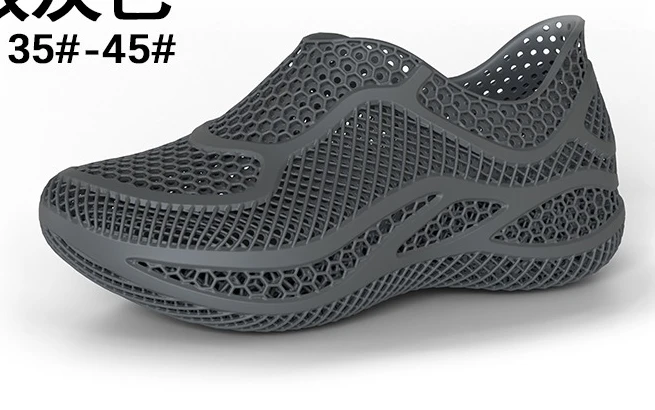
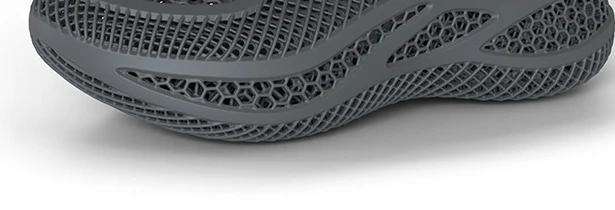
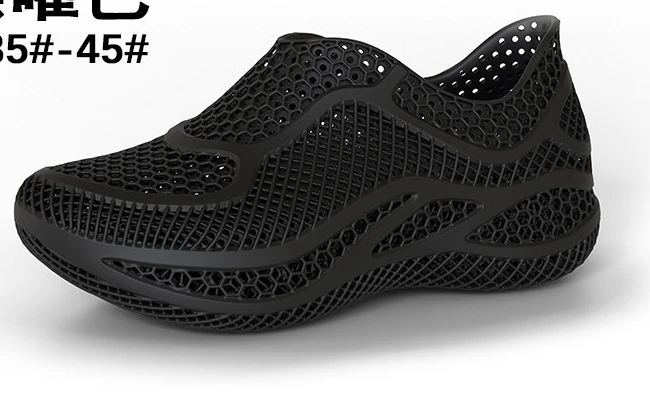
The company-supplied JR-58106 catalog shows a closed-toe shoe with an open upper, defined heel region and a patterned sole structure. The images show model appearance and color references. They do not establish an independent test result, a completed customer order or a production acceptance rate.
What the JR-58106 product demonstrates
The upper combines visible openings with larger structural bands, while the lower region uses a different arrangement of cells and connecting features. This makes the model useful for discussing how a footwear concept becomes a manufacturable lattice product. It is a specific product example rather than a universal shoe specification. The catalog model code is JR-58106; request that model when comparing a sample with a custom design.
The important development question is where the shoe should bend, where its shape should remain supported and how those regions meet. A designer can propose different cell patterns or wall sections for those roles. Changing one region may alter the response of its neighbors, so a visually attractive lattice still needs assessment as a complete shoe. A photograph cannot reveal the precise internal geometry or local stiffness values.
Product references and visible details
Lattice geometry, fit and customization
Begin with the intended wearer, fit reference and use environment. Define the toe space, opening, heel retention and sole contact surface before adjusting decorative details. A model that looks correct in a side view may behave differently when loaded, put on, removed or bent at the forefoot. Review the complete shape and the interaction between the upper and sole rather than approving a silhouette alone.
Customization can involve model appearance, color, size and branding, subject to engineering review. A logo should not unintentionally interrupt a flexible connection or create an uncomfortable contact feature. Size changes also require more thought than uniformly scaling every lattice cell. The brand and manufacturer should agree which dimensions follow the size progression and which features require a separate design decision.
Material and DLP process selection
Jingrui Proto’s existing footwear offering identifies in-house design and DLP production of elastic soles and printed shoes. For this case, that is the confirmed manufacturing capability. The catalog photograph does not identify a resin trade name, hardness, skin-contact assessment or chemistry. Confirm the proposed material and its documentation for the intended market before approving a quotation.
A material review should connect flexibility with repeated bending, tear-sensitive features, cleaning and exposure during use. Ask which properties are documented for the actual printed and finished condition, rather than assuming that a generic material datasheet describes the complete shoe. Where a material or geometry changes, the development team should decide which earlier sample evaluations remain relevant and which need repeating.
Manufacturing constraints to resolve before sampling
The team needs access to the lattice geometry, not just a rendering of its outside surface. Thin connections, isolated cells, abrupt transitions and enclosed regions should be reviewed for printability and finishing access. Orientation and any required support contact must be planned around visible surfaces and surfaces that touch the foot. The appropriate strategy is specific to the design and selected equipment.
Cleaning and any required curing or other finishing steps belong in the production plan. Residue trapped inside the structure, unintended fused openings or damaged cell connections can affect an otherwise acceptable sample. Agree how those conditions will be inspected, including the areas that are difficult to reach. Do not convert a capability description into a promise that every submitted lattice can be printed unchanged.
Validation plan: proposed methods, not reported results
The following are development checks to agree with the buyer. This page does not report that JR-58106 has completed this program. Establish the sample condition, test method, load or motion, environment and acceptance criteria before testing. Record the material, CAD revision and manufacturing route so that a result can be connected to the sample that produced it.
- Fit and handling: assess putting the shoe on, removal, heel retention and contact points using the agreed fit references.
- Repeated flexing: evaluate relevant bend regions and inspect connections for cracking, tearing or unacceptable permanent change.
- Abrasion: define the contact surface, abrasive medium, force and endpoint; document whether a material specimen, sole region or complete shoe is assessed.
- Recovery: compare unloaded geometry before loading and after an agreed rest period rather than judging recovery immediately by hand.
- Finished-product checks: assess cleaning, color appearance and surface condition after representative handling and exposure.
How to read the company’s wear-life figures
Jingrui Proto has provided figures of 800,000 abrasion cycles, approximately six months of regular wear and approximately one to two years of intermittent wear. These are company-provided statements, not independently verified results presented by this case study. Supporting protocols, specimen details and independent reports are not available in the evidence for this page. They should not be treated as a guarantee for JR-58106, another model or a custom order.
Abrasion cycles cannot by themselves establish calendar service life. Walking conditions, wearer behavior, surface contact, material and geometry all need consideration. Ask the team for the available underlying documentation and agree a qualification plan for your model. A commercial decision should use that plan and approved samples rather than converting the quoted cycle count into a promised number of months.
From design iteration to a production specification
Use each prototype to answer a defined question. A first sample may assess shape and fit; a later revision may address local flexibility or finishing. Compare revisions with the same evaluation setup wherever possible, and record the reason for each geometry change. Avoid changing material, lattice and finishing simultaneously if that would make the source of an improvement impossible to identify.
Before a commercial batch, approve the size and color references, inspection points, packing requirements and handling instructions. Define how production samples will be compared with the accepted reference and how a proposed change will be reviewed. Prototype feasibility is a starting point for production qualification, not evidence of unlimited production capacity or a universal lead time.
Suitable buyers and project boundaries
This product example is relevant to footwear brands developing lattice shoes, designers exploring a custom appearance and OEM/ODM buyers defining a sample program. It does not establish suitability for protective footwear, a medical application or a regulated performance category. State those intended uses at the beginning so the necessary requirements can be reviewed separately.
Footwear RFQ checklist
Send the JR model reference or your CAD geometry, target sizes and fit system, color and branding brief, intended application and estimated quantities. Include drawings for critical dimensions and identify whether the quotation covers an existing model, a modified model or a new design. Provide your sample schedule, destination and required documentation. Explain any abrasion, flex, cleaning or other acceptance requirements instead of asking for an undefined durable shoe.
Frequently asked questions
Does this case replace the footwear service page?
No. This case examines the JR-58106 product and its development questions. The footwear service page covers the wider collection, commercial inquiry options and current manufacturing offering.
Can a brand request a different lattice?
Submit the geometry or design brief for feasibility review. The team needs to consider printability, contact surfaces, flexibility targets and sample validation before confirming the proposed change.
Is the photographed product certified for a specific use?
No product certification is established by these photographs. Ask for the material and finished-product documentation relevant to your intended use and destination market.
Request a product development review
Send your product reference, CAD or sketches and the requirements that will determine sample approval. Jingrui Proto can review the proposed development scope and identify the process, material and documentation questions that need to be resolved before quotation. Confirm quantities and timing for your own project rather than assuming another product’s commercial terms apply.
Send CAD and request a manufacturing quotation.
Relevant capabilities and related product cases
Explore 3D printing services, surface finishing and material resources. These resources describe broader capabilities; they do not identify an unconfirmed material or process for the pictured product.
View the current footwear collection and DLP manufacturing offering.
Related product demonstrations: 3D Printed Headrest Support Cushions: Lattice Development, 3D Printed Mouse Wrist Rests: Lattice Product Development, 3D Printed Seat Cushions: Lattice Product Development. Browse all case studies.
Related projects