3D Printed Seat Cushions: Lattice Product Development
Product demonstration / development case
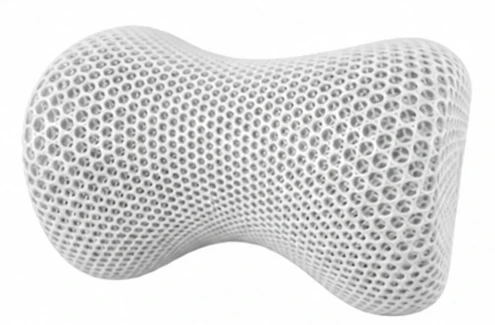
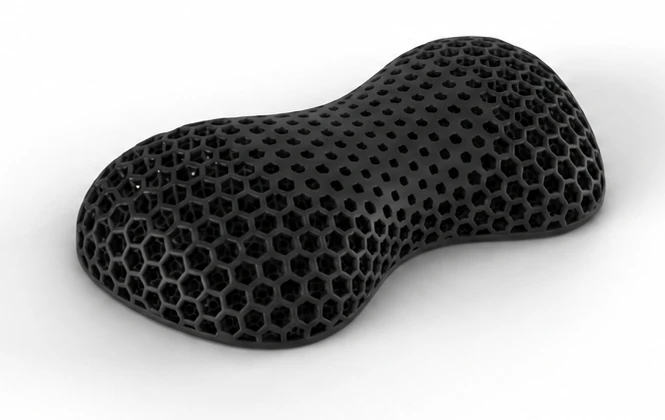
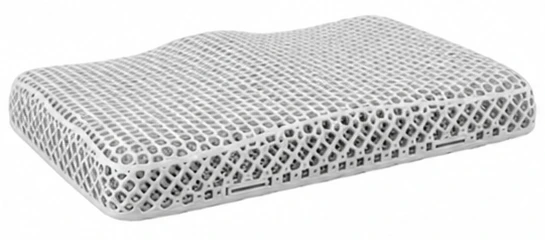
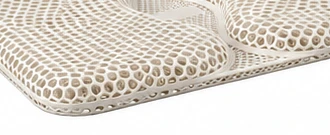
The supplied product references show two distinct seat-cushion forms: a single-piece contoured pad and a double-pad design. Their development challenge is to connect lattice geometry and the supporting chair with a defined loading response, cleanable structure and repeatable finished-product specification.
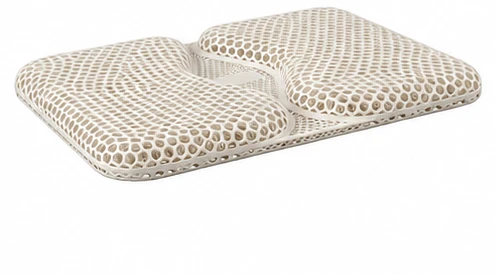
These company-supplied finished-product references demonstrate appearance and design variation. They are not pressure maps, fatigue-test reports or evidence of a completed customer program. This case does not assign a load rating, measured comfort improvement or clinical benefit to either cushion.
Two finished-product forms to compare
The double-pad reference has two prominent contact regions separated by a central channel, while the single-piece reference presents a different continuous contour. Both use visible openings across the surface. These are distinct design examples, not evidence that one form is better for every user or chair. Ask for the intended reference when requesting a sample or developing a modification.
The supplied single-piece sheet shows gray, black, warm yellow and sky blue references. The double-pad sheet shows off-white, black, sweet pink and light gray references. Color availability and the chosen formulation should be confirmed for the order. Neither sheet establishes dimensions, material grade or a measured comparison between the two structures.
Product references and visible details
Begin with the supporting chair and use conditions
A cushion’s lower surface interacts with the seat beneath it. Define whether that surface is flat, curved, upholstered, rigid or flexible, and record the usable area. Check the surrounding edges, the intended cushion position and the possibility of movement during use. A design that is stable on one support surface may behave differently on another.
The top contour should be assessed in the intended seating arrangement, including clothing and relevant movement. Specify the population and use duration that the development program is intended to represent. A catalog photograph cannot establish comfortable seating for all users. Review the complete installation rather than evaluating the cushion only on a bench or in an unloaded condition.
Lattice density, cell shape and local response
Cell geometry, wall sections and transitions provide design variables for a proposed loading response. Discuss which regions should deform and which should retain shape, then identify a way to evaluate that behavior. The visible pattern is a useful design reference, but does not provide numerical stiffness data. Different materials or print conditions can also change the response of a similar-looking geometry.
Changing local structure can affect more than one requirement. A thinner connection might alter flexibility while also changing handling durability or the way a region recovers. A larger opening might change the contact surface or cleaning access. Compare these decisions through samples with documented geometry, rather than using one unqualified description such as high-density cushioning for the whole product.
Material and process selection
Jingrui Proto’s ergonomic-product offering supports customization, prototyping and small-batch inquiries. The supplied cushion references do not identify a specific material grade or manufacturing process. Request those details with the proposal; do not infer an elastomer chemistry, hardness or printing route from color and shape. The acceptance sample should use the material and finishing condition intended for production.
Discuss repeated compression, recovery, handling wear, cleaning and the expected environment. Where a material datasheet is available, determine which properties relate to the actual printed and finished condition. A flexible structure does not automatically establish long-term fatigue performance, skin-contact suitability or resistance to a cleaning agent. Include the required documentation in the buyer’s specification.
Manufacturing constraints for a broad flexible part
Review the full cushion envelope and lattice model, including the underside and edge transitions. Broad flexible parts need a consistent way to assess shape without introducing an undefined load during measurement. Identify critical interfaces and specify the support condition used for inspection. If a separate backing, attachment or cover is proposed, include its geometry and assembly requirements.
The team should review orientation, any support contact and access for cleaning and finishing. Inspect representative openings and connections as well as the outer silhouette. A cover or coating may change contact feel and the behavior of the openings, so evaluate the finished configuration. Do not accept an attractive top view as proof that internal geometry or production consistency has been checked.
Proposed loading and durability evaluation
No compression curve, pressure distribution or fatigue result is presented for these products. For development, agree a fixture that represents the supporting seat and a contact condition relevant to the application. Define the load, duration, motion, conditioning and recovery interval. Record the unloaded dimensions and visible structure before testing so the result has a meaningful baseline.
- Compression response: compare the specified loaded condition and check for local collapse or unwanted contact with the supporting surface.
- Recovery: assess the unloaded shape after an agreed rest interval and record any unacceptable permanent change.
- Cyclic loading: define repeated loading and inspect connections, edges and transitions for damage or altered response.
- Stability: evaluate movement against representative seat surfaces during the intended handling and use.
- Pressure distribution, if required: use an appropriate measurement plan for the complete seating arrangement; do not infer a pressure map from lattice density.
These are suggested evaluation topics, not a statement that the pictured cushions have passed them. Acceptance limits and sample numbers need project-specific agreement. A result for one material, geometry or support surface should not be presented as validation of every custom version. Retain the test setup and specimen identification with the sample approval record.
Ventilation, cleaning and surface expectations
The lattice visibly contains openings. Whether those openings deliver a useful ventilation effect depends on the complete installed product, including any backing, cover and adjacent upholstery. If airflow or drying is a purchase criterion, define how it will be assessed. No cooling improvement or measured ventilation rate is claimed here.
Specify cleaning agents, contact times and the expected drying routine. Assess accessible surfaces and internal openings after representative cleaning, and review appearance and structural condition. Agree a tactile surface reference where feel matters. An open structure may still contain regions that are difficult to reach; cleaning requirements should therefore influence the design and material review before sampling.
Applications and qualification boundaries
The examples are relevant to removable consumer seat cushions and customized seating accessories. Office seating can be considered with the intended chair. Automotive and specialty seating require additional review of the installation and the relevant requirements; these photographs do not establish automotive approval, crash-related performance or suitability as a structural seat component.
For any specialized or regulated intended use, define the required evidence before selecting the route. No medical benefit, improved circulation or measured reduction in discomfort is implied. Buyers should distinguish a design proposal, an approved prototype and a qualified production product in their own documentation and commercial claims.
Prototype approval and seat-cushion RFQ checklist
Provide the reference form or CAD, overall dimensions, target chair or seat surface, intended users and loading conditions. Include color and logo requirements, any cover or backing, cleaning expectations, sample quantity and expected batch volume. State the desired inspection and evaluation criteria, destination market and required documentation. Confirm whether the quotation is for an existing model or a new design.
Use early samples to assess fit, shape and installation before comparing later material or lattice revisions. Record the final CAD, material and finish against the approved sample. Before a pilot batch, agree inspection points, packing and change review. An accepted appearance sample alone does not establish durability or production qualification.
Frequently asked questions
Which form distributes load better?
The photographs do not answer that question. Compare the designs using an agreed loading or pressure-measurement setup on the intended supporting seat.
Can a cushion use different stiffness regions?
Discuss the desired response and provide the use conditions. Proposed geometry and material changes need sample evaluation before a local stiffness specification is confirmed.
Are these automotive seat components?
They are finished-product references for cushion development. Automotive integration and any safety-related role require a separate specification and qualification review.
Request a product development review
Send your product reference, CAD or sketches and the requirements that will determine sample approval. Jingrui Proto can review the proposed development scope and identify the process, material and documentation questions that need to be resolved before quotation. Confirm quantities and timing for your own project rather than assuming another product’s commercial terms apply.
Send CAD and request a manufacturing quotation.
Relevant capabilities and related product cases
Explore 3D printing services, surface finishing and material resources. These resources describe broader capabilities; they do not identify an unconfirmed material or process for the pictured product.
View the current ergonomic product collection and custom development offering.
Related product demonstrations: JR-58106 3D Printed Footwear: Lattice Product Development, 3D Printed Headrest Support Cushions: Lattice Development, 3D Printed Mouse Wrist Rests: Lattice Product Development. Browse all case studies.
Related projects