3D Printed Headrest Support Cushions: Lattice Development
Product demonstration / development case
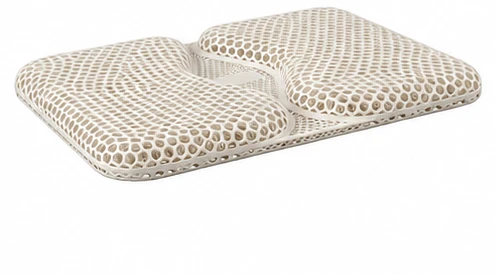
The product shown here is a contoured headrest support cushion with an open lattice, supplied in several color references. Its development challenge is to connect the intended contact shape, mounting context and deformation response with a specification that can be sampled and inspected.
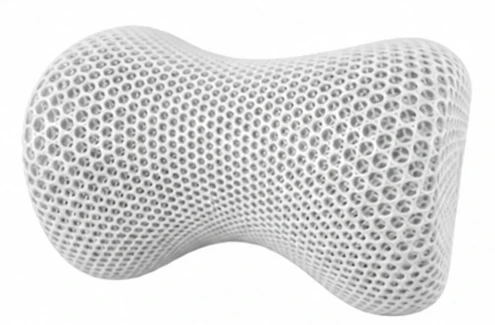
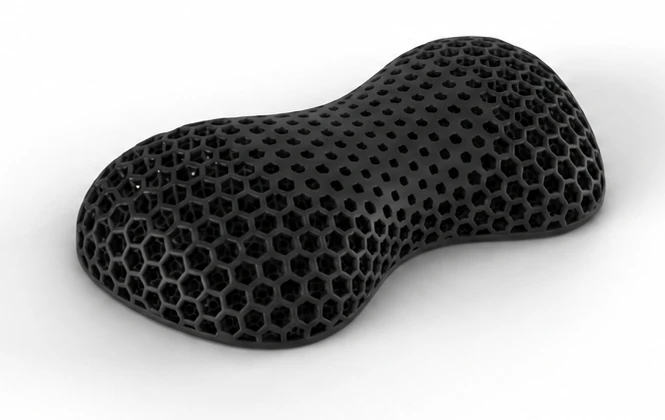
This is a company-supplied finished-product reference for an automotive headrest support pad. It is not a conventional textile pillowcase or a documented sleeping pillow. The reference establishes appearance; it does not establish medical benefit, crash performance, sleep improvement or a completed customer project.
Identifying the actual pillow-cushion product
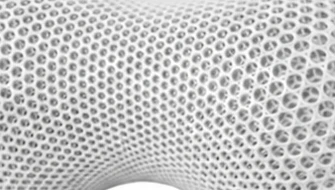
The visible product has a narrow central region and broader curved ends, with an open pattern across the surface. The supplied product collection identifies this shape as a car headrest. Calling it a generic pillow without that context would leave a buyer unclear about what is actually available. This case therefore uses the more precise description headrest support cushion throughout.
The reference images show light gray/white, black, brown and vivid orange examples. These are appearance references rather than a promise that every color or formulation is available for every order. They show the overall contoured form clearly, but do not reveal an attachment system, dimensions or a cross-section. Those details need to be confirmed through a drawing and a physical sample.
Product references and visible details
Structural geometry and intended contact
The first design task is to define the surface the cushion rests against and the region it is intended to contact. Record the available space, curvature and surrounding features. An accessory that is stable on one seat or headrest may move or sit differently on another. The proposed mounting arrangement and its effect on existing equipment must be assessed with the actual installation.
Cell geometry, wall thickness and connecting regions can be considered together when targeting a deformation response. A local design change is a proposal to evaluate, not proof of a particular stiffness or comfort level. Ask for a clear definition of the loaded condition and the unloaded reference shape. This makes sample review more useful than describing the product only as soft or supportive.
Material and manufacturing-route review
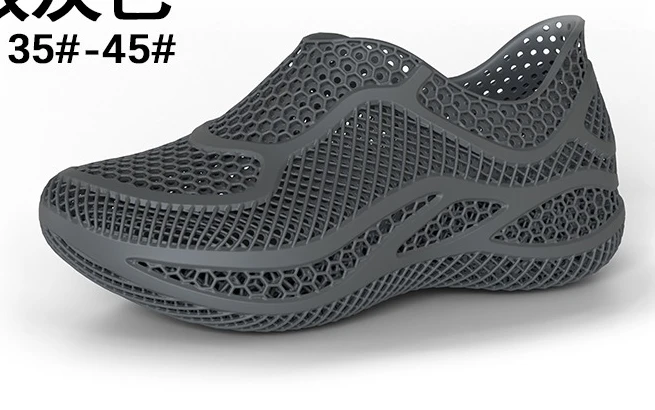
Jingrui Proto’s ergonomic-product offering supports custom development, prototyping and small-batch inquiries. The product image does not identify the material grade or printing process used for this particular reference. Do not transfer the DLP process description from footwear to this cushion without project-specific confirmation. Request the proposed process and material together with the quotation.
The material review should cover repeated compression, recovery, surface feel and the cleaning routine. If the product will remain in a vehicle, include the relevant temperature and exposure conditions in the brief. Ask which properties are available for the selected printed material and finished product. A color reference or a flexible appearance does not establish chemical resistance, skin-contact suitability or an automotive material approval.
Manufacturing considerations for an open support pad
Review the lattice model for thin connections, abrupt section changes and features that are difficult to clean or inspect. The finishing plan must account for the internal openings as well as the outside contour. A smooth outer silhouette does not demonstrate that every internal passage is accessible or that the finished structure meets the intended acceptance criteria.
Discuss orientation and any support or handling requirements with the manufacturing team. Where the product uses a separate attachment, cover or backing, specify the interface and assess the complete assembly. A cover can change contact feel and drying behavior, so approval should use the intended configuration. No attachment performance is claimed from the current image set because the relevant details are not shown.
Compression and recovery: a proposed evaluation program
This section describes methods to consider, not tests reported as completed on the pictured cushion. Define the support fixture, contact shape, compression level, loading duration and recovery interval. Record the sample condition before the test. Compare dimensions and visible cell condition after loading and after the agreed rest period, using acceptance limits set for the project.
Repeated-loading evaluation should represent the intended installation and use rather than compressing the product arbitrarily. Include a check for migration, local collapse, cracks, torn connections or permanent shape change. If the product is revised, retain the original sample identification and the new CAD revision so the results remain traceable. No cycle count or service-life rating is inferred here.
Ventilation, cleaning and surface finish
The openings are visible geometric features, but the photographs do not measure airflow or cooling. If ventilation is a purchase requirement, define how the complete installed product will be assessed. Consider whether a backing, cover or adjacent upholstery blocks the intended pathways. A claim about the assembled accessory should reflect that assembled condition.
For cleaning, specify the intended method, cleaning agent, contact time and drying expectations. Evaluate appearance, residue, odor concerns and the condition of accessible and internal surfaces after the approved routine. Agree a surface sample if tactile feel or visible marks matter. Do not assume that an open lattice is automatically easier to clean or that a finish suitable for another product will suit this one.
Automotive and other application boundaries
The supplied reference is an automotive accessory form, not evidence of qualification as an original vehicle head restraint or safety component. Compatibility with a vehicle installation requires a separate review. The accessory should not be presented as improving crash protection, preventing injury or meeting a vehicle manufacturer’s requirements without the corresponding evidence.
Other contoured support-product concepts can be discussed through custom development. A desk, travel or home application would require its own geometry, use conditions and evaluation. Similarly, a true sleeping pillow would need a different product brief and authentic product assets. This case does not extend the headrest image into an unsupported bedding product or claim improved sleep.
Developing and approving a custom version
Start with a fit reference and a defined contact envelope. Use the first sample to check the overall form, installation and visible finish. A subsequent iteration can address local response or a revised attachment. Record what changed and why; the sample history should let the buyer connect the approved shape with the final CAD and material specification.
Before a pilot batch, agree inspection of the exterior shape, relevant interfaces and representative lattice condition. Define how appearance variation will be assessed across colors and how the product will be protected during packing. If the design or material changes after approval, decide whether the existing sample program remains applicable. Small-batch feasibility does not remove the need for that change review.
Headrest support-cushion RFQ checklist
Provide the intended installation, CAD or sketches, contact envelope, attachment requirements and overall dimensional drawing. Identify the desired color, surface expectations, target quantity and whether a cover or backing is included. Add the anticipated environment, cleaning method and requested compression or recovery criteria. Include the destination market and required documentation so the team can identify evidence gaps before sampling.
Frequently asked questions
Is this a pillowcase or a sleeping pillow?
Neither description is supported by the current assets. The photographed product is a contoured lattice headrest support cushion. A separate sleeping-pillow project needs its own brief and product evidence.
Can local stiffness be customized?
The desired response can be discussed through geometry and material development. Specify the loading condition and acceptance criteria so proposed changes can be compared on samples rather than judged from a render.
Are comfort or medical benefits proven?
No clinical, sleep or measured comfort outcome is established here. Any such claim needs an appropriate evidence program for the finished product and intended users.
Request a product development review
Send your product reference, CAD or sketches and the requirements that will determine sample approval. Jingrui Proto can review the proposed development scope and identify the process, material and documentation questions that need to be resolved before quotation. Confirm quantities and timing for your own project rather than assuming another product’s commercial terms apply.
Send CAD and request a manufacturing quotation.
Relevant capabilities and related product cases
Explore 3D printing services, surface finishing and material resources. These resources describe broader capabilities; they do not identify an unconfirmed material or process for the pictured product.
View the current ergonomic product collection and custom development offering.
Related product demonstrations: JR-58106 3D Printed Footwear: Lattice Product Development, 3D Printed Mouse Wrist Rests: Lattice Product Development, 3D Printed Seat Cushions: Lattice Product Development. Browse all case studies.
Related projects