FGF and FDM are both extrusion-based 3D printing processes, but they are usually evaluated for different buyer problems. FDM typically uses filament and is familiar for prototypes, fixtures and smaller thermoplastic parts. FGF, also called pellet 3D printing or large-format additive manufacturing, uses thermoplastic pellets and is often considered when the part is physically large and the project economics depend on faster deposition and lower feedstock cost.
For large parts, the decision is not only about printer size. It is about geometry, surface expectations, finishing, handling, assembly and what the part must do after printing.
How do filament FDM and pellet-fed FGF differ?
FDM feeds filament through a heated nozzle. It is widely used for prototypes and functional models where part size, material, finish and accuracy fit the equipment.
FGF feeds thermoplastic pellets into a screw-driven extruder. Jingrui Proto’s FGF 3D printing service describes the process as large-format pellet 3D printing for meter-scale parts, molds, furniture, interior forms, display objects and similar applications.
The practical distinction is scale and economics. Large nozzles and pellet feedstock can make big forms more practical, but the surface and detail expectations must match the process.
Which purchasing questions distinguish FGF from FDM?
Compare the proposed feedstock route, complete part size, detail, finished surface and delivery scope; process names alone do not define equivalent quotations.
| Question | FGF | FDM |
|---|---|---|
| What size problem does it usually address? | Large forms, molds, furniture, displays and tooling-like shapes | Prototypes, fixtures and large industrial models within the reviewed FDM build volume and geometry |
| What drives the economics? | Pellet feedstock and higher deposition for large geometry | Filament convenience and detail for smaller parts |
| What surface should buyers expect? | Larger bead texture that often needs finishing if cosmetic quality matters | Finer bead texture than FGF in many setups, but still layer-based |
| What should be reviewed early? | Handling, segmentation, finishing, coating, support and application setting | Orientation, support, material, tolerance and functional surfaces |
| Is it a finished-part shortcut? | Not automatically; finishing and application review are important | Not automatically; material and finish limits still apply |
Why does increasing part size change the manufacturing plan?
Large-format printing is not simply “print the same part bigger.” Bigger forms introduce handling, support, thermal behavior, finishing area and transport questions. A buyer may need to decide whether the part should be printed in one piece, printed in segments, machined after printing, coated, reinforced or used as a mold or master.
This is why the RFQ should include the intended use and installation setting. A trade-show display, furniture form, composite mold and production aid may all be large, but they do not have the same requirements.
What does the published FGF furniture case actually demonstrate?
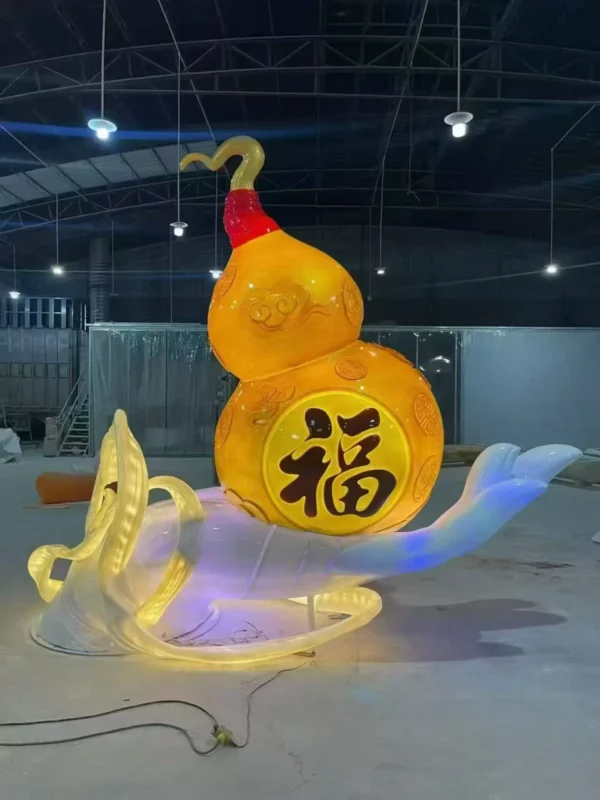
Jingrui Proto’s published case study FGF 3D-Printed Furniture and Interior Forms provides real manufacturing evidence without overclaiming. The verified public facts are that Jingrui Proto produced furniture and interior forms using FGF 3D printing, with a documented 7-day lead time. The public case does not claim a specific polymer, machine model, dimensions, layer specification, load rating or strength result.
That restraint is useful for buyers. Images can show scale and finish context, but they should not be used to infer material performance. Material and performance requirements belong in the RFQ and engineering review.
Which surface and finishing requirements should an FDM or FGF RFQ define?
FGF parts commonly require buyer alignment on surface texture. The as-printed bead can be part of the design language for some furniture, interior and display forms. In other projects, sanding, filling, coating, painting or machining may be needed.
FDM also leaves visible layers unless finished, but the bead scale and part size are usually different. For buyer-intent planning, ask what the viewer or user will actually see and touch:
- Is the printed texture acceptable?
- Does the part need paint or coating?
- Are there visible seams or joined sections?
- Is the part a final display object, a master pattern or a functional tool?
- Will any surfaces need machining after printing?
What information should buyers send for a large-format printing assessment?
For an FGF or large-format comparison, send:
- CAD file or 3D model
- Overall dimensions and maximum allowed segment size
- Quantity
- Intended use, such as furniture, interior form, mold, display or tooling
- Required surface appearance
- Outdoor, indoor, heat, impact or handling conditions
- Assembly, mounting or transport requirements
- Any surfaces that require machining or coating
How should buyers interpret Jingrui Proto’s FDM and FGF size capabilities?
Jingrui Proto’s customized industrial-grade FDM equipment has a maximum build volume of 1500 × 1500 × 1000 mm in X, Y and Z. A part approximately 1.4 meters long can be considered for one-piece FDM printing only when its complete geometry and proposed orientation fit that space. The separately confirmed FGF size capability is up to 1800 mm; it is not the FDM build volume and does not define an unreported three-axis FGF envelope.
Send the complete model rather than only the longest dimension. Include feet, protrusions, attachment points and other features that may govern placement. A short description such as “1.4-meter panel” does not establish the other dimensions or show whether the part can be oriented as required. Ask the supplier to confirm the proposed placement against the actual geometry before releasing a one-piece order.
The reviewed print envelope is also different from a finished product’s installation envelope. A part may fit the machine yet be awkward to finish, pack, move through a doorway or install. Keep the one-piece requirement separate from handling and delivery requirements so that each can be assessed explicitly.
When should a large printed part remain one piece rather than be divided?
Keep a large part in one piece when the reviewed geometry, manufacturing route and delivery plan support the interfaces and appearance you need; consider segmentation when it solves a specific manufacturing or handling constraint without creating unacceptable joint risks.
Identify surfaces where a seam would be visible or would interrupt a functional interface. If segmentation is acceptable, ask for the split location, alignment approach and responsibility for final assembly. Do not compare a single-piece quotation with an unassembled multi-piece quotation as if the deliverables were identical. A lower printing price may omit joint preparation, finishing and installation work.
Where assembly is part of the scope, define which dimensions apply to each section and which apply to the completed object. A set of individually acceptable segments does not automatically establish the overall assembly shape. If the buyer will assemble the object, request the identification and instructions needed to reproduce the reviewed arrangement.
What should buyers specify before sanding, filling or painting a large FDM or FGF part?
Specify the visible surfaces, viewing distance, acceptable texture and final interface condition before choosing a finishing route. “Smooth finish” alone does not explain whether the buyer expects a close-up product model, a distant exhibition form or a functional surface.
Use marked views to distinguish cosmetic faces from hidden areas and mounting interfaces. Filling and sanding should not silently redefine edges or interfaces that matter to the assembly. If coating is proposed, identify regions that need a different treatment or protection. Agree whether the dimensional acceptance applies before or after the final finish.
Ask for a relevant appearance reference and confirm what it represents. A small flat sample may help discuss texture or paint, but it does not establish how seams, curves and recesses will appear on a large object. A photograph can record a visual agreement without proving surface uniformity under every lighting condition. Use a representative finished area or part when that distinction matters.
Jingrui Proto offers surface finishing. The quotation should confirm the operations proposed for the actual printed material and application. Do not assume that an exterior coating establishes waterproofing, outdoor durability, structural strength or a particular service life.
Which mounting and delivery requirements should a large-print quotation include?
A large-print quotation should include the agreed mounting interfaces, delivered assembly state, packaging and destination constraints rather than treating the printed shell as the complete procurement scope.
Provide the interface with its supporting structure, including any buyer-supplied hardware that affects the design. Explain whether the object is freestanding, mounted or supported elsewhere. A hollow display form and a load-bearing component require different engineering questions; a product photograph cannot establish an allowable load. Agree the responsibility for structural assessment when the application requires it.
Identify the practical delivery route. Maximum section size, unpacking space and on-site assembly access may influence segmentation even when the printer can accommodate a larger part. Ask which operations occur before packing and which remain for the recipient. The quotation should state whether bases, brackets, hardware and installation are included or excluded.
For international delivery, agree the destination, handling-sensitive areas and whether the package protects the approved finish from contact with hardware or adjacent sections. Confirm who inspects the shipment on arrival and which evidence is required before assembly conceals important surfaces. No particular freight cost, transit time or damage-free guarantee follows from the manufacturing capability alone.
How can buyers compare large-format printing quotations without a misleading unit price?
Compare quotations using the same approved geometry, material proposal, finishing condition, assembly scope and acceptance requirements. Printing price alone can hide differences in the work required to produce a usable delivered object.
| Scope item | Buyer input | Supplier confirmation |
|---|---|---|
| Printing arrangement | Full geometry and permitted splits | Proposed process and one-piece or sectional plan |
| Finished surfaces | Marked cosmetic and functional regions | Agreed texture, finishing operations and exclusions |
| Assembly | Interfaces, hardware and installation responsibility | Delivered assembly state and remaining buyer work |
| Acceptance | Critical features and appearance reference | Review stage and included documentation |
| Delivery | Destination and handling constraints | Packaging scope and quotation assumptions |
For example, a bare sectional print and a finished assembled display can both be described as “large-format printing.” They answer different purchasing requests. Require each supplier to identify its exclusions rather than inferring them from the headline price. This is a hypothetical comparison of quotation scope, not a Jingrui Proto customer case.
Send your geometry, intended use and delivered-condition brief through the existing quotation channel. Request a review of FDM, FGF or an alternative route based on those requirements, with material and performance claims confirmed for the particular application.
What should buyers confirm before selecting large-format FDM or FGF?
Confirm the feedstock route, reviewed geometry, required surface and final delivery condition before deciding between FDM and FGF.
Is FGF the same as FDM?
No. Both are extrusion-based, but FDM usually uses filament while FGF uses thermoplastic pellets in a screw-driven extrusion system. FGF is often evaluated for larger forms and different economics.
Is FGF always better for large parts?
No. It depends on the geometry, detail requirement, surface expectation, material target, handling plan and finishing route. Some large projects may still use segmented SLA, CNC, composite tooling or another process.
Can FGF parts be finished for interior or display use?
Yes, finishing can be part of the workflow, but the required finish must be discussed early. The process route changes if the part needs a smooth painted surface instead of visible printed texture.
How should buyers choose between FDM and FGF for a large part?
Use FGF when large size, deposition economics and overall form make pellet extrusion practical. Use FDM when the part size and detail fit filament printing. For large-format projects, the best RFQ includes geometry, size, intended use, surface expectations and finishing requirements.
To review a large-format part, send the project brief through the Jingrui Proto contact page.
Related Posts
- Large Format 3D Printing Capabilities and Materials
- Large-Scale Prototypes: Process, Assembly and RFQ Guide
- Prototype to Low-Volume Production: How to Choose the Right Manufacturing Process
Author Box
Author Name: Jingrui Proto Engineering Team
Industry Experience: Prototype and low-volume manufacturing since 2006
Brief Bio: The Jingrui Proto engineering team helps buyers evaluate additive, CNC, finishing and assembly routes for large prototypes and low-volume manufacturing projects.