

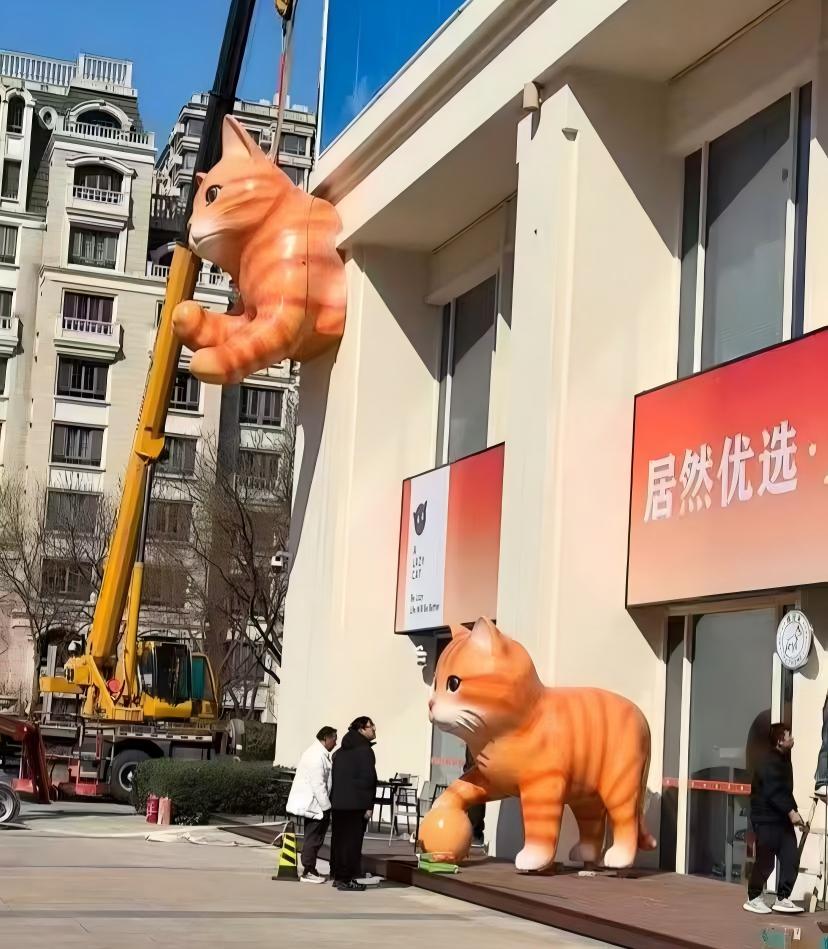
Image: Actual publicly documented Jingrui Proto outdoor gear installation. The image does not identify ASA material or prove a new sculpture installation design.
Quick Answer
Choose the outdoor sculpture route before discussing a printer size or paint color. A direct FGF-printed ASA shell and an FGF master used to manufacture an FRP shell are different products, with different material, reinforcement, finishing and installation requirements. Define the intended location, geometry, structural load path, anchoring responsibility and maintenance plan. Neither a weather-resistant polymer name nor an attractive installation photograph proves that a new sculpture is ready for public outdoor use.
This guide helps designers, landscape contractors and procurement teams compare large-format manufacturing proposals. It focuses on the choice between direct printed construction and a printed-master composite route. Existing Jingrui Proto outdoor and FRP examples provide process context; they are not evidence of a completed ASA sculpture with a particular wind, fire or weathering qualification.
Define the deliverable before selecting the material
Ask whether the quotation covers a printed shell, a finished sculpture, a master pattern, tooling, an FRP component or a complete installed assembly. These scopes can share the same digital model while requiring substantially different work. A low price for a master is not comparable with an installed sculpture price.
Describe the viewing and use conditions. An inaccessible decorative object, a sculpture people can touch and a structure that invites climbing create different risks. If the project may attract public interaction, provide that context to the responsible designer rather than assuming a decorative label removes structural responsibilities.
Identify who supplies engineering, foundation design, installation equipment and site approval. A manufacturing supplier can review the fabrication route, but should not silently become the civil or structural engineer through an ambiguous “supply and install” note.
Compare direct FGF and master-to-FRP routes
Direct FGF pellet extrusion creates the component from deposited thermoplastic. The delivered shell retains a relationship to layer direction, bead geometry, thermal history and any secondary coating or reinforcement. Large geometry can be feasible, but local joints and load paths still need design review.
In a master-to-FRP route, the printed object supports pattern or tooling manufacture, and the final composite component has a different construction. Laminate, reinforcement, resin, tooling and assembly decisions matter. The printed master’s material is not necessarily the final sculpture material.
Avoid describing an FRP case as a tested direct ASA print. Review Jingrui Proto’s FGF service and related public work for the actual route used. If a new proposal changes that route, ask what additional engineering and validation are required.
| Route | What the print does | What needs separate review |
|---|---|---|
| Direct shell | Forms the delivered body | Layer behavior and joints |
| Printed master | Defines a pattern | Final composite build |
| Segmented build | Creates transportable sections | Alignment and joining |
| Hybrid assembly | Works with internal structure | Attachment load paths |
Evaluate ASA as a candidate, not a universal answer
ASA is often considered where weathering resistance matters. INEOS Styrolution’s material overview identifies UV-related properties within its ASA product range. That does not establish the outdoor life of every pellet grade, printed wall or finished sculpture.
Ask for the exact proposed material and relevant data. Pigmentation, additives, reinforcement and processing affect the interpretation of the material specification. A generic ASA label should not replace project-specific review of temperature, chemicals, moisture and the desired appearance over time.
If glass-fiber reinforcement is proposed, assess stiffness, thermal behavior, surface preparation, tool wear and any changes in directional behavior. A nominal 20% glass content is not automatically optimal for a sculpture. Confirm how the percentage is defined and what the selected grade’s data actually support; do not claim a universal strength increase or installation benefit.
Design the load path through shell, frame and anchors
The sculpture’s appearance geometry may not provide a complete structural system. Identify how self-weight and application loads travel through the shell, internal supports, connections and foundation. Thin printed walls should not be assumed to perform like a continuous metal frame or a specified composite laminate.
Discuss attachment zones early. A local insert or bracket can concentrate force into surrounding material. The connection needs enough support and a way to transfer load without relying on an unverified small area of polymer or filler. Access for assembly and later inspection also matters.
Wind, public interaction and site-specific demands require qualified assessment by the responsible project professionals. This article does not provide anchor sizing or a universal wall thickness. Those decisions depend on geometry, exposure, supporting structure and applicable local requirements.
Plan segmentation and transport before surface finishing
A build may fit the printer yet be impractical to transport or install as one piece. Confirm the actual machine allocation and usable build arrangement, then review vehicle access, handling points, lifting method and site entry restrictions. A maximum capacity statement is not a shipment plan.
If segmentation is required, decide where joints are acceptable visually and structurally. Alignment features can help assembly, but should not be mistaken for a fully engineered connection. Mark the surfaces that need final site finishing and those that must remain accessible for maintenance.
For a hypothetical large animal sculpture, an attractive seam location may conflict with access to an internal frame connection. Resolve that trade-off digitally before fabrication. The example describes planning logic, not a reported Jingrui Proto customer result or completed lifting study.
Control water paths and hidden cavities
Outdoor objects encounter water in ways that a showroom sample does not. Review openings, low points, seams and internal cavities. Avoid unintentionally trapping water near hardware or inside hollow forms. Any drainage or ventilation arrangement must be compatible with appearance and the intended structure.
Do not assume a coated surface makes every joint watertight. Layer interfaces, attachment penetrations and segmented seams require their own review. If the sculpture contains lighting or electrical equipment, coordinate those systems with the responsible specialist rather than inferring protection from the outer shell material.
Consider access for inspection and cleaning. A drain that cannot be cleared or an internal fixing that cannot be reached may undermine the maintenance plan. State how the owner will inspect concealed areas after installation and which components can be replaced.
Specify coating as a system
Surface preparation, primer, filler and topcoat need to be compatible with the selected substrate and construction route. A paint system used on FRP should not automatically be transferred to a direct thermoplastic print. Confirm adhesion and application requirements through appropriate project review.
Mark the required appearance: visible layer texture, filled smooth surface, local texture or another approved finish. A highly filled surface can hide deposition lines, but it does not independently prove structural continuity underneath. Keep cosmetic approval separate from connection and material acceptance.
Ask how repaired or site-finished seams will match the shop finish. Color, gloss and texture can differ when application conditions change. A representative sample and a defined reference hierarchy are more useful than an unsupported promise of an invisible joint under every viewing condition.
Agree what outdoor validation is actually required
Identify the evidence the project needs before release: material documentation, connection design review, dimensional checks, assembly trials, coating evaluation or specific third-party assessments. These are separate deliverables. Do not describe a generic ISO management-system certificate as a product or installation safety certification.
Weathering performance should be supported by the relevant material or coating evidence and its limitations. A material producer’s data may help shortlist candidates, but does not prove the full sculpture’s service life. Geometry, exposure, joints and maintenance remain part of the actual system.
If a test is requested, define its method, specimen or assembly, acceptance rule and responsible party. Do not invent a passed weathering, wind or water test because the material was selected for outdoor use. The quotation should identify which validation remains with the buyer or site engineer.
Quote the complete project boundary
Separate digital preparation, printing, master or tooling work, composite fabrication if applicable, frame, finishing, assembly, packing and installation support. A meaningful comparison should state what each supplier delivers and what another contractor must provide.
For direct ASA proposals, ask whether the material grade is actually available and approved for the allocated equipment. For FRP proposals, ask for the final construction scope rather than the printed master’s description alone. Confirm any external process coordination without assuming all stages are in-house.
Jingrui Proto’s approved general FGF envelope is a capability starting point, not a guarantee that every sculpture can be delivered as one piece. Large bonded or assembled work is also part of the company’s documented capability. The quotation should state which route is proposed for the actual geometry.
Hand over a maintainable installation record
At delivery, agree which drawings, component identities, finish references and maintenance instructions the owner receives. Identify removable access covers, inspection points and replacement hardware where included. A future repair contractor should be able to distinguish a cosmetic seam from a structural connection without dismantling the sculpture by guesswork. Keep site changes in the handover record, including any approved alteration to anchor locations or segment joints. Do not treat a shop photograph as an as-installed drawing when the site assembly differs. This record supports maintenance planning; it does not replace the responsible engineer’s installation acceptance.
Outdoor sculpture RFQ checklist
- Full digital model, dimensions and desired viewing appearance.
- Site location, exposure and expected public interaction.
- Direct print, printed master or final FRP deliverable definition.
- Proposed material grade and any reinforcement requirements.
- Structural and foundation design responsibility.
- Frame, attachment, anchoring and service-access requirements.
- Water paths, drainage and internal equipment considerations.
- Surface preparation, coating reference and site-finish scope.
- Segmentation, transport and installation constraints.
- Required evidence, tests and acceptance responsibilities.
Frequently Asked Questions
Is ASA automatically suitable for any outdoor sculpture?
No. It is a candidate material whose exact grade, processing, geometry and exposure need review. Weathering-related material properties do not establish the complete sculpture’s installed performance.
Is an FGF-to-FRP case proof of direct ASA production?
No. The printed object may be a master rather than the final installed shell. Keep the material and process identities separate when evaluating examples and quotations.
Does 20% glass fiber always improve the design?
No universal conclusion applies. Reinforcement can change several properties and manufacturing requirements. Assess the exact grade and the intended load path rather than optimizing a single percentage.
Can the printed shell carry the anchors directly?
That needs an engineered connection review. Attachment loads, local support, material behavior and the foundation all matter. Do not select anchor details from a photograph or a generic wall-thickness rule.
Does paint guarantee waterproofing or UV life?
No. Coating compatibility, application, seams and exposure must be considered together. Any environmental claim needs the appropriate evidence and defined limitations.
What should be decided before ordering?
Confirm the final construction route, material, structural responsibilities, connection plan, surface specification and installation boundary. These decisions determine whether two quotations describe the same project.
Request an outdoor manufacturing route review
Send the model, site brief, intended construction and finish requirements. Identify who owns structural design and installation approval. Contact Jingrui Proto to compare direct FGF and printed-master routes with clear material, assembly and evidence boundaries before committing to the final sculpture.
Author
Jingrui Proto manufacturing content team. Outdoor examples are process context, not a substitute for project-specific structural, environmental or installation approval.





