
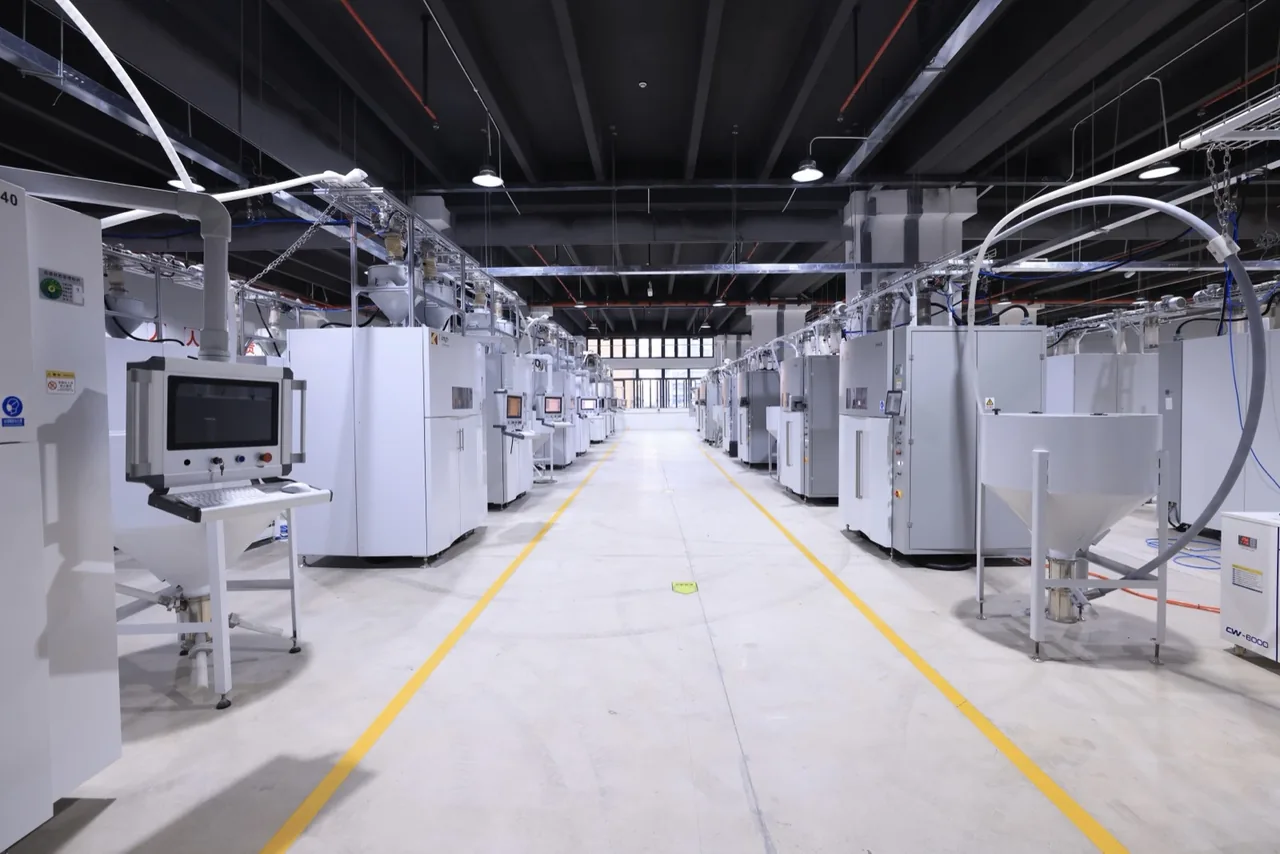
Image: Actual Jingrui Proto SLS workshop photograph. Machine imagery does not confirm the allocation or usable envelope of a proposed500mm order.
Quick Answer
A 500 mm housing is not ready for a one-piece SLS order simply because its bounding box appears to fit a printer. Confirm the assigned machine, orientation, process allowances, thermal behavior, powder access, functional interfaces and inspection plan. One-piece construction removes assembly joints, but does not automatically guarantee straightness, strength, airtightness or lower delivered cost.
This guide is for engineers and buyers considering large nylon covers, housings and equipment forms. The 500 mm dimension describes the buyer’s proposed geometry, not a completed Jingrui Proto customer result. The company’s approved general nylon envelope is 750 × 550 × 550 mm; that broad capability statement must not be treated as automatic confirmation of a specific SLS machine allocation or usable project envelope.
Check 1: Confirm usable space in the proposed orientation
Send the complete outer geometry, including tabs, flanges and temporary features. A main body may fit while a small projection crosses the actual build boundary. Ask the supplier to review a dimensioned orientation rather than comparing only the largest number on a brochure.
The nominal chamber envelope is not necessarily all usable product space. Process margins, orientation, thermal considerations and preparation requirements can affect the accepted build arrangement. A part close to a boundary needs explicit review; do not assume diagonal placement resolves every constraint.
State whether one-piece manufacture is mandatory and why. Removing seams may help appearance or simplify assembly, but a split design can sometimes improve orientation, access or transport. Obtain a comparison if segmentation is acceptable. A quotation that assumes bonding is not equivalent to a confirmed single-build offer.
Check 2: Review broad walls and thermal distortion risk
SLS builds nylon through a heated powder-bed process. Large thin areas and abrupt thickness changes deserve careful review because cooling and local geometry can influence the released shape. A minimum printable wall value does not establish acceptable behavior for a long enclosure panel.
Ask where ribs, local thickening or a changed section could improve stiffness without creating excessive mass concentrations. A rib can help support a broad area, but may also affect the surface or local thermal behavior. The supplier should review the complete geometry rather than add a generic grid everywhere.
Do not place a tight flatness requirement on an unsupported wall without discussing inspection state. A flexible housing may look different when resting freely, held on supports or attached to its frame. Define the condition relevant to its use and whether an assembly trial is part of acceptance.
Check 3: Provide powder-removal and cleaning access
The surrounding powder supports the build, but unused powder still needs removal. Closed cavities, narrow channels and inaccessible pockets can trap material. Mark where internal cleanliness matters and ask how the supplier will reach or verify those regions.
Avoid treating a small drain hole as a universal cleaning solution. Its size, location and connection to internal spaces determine whether powder can actually escape. Internal ribs or baffles can form isolated pockets even when the outer shell has an opening.
If the part carries airflow, electronics or moving elements, explain the contamination concern. Define the delivered cleaning condition and any special verification separately. A photograph of the outside cannot prove the interior is clear, and an open lattice does not automatically make every internal volume accessible.
Check 4: Separate printed interfaces from precision features
Identify the locations that decide fit: mounting pads, connector openings, locating bores, cover joints and fastener patterns. The housing’s overall length and a local mating feature may need different acceptance methods. Do not apply a general process tolerance as proof that every interface works.
Provide counterpart geometry where possible. A large cover assembled to a rigid metal frame behaves differently from two flexible printed shells. The supplier needs to know which part establishes location and how the joint is fastened before proposing a sensible tolerance or inspection strategy.
If secondary machining is considered, discuss stock, fixturing and access before printing. A large flexible shell can be difficult to locate for cutting, and an inaccessible boss cannot be corrected just because its dimension is marked critical. Selectively changing the interface design may be more practical than machining the whole part.
| DFM check | Buyer input | Approval question |
|---|---|---|
| Build fit | Full CAD and orientation | Is one build confirmed? |
| Wall behavior | Functional load and supports | Is shape suitable? |
| Cleaning | Internal access and use | Can powder be removed? |
| Interfaces | Mates and datums | What needs final checking? |
| Material | Grade and exposure | What evidence applies? |
| Finish | Surface map | What changes after finish? |
| Delivery | Packing and acceptance | Will arrival fit be checked? |
Check 5: Confirm the actual nylon grade and use conditions
“Nylon” does not identify a complete material specification. Ask for the proposed grade and relevant data for the intended use. PA12, filled grades and other nylon families should not be treated as interchangeable merely because their printed surfaces look similar.
Producer data must be interpreted in context. The EOS PA 2200 information explains that material or process data alone are not a sufficient design basis or a guarantee of application suitability. Mentioning this source does not claim Jingrui Proto uses that particular material for every SLS order.
Explain temperature, moisture exposure, chemicals and sustained loads where relevant. A room-temperature fit model is a different task from a housing used near heat or under continuous fastening load. Request the evidence needed for the application instead of transferring a test value from a generic specimen into an untested large geometry.
Check 6: Define the finished surface before approving dimensions
Decide which surfaces remain as printed and which receive further treatment. Cleaning, surface smoothing, coloring or coatings can influence appearance and interfaces. Confirm that the proposed finish is suitable for the selected material and geometry.
Mark cosmetic faces and regions where tool marks, residual texture or finish edges matter. A deep recess may not receive the same surface treatment as an exposed outer panel. A color requirement without a surface map leaves room for different assumptions about preparation and acceptance.
Do not equate a smoother surface with a leak barrier. If the housing requires a fluid or gas containment function, define that separately and validate the actual construction. SLS nylon should not be described as universally airtight or waterproof on the basis of appearance or a finishing name.
Check 7: Plan support, packing and arrival inspection
A large nylon part may need support during handling and transport. Ask where it can be lifted and how the packing prevents movement without loading thin walls or fragile projections. A package that protects the exterior but bends a flange has not preserved the functional geometry.
Agree which measurements or assembly checks will be repeated after delivery. The supplier and buyer should use comparable supports, datums and environmental assumptions when evaluating a disputed shape. Otherwise, an apparent disagreement may reflect different measurement states rather than a manufacturing change.
Include the installation route in the review. Doorways, access panels and transport restrictions can matter even when the printer can produce the complete part. One-piece manufacturing removes assembly work but may create a handling problem that a segmented design would avoid.
Decide whether one piece is the right commercial choice
Compare complete routes, not just print prices. A one-piece build may avoid joint alignment and cosmetic seam finishing. A split route may offer easier orientation, replacement or shipping. Each should include the relevant preparation, finishing, assembly and inspection work.
Consider a hypothetical equipment cover with a broad side wall and several inward-facing bosses. The part may fit nominally inside a chamber, yet still require redesign for wall stiffness and powder access. A process review should expose those issues before the buyer commits to an unqualified one-piece requirement.
Jingrui Proto’s SLS service can be reviewed alongside its broader 3D printing capability. Ask for written confirmation of the actual process, material and build arrangement. Do not infer a project reservation from a published maximum capacity.
Build an inspection plan for the assembly decision
Choose measurements that explain whether the housing will install and function. Overall envelope, mounting pattern, opening positions and contact regions may be more informative than a long list of unrelated local dimensions. Define which areas are cosmetic and which govern fit.
For a flexible shell, record support and restraint. If the acceptance condition is assembled, identify the mating frame and fastening instructions supplied by the design team. A supplier should not need to force a part into shape arbitrarily to obtain a passing result.
Separate a dimensional check from a functional validation. Electronics fit, thermal performance, environmental protection and service durability may require additional tests. Record what the prototype is intended to prove so an accepted fit sample does not become unsupported evidence for the finished product’s wider performance.
RFQ checklist for a large SLS housing
Before releasing the order, ask the supplier to return a marked review showing the agreed orientation and any unresolved DFM points. Keep that review with the CAD revision. A verbal statement that the part fits should not replace the actual one-piece manufacturing commitment and its stated exceptions.
- Full CAD with all projections and overall dimensions.
- Whether one-piece manufacture is mandatory or merely preferred.
- Proposed material grade or functional material requirements.
- Critical walls, load paths and permitted design changes.
- Powder-removal access and internal cleaning expectations.
- Mating-part geometry, datums and key interface dimensions.
- Final surface map and areas needing special treatment.
- Free-state or assembled inspection requirements.
- Quantity, packing constraints and installation access.
- A request to confirm the allocated machine and orientation.
Frequently Asked Questions
Does a 500 mm part automatically fit the nylon envelope?
No. All three dimensions, orientation, projections and process allowances matter. The general approved envelope is a starting point for review, not a project-specific SLS build confirmation.
Does SLS need traditional support structures?
The powder bed supports surrounding geometry during building, but that does not remove design constraints. Powder evacuation, thermal behavior and post-build handling still need attention, especially for large hollow parts.
Is one-piece printing always stronger than bonding?
No universal claim is appropriate. Performance depends on geometry, material, loading and any joint design. Choose the route for the actual application and validate it rather than treating absence of seams as a test result.
Can internal cavities remain closed?
That requires careful review because unused powder may be trapped. Provide the internal geometry and use requirements so cleaning access and any necessary openings can be resolved before production.
Can a large shell receive precision machining afterward?
Possibly, where stock, access and fixtures support it. Discuss the selected features before printing. A flexible or inaccessible region may need a design change instead of an assumed corrective operation.
Does surface smoothing prove airtightness?
No. Appearance and containment performance are different requirements. Specify the actual leak or exposure test if the application needs one, and avoid unsupported waterproof claims.
Request a one-piece feasibility review
Send the complete housing CAD, dimensions, material requirements and mating information. Mark powder-sensitive areas, critical interfaces and the reason for avoiding joints. Ask Jingrui Proto to review the proposed SLS build before treating a 500 mm one-piece housing as an approved manufacturing route.
Author
Jingrui Proto manufacturing content team. Build-envelope statements are qualified against approved company records; examples do not represent completed customer tests.





