If you're exploring metal 3D printing services, here's a practical approach: don't start by comparing machine specs or theoretical precision. Start by clarifying what your part is actually for. Is it an appearance model? A functional prototype for testing? Or a finalized part ready for small-batch pilot production? Different needs lead to completely different solutions. This guide helps you match your real scenario to the right direction.
Scenario 1: Appearance Validation or Concept Models → Prioritize SLA + Silicone Casting
If your goal is to check form, feel, or fit, direct metal 3D printing is overkill. A more economical route: start with a high‑precision SLA master pattern, then use silicone vacuum casting to produce polyurethane parts that mimic metal. With SLA accuracy at ±0.01 mm and ultra‑fine layer thickness of 0.025mm, the cast models deliver sharp details and realistic texture – more than enough for design reviews. Per‑part cost typically falls in the tens to hundreds of yuan, an order of magnitude cheaper than direct metal sintering. Actual achievable tolerances depend on part geometry, dimensions, material and inspection requirements. Specific tolerances should be confirmed during engineering review.
Scenario 2: Functional Prototype Testing → Go Directly to SLM
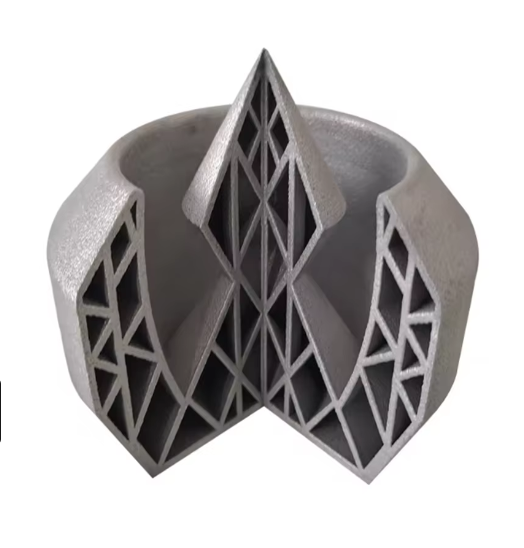
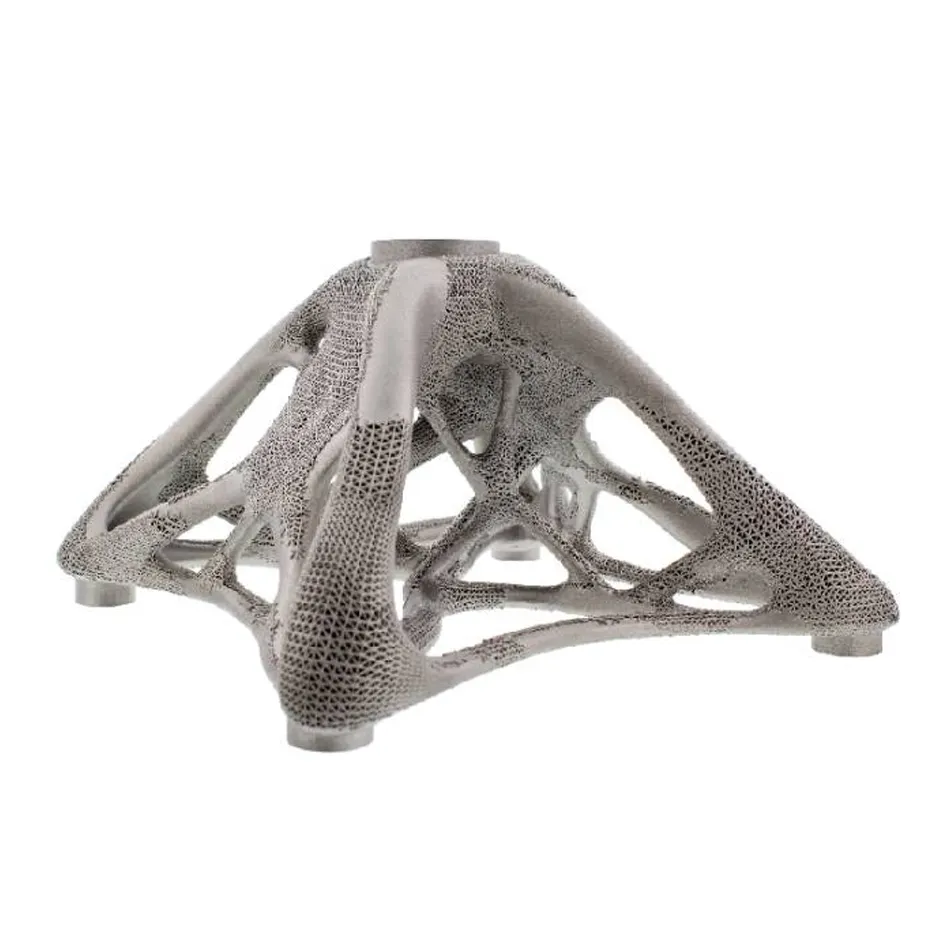
When your part needs to go into actual system testing – say, an irregular heat‑sink bracket or a high‑temperature fluid channel – you need the same metal material as the final product, formed directly. SLM (Selective Laser Melting) is virtually the only answer. It prints complex internal channels and lattice‑lightweighted structures in one piece – something traditional CNC can't handle. When evaluating suppliers, focus on two metrics: density and dimensional tolerance. Reliable SLM printing achieves density ≥99.9% and stable tolerances within ±0.05mm. For demanding powertrain validation parts, post‑print 5‑axis CNC finishing can tighten critical fits to ±0.02mm – a step that determines whether your test data is meaningful.
Scenario 3: Ultra‑Small‑Batch Pilot Runs & End‑Use Parts → Hybrid Processes for Cost Reduction
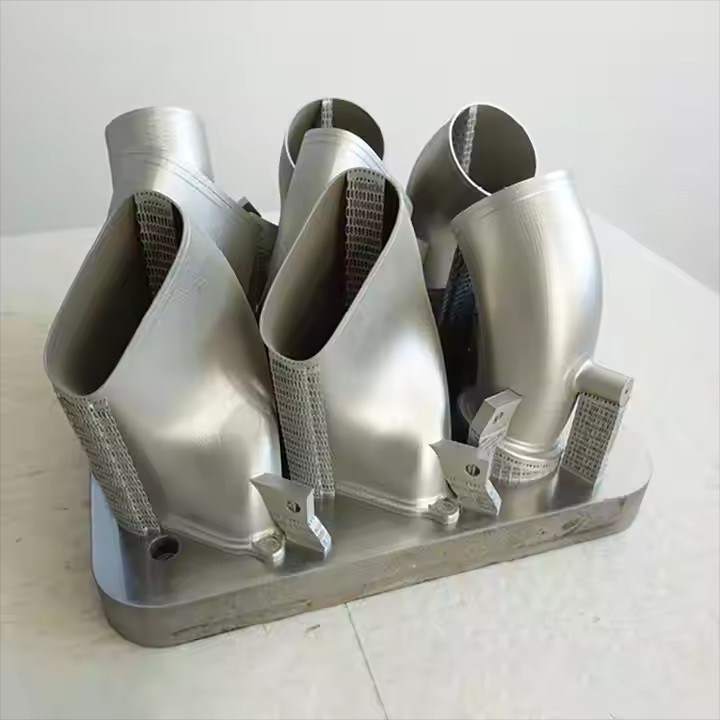
Once your design is finalized and you need dozens to hundreds of parts for market testing, injection molding is too expensive and pure 3D printing is too slow and costly. A smarter approach: "3D‑printed master + silicone casting for small‑batch replication," or "SLM for critical structures + CNC for mating surfaces." This preserves key precision while minimizing per‑part cost. For a typical structural bracket, upfront drawing optimization can eliminate unnecessary secondary operations, reducing per‑unit R&D costs by around 18%. Experienced providers even offer free design‑for‑manufacturing (DFM) reviews before you commit – pinpointing cost‑saving opportunities and potential warping risks upfront.
Core Dimensions: What to Look for in a Metal 3D Printing Partner
Precision & Consistency
Don't be fooled by brochure specs touting "theoretical maximum accuracy" – those numbers are measured under ideal conditions. What matters is batch‑to‑batch consistency: how much dimensional variation occurs from the first to the last part in a production run. Industry standard for batch accuracy hovers around ±0.1mm, while tighter‑controlled shops hold routine tolerances at ±0.05mm. The verification method is straightforward: ask for actual QC reports with batch numbers, paying special attention to the CpK value (process capability index) – a metric that's difficult to fabricate.
Delivery Speed & Production Capacity
Waiting is the biggest drain on R&D momentum. Standard prototype lead times of 3–7 days are common, but if you find a supplier offering 24‑hour rapid sampling and 72‑hour small‑batch delivery, your entire project timeline gains breathing room. Here's the nuance: speed isn't achieved by cutting corners – it requires capacity redundancy and a robust scheduling system. A facility with dual bases (Zhuhai + Dongguan), 500+ industrial‑grade machines, and a 300‑person team has the scale to prioritize rush orders without compromising quality.
Process Completeness & Data Security
A single part typically goes through printing, annealing, wire EDM, CNC finishing, surface treatment, and more. Managing three or four different vendors dramatically increases coordination costs and handover errors. A full‑service, one‑stop shop eliminates this hassle. Equally critical for unreleased products: drawing and structural data security often outweighs per‑unit pricing. Confirm that your supplier has documented confidentiality protocols – such as military‑grade drawing escrow and physically isolated production areas – to prevent data leakage at the source.
Scenario Matching: Align Your Budget and Development Stage
SLM laser precision reaches 0.02mm, with a maximum build volume of 600×600×600mm – enabling mid‑to‑large parts to be printed in a single piece. Per‑part cost for cast PU parts ranges from 10 to 200 yuan, with surface treatments like texture or painting delivering a production‑grade finish. CNC achieves repeat positioning accuracy of ±0.005mm, combining 3D printing's design freedom with traditional machining's fit precision.
When to Skip Metal 3D Printing
⚠️ Simple geometries – blocks, shafts, flanges without internal complexity. Traditional CNC or wire EDM is typically faster and cheaper, with little value added by 3D printing.
⚠️ Exotic alloy requirements – if your project demands a specific forged aluminum grade not available in standard SLM powder stock, you'll need to revert to machining or tooling routes.
⚠️ Cost‑sensitive high volumes – once annual demand exceeds several thousand units, the per‑part cost advantage of metal 3D printing erodes, and traditional molding becomes more economical.
An Actionable Selection Checklist
Clarify part purpose – appearance → casting; performance → SLM; pilot runs → hybrid processes.
Set a precision floor – demand actual batch tolerance data at ±0.05mm or better, not theoretical values.
Verify speed commitments – confirm 24‑hour sampling and 72‑hour small‑batch delivery capability, and assess production scale to judge credibility.
Prioritize process coverage – choose suppliers who can complete printing, machining, and post‑processing in‑house to minimize cross‑vendor losses.
Secure your data – before engaging, confirm the supplier's drawing confidentiality and after‑sales warranty mechanisms. For example, a 30‑day process quality warranty, 7×24 technical support, 2‑hour initial response, and 24‑hour quality resolution are clear indicators of reliability.
Final Thought
Metal 3D printing isn't about paying more – it's about finding the right fit. Break down your requirements clearly, apply the criteria above, and you'll avoid most of the common pitfalls.