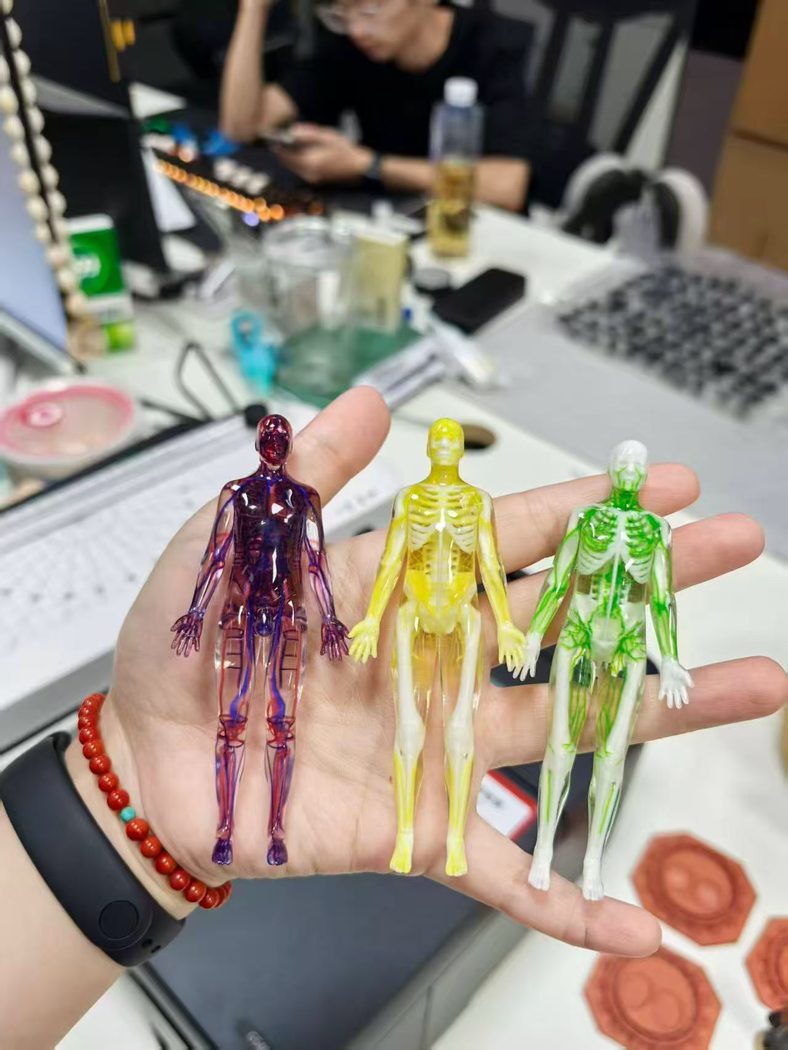
Order a full-color model with removable sections by defining the closed appearance, separation sequence and locating interfaces before printing. A clean digital split does not establish that the physical sections will align, survive handling or remain easy to remove. Treat the joint as part of the model’s design and approval plan.
Key takeaways. Identify what the section must reveal, choose where the joint can remain visible, distinguish locating from retention, and approve representative handling in the finished condition. This guide covers presentation and teaching-model procurement without prescribing a universal clearance or claiming an unperformed durability test.
What should a removable full-color model section demonstrate?
A removable section should demonstrate the intended internal information while preserving an agreed appearance and handling arrangement. Define that purpose before designing the split.
An engineering presentation may need to reveal a passage or assembly relationship. A teaching model may need a sequence of removable layers. A product display may prioritize an unobtrusive exterior joint. Those objectives can conflict. Mark the information that must remain visible and identify which surfaces may contain joint lines, labels or locating features.
Where should buyers place separation lines in full-color models?
Place separation lines where the model can be manufactured, handled and inspected without obscuring essential information. A visually hidden split is useful only if the sections remain practical to remove.
Review the access needed to lift or grip each section. Avoid requiring users to pull on a fragile projection merely because the joint is concealed. A split through a fine texture or important label may disrupt the visual message. Ask the supplier to review printing, support removal and finishing at the joint before treating the CAD division as final.
How should locating features differ from retention features?
Locating features establish the relative position of the sections, while retention features keep them together during the intended use. One feature can contribute to both, but the requirements should be evaluated separately.
A small pin may align a cover without providing a suitable grip or retention force. A tight fit can make the section difficult to remove and concentrate handling loads. Consider the material, geometry and user sequence. This guide does not prescribe pin sizes, interference or pull forces. Those values require a design-specific review and acceptance plan.
What should buyers compare when selecting a removable-section joint?
Buyers should compare alignment, accessibility, visible seams and the method of retaining the section. The complete user interaction matters more than the appearance of the isolated joint.
Requirement
Question for review
Acceptance evidence
Alignment
Which surfaces establish position?
Closed-model inspection
Removal
Where does the user grip the section?
Agreed handling demonstration
Retention
How is unintended movement prevented?
Application-specific evaluation
Appearance
Where are seams and color boundaries visible?
Approved finished reference
Transport
Are sections shipped assembled or separately?
Reviewed packing arrangement
This matrix describes review tasks. It contains no measured retention or durability values and does not certify a particular joint design.
How should color and texture cross a removable joint?
Color and texture should cross the joint according to the approved closed-model appearance and the information revealed when the section opens. Both states need review.
Identify whether a continuous texture must align across components. Small offsets can be more noticeable where a line or label crosses the split. If the interior is color-coded, supply the intended mapping and legend. A visually realistic exterior and an instructional interior may require different color decisions. Confirm which reference controls each area rather than relying on a single rendered image.
How can support removal and finishing affect removable sections?
Support removal and finishing can affect joint surfaces, edges and access, so the proposed route should be reviewed for each section. A surface that is easy to print may be difficult to prepare once it becomes part of a narrow joint.
Ask where processing contacts or support interfaces may occur. Specify visible faces and any joint surfaces whose condition controls fit. Different full-color routes use different materials and processing methods. Follow the relevant manufacturer guidance rather than transferring a solvent or cleaning method from another system. Confirm any later machining, bonding or coating as a separate operation.
What should a buyer approve in a removable full-color sample?
Approve the closed appearance, revealed information, alignment and intended handling sequence in the finished sample. These decisions should be recorded separately.
A photograph of the closed model cannot establish that the section can be removed safely. A successful opening cannot establish the visual match of all colors. Use the actual section and identify the approved revision. If the sample is modified during review, record those changes before releasing production. Do not approve a batch from a sample whose joints were adjusted without documenting the accepted configuration.
How should buyers plan packing for removable full-color components?
Plan packing around the agreed assembly state and robust support regions of each component. Shipping sections separately may reduce some loads but introduces identification and customer-assembly requirements.
State whether the model arrives ready to display or requires assembly. Identify the intended grip points and any sequence that prevents damage. A removable lid should not be restrained by a fragile internal feature. If repeated packing is expected, explain that use to the supplier. Any transport qualification requires an agreed test method and acceptance criteria.
How does this removable-model guide differ from scale and file preparation guidance?
This guide addresses interfaces and user interaction between separate colored components. Scale review and file preparation remain related but distinct purchasing tasks.
The small-model feature guide addresses geometry that becomes fragile when reduced in size. The file and proof guide addresses the submission package. For removable sections, the additional requirement is a controlled joint and acceptance of both assembled and opened states.
What should a removable full-color model RFQ include?
Include the complete assembly, separated components, color information and intended removal sequence. Identify who approves any joint changes proposed for manufacture.
State final physical size, units and revision.
Provide geometry and complete texture or color information.
Mark visible seams, alignment requirements and critical labels.
Describe locating, retention and intended user handling.
Define finishing, assembly, packing and sample approval.
State whether parts are display-only or subject to a separately defined evaluation.
What do buyers ask about removable full-color models?
Buyers should resolve joint purpose, handling, color alignment and delivery condition before approving removable models.
Does splitting a model automatically make it easier to print?
No. It changes orientation, support, assembly and finishing requirements that need review.
Can a locating pin also retain the section?
Possibly, but alignment and retention must each satisfy the intended use.
Can a rendering approve physical removal?
No. A representative finished sample is needed for the agreed handling review.
Should every section have a tight fit?
No. Fit depends on material, geometry and the required user interaction.
Can color proofing replace joint approval?
No. Color evidence does not establish mechanical alignment or handling suitability.
Does separate packing guarantee safe shipping?
No. The complete packing and handling arrangement still needs assessment.
Sources and method. Reviewed November 10, 2026. Stratasys Direct’s PolyJet design guide supplies technology and design context. Mimaki’s 3DUJ-553 documentation provides another full-color route and application-evaluation context. No machine-specific performance is transferred to Jingrui Proto. The joint-review matrix is original editorial synthesis.
How can buyers request a removable full-color model quotation?
Share the assembly files, final size, color requirements and intended opening sequence for a manufacturing and packing review.
Choose inspection for low-volume prototypes by critical features, lot definition, sample selection, measurement suitability and clear acceptance decisions.
Review SLM machining-stock deviations against datums, final interfaces and inspection evidence before approving CNC continuation, concessions or remakes.
Plan vacuum-cast pilot lots around assembly trials, destructive evaluations, usable samples and retained references with a practical purchasing checklist.
Approve ABS-like vacuum casting resin by grade, datasheet conditions, assembly needs and validation scope before transferring decisions to production ABS.
Prepare small full-color models with a scale-aware review of fragile details, texture versus geometry, support removal, bases, packing and sample approval.
Plan silicone mold replacement around accepted vacuum-cast parts, with wear checks, resin limitations, quotation scope and a practical buyer RFQ checklist.