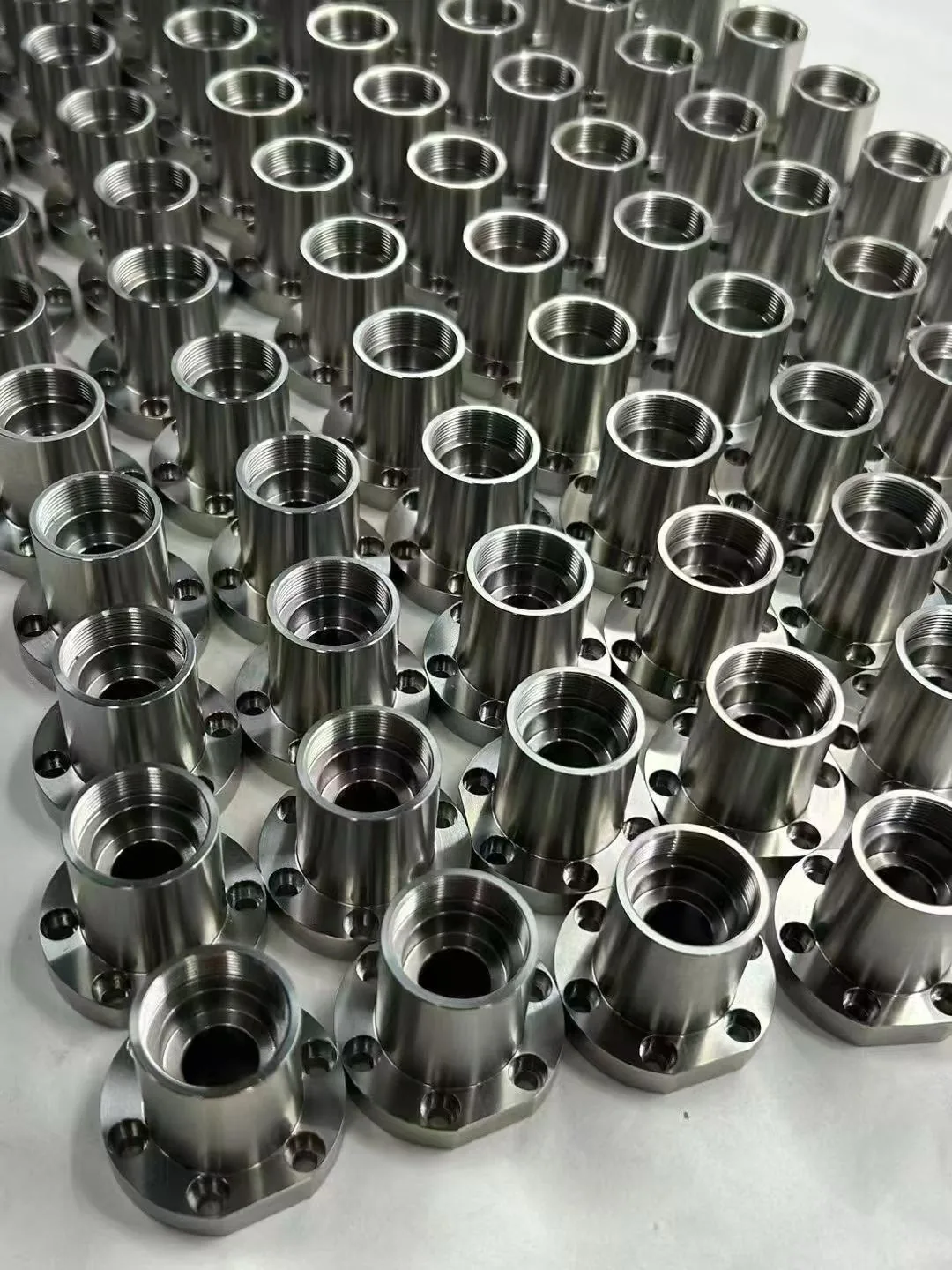
Image: Actual Jingrui Proto CNC turned metal parts. This photograph is process context, not proof of a material grade, lot linkage or certificate.
Quick Answer
Prototype material traceability requires a connection between the material specified, the material used and the parts delivered. A certificate bearing the correct alloy or resin name is insufficient if nobody can show which delivered items it covers. Put the required grade, condition, document type, lot linkage and substitution approval into the RFQ before requesting comparable quotations.
This guide helps overseas engineers and purchasing teams buying machined, cast or printed prototypes decide what evidence to request. It separates material identity from manufacturing history and final inspection. It does not claim that every prototype needs the same documentation, or that Jingrui Proto automatically provides every record described below. Availability and responsibility must be agreed for the particular order.
Start with the procurement decision the records must support
A visual demonstration model and a material-sensitive functional prototype have different evidence needs. If the part merely shows an exterior shape, exact chemistry may not answer the immediate design question. If the prototype evaluates fastening, exposure or a production material, substituting a visually similar material can undermine the purpose of the build.
Identify the decision before selecting a document package. Will the sample support a fit review, a material comparison, a purchasing qualification or another defined evaluation? Write down which material differences would invalidate that decision. Then ask the supplier which records can demonstrate the relevant identity and condition.
Avoid requesting “full certification” without defining it. The phrase can mean an order-level declaration, an upstream material report, an independent test or a complete manufacturing history. Those deliverables have different sources and costs. An explicit document schedule helps prevent a quotation from including one interpretation while the buyer expects another.
Separate four kinds of evidence
Material documentation becomes more useful when each record answers a distinct question. A statement of conformity, a producer’s report, an identity link and a finished-part inspection should complement one another rather than be treated as interchangeable certificates.
| Evidence |
Question answered |
Important limitation |
| Supplier CoC |
What does the supplier declare? |
Check the declared scope |
| Producer material report |
What material was reported? |
Link it to supplied stock |
| Lot or job linkage |
Which parts used that material? |
Preserve the connection |
| Final inspection |
What was checked after manufacture? |
Not automatically material proof |
Supplier declaration or certificate of conformity
A supplier CoC should identify the order or parts and the requirements to which conformity is declared. Review its wording: it may cover drawing revision, quantity and specified manufacturing scope without containing chemical analysis or mechanical test results. A signed declaration is not automatically an independent laboratory report.
Ask whether it references supporting records and how exceptions are listed. A generic company letter stating that a supplier works to high quality standards does not identify your material. Equally, do not reject a useful order declaration merely because it is not an upstream mill report; first decide what evidence the contract actually requires.
Material producer records
A mill or material producer report may identify grade, product form, condition, heat or batch reference and applicable test results. Read what it actually covers. A report for incoming bar stock does not necessarily describe a later treatment, coating or manufacturing operation on your finished component.
The BSI overview of EN 10204 explains a framework for inspection documents. Where such a document type is required, specify it accurately and confirm its availability before procurement. Do not treat the standard’s name as evidence that every requested test or finished-part characteristic is covered.
Build a link from material receipt to the shipping list
For a traceability-sensitive order, ask the manufacturer to explain the proposed identification chain. The relevant references may include an upstream heat or lot, a stock issue, a manufacturing job, a processing batch and the delivered part or package. Not every project needs every level, but gaps should be visible before the order is released.
Consider a hypothetical bracket batch made from two stock lots. A folder containing two genuine reports does not show which brackets belong to which lot. The buyer needs an agreed allocation record or another suitable identification method. This example illustrates a purchasing requirement, not Jingrui Proto’s claimed internal record system or a customer result.
Cutting and finishing can remove original stock markings. Ask how identity is retained when blanks are separated, small parts cannot be marked or surfaces are later coated. Options might include controlled containers, travelers or package identification, subject to the supplier’s confirmed process. Specify whether the required resolution is a whole job, a batch or an individual component.
| Handoff |
Link to request |
Decision to resolve |
| Stock to blank |
Material lot to job |
Can lots be mixed? |
| Blank to process |
Job to process batch |
What identity remains? |
| Process to inspection |
Part or batch reference |
Which population was checked? |
| Inspection to shipment |
Release to packing list |
Can receiving identify coverage? |
Match traceability to the manufacturing route
CNC machining from stock
Specify material designation, relevant condition and product form where these affect the design evaluation. A familiar alloy name alone can leave important differences unresolved. Ask whether the quoted stock can be supplied with the required records, and whether a distributor’s delivery reference connects to the producer’s report.
Jingrui Proto’s CNC machining service includes in-house machining. That capability does not establish a universal certificate package. Request confirmation of material documentation, downstream operations and any outside testing for the actual job. Keep material requirements separate from dimensional acceptance so neither disappears inside a general machining note.
Polymer printing and vacuum casting
A printable polymer family, an exact commercial grade and a cast resin formulated to resemble another plastic are different descriptions. An ABS-like casting resin is not automatically injection-molding ABS; a printed nylon part should not be identified solely by its color. Review the proposed material designation against the intended evaluation.
For resin casting, ask what material identification and mixing or curing information can be supplied if relevant to the test. For powder or filament printing, agree which feedstock and job references are available. Do not impose a metal mill-certificate template on polymer suppliers without checking what evidence the material producer and manufacturing route actually support.
Use Jingrui Proto’s materials information to begin that discussion, then confirm the quoted grade. Supplier descriptions and typical datasheet values help select a candidate; they are not necessarily measurements of the individual delivered parts.
Metal additive manufacturing
Metal powder identification and finished-part condition are separate evidence questions. A feedstock report may describe the powder lot while leaving the build history, later treatment and final inspection outside its scope. If these matter to your evaluation, identify them as additional deliverables rather than assuming a powder certificate proves the completed component.
Ask which manufacturing references and process records can be associated with the order. If powder handling history or subsequent machining is relevant, agree the necessary scope before quoting. This is a request for project-specific evidence, not a claim that Jingrui Proto operates a particular powder tracking system or promises universal testing.
Understand what independent testing can and cannot recover
Additional testing can answer a defined material question when the method and sample are suitable. It does not automatically recreate missing records of material origin or processing. Decide whether the question concerns elemental composition, mechanical behavior, condition or another property before ordering a test.
Thermo Fisher’s explanation of PMI methods notes that handheld XRF cannot measure carbon. A matching XRF alloy identification therefore cannot by itself establish the low-carbon distinction between 316L and other 316 variants. Select a method capable of answering the actual question; no analyzer ownership or testing service is implied here.
Similarly, an additional test is not automatically equivalent to a requested inspection certificate. LRQA’s material certification overview describes Type 3.2 inspection and witnessing and notes limits to retrospective certification. Resolve special document requirements with the responsible inspection body before buying stock, not after parts are complete.
Control substitutions and process changes before acceptance
An RFQ should say whether alternative grades, product forms or material sources may be proposed. A technically reasonable alternative still needs review against the prototype’s purpose. Require the proposed change to identify affected requirements and available evidence; avoid informal approval based only on a similar trade name.
Keep document revisions aligned with the released design. If the team changes material after a sample review, record what earlier evidence remains applicable. A dimensional fit result may still be useful while a material-sensitive conclusion needs another build. Do not extend approval beyond what the sample actually demonstrated.
For multi-process assemblies, assign identity at the component level. A machined bracket, printed support and cast cover can have different material records and acceptance criteria. One document for the overall shipment should not silently imply that all components share a single material, batch or manufacturing route.
Review the evidence package before dispatch
Request a sample document format early if the required fields are unfamiliar. Check that the final package names the order, item, revision, material and relevant reference consistently. Resolve missing attachments and unclear coverage before release rather than assuming receiving staff can reconstruct the relationship later.
Ask how approved deviations are recorded and whether the packing list identifies affected items. If only selected parts were inspected or tested, the report should state the sampling scope. Do not translate a result from one sample into a claim about every delivered component unless the agreed evidence supports that conclusion.
Plan receiving checks around the same references. Compare labels and quantities with the documentation before removing all packaging or mixing components into a common bin. Where identity is lost, appearance alone may be inadequate to restore it. Agree a hold-and-review route for mismatches instead of guessing which report belongs to a part.
A Practical Material Traceability RFQ Checklist
- State the prototype’s purpose and material-sensitive decisions.
- Identify exact grade, relevant condition and permitted alternatives.
- Separate supplier declarations, producer reports and requested tests.
- Specify the required document type rather than “full certification.”
- Define whether linkage must reach job, batch or individual-part level.
- List downstream treatments, finishes and assembly components needing records.
- Agree how identity survives cutting, coating, inspection and packing.
- Define substitution approval and any sample revalidation requirements.
- Confirm document formats, delivery timing and responsibility for gaps.
- Request separate quotation lines for additional documentation and testing.
Compare offers against this same schedule. A lower quotation may exclude records, segregation or testing included in another proposal. Ask suppliers to identify unavailable evidence explicitly. A clear limitation allows an engineering decision; a vague promise can leave the purchasing team with completed parts that cannot support the intended evaluation.
Frequently Asked Questions
Is a CoC the same as a material test report?
No. A CoC is a conformity declaration with a defined scope; a material test report contains results associated with the material described. Review issuer, references and coverage. You may need both, plus a connection to delivered parts.
Does every prototype need a mill certificate?
No. Documentation should support the material requirement and intended use. A display model and a material-sensitive test part can justify different packages. Confirm the requirement before comparing quotations rather than requesting documents that do not answer a relevant question.
Can a finished-part chemical test replace a missing lot history?
It can provide composition evidence for the tested sample when the method is suitable. It does not by itself recreate upstream origin, processing history or the identity of every other component. Agree how any remaining gap affects acceptance.
Does a dimensional inspection report establish the material grade?
Not by itself. Dimensions and material identity are different requirements. Connect the relevant records to the same job or parts and state which additional evidence is needed. A correctly sized part can still use an unintended material.
What should I request for a printed-and-machined component?
Identify the feedstock or starting material, manufacturing job, secondary operations and delivered condition relevant to your evaluation. Agree which records are available and how they connect. Neither a printing record nor a machining report necessarily covers the entire route alone.
Can Jingrui Proto provide the documents my project requires?
Ask for a project-specific confirmation before ordering. Send the required document list with the CAD and drawing. Availability, upstream sourcing, test scope and any outside inspection need review; this guide is not a blanket promise that every document is included.
Request a Document-Scoped Prototype Quotation
Send Jingrui Proto your CAD files, drawing revision, quantity, material requirement and intended evaluation through the RFQ and contact page. Add a short document schedule stating what must accompany the parts and how closely it must link to the delivered items. Ask the quotation to identify included evidence, optional work and unresolved gaps before you authorize manufacture.
Author
Jingrui Proto manufacturing content team. This guide distinguishes procurement recommendations, published process capabilities and external technical references; it does not reproduce confidential project records or claim unverified company procedures.
Related Posts