
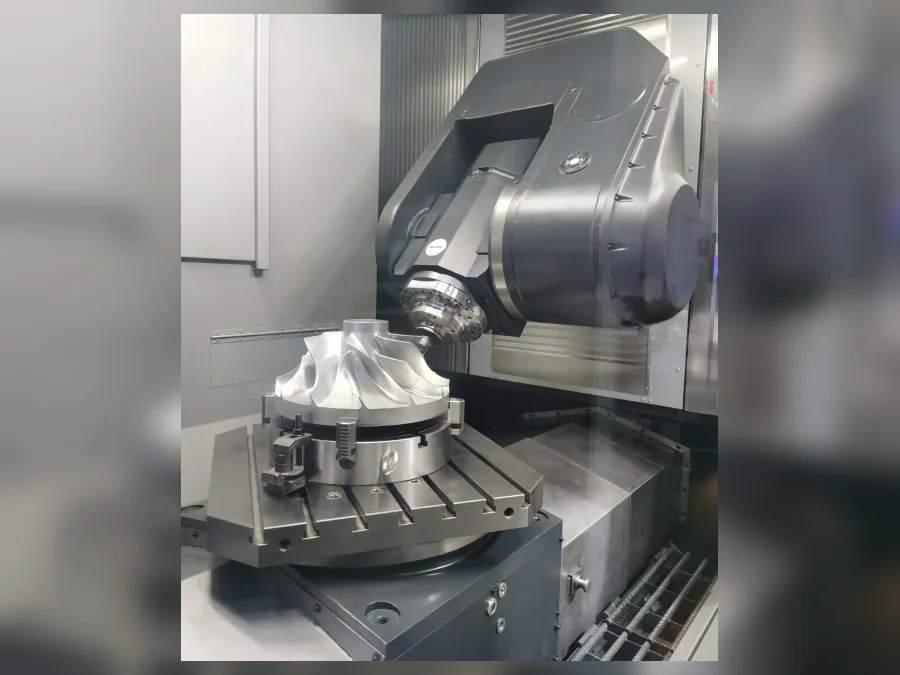
International prototype buyers often send the same CAD package to several suppliers and receive quotes that are difficult to compare. One supplier assumes cosmetic samples, another assumes functional testing, and a third quotes the fastest process that can approximate the shape. The result is not a true process comparison; it is a comparison of assumptions.
This guide explains choosing between subtractive machining and additive manufacturing after reviewing geometry, loads, surfaces and acceptance evidence. It is written for engineering and sourcing teams that need practical manufacturing feedback before ordering parts from an overseas supplier. The goal is not to force every project into one technology. The goal is to make the RFQ specific enough that a supplier can recommend a route, identify risks, and quote the work without inventing missing requirements.
Start with the Job the Prototype Must Do
A prototype can be a visual model, a fit-check part, a test fixture, a functional assembly component, a pilot-build sample or a sales demonstration unit. Those use cases can look similar in CAD, but they require different manufacturing decisions. Before asking for a quote, describe how the part will be used, what the test will prove, and which failures would create real project risk.
CNC machining usually fits prototypes that must behave like a final machined component, use production-grade billet or plate material, hold controlled datums, accept threaded metal features, or provide sealing, sliding and bearing surfaces. 3D printing may be a better early option when geometry is still changing, internal channels or lattice-like forms would be difficult to machine, or the buyer needs several design variants before locking the drawing. A good supplier should be able to explain these boundaries clearly and ask for missing information rather than treating the CAD model as the entire specification.
Buyers should also separate permanent product requirements from temporary prototype requirements. A housing used for investor review may need paint and a clean surface. A bracket used in a fixture may need stiffness, hole location and a reliable threaded connection. A prototype used for thermal or fluid testing may need material and sealing details that are irrelevant to a purely visual part.
Review Geometry Before Selecting the Process
Geometry is usually the first visible clue, but it should not be the only one. Look for deep pockets, thin walls, undercuts, internal passages, small holes, long slender ribs, enclosed cavities, sharp internal corners and broad cosmetic faces. Each feature affects tooling access, printing orientation, support removal, finishing time and inspection.
For international RFQs, screenshots with marked critical areas are useful. A supplier can open the CAD file, but a marked PDF or drawing tells the reviewer what matters to your team. If a feature is only cosmetic, say so. If it controls assembly, sealing, alignment or motion, mark it as critical. This prevents effort from being spent in the wrong place.
The linked Jingrui Proto CNC machining page can be used as a starting point for process discussion: CNC machining. The page should not replace a project-specific review, because part geometry, material choice, finishing and inspection scope still decide the actual route.
Define Material Intent Instead of Only Naming a Material
Material names can hide different expectations. A buyer may write ABS, PA12, aluminum or stainless steel because the final product uses that family, while the prototype only needs stiffness or appearance. Another project may require the prototype to use a specific grade because it will be tested under load, heat, contact, wear or chemical exposure.
State the reason behind the material request. If a substitute is acceptable, list the property that matters most: stiffness, impact resistance, heat resistance, dimensional stability, transparency, surface quality, conductivity, weight or corrosion resistance. If a substitute is not acceptable, state the exact grade and any documentation needed.
This distinction helps the supplier propose a realistic path. It also prevents over-specification. Many prototypes fail schedule or budget targets because a team asks for production material when the test only needs geometry and handling strength. Other projects fail validation because the buyer accepts a visually similar material without checking whether the test conditions demand something closer to production.
Decide Which Features Need Controlled Tolerances
Not every dimension deserves the same tolerance. Tightening every value can increase cost, slow quoting and create inspection disputes without improving the prototype. Instead, identify the features that control assembly or function: datum faces, hole patterns, bearing seats, snap features, sealing faces, mating edges, slots, shaft locations and threaded interfaces.
For those features, provide a drawing with tolerances, datums and notes. For noncritical cosmetic geometry, general tolerances may be enough. If the design has no drawing yet, include a short critical-feature list in the RFQ email. This is especially useful when the CAD model contains many decorative surfaces but only a few dimensions determine whether the prototype can be tested.
The most useful tolerance discussion is practical rather than absolute. Ask what process can reasonably control the feature, what secondary operations may be needed, and how the result will be inspected. A supplier that promises precision without asking about datums, measurement method or part function is skipping an important step.
Compare Process Fit with a Buyer Checklist
| RFQ question | What it clarifies | Buyer action |
|---|---|---|
| Critical datum faces | CNC if faces control assembly location | 3D print for concept fit checks where datum control is less critical |
| Internal channels | Possible only with splits or secondary machining | Often practical if powder/resin removal and inspection are planned |
| Material evidence | Ask for alloy or plastic grade and stock form | Ask for process, material family and post-processing condition |
| Threaded features | Machined threads or inserts in robust material | Printed threads only for low-risk checks; inserts may be needed |
| Cosmetic surfaces | Machining marks and finishing path must be agreed | Layer lines, bead texture or resin sanding must be reviewed |
Use the table as a discussion tool, not as a universal rule. Prototype manufacturing is full of trade-offs. A process may be fast for one geometry and slow for another. A material may be good for a handling model but unsuitable for thermal testing. A surface may look acceptable in photos but still need sanding, painting, sealing or machining before the part can be evaluated.
Plan Finishing, Assembly and Inspection Early
Finishing is often quoted too late. Painting, dyeing, polishing, bead blasting, vapor smoothing, sealing, insert installation, tapping, bonding and assembly can change both schedule and dimensional risk. If cosmetic quality matters, provide color references, gloss level, texture expectation and acceptable parting-line or layer-line limits.
Assembly requirements should be equally explicit. Tell the supplier whether threaded inserts will be installed, whether metal parts will be bonded to plastic parts, whether hardware is buyer-supplied, and whether the prototype must be shipped as a finished assembly or as loose components. If the part will be assembled repeatedly, call out fastening risk early.
Inspection should match the purpose of the prototype. A full report for every feature may be unnecessary for a concept model, but a functional component with critical interfaces may need dimensional reporting. Define the evidence you need before production starts: photos, dimensional report, material note, finish confirmation, first-article review or assembly check.
Control Revision and Communication
Many prototype delays come from version confusion. A supplier may quote one file, produce from another, and receive a late drawing note after machining or printing has started. Avoid that by naming files with revision numbers and dates. Put the same revision in the RFQ email, drawing title block and any screenshot annotations.
When changes happen, summarize them. Do not simply send a new STEP file and assume the supplier will identify every difference. State whether the change affects geometry, material, finish, inspection, quantity or delivery priority. If a quote must be revised, ask the supplier to identify which cost or schedule items changed because of the revision.
For overseas manufacturing, time-zone gaps make clarity more valuable. A complete RFQ package can save several calendar days because the supplier can review manufacturability, prepare questions and quote with fewer clarification loops.
What to Send with the RFQ
Send a neutral CAD file such as STEP for geometry review where appropriate, plus STL or native files if the process needs them. Include a PDF drawing for critical dimensions, tolerances, datums, threads and finish notes. Add quantity, target use, material intent, surface requirements, color or texture references, inspection expectations and the desired delivery location.
For multi-part assemblies, include an exploded view or assembly file and mark purchased hardware separately from manufactured parts. If only some components require manufacturing, make that boundary clear. If the supplier should quote alternative processes, say which trade-offs are acceptable: lower cost, faster delivery, better surface, stronger material, tighter interface control or lower launch risk.
Common Mistakes Buyers Can Avoid
The first mistake is treating a prototype quote as a commodity request. When the project involves functional testing, cosmetic approval or pilot production, the supplier needs context. The second mistake is hiding uncertainty. If a material, tolerance or finish is flexible, say so; flexibility can help the supplier offer a better route.
The third mistake is comparing quotes without comparing assumptions. A lower quote may omit finishing, inspection, inserts, assembly, packaging or revision support. A higher quote may include work that another supplier left out. Ask each supplier to state what is included and what remains excluded.
FAQ
Can a supplier choose the process from CAD alone?
Sometimes, but CAD alone is rarely enough for a high-confidence recommendation. The supplier also needs function, quantity, material intent, finish expectations, critical tolerances and inspection needs.
Should every prototype have a 2D drawing?
Not every concept model needs a full production drawing. Functional interfaces, threads, sealing faces, datum-controlled geometry and inspection requirements should be documented in a drawing or a clear critical-feature note.
Is the cheapest prototype quote usually the best starting point?
Not unless the scope is identical. Compare material, finish, tolerance assumptions, inspection scope, revision handling and shipping terms before judging price.
How should buyers ask for DFM feedback?
Ask for specific feedback on manufacturability risks, suggested process changes, tolerance concerns, finishing risks and information missing from the RFQ. A focused request gets better answers than a general request for comments.
What should be marked as critical?
Mark features that affect assembly, sealing, movement, load transfer, alignment, repeated fastening, customer-visible appearance or regulatory/validation evidence. Leave noncritical surfaces under general notes where possible.
Conclusion
The best prototype process is not chosen by a slogan or a broad comparison chart. It is chosen by matching geometry, material intent, function, finish, tolerance and inspection evidence to the real purpose of the part. A clear RFQ package helps Jingrui Proto review the project, identify risks and recommend a practical path for prototype or low-volume manufacturing.
If you are preparing a prototype package, send CAD files, drawings, quantity, material intent, finish notes and critical requirements together. That gives the engineering review a solid starting point and helps the quote reflect the part you actually need.
Related Posts
- CNC Machining RFQ Checklist for Prototype and Low-Volume Parts
- CNC Machining Tolerances: What Buyers Should Mark on Engineering Drawings
- How to Reduce Prototype Manufacturing Costs Without Sacrificing Quality
Author Box
Author Name: Jingrui Proto Engineering Team
Industry Experience: Prototype manufacturing, 3D printing, CNC machining, vacuum casting, finishing and low-volume production
Brief Bio: Jingrui Proto’s engineering content is prepared for international product teams and sourcing buyers who need practical manufacturing guidance before sending RFQ and CAD packages.






