Choose SLA resin from the decision your prototype must support. For a functional prototype, prioritize the relevant combination of stiffness, toughness, deformation, temperature exposure, and environmental resistance. For an appearance model, prioritize visible detail, surface preparation, color, transparency, and finishing. Then confirm the exact resin, processing conditions, and acceptance criteria with the supplier.
An attractive print is not automatically a reliable mechanical test specimen. A resin described as “ABS-like” or “PP-like” is a photopolymer formulation, not the named thermoplastic. Such descriptions suggest selected behavior, not equivalence across fatigue, creep, chemical exposure, or production service. This article gives general selection guidance, not a statement of Jingrui Proto’s resin inventory or part capability.
Define What the Prototype Must Prove
Start with a short test brief. Identify the decision, the loads or handling involved, the environment, and the evidence needed to approve the next stage. “Functional prototype” is too broad: a one-time assembly check, repeated snap engagement, hot enclosure test, and fluid-contact trial create different requirements.
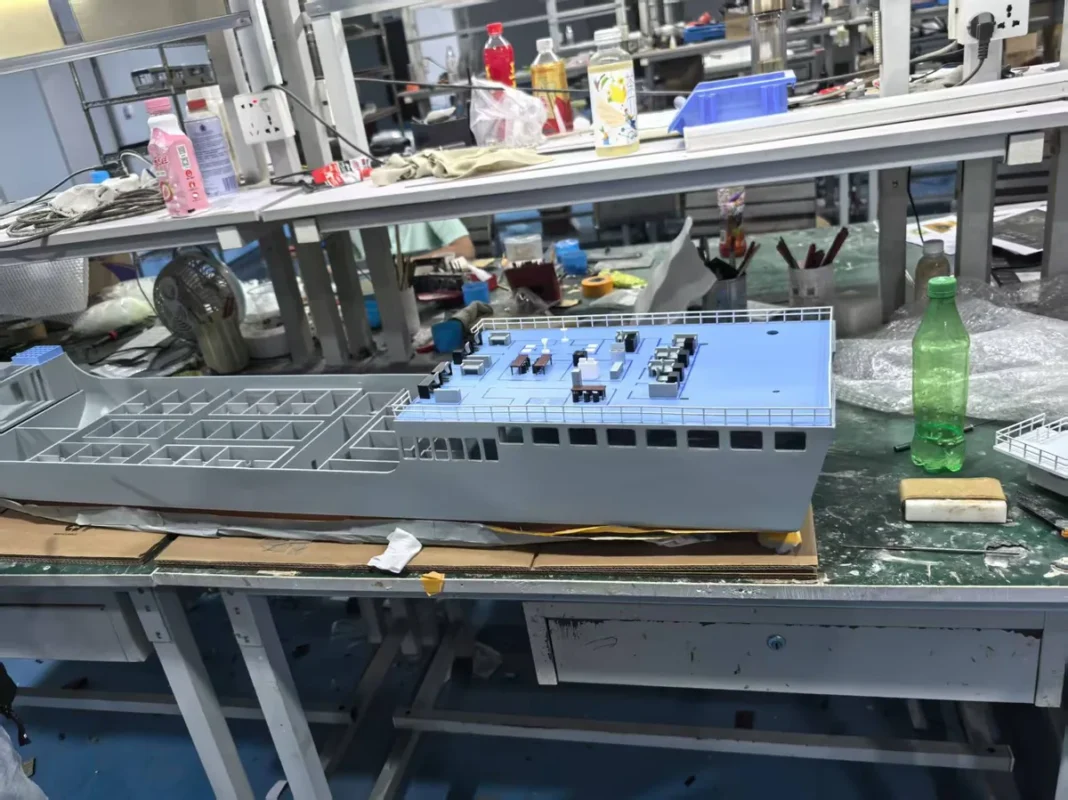
For an appearance model, define whether it supports photography, customer review, ergonomic evaluation, or approval of color and gloss. A model used at arm’s length has different acceptance needs from a transparent housing inspected closely under bright light. Separate essential outcomes from desirable extras.
Divide the Project Into Test Roles
One resin rarely optimizes every requirement. A painted presentation model may conceal surface details that matter during dimensional evaluation. A tough formulation may support assembly handling while requiring a different preparation route to reach the desired cosmetic finish.
Consider separate functional and appearance specimens when their requirements conflict. This can produce clearer evidence than forcing one part to represent mechanical behavior, optical performance, and production appearance simultaneously. State which prototype supports which decision so reviewers do not overinterpret the results.
Compare Properties Instead of Marketing Names
Review the exact formulation’s technical data sheet, revision, test methods, and processing conditions. Tensile strength, modulus, elongation, impact behavior, hardness, and thermal properties describe different aspects of performance. A high value in one category does not automatically make a resin better for your application.
Test coupons differ from complete parts. Geometry, support locations, build orientation, surface defects, and cure history can influence the prototype. Use data-sheet properties to shortlist materials, then test representative features under conditions that resemble the intended evaluation.
Stiffness, Strength, and Toughness Answer Different Questions
Stiffness concerns resistance to elastic deformation. Strength concerns resistance to a defined failure condition. Toughness concerns energy absorption before fracture and depends on how it is measured. A stiff housing can resist deflection while remaining vulnerable at a thin latch or sharp internal corner.
For flexible mechanisms, review recoverable deformation and behavior over repeated cycles. Elongation at break alone does not show whether a clip returns to its original shape after repeated use. For screw bosses, consider assembly torque, stress concentration, and the planned number of disassembly cycles.
Read Heat Data With Its Test Conditions
Heat deflection temperature describes deformation under a specified test load and procedure. It is not a universal continuous-service temperature. A part may creep under sustained load, distort locally, or become brittle after exposure even when a headline thermal value appears suitable.
Describe the temperature profile, duration, restraint, load, and heating method. A brief warm-air exposure differs from prolonged contact with a hot component. Ask for a representative test when thermal behavior determines the engineering decision, rather than accepting a material label as validation.
Use Resin Families as a Shortlist
The categories below describe common selection directions. They do not promise availability, identical formulations, or successful performance. Confirm the exact product and current technical documentation before committing to a build.
| Resin category |
Useful starting application |
Main selection question |
Limitation to investigate |
| Standard or general-purpose |
Visual geometry, detail, basic fit review |
Is handling performance adequate? |
Brittle details or limited mechanical representativeness |
| Tough or durable |
Enclosures, clips, assembly trials |
Which deformation and impact behavior matters? |
Creep, repeated cycling, and formulation-specific behavior |
| Rigid or filled |
Stiff fixtures and dimensionally sensitive forms |
Is low deflection the priority? |
Notch sensitivity, brittle edges, and finish preparation |
| Heat-resistant |
Defined elevated-temperature trials |
Does documented testing match the exposure? |
Sustained loading and cure-dependent thermal behavior |
| Flexible or elastomeric |
Soft interfaces and deformation studies |
Are recovery, hardness, and tear behavior suitable? |
Compression set and differences from production elastomers |
| Clear |
See-through housings and visual fluid-path models |
What optical clarity is actually needed? |
Haze, finishing access, scratches, and aging |
Specify the Formulation, Not Just the Family
Two materials described as tough can have substantially different stiffness and deformation behavior. A substitution can invalidate comparisons between prototype revisions. Include the manufacturer, product name, formulation version where relevant, and required processing conditions in the procurement record.
Availability and compatibility with a supplier’s process need confirmation. Do not assume that a published resin can be substituted into any SLA system. If the supplier proposes an alternative, review the relevant properties and agree whether previous test conclusions remain applicable.
Account for Orientation, Supports, and Post-Curing
SLA 3D printing and subsequent processing shape the final result. Orientation influences support placement, surface stair-stepping, drainage, and deformation risk. It may also affect measured mechanical behavior. The best orientation for a cosmetic face may conflict with the preferred orientation for a mechanically loaded feature.
Identify surfaces where support contact is unacceptable or where cleanup could alter function. Discuss fragile edges, threads, sealing faces, and visible details before printing. Support removal and sanding can affect small features, so dimensional acceptance should cover the delivered condition rather than an assumed as-printed state.
Washing and Curing Are Part of the Material Specification
Cleaning removes residual resin, while post-curing can change the polymer’s properties. Follow the formulation’s validated process rather than applying a generic cure schedule. Cleaning exposure, drying, compatible light wavelength, exposure conditions, cure temperature, and cure duration can influence dimensional and mechanical outcomes. Matching temperature and time across different curing systems does not establish equivalent treatment. Formlabs explains the relationship between additional curing and dimensional change in its post-curing guide; this is material-processing guidance, not a statement that Jingrui Proto uses that manufacturer’s equipment or resins.
For example, Formlabs’ mechanical property documentation specifies printing, post-curing, and conditioning conditions for reported samples. That illustrates why a property must be read with its preparation method. It does not establish equivalent results for another resin, machine, or finished geometry.
Design Hollow Geometry for Safe Processing
Hollowing can reduce material use but creates drainage and cleaning obligations. Enclosed cavities may retain uncured resin, complicate curing, or create later leakage. Drain access and internal geometry need review, particularly when a transparent part will expose every internal defect. In bottom-up vat systems, concave geometry can also create suction during printing. Review orientation and pressure-relief openings separately from post-print drainage, as described in Formlabs’ cupping guidance. The relevant constraints depend on the actual machine architecture.
Ask the supplier how cavities will be cleaned, inspected, and delivered. Never treat hollowing as an automatic cost reduction without considering processing labor and acceptance. For fluid trials, assess leak behavior and chemical compatibility separately; a visually continuous wall is not proof of containment performance.
Plan Appearance and Surface Finish Explicitly
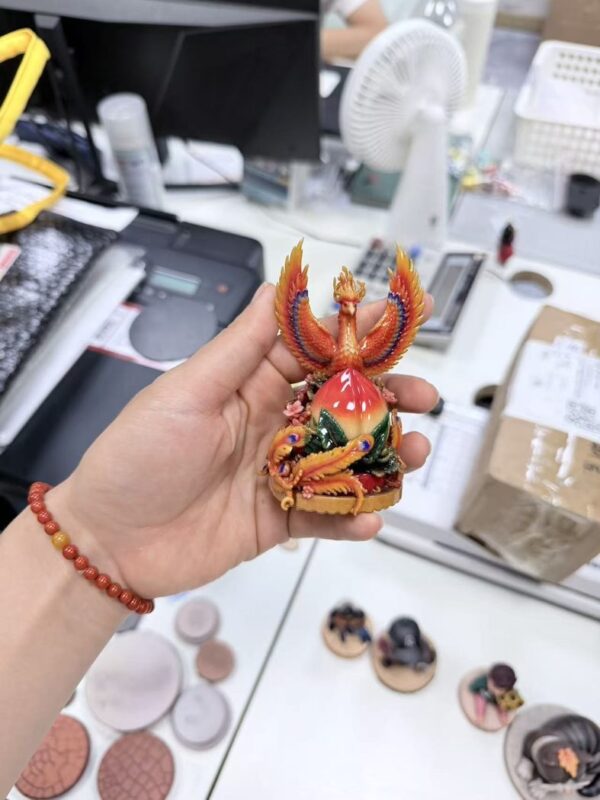
Appearance models should identify visible surfaces, acceptable support marks, texture, color, and gloss. An approved physical reference is usually more useful than an instruction such as “premium finish.” State viewing conditions when the cosmetic decision depends on lighting, distance, or reflections.
Sanding, filling, priming, painting, and polishing can change edge definition and local dimensions. Mask interfaces or establish allowances where finish affects fit. A painted sample can represent shape and color while still differing from injection-molded texture, weld lines, or production coating behavior.
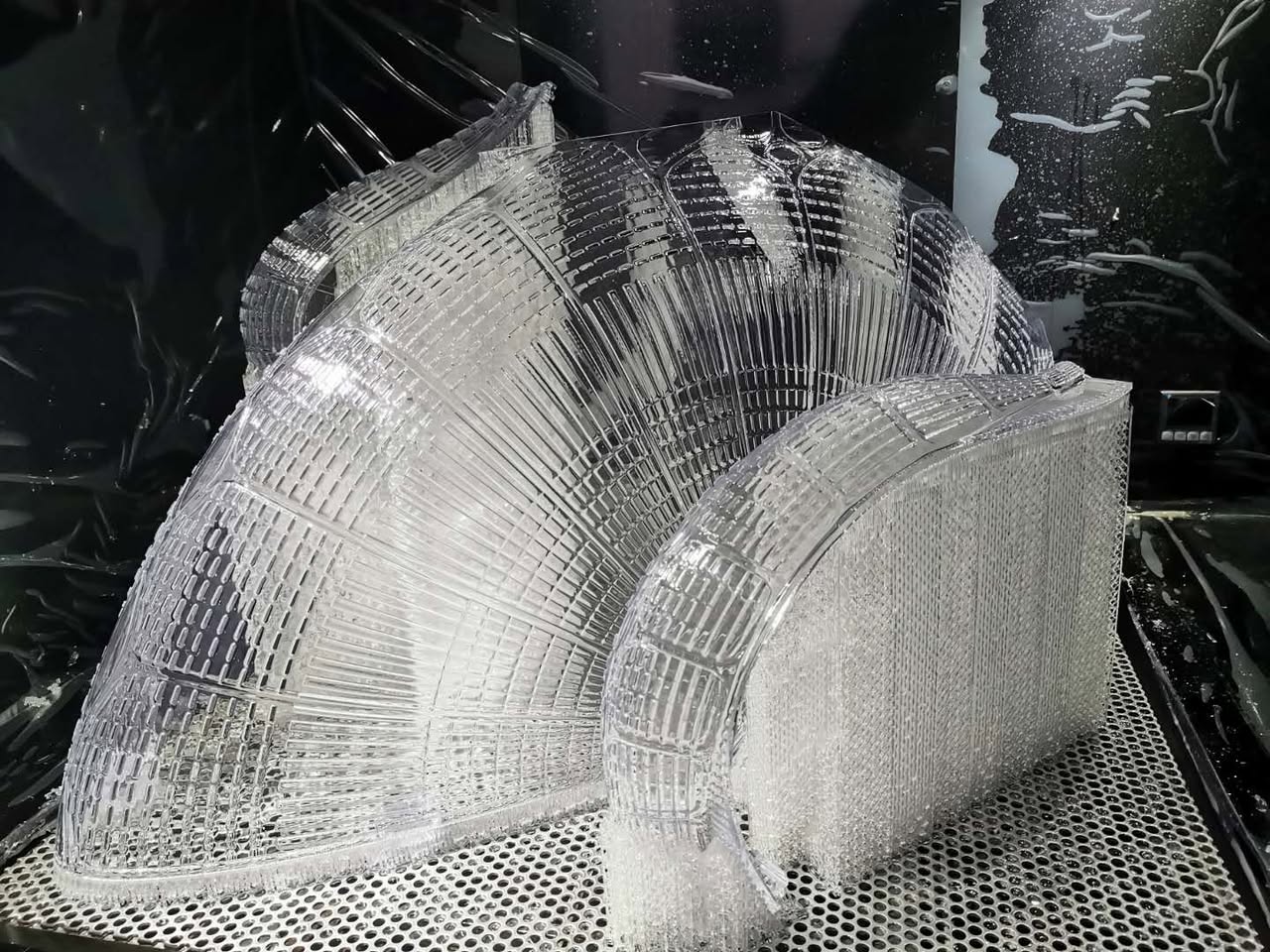
Transparent Resin Needs an Optical Acceptance Plan
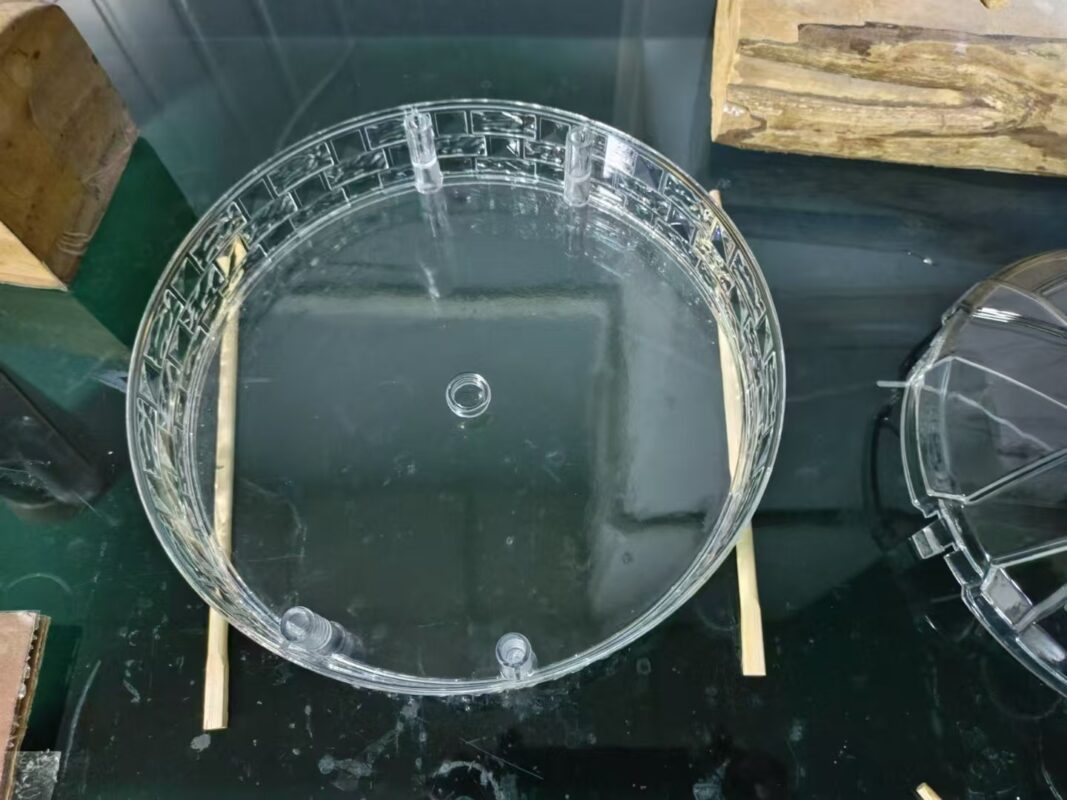
Clear resin does not automatically produce an optically clear part. Surface condition, internal features, thickness transitions, and finishing influence what a viewer can see. Polishing an accessible exterior does not remove haze from an inaccessible internal passage.
Define whether the goal is observing a component, following liquid movement, presentation clarity, or a more demanding optical function. Evaluate a representative sample if transparency is decisive. Do not infer lens quality, wavelength performance, or long-term clarity from a resin’s visual category.
Hypothetical Example: A Handheld Instrument Housing
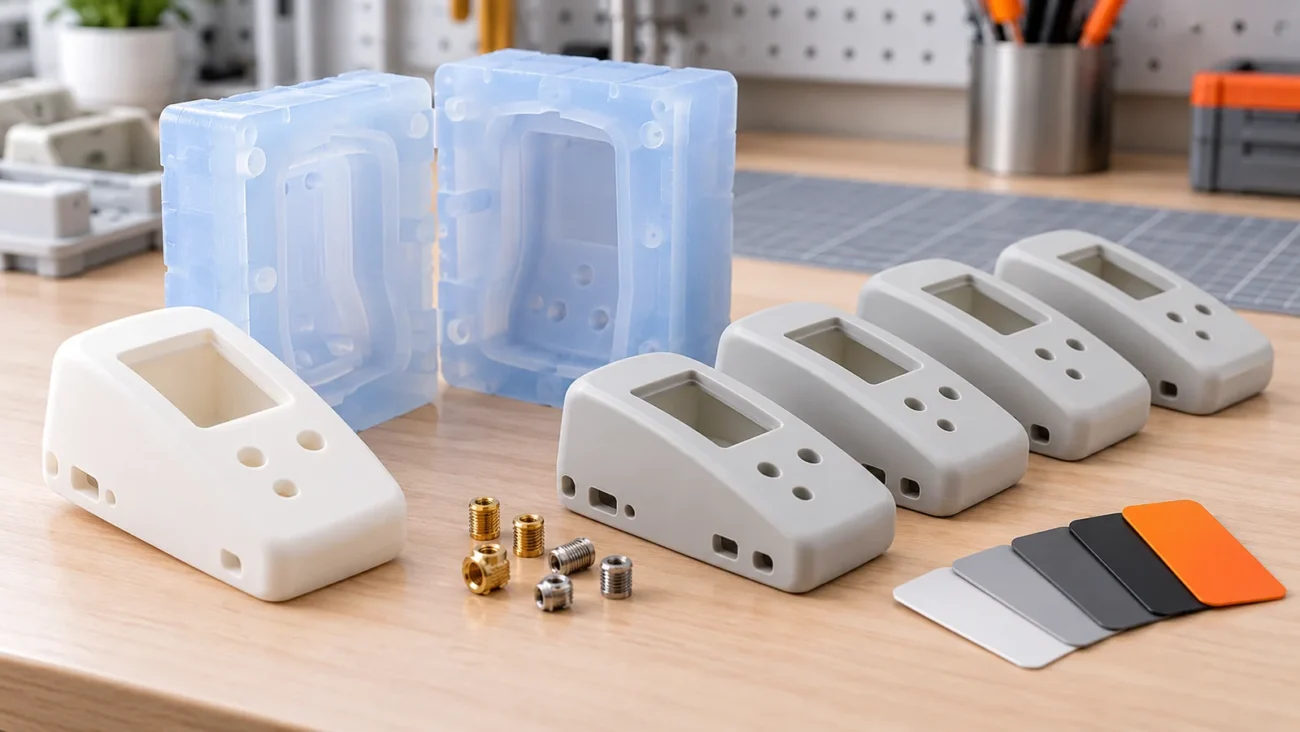
Imagine a hypothetical handheld instrument with two enclosure halves, screw bosses, a flexible latch, and a small transparent window. The team needs to check assembly access, repeated opening, grip comfort, and appearance before approving the next design stage.
A general-purpose resin may show the overall geometry clearly, but that does not establish latch durability. Selecting a heat-resistant resin solely because the instrument contains electronics also misses the question: what temperatures and loads will the housing actually experience during the planned test?
Split Mechanical and Presentation Objectives
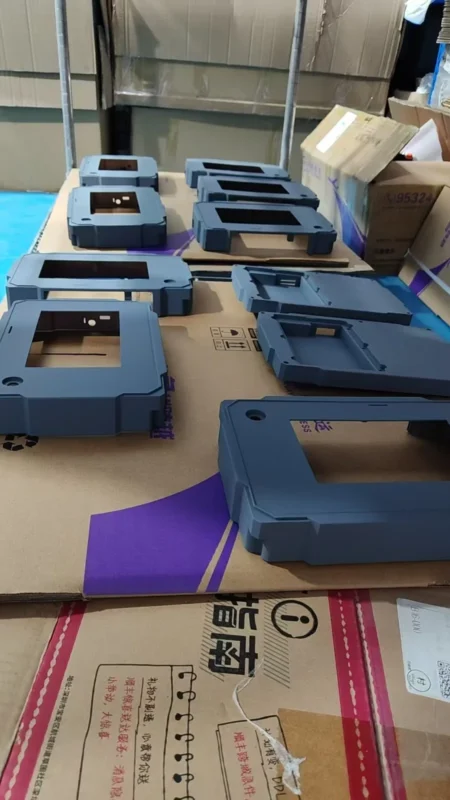
The team prepares a functional housing from a candidate tough formulation, subject to supplier review. It identifies the latch, bosses, and mating edges as test-critical features. The supplier reviews build orientation and support placement against those features before the team approves manufacture.
A separate presentation housing receives the agreed painted finish. The transparent window is evaluated independently with a representative finishing sample. This prevents a cosmetic coating from obscuring latch behavior and avoids assuming that one resin represents both the enclosure and window requirements.
Define Success Before Testing
The assembly trial records screw installation, access, mating alignment, and visible damage. The latch trial uses an agreed number of cycles and consistent handling, checking return position and cracking. The appearance review uses the approved color and gloss reference.
Any thermal test specifies temperature history and loading. These prototype results support the stated design decisions; they do not qualify the eventual production polymer. The example is hypothetical and does not describe Jingrui Proto’s stock, equipment, or validated performance.
Set Measurement and Acceptance Conditions
Specify the delivered state: washed, cured, support-removed, and finished as agreed. Identify critical dimensions and the environmental conditioning needed before measurement. Flexible features may require controlled restraint or contact force so the measurement does not deform the characteristic being evaluated.
Avoid equating layer thickness with finished-part accuracy. Shrinkage, orientation, geometry, support removal, and finishing can affect dimensions differently. Ask for feature-specific feasibility and proposed inspection methods instead of requesting an unsupported blanket accuracy statement.
Match Documentation to the Purchasing Decision
For a simple visual model, approval photographs and an agreed appearance reference may suffice. A functional trial may need dimensional results, resin identification, cure records, and observations from a representative assembly. Specify the scope in the RFQ so quotations include comparable evidence.
Agree on substitution control, rejection criteria, and how deviations will be approved. Retain the drawing revision and material identity with the test results. Without that traceability, a successful prototype can be difficult to reproduce or compare with a later build.
Understand Cost and Lead-Time Drivers
Resin price is only one component. Build orientation, part height, supports, cleaning access, curing, manual cleanup, finishing, and inspection all influence total effort. Fragile details or inaccessible surfaces can increase handling risk and finishing labor even on a small model.
Quantity, material availability, approval of finishing samples, and shipping protection also affect the schedule. Splitting a large part may simplify manufacture but introduce joints that alter stiffness or appearance. Request the supplier’s proposed build strategy and identify which operations drive cost and delivery.
Recognize When SLA Cannot Answer the Question
An SLA prototype may reveal assembly problems without representing production fatigue, creep, wear, or chemical resistance. Safety-critical, pressure-bearing, electrical, food-contact, or medical applications require application-specific evidence. A resin category or prototype success cannot supply regulatory approval or production qualification.
When the decision depends on the actual metal or an appropriate machinable engineering plastic, consider a process that uses the required material. Discuss CNC machining with Jingrui Proto as an alternative, with grade, geometry, and acceptance confirmed separately. Process choice should follow the test objective.
Frequently Asked Questions
Is Tough Resin Equivalent to Injection-Molded ABS?
No. It may resemble selected properties, but it is a different material system. Compare the exact data and evaluate the features needed for your test. Production qualification requires evidence for the production material and process.
Can One Resin Cover Both Functional and Appearance Testing?
Sometimes, if requirements align and finishing does not compromise the test. When flexibility, clarity, stiffness, and painted appearance conflict, separate specimens can provide more useful evidence and a clearer approval decision.
Does More Post-Curing Always Improve a Part?
No. Use the documented process for the exact formulation. Additional exposure is not a universal improvement and can change dimensions or behavior. Ask the supplier to confirm the preparation conditions relevant to the quoted properties.
Can a Resin Prototype Predict Long-Term Outdoor Performance?
Only with relevant testing and justified correlation. Light exposure, moisture, temperature changes, and sustained load can alter behavior. A successful indoor demonstration does not establish long-term outdoor suitability.
Send Jingrui Proto a Test-Focused RFQ
Provide the CAD file, critical dimensions, quantity, prototype purpose, expected loads, temperature exposure, chemical contact, and required finish. Mark visible surfaces and sensitive interfaces. Include any proposed resin and its documentation, or ask for a candidate recommendation with the selection reasoning.
Ask Jingrui Proto to confirm material availability, processing conditions, orientation assumptions, finishing scope, inspection evidence, and limitations before ordering. Keep general resin guidance separate from supplier-confirmed capability. A clear test brief makes the prototype more useful because everyone knows which decision it must support.
Upload CAD & Request a Quote
Related Engineering Guides
Jingrui Proto Engineering Editorial Team
Manufacturing guidance for overseas engineers and procurement teams preparing prototype and low-volume RFQs. Final process, material and acceptance requirements are confirmed during project review.