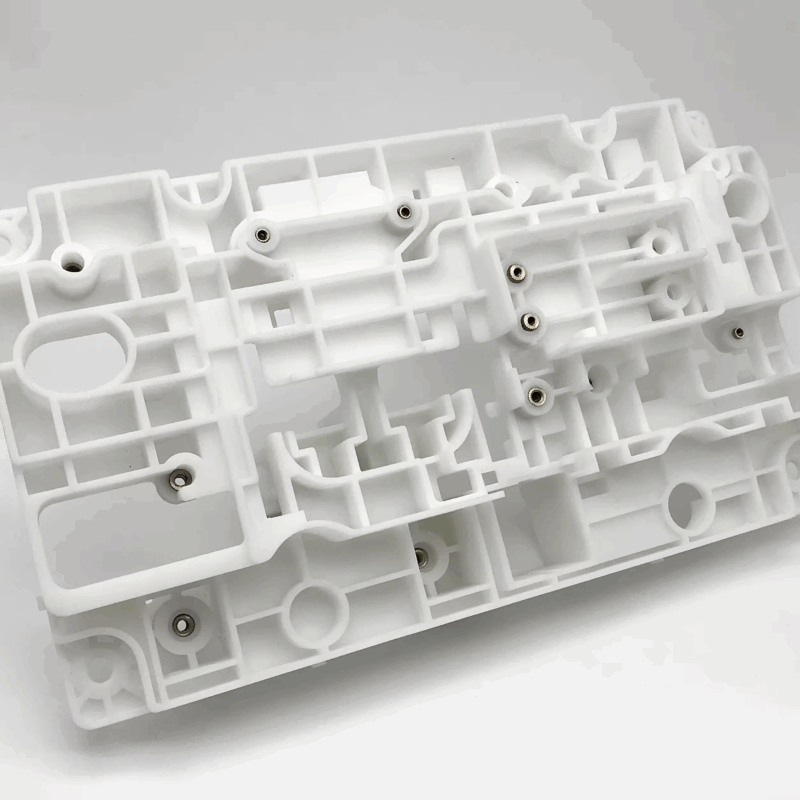
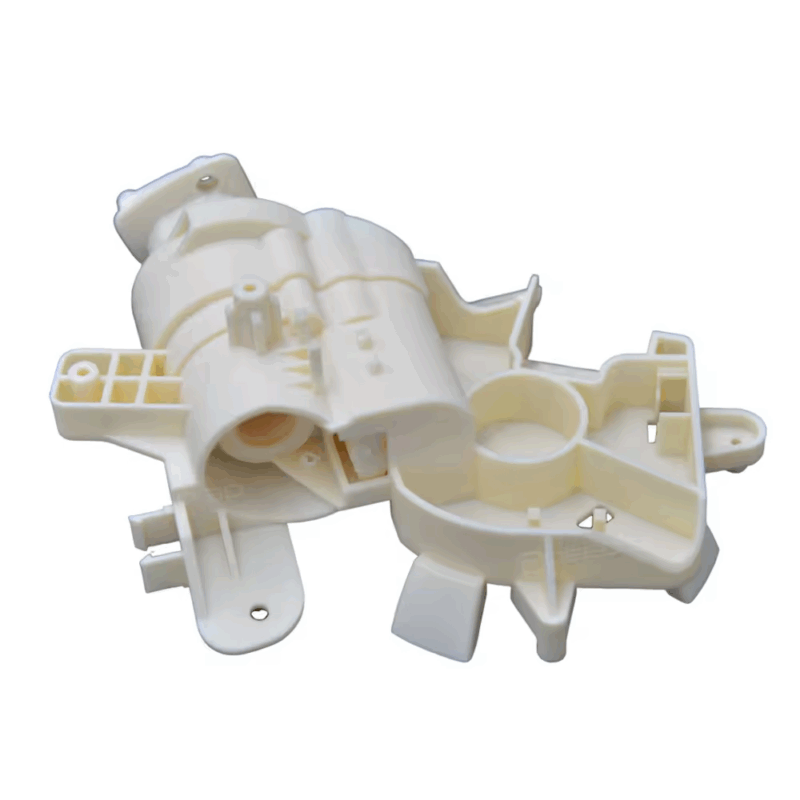
Choose between SLS and MJF by first comparing the same unfilled PA12 material family, geometry, quantity, and finished-part requirements. SLS selectively scans each layer with a laser; MJF uses deposited agents and thermal energy across the layer. That difference makes build layout and machine occupancy useful comparison points, especially for repeated parts. Neither process name guarantees a better component: select the route that meets your fit, loads, appearance, and inspection criteria with the most suitable complete manufacturing plan.
For buyers, the key question is whether the proposed process can deliver acceptable parts after cleaning and any agreed finishing. A bracket that looks correct but distorts at its mounting face, or an enclosure whose latch stops working after surface treatment, creates project risk regardless of its quoted unit price.
What SLS and MJF Change in the Manufacturing Route
Selective laser sintering, or SLS, uses a laser to trace and fuse selected regions of a polymer powder layer, as described in Xometry’s SLS process guide. Multi Jet Fusion, or MJF, deposits agents before thermal fusion across the layer; Xometry’s MJF overview explains this distinction. Both use surrounding powder to support parts, rather than separate support structures attached to the model.
Laser Scanning Versus Agent-Based Layer Processing
For SLS, the exposure step follows the selected cross-sections. For MJF, agent deposition and heating passes are central to layer processing. Consequently, adding copies is not simply the same scheduling calculation for both routes. Ask for a layout-based quotation, particularly when comparing one large component with many smaller components. This is a reason to investigate batch economics, not a prediction that MJF will always be faster or cheaper.
That shared powder-bed approach enables shapes that may be inconvenient to machine, including integrated passages and complex brackets. It does not remove manufacturing constraints. Loose powder still needs an exit path, slender features must survive handling, and the thermal history can affect distortion. An unsupported CAD cavity can therefore become an uncleanable physical part.
Hold the Material Family Constant for the Comparison
Use unfilled PA12 on both sides of the initial comparison, with the same CAD revision, conditioning requirements, and acceptance tests. Comparing SLS PA11 with MJF PA12 would combine a polymer change with a process change and obscure the reason for any difference. Platform-compatible PA12 grades may still differ, so record their exact designations rather than assuming identical formulations. A generic description such as “engineering nylon” leaves too much room for substitution.
Request the exact proposed material designation and applicable technical information. Separate published material data from evidence about the actual finished component. A tensile specimen does not establish the fatigue life of a thin latch, the sealing behavior of a housing, or the dimensional stability of a broad mounting plate.
A Decision Table for Buyer Selection
This table assumes unfilled PA12, identical geometry, and equivalent finished-part acceptance. It distinguishes process questions without assigning an automatic winner.
| Decision factor |
SLS route |
MJF route |
Buyer acceptance gate |
| Layer exposure |
Laser scans selected cross-sections |
Agents define regions for thermal fusion |
Evaluate the actual build plan |
| Repeated copies |
Ask how added scan workload affects the offer |
Ask how layer passes and nesting affect the offer |
Compare realistic quantities and complete schedules |
| Geometry and orientation |
Review features against the proposed laser-build orientation |
Review features against the proposed agent-based build orientation |
Use the same critical-feature checks |
| PA12 formulation |
Identify the laser-sintering grade |
Identify the MJF-compatible grade |
Retain unfilled PA12 and document grade differences |
| Appearance |
Approve a sample from the quoted SLS route |
Approve a sample from the quoted MJF route |
Hold final color and texture targets constant |
| Route changes |
Control changes to the accepted SLS setup |
Control changes to the accepted MJF setup |
Verify equivalent performance before substitution |
If one offer includes inserts, dimensional checks, and agreed color while the other covers only cleaned parts, their unit prices are not directly comparable. Normalize scope before making a purchasing decision.
Fit Depends on Features, Datums, and Finishing
A general dimensional tolerance cannot describe every feature equally well. Hole size, wall thickness, flatness, and position relative to a datum are different requirements. A supplier may accept the overall part envelope while identifying a particular bore or mating face as needing a different manufacturing route.
Mark functional dimensions on a drawing instead of tightening every dimension. Explain which surface locates the component, which holes establish position, and where clearance is intentional. Unnecessarily restrictive tolerances can increase inspection or rework without improving the assembly.
Evaluate the Complete Mating Condition
For a cover and housing, inspect the closure as an assembly. Checking each component against its own nominal dimensions may miss accumulated variation, interference at corners, or a latch that works only when the cover is twisted. Use the actual mating part or an agreed reference fixture where practical.
Nylon absorbs moisture, so conditioning and the service environment deserve attention when fit is sensitive. State whether acceptance occurs immediately after delivery, after a defined conditioning procedure, or under a specified operating condition. Without that agreement, buyer and supplier measurements may describe different states of the same component.
Finishing Belongs in the Dimensional Plan
Cleaning, dyeing, smoothing, coating, or local machining should be specified only when proposed and confirmed for the project. Finishing can alter edges, texture, local dimensions, or the way two surfaces slide. A smooth appearance is not evidence of a controlled sealing face.
For highly sensitive interfaces, discuss whether a different route is more appropriate. Jingrui Proto offers CNC machining, which can be considered when accessible machined features or a different material route better suit the requirement. Suitability still depends on the actual geometry and drawing.
Surface Appearance Requires Its Own Acceptance Criteria
As-built powder-bed nylon has a texture that should be assessed against the application. A workshop fixture and a customer-facing handheld enclosure may have very different expectations. Asking for “good finish” does not communicate either requirement clearly.
Identify visible surfaces, touch surfaces, hidden surfaces, and mating surfaces separately. Define whether cosmetic assessment will use an approved sample, photographs under agreed conditions, or a written defect standard. Small texture variations can be acceptable on concealed areas yet unacceptable around a prominent product logo.
Color and Texture Are Separate Variables
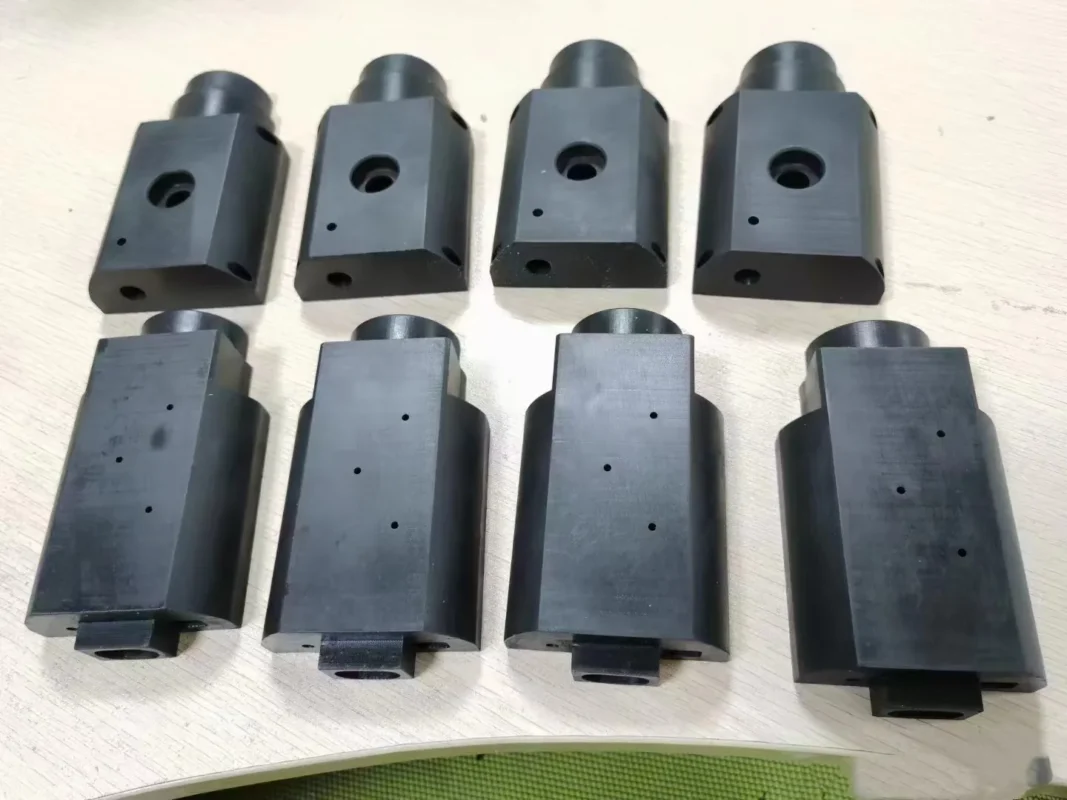
A dark finish does not necessarily hide all surface irregularity, and an attractive photograph does not prove that separate batches will look identical. Ask how the proposed color and finish will be evaluated and whether the sample represents the same route as the ordered parts.
Do not assume either SLS or MJF guarantees a particular color, polish, or treatment. Material and finishing availability must be confirmed in the quotation. If appearance is a release condition, approve it before authorizing the complete batch.
Functional Risk Goes Beyond a Strength Datasheet
The relevant failure mode determines the test. A mounting bracket may need stiffness and positional stability; a clip may need repeated deflection; a duct may need clean internal passages. Comparing only tensile strength ignores these different jobs.
Build orientation and local geometry can influence behavior. Thin transitions, sharp corners, fastening points, and slender sections deserve particular attention. Ask the supplier to identify features that could distort or break during manufacture, cleaning, transport, assembly, or use.
For snap features, communicate the required movement and number of operating cycles as project requirements, not as assumed material capabilities. For fasteners, identify the fastening method, installation approach, and expected loading. A screw that fits once does not establish that the joint will tolerate repeated servicing.
Where failure could create a safety problem, define the applicable validation and release responsibilities. Printed nylon should not be treated as qualified for a regulated or safety-critical application simply because the raw material description sounds suitable.
What Actually Drives Cost and Delivery
Price depends on more than part volume. Geometry, build arrangement, available capacity, material choice, cleaning effort, finishing, inspection, packaging, and rejected-part risk all contribute. A hollow component may reduce fused material but introduce difficult powder removal and additional verification.
Quantity affects economics through build utilization and repeated handling, but it does not create a universal SLS or MJF cost crossover. Ask for quotations at the quantities you realistically expect to buy, including the first validation batch and possible repeat orders.
Separate Manufacturing Time From Delivery Readiness
Printing is only part of the schedule. File review, build scheduling, cooling, unpacking, cleaning, finishing, inspection, and shipping can determine when usable parts arrive. A claim about machine speed cannot substitute for a delivery commitment tied to your accepted specification.
Ask what starts the quoted lead time: purchase order, payment, approved CAD, or sample approval. Clarify whether the schedule includes inspection records and finishing. When a project is urgent, prioritize the requirements that affect the next test and identify which optional cosmetic steps can wait.
Illustrative Examples: Different Requirements, Different Choices
Hypothetical Example: Repeated PA12 Cable Guides
An engineering team needs repeated cable guides with mounting holes and open curved passages. It sends the same design for SLS and MJF quotations, specifying unfilled PA12, identical finished interfaces, and the same handling requirements. Polymer selection is held constant so the exercise evaluates manufacturing routes.
The buyer requests alternative quantities and proposed build arrangements. It asks the SLS supplier how additional copies affect scan workload, and the MJF supplier how nesting affects its quoted build. It then checks mounting fit, passage cleanliness, and cable-contact surfaces on representative parts. If neither route has an acceptance advantage, complete batch cost and delivery scope become deciding factors; a nominal printing-speed claim does not settle the purchase.
This example is hypothetical. It illustrates an acceptance method, not a claim that either process will achieve a particular result or that Jingrui Proto has produced this component.
Illustrative Example: A Fixture With a Precision Locating Interface
A manufacturing team wants a lightweight fixture body with complex clearance geometry, but its locating interface must register consistently against an existing machine. The body may suit powder-bed printing, while the interface needs a different approach.
The buyer asks whether the locating element should be a separately machined component rather than forcing the printed body to carry the entire accuracy requirement. The decision considers attachment, datum transfer, wear, and replacement. This hypothetical case shows why process selection can be feature-specific rather than a choice between two complete printed parts.
Build an RFQ That Suppliers Can Quote Consistently
Provide the native or neutral CAD file, a drawing for critical features, quantity by revision, and the intended application. Include loads, temperature exposure, moisture exposure, chemical contact, and any required functional testing. State known requirements explicitly and identify unresolved ones as questions.
Request confirmation of the proposed material, part orientation considerations, cleaning access, finishing scope, inspection method, and exclusions. Ask the supplier to flag deviations before production. A quotation that silently substitutes a different finish or material creates avoidable procurement risk.
Define the Release and Repeat-Order Rules
Separate sample approval from authorization of the remaining quantity. Specify who approves appearance, who accepts dimensional records, and whether a functional assembly test is required. Record the approved CAD revision alongside the purchase order and sample reference.
For recurring orders, agree how material substitutions, orientation changes, finishing changes, and changes in manufacturing location will be communicated. The appropriate control depends on the risk of the component. Buyers should be able to trace delivered parts to an approved specification without assuming every future batch will reproduce an undocumented sample.
FAQ: SLS vs MJF Purchasing Questions
Is MJF Always More Accurate Than SLS?
No universal accuracy ranking is adequate for procurement. Feature geometry, orientation, material, thermal behavior, finishing, and measurement conditions all matter. Compare the dimensions that control your assembly and request evidence for those features, rather than choosing from a general process tolerance alone.
Can SLS and MJF Parts Be Interchanged in the Same Assembly?
Possibly, but interchangeability needs verification. The same CAD geometry does not establish identical finished dimensions, stiffness, surface friction, or color. Check representative parts under the same assembly and conditioning requirements before allowing the two routes as approved alternatives.
Which Process Is Better for Snap Fits?
The answer depends on the selected material, latch geometry, deflection, orientation, and expected service cycles. Neither label guarantees a durable snap fit. Define the operating movement and test the finished feature, including any treatment that affects its dimensions or surface.
Should I Specify PA12 if I Only Need a Functional Prototype?
Specify a material when it is required by the test objective. Otherwise explain the function and ask for a proposed grade with supporting information. If the prototype will support a material-dependent conclusion, accepting an unspecified nylon can undermine that conclusion even when the part assembles successfully.
What Should Be Checked Before a Repeat Order?
Confirm revision, quantity, material, finish, critical dimensions, approved sample reference, and any changes from the previous route. Review field feedback as well. A successful initial fit check may not reveal wear, creep, or environmental effects that become important during use.
Request a Quote With Clear Acceptance Gates
Jingrui Proto offers MJF 3D printing. Send your CAD, critical-feature drawing, intended quantity, application conditions, finish expectations, and sample acceptance criteria for an MJF quotation discussion. Identify any SLS comparison requirements so the proposals can be evaluated on equivalent deliverables.
Ask for geometry review and confirmation of the proposed material and inspection scope before committing to production. A useful RFQ ends with a shared definition of an acceptable part, a documented approval sequence, and a clear list of requirements still needing validation.
Upload CAD & Request a Quote
Related Engineering Guides
Jingrui Proto Engineering Editorial Team
Manufacturing guidance for overseas engineers and procurement teams preparing prototype and low-volume RFQs. Final process, material and acceptance requirements are confirmed during project review.