Introduction
Multi Jet Fusion (MJF) and selective laser sintering (SLS) are both industrial powder-bed 3D printing technologies used for functional nylon prototypes and low-volume plastic parts. The short answer is simple: choose MJF 3D printing when you need consistent nylon parts, fine feature detail, good surface uniformity and efficient nested production; choose SLS 3D printing when your material requirement, supplier capacity or geometry is better matched to laser-sintered nylon.
For engineers, the best choice is not the technology name. It is the process that can meet the required material behavior, dimensional risk, surface target, quantity and inspection plan with the least unnecessary cost.
Technical Explanation: How MJF and SLS Work
What Is MJF?
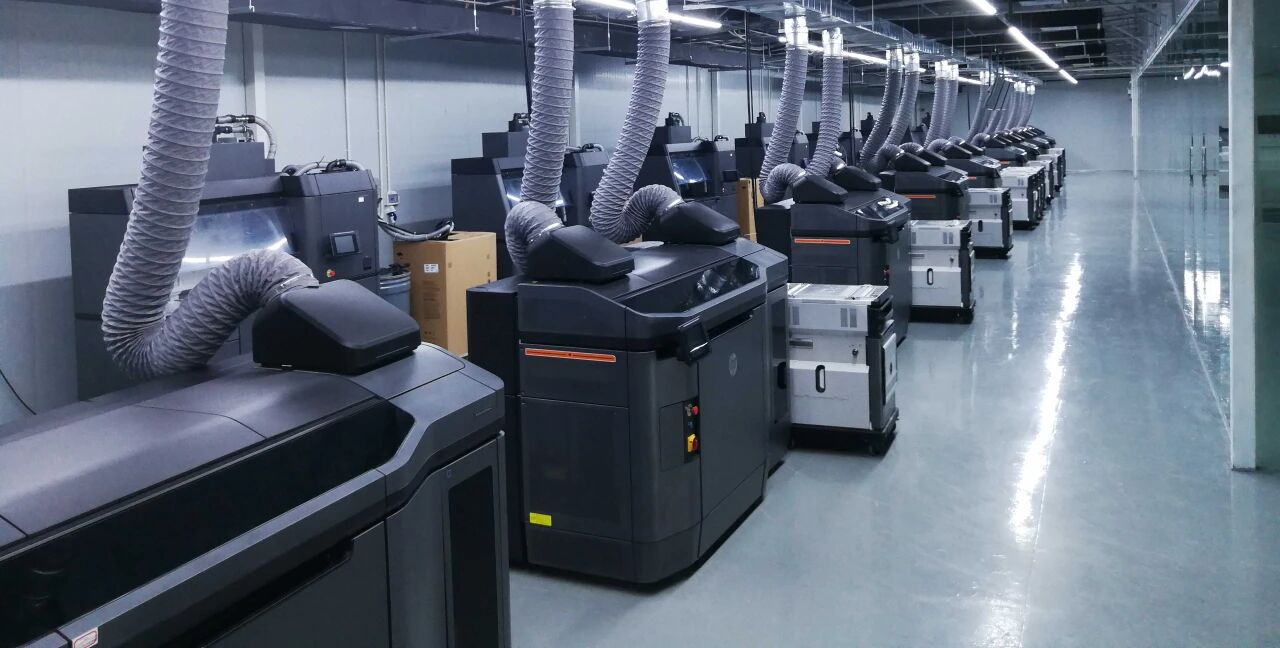
MJF spreads a thin layer of polymer powder, applies fusing and detailing agents, then uses thermal energy to fuse the selected cross section. The process builds parts layer by layer in a powder bed. Unfused powder supports the part during the build, so many geometries can be produced without support structures.
What Is SLS?
SLS also uses a powder bed, but it fuses selected areas with a laser. Like MJF, it usually does not need separate support structures because the surrounding powder supports the part.
MJF vs SLS: Key Differences
| Decision factor | MJF | SLS | Buyer guidance |
|---|---|---|---|
| Heat source | Agent plus thermal energy | Laser sintering | Affects process control and surface character |
| Common material | PA12 nylon | PA12 and other nylon options | Confirm exact grade before testing |
| Surface | Fine, slightly grainy nylon surface | Grainy powder-bed surface | Plan finishing if appearance matters |
| Nesting efficiency | Strong for many small parts | Strong for complex nylon parts | Quantity and packing affect cost |
| Support structures | Usually not required | Usually not required | Useful for complex internal features |
| Best fit | Functional prototypes and small batches | Functional prototypes and material-specific projects | Match process to risk, not habit |
Buyer Decision Guidance
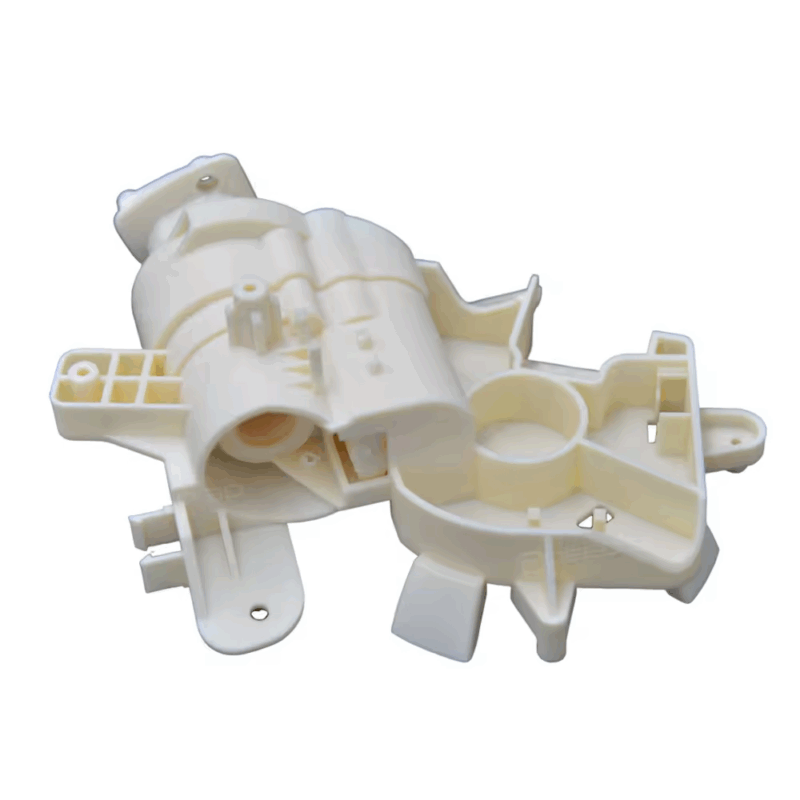
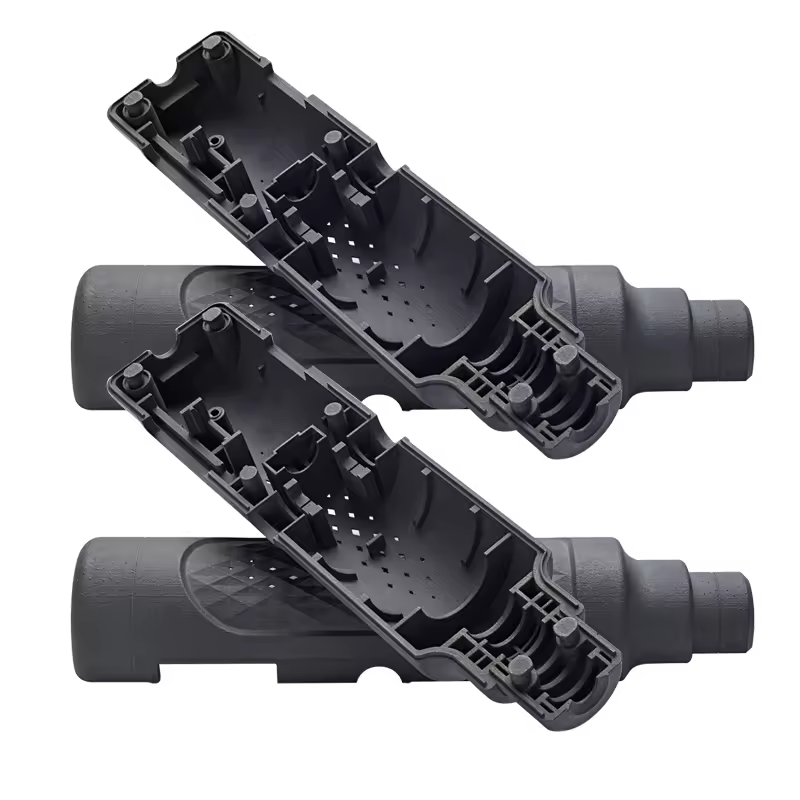
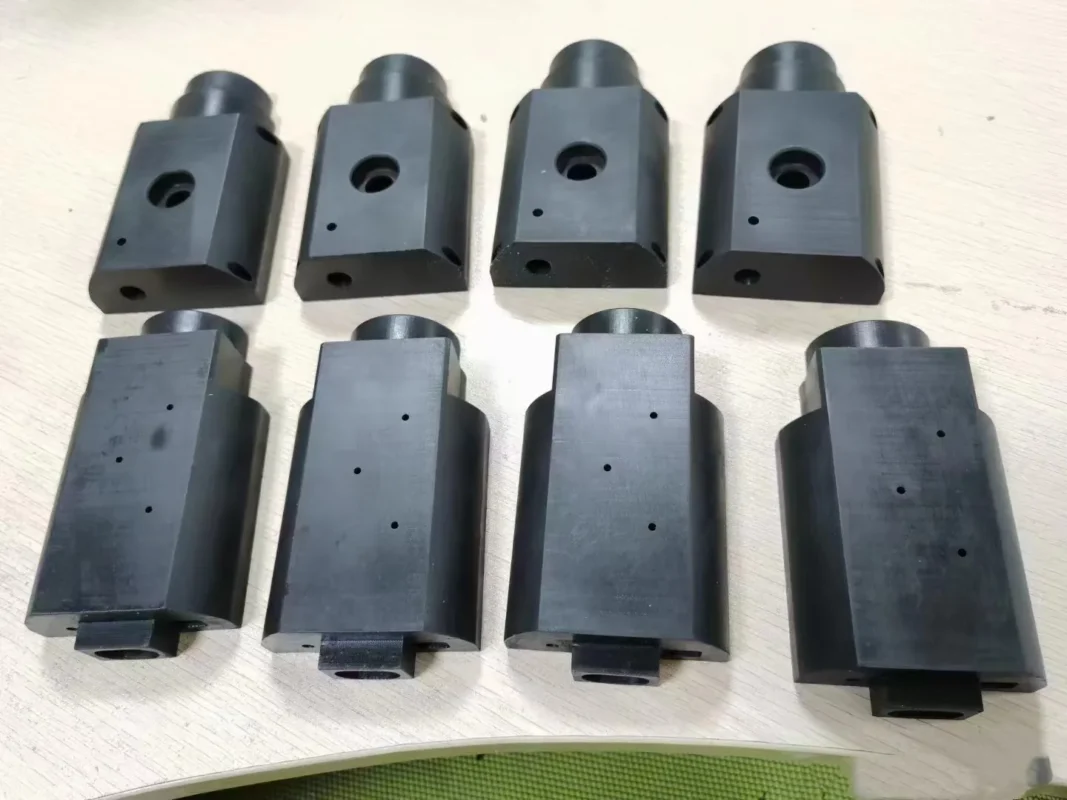
Choose MJF when the project needs many small-to-medium nylon parts, uniform appearance across a batch, complex ducts or clips, and a practical route for engineering validation before tooling. MJF is often a strong option for housings, brackets, covers, jigs, fixtures and product-development builds.
Choose SLS when the part geometry, required nylon option, supplier workflow or previous validation history points toward laser-sintered parts. SLS remains a mature process for functional prototypes, snap-fit trials, lightweight structures and low-volume nylon components.
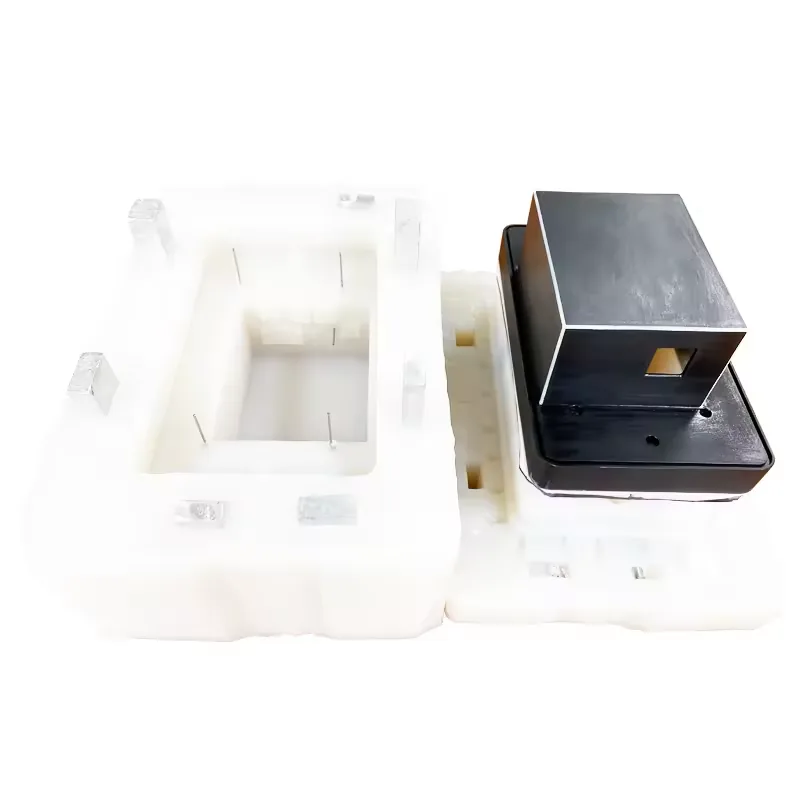
If the design is already stable and repeat volume is expected, compare both printing routes with injection molding. Printing may reduce early tooling risk, while molding may become more suitable when production thermoplastic behavior and repeatability are the priority.
Applications
- Robotics brackets, covers and end-effector components
- Automotive interior prototype parts and ducting
- Medical device housings for fit and handling review
- Consumer product clips, latches and enclosure trials
- Jigs, fixtures and low-volume assembly aids
FAQ
Is MJF stronger than SLS?
Not automatically. Strength depends on material grade, build orientation, geometry, process parameters and post-processing. Compare datasheets and test parts under the real load case.
Is MJF better for functional prototypes?
MJF is often excellent for functional nylon prototypes, especially when batch consistency and fine detail matter. SLS may still be better when a specific material or validation history is required.
Do MJF or SLS parts need supports?
Usually no. The surrounding powder supports the part during printing, which is one reason both technologies are useful for complex shapes.
Can MJF replace injection molding?
MJF can support prototypes, pilot builds and some low-volume production, but it does not duplicate every property or cost structure of molded thermoplastic parts.
Conclusion
MJF and SLS are both valuable industrial 3D printing processes. For an RFQ, send CAD files, target quantity, material expectations, critical dimensions, load cases and finish requirements. Jingrui Proto can review whether MJF, SLS or another manufacturing route is the better fit. Contact Jingrui Proto to discuss your nylon prototype project.