
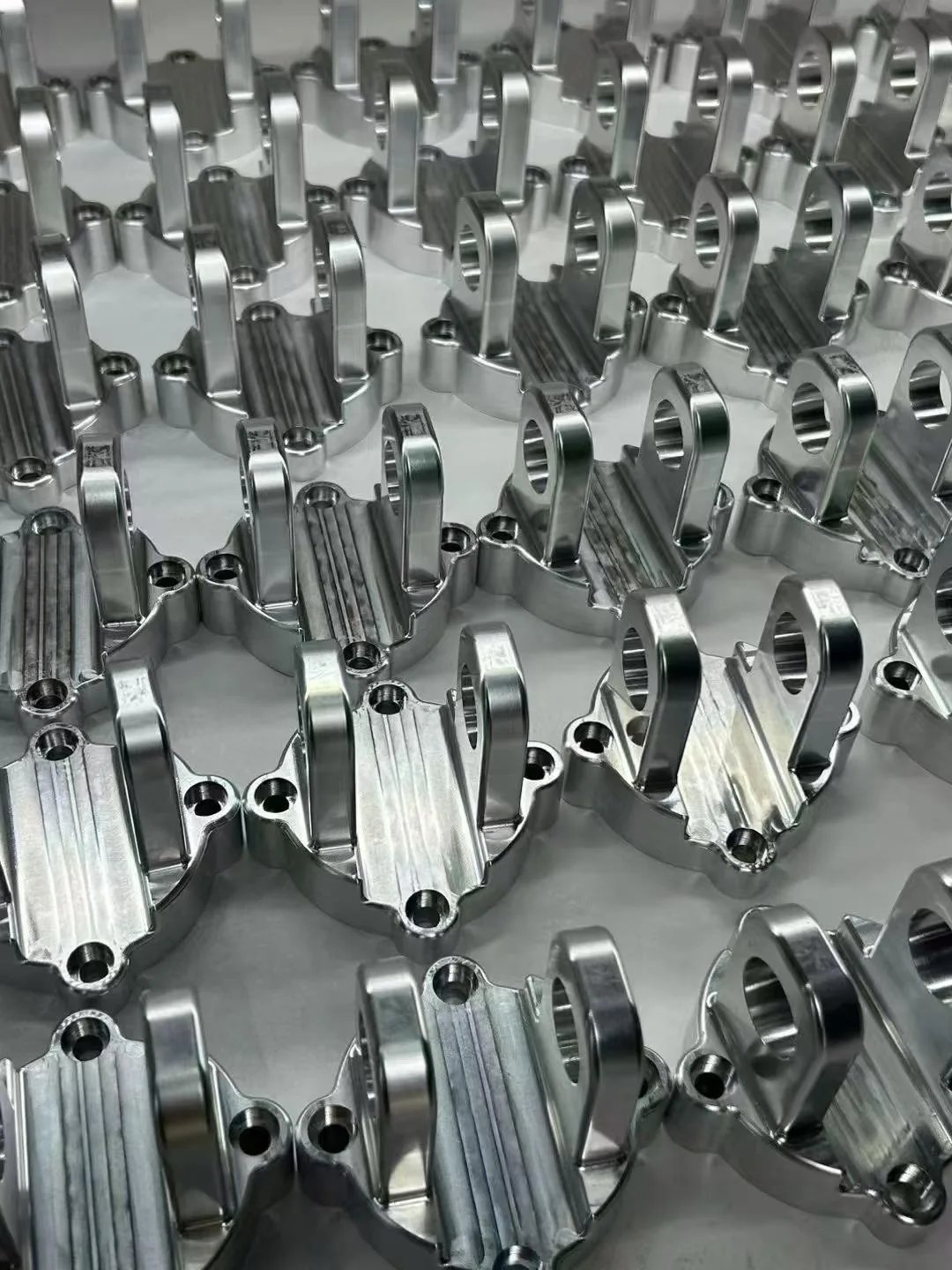
A Chinese CNC supplier should earn production approval through a controlled trial order that tests your drawing, manufacturing route and acceptance requirements. A machine list or attractive sample photograph cannot establish whether the supplier can deliver your particular interfaces consistently. Define what the trial must demonstrate before requesting prices, then compare the delivered evidence with the agreed requirements.
For overseas engineering buyers, the useful question is whether the supplier can turn a released design into traceable, inspectable parts without hidden decisions. This guide provides a qualification framework for that decision. It separates supplier identity checks, technical review, trial manufacture and repeat-order release, so an inexpensive prototype does not become accidental approval for a larger purchase.
Start with a qualification boundary
Write down the part family you are qualifying. A successful aluminum enclosure does not qualify the supplier for every alloy, deep bore, thin wall or surface treatment. Identify the intended material, envelope, manufacturing complexity, finish and inspection requirements. Record any conditions outside the trial, such as a different production site or a later move to a more demanding material.
Then state the purpose of the first order. A visual prototype, engineering fit check and production qualification need different evidence. If the order will only confirm assembly access, do not retrospectively claim it established fatigue life or long-term corrosion performance. If the goal is repeat procurement, include the interfaces and documentation that future shipments must preserve.
Set the release authority as well. The project engineer should approve technical departures, while procurement confirms commercial terms and the delivery package. A supplier’s salesperson should not be left to decide which drawing notes matter. This division gives both sides a clear route when a question emerges during machining.
Verify who will manufacture the parts
Ask for the legal entity issuing the quotation, the machining location and the contact responsible for engineering decisions. Confirm which operations the supplier performs and which require another organization. Outside finishing can be a workable arrangement when responsibility, confidentiality and acceptance criteria are clear. An unexplained subcontracting chain is harder to control.
Request evidence relevant to the proposed route: a workshop walkthrough, appropriate equipment photographs, an explanation of workholding, and a redacted example of an inspection record where permission allows. Do not demand confidential customer drawings as proof. A supplier can explain how it handles revision control without disclosing another buyer’s intellectual property.
Jingrui Proto’s canonical CNC machining service page confirms in-house CNC milling and turning, including multiple axis options. That statement applies to CNC machining. Buyers should still confirm the route for finishing, outside testing and other processes in their quotation rather than infer that every available service occurs in-house.
Use a trial part that exposes the right risks
Choose representative geometry rather than the easiest component in the project. The trial should include the features that drive fit, setup strategy or inspection difficulty. A pocketed housing might need a mating face, an angled hole and a threaded interface. A turned component might depend on relationships between a bore, shoulder and external seating diameter.
Avoid making the trial unnecessarily expensive by adding artificial difficulty. Include genuine design requirements, then identify which features are qualification gates. A decorative chamfer may be easy to review visually; a locating bore may require an agreed measurement method. This distinction lets the supplier allocate inspection effort where failure would actually affect assembly.
Where a family contains substantially different risks, qualify those risks separately. A thin plate and a compact block can behave differently during clamping and material removal. Approval should describe the scope demonstrated, with unresolved risks recorded for a later build. It should never become a blanket endorsement based on one convenient part.
Freeze the technical package before comparing quotes
Issue one released CAD model, a matching drawing and an explicit revision identifier. State which document controls if geometry and drawing notes conflict. Include material designation, finish, quantity, delivery destination and critical features. Explain the assembly function of demanding interfaces so the supplier can flag unnecessary constraints or missing requirements.
Ask every candidate to return the same structured response: accepted requirements, proposed process route, technical exceptions, included inspection and excluded work. Keep assumptions visible. A low price that excludes finish masking or dimensional reporting is a different offer from a price that includes those activities.
When a supplier proposes a change, require an annotated drawing or a clear written description. Approval of a price does not automatically approve a larger internal radius, replacement material or relaxed tolerance. Record the technical decision before issuing the purchase order, then send the approved revision to everyone involved in the trial.
A supplier qualification evidence matrix
| Decision gate | Evidence to request | Release condition |
|---|---|---|
| Manufacturing responsibility | Machining location and operation ownership | The quoted route and responsible contact are clear |
| Drawing understanding | Annotated DFM response and exception list | Critical features have an agreed manufacturing approach |
| Material control | Agreed grade and documentation scope | Substitution requires buyer approval |
| Dimensional acceptance | Feature list, datum scheme and report example | Results can be mapped to the released drawing |
| Finish acceptance | Masking map and agreed appearance reference | Functional surfaces and cosmetic criteria are distinguished |
| Repeatability | Trial findings and repeat-order controls | Changes that require renewed approval are defined |
Use this matrix as a procurement framework, not a certification score. A strong response in one category cannot cancel a hard failure in another. Missing control of a critical datum remains a problem even when communication and pricing are excellent. Keep acceptance conditions written in terms of evidence the project can actually review.
Review DFM reasoning, not just a pass stamp
A useful DFM response explains how geometry affects manufacture. For a deep pocket, ask how tool access and stiffness influence finish and corner geometry. For a part machined from several directions, ask how the supplier will preserve the important relationships between features. The answer need not disclose proprietary programming, but it should address the risk.
Pay attention to disagreements. A supplier who identifies an inaccessible feature before accepting the order may be demonstrating better technical control than one who accepts everything immediately. Ask whether the proposed solution changes function, appearance, inspection or delivery. Resolve those consequences before the trial begins.
Treat capability values as conditional. Jingrui Proto’s CNC page distinguishes its typical tolerance framework from tighter selected critical features subject to geometry, material, setup and inspection. A qualification order should follow that same logic: identify the features requiring review, rather than apply the tightest advertised number to every dimension.
Separate machining quality from finish effects
Finishing can change the condition of a previously acceptable interface. Coatings may affect fits, threads, electrical contact or the seating of mating parts. Tell the supplier which surfaces require masking and whether the acceptance dimension applies before or after finishing. Put these instructions on the controlled drawing or an attached finish map.
Use an appearance reference appropriate to the project. A photograph may help explain a texture, but lighting and camera settings limit its value for color decisions. Where appearance is a release gate, agree on a physical reference and viewing conditions. Keep cosmetic rejection criteria separate from functional dimensional criteria.
The surface finishing service page provides a starting point for discussing finishing routes. Availability of a treatment does not establish coating thickness, adhesion performance or environmental resistance for your part. Ask for the specific requirement to be reviewed and included in the quotation when it affects acceptance.
Inspect the delivered evidence before approving the next order
Check the package against the purchase order before reviewing individual dimensions. Confirm part number, revision, quantity, material identification and the inspection report reference. A beautifully formatted report attached to the wrong revision is not useful acceptance evidence. Resolve identification problems before the parts enter an assembly build.
Then compare critical results with the drawing and, where practical, the intended mating components. Review deviations as engineering decisions. A part that assembles after undocumented hand adjustment should not be recorded as an uncomplicated pass. State whether the adjustment is acceptable for the prototype and whether it must disappear from future production.
Record the outcome in a short trial closure: accepted scope, rejected conditions, approved departures, corrective actions and outstanding evidence. Decide whether another sample is needed. Supplier approval becomes more useful when it identifies what has actually been demonstrated and what remains conditional.
Control the transition to repeat purchasing
After the trial, preserve the released technical package and the accepted finish reference. Ask the supplier to identify changes to manufacturing site, material, major route or inspection approach before a repeat order proceeds. The aim is to prevent a successful prototype from being followed by an unreviewed production change.
Keep the commercial comparison tied to total delivered requirements. Inspection, packaging, finish protection and documentation all consume work. Compare the same scope across suppliers, and record any recurring cost that was waived for the sample. A trial discount should not hide the economics of the repeat build.
Use the first repeat shipment as a confirmation of the controls established during qualification. Review whether the evidence remains consistent with the trial. If problems emerge, investigate the affected feature and process rather than simply requesting another attractive sample. This creates a practical path from engineering evaluation to dependable procurement.
Frequently asked questions
Is a factory video enough to qualify a Chinese CNC supplier?
No. A video can help verify that relevant equipment and a workshop exist, but it does not demonstrate control of your drawing or material. Pair identity evidence with a technical response and a representative trial. Review the delivered parts and records against agreed gates. The useful result is approval for a defined part family and route, with any conditions recorded.
Should I choose the supplier with the tightest advertised tolerance?
Choose the supplier that can explain and verify your critical features. An advertised tolerance may describe selected geometry under particular conditions. Ask which features require special workholding, finishing allowances or measurement methods. Keep general dimensions economical and tighten the interfaces that affect function. The trial should establish whether those requirements are achievable on the actual part.
Can a supplier use an outside finishing company?
It can be acceptable when the arrangement is disclosed and controlled. Clarify confidentiality, transport protection, finish acceptance and responsibility for a nonconforming result. Confirm that approved masking and revision information travel with the parts. A coordinated route can work; the buyer needs a named party accountable for the complete delivered requirement.
What should happen when the trial part fails an assembly check?
Identify the failure before deciding on rework. Check the drawing revision, datum interpretation, finish condition and mating component. Record measured evidence and determine whether the cause is manufacture, design or an incomplete requirement. Approve any temporary concession separately from production approval. A replacement part should address the cause rather than repeat the same uncertain instructions.
Do prototypes automatically qualify a supplier for low-volume production?
No. A prototype may establish fit while leaving repeatability, documentation or packaging untested. Define which controls must carry forward, and ask whether quantity changes the setup, material source or operation sequence. Release the repeat order only after those differences have been reviewed. Keep any remaining qualification conditions visible in the purchase order.
What should I send Jingrui Proto for a qualification quote?
Send released CAD, a drawing, material, finish, quantity and destination, together with the trial’s purpose. Mark critical interfaces and describe the inspection evidence required. Identify confidentiality restrictions before sharing sensitive files. Use the existing contact and RFQ channel to request a drawing-based review and a quotation with explicit assumptions and acceptance scope.
Related Posts
- CNC tolerances and engineering drawing requirements
- Quality inspection methods for precision CNC parts
- Reducing prototype costs without sacrificing quality
Author
Prepared by the Jingrui Proto editorial team for engineering and procurement buyers. This is a purchasing framework, not a customer case study or a guarantee of project-specific performance. Manufacturing commitments belong in the reviewed quotation and released technical package.










