Quick Answer
Buy a welded sheet-metal assembly against its final functional condition, while identifying the manufacturing stages that can change that condition. Define locating datums, weld requirements, machining interfaces, cosmetic seams and the accepted measurement state. Ask the supplier to propose the forming, welding, secondary-machining and finishing sequence before release. Individually accurate flat parts do not automatically establish an accurate welded assembly.
This guide focuses on purchasing fabricated structures with functional interfaces. It addresses a different question from selecting captive sheet-metal hardware: how the complete assembly will be located, joined and checked after multiple processes. It does not prescribe a welding procedure, universal distortion allowance or universal dimensional capability.
Begin With the Final Assembly Function
Explain what the fabricated structure must support, locate or enclose. A machine cover may primarily need access and appearance. A mounting chassis may establish the relationship between several components. A bracket can have a small but critical mating face even when most of its geometry is noncritical.
Identify the actual interfaces on the model and drawing. Mark which holes locate components, which slots allow adjustment, and which surfaces act as stops. If a feature only provides clearance, say so. This helps the supplier distinguish functional requirements from dimensions that need not control the process.
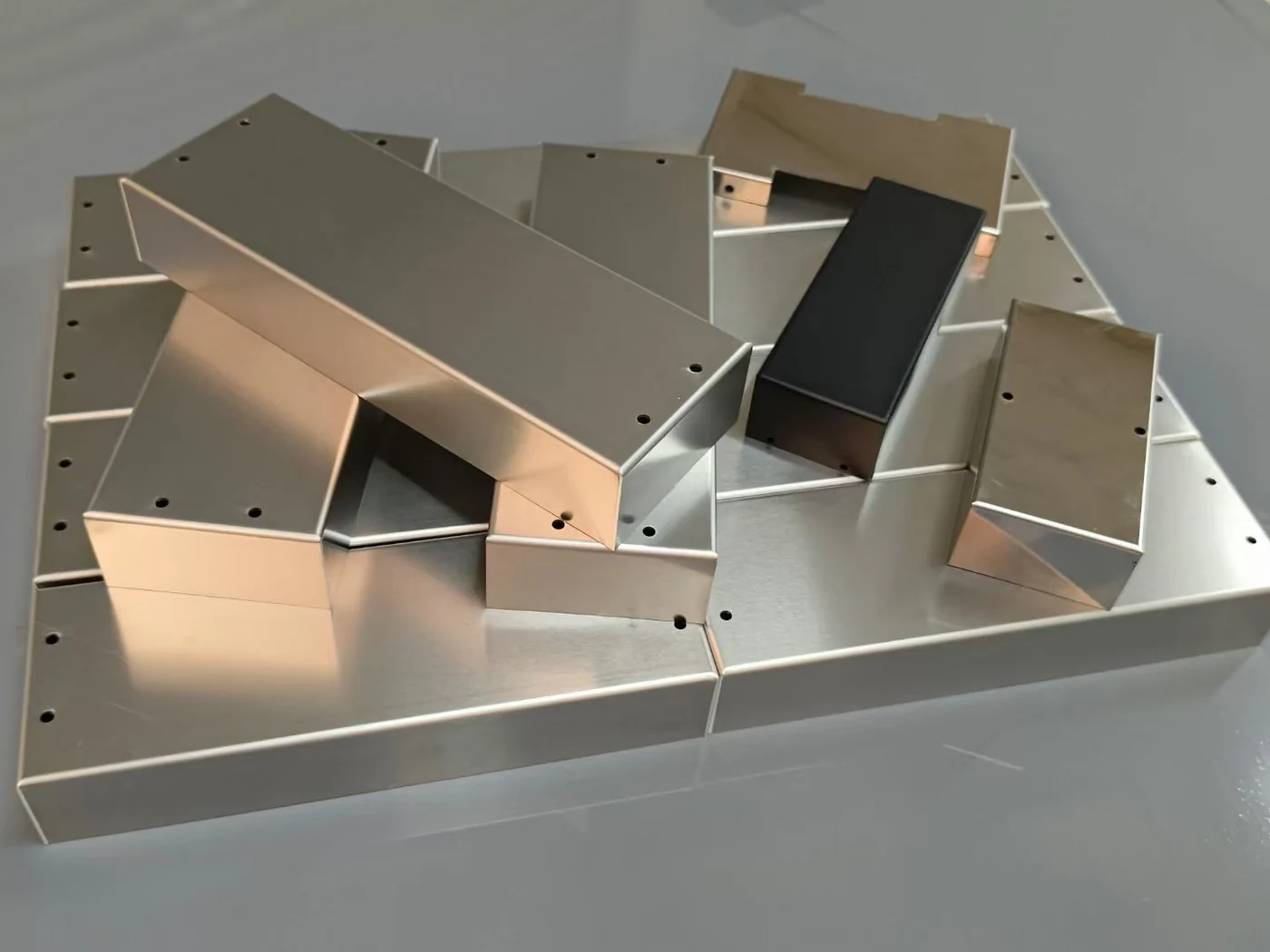
Jingrui Proto’s sheet-metal workshop lists cutting, forming, hardware insertion and welding operations, with machining considered where a feature requires it. Exact welding route, material suitability, workholding and verification scope must be reviewed for the project. Do not infer a particular qualification or test capability from a general workshop description.
Provide the mating-component information where possible. A fabrication drawing can be internally consistent yet omit the relationship needed for successful installation. The RFQ should make that relationship visible rather than relying on the supplier to infer the customer’s equipment arrangement.
Distinguish Component Accuracy From Assembly Accuracy
Cutting, bending and welding each introduce their own process considerations. A plate that is acceptable before joining can occupy a different position in the finished structure. The buyer should therefore identify which requirements apply to individual pieces and which apply after assembly.
For a locating face, ask whether it is produced directly by fabrication or finished through a secondary operation. For a hole pattern across several welded members, review the final datum scheme and access for making and measuring the pattern. Avoid assuming that separate pre-cut features will establish the required final relationship without review.
Do not tighten every component dimension in an attempt to solve an assembly requirement. That can add work while leaving the actual locating strategy undefined. Start with the final function and ask the supplier which component controls and process stages are necessary to achieve it.
| Requirement |
Manufacturing question |
| Alignment between mounting faces |
Which surfaces locate the structure, and when are they finalized? |
| Hole pattern spanning joined parts |
Is it produced before joining or after the assembly has reached an agreed state? |
| Visible seam |
What weld appearance, dressing and final finish are acceptable? |
| Removable cover fit |
Which gaps, stops and attachment features control the installed condition? |
| Final flatness or position |
Is acceptance free-standing, supported, clamped or installed? |
Establish Datums That Can Be Used During Manufacture
A datum scheme should represent the functional relationship and be usable for the intended operations. Ask how the assembly will be located during joining, secondary machining and inspection. If those stages use different references, review how the relationships are transferred.
Temporary fixture contact is not automatically the same as the final inspection condition. A structure can appear aligned while restrained and behave differently after removal. State whether a requirement applies in the free state or a defined installed condition. Where support is needed for measurement, describe the approved support arrangement.
Consider access to the datum surfaces. A surface that becomes hidden behind a welded panel may require verification earlier in the route or a different design. The supplier should identify that constraint before the order promises an impossible final measurement.
If the buyer supplies a fixture or mating component, identify its revision and responsibility. If the supplier proposes dedicated tooling, clarify what it establishes and whether it forms part of the deliverable package. Do not assume that tooling used to build the assembly will also serve as an adequate inspection reference.
Review Welding Sequence as a Supplier Proposal
Welding involves localized heating and cooling, which can affect the final shape. TWI’s guidance on distortion prevention and restraint explains why positioning and fabrication sequence matter. For a buyer, the useful action is to request an appropriate process proposal for the actual assembly rather than copy a generic sequence from another part.
Identify the joints and the required weld information on the controlled drawing. Distinguish structural, sealing and cosmetic purposes where relevant. Those purposes should not be replaced by an undefined note such as “weld all around” unless the responsible designer actually intends that requirement.
Ask the supplier to flag regions where restraint, sequence or access may complicate the required result. A proposed change might involve joint design, assembly order or a local feature. Any change to the controlled design should be approved before implementation.
This purchasing review does not prescribe welding parameters or promise that restraint eliminates distortion. The qualified process decisions belong to the responsible manufacturing team. The buyer’s role is to define function, acceptance and change approval so that the process proposal can be evaluated against a meaningful target.
Decide Which Features Need Secondary Machining
Some assemblies can satisfy their function through fabrication alone. Others require a final operation on selected interfaces. Identify the specific faces, bores or patterns rather than requesting a generally “precision” welded structure. The supplier can then assess access, stability and workholding for those features.
Review when the structure reaches the condition in which machining should occur. A later welding operation or an unreviewed finishing step can undermine a feature produced earlier. Ask for a coordinated route that shows which operations follow the critical machining stage.
If additional stock or temporary features are proposed for workholding, make their treatment explicit. Confirm what remains in the delivered part and what is removed. The finished drawing and the manufacturing proposal should not disagree about a functional surface or an accessible opening.
Jingrui Proto offers in-house CNC machining. Combining it with fabrication still requires a review of the actual assembly envelope and setup. The existence of both capabilities does not establish that every welded structure can be machined in every orientation.
Separate Weld Integrity, Appearance and Final Finish
A seam can meet an appearance expectation without establishing its intended structural or sealing requirement. Conversely, an acceptable functional joint may still need a defined cosmetic treatment. Keep these requirements distinct in the drawing and approval plan.
If weld dressing is requested, identify the visible region and the acceptable final condition. Material removal should follow the design and process requirements; it should not be treated as an unrestricted instruction to erase every sign of joining. Ask the supplier to flag conflicts between cosmetic intent and the functional joint.
Finishing should be planned around functional surfaces, threads, contacts and access. Mark areas that require masking or a particular final condition. Confirm whether acceptance dimensions apply before or after the specified finish. A coating note without that relationship can leave the delivered fit uncertain.
Use the surface-finishing overview to discuss available routes, then confirm suitability for the actual substrate and assembly. Do not assume every listed finish can be applied to every mixed-material or partially enclosed structure.
Match Inspection to the Real Failure Risks
Define dimensional, visual and any required joint evaluations separately. Request a project-specific method and acceptance scope for each. A photograph cannot establish internal joint integrity, and a dimensional report does not prove every operating load case.
For dimensional checks, identify the support condition, datums and final process state. A result measured while the assembly is clamped may not answer a free-state requirement. If the assembly is accepted installed against another structure, define that installation condition sufficiently for a repeatable evaluation.
Ask how inaccessible features will be addressed. An earlier inspection record can be appropriate for certain requirements, but it should identify the stage and its limitations. Avoid a blanket request for “complete inspection” that leaves both method and coverage undefined.
If the application requires a particular weld qualification, nondestructive examination, sealing test or other evidence, state it before quotation. The supplier must confirm the specific scope and arrangements. This article does not claim those services or results for Jingrui Proto without project verification.
Illustrative Application: A Fabricated Equipment Chassis
Imagine a hypothetical chassis supporting a removable mechanism and an external cover. The mechanism needs a controlled mounting relationship, while the cover mainly needs clearance and appearance. This is an engineering illustration, not a customer case or a claimed test result.
The buyer identifies the mechanism’s locating faces and separates them from the cover attachments. The supplier reviews the forming and welding route, then proposes how the important mounting features will be finalized and measured. Cosmetic seams and finish-sensitive surfaces are marked independently.
A first assembly is evaluated in the agreed state before a repeat order proceeds. If a discrepancy appears, the team can distinguish fixture condition, component geometry, joining effects and finishing rather than simply tightening all drawing limits. The value lies in a traceable decision process.
RFQ Checklist for Welded Assemblies
Send the complete assembly CAD, component drawings where relevant, material requirements, quantities and intended use. Identify whether you need a bare fabrication, a finished assembly or a structure with secondary-machined interfaces.
- Mark functional datums, mounting relationships and noncritical clearance features.
- Identify joints and their structural, sealing or cosmetic purpose.
- State whether acceptance is free-standing, supported, clamped or installed.
- Request the proposed forming, joining, machining and finishing sequence.
- Identify visible seams and approved dressing requirements.
- Define final finish and protected functional areas.
- Separate dimensional checks from any special joint evaluation.
- Clarify first-article approval, change control and delivery protection.
Compare quotations after these requirements align. One proposal may cover cut and bent components, another a welded structure, and another the final machined and finished assembly. Their prices cannot be compared meaningfully until the delivery state and evidence package match.
Frequently Asked Questions
Do accurate flat parts guarantee an accurate welded assembly?
No. Forming, joining, restraint and the final support condition affect the assembled relationship. Specify the functional assembly requirements and review the route used to achieve them. Individual component checks should not be substituted for final assembly acceptance.
Should critical holes be made before or after welding?
That depends on geometry, access and the required final relationship. Ask the supplier to propose the appropriate route and identify the acceptance state. A hole produced before joining should not automatically be assumed to remain in its required final position.
Does clamping prove that the assembly is flat?
It proves only the condition under the defined restraint. If the requirement applies in the free state, inspect that state using the agreed support arrangement. Distinguish manufacturing fixture contact from the condition that controls functional acceptance.
Can every visible weld be ground flush?
Do not assume so. The cosmetic request must be reviewed against the joint’s function, material and process. Identify the visible surfaces and let the responsible manufacturing and design teams resolve the permitted treatment before production.
Is a photograph enough to approve a welded structure?
It can document appearance and general condition, but it does not establish every dimensional or joint requirement. Agree the relevant evidence separately. Any special testing or qualification must be explicitly confirmed in the quotation.
What should Jingrui Proto receive for a useful quotation?
Provide assembly CAD, drawings, material, quantities, functional interfaces, weld requirements and finish expectations. Explain the accepted measurement state and required evidence. Ask for a coordinated fabrication and secondary-operation proposal rather than a quote based only on outer dimensions.
Request a Fabrication-Sequence Review
Send Jingrui Proto your welded-assembly requirements with the mating-interface and acceptance information. Request confirmation of the forming, welding, machining and finishing scope. Resolve the final inspection state before approving production so the delivered structure is judged against the same requirements used for quotation.
Related Posts
Author
Prepared by Jingrui Proto for engineering and procurement teams buying fabricated assemblies. Process routes, qualifications and acceptance requirements require project-specific confirmation.