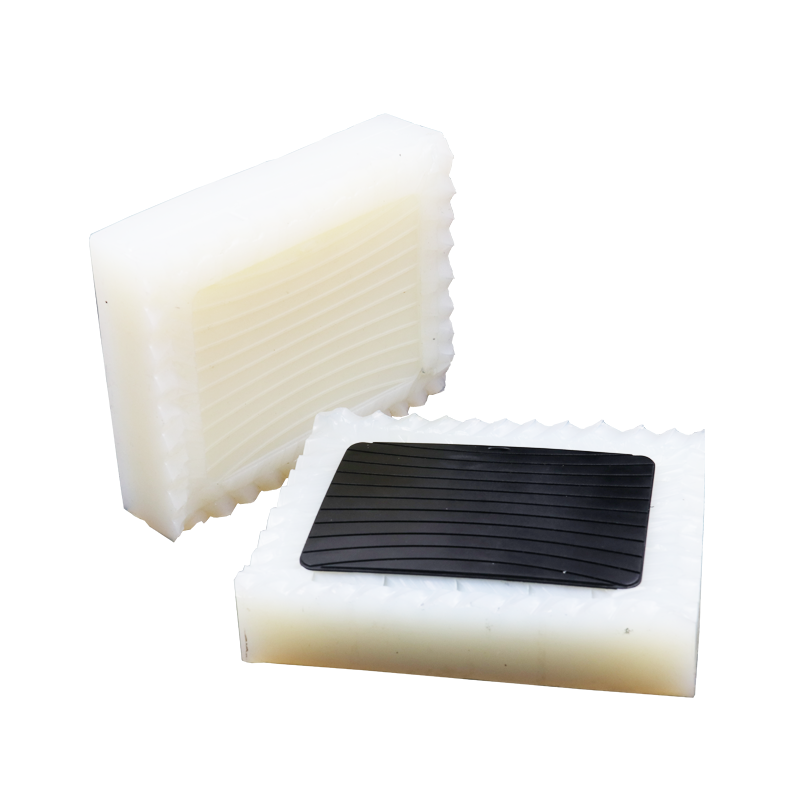
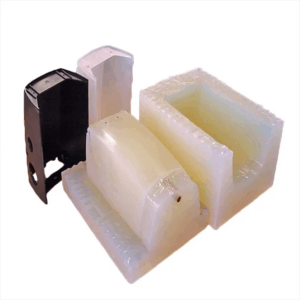
In the field of new product R&D, small-batch trial production and prototype proofing, silicone mold has become a mainstream process for trial production of 3C electronics, smart home appliances, scientific research equipment, and cultural and creative products due to its advantages such as low cost, fast molding speed, adaptability to complex structures, and the ability to realize multi-material simulation molding. However, in actual production, deformation, shrinkage, warping, and dimensional deviation are the most frequent quality problems of silicone mold prototypes. At the least, they cause parts assembly jams and appearance defects, and at worst, they directly cause the entire batch of samples to be scrapped, delaying the progress of new product testing and iteration.
In many small and medium-sized processing factories, due to extensive process control, vague control of shrinkage parameters, and non-standard curing processes, random shrinkage deviations of 0.5%–1.5% are common in slicone mold products, and the deformation rate of special-shaped thin-walled structures remains high. This article will comprehensively dismantle the core causes of silicone mold prototype deformation, share standardized prevention solutions, and focus on Jingrui Proto’s core technical advantages in precise shrinkage control and anti-deformation process optimization to solve the problem of mold product deformation from the root cause. 1. Common deformation types and hazards of silicone mold prototypes The deformation of parts after silicone molding is not a single problem. Different deformation types correspond to different process loopholes, which directly affect the product use effect:
1. Overall shrinkage and deformation: The overall size of the finished product is uniformly reduced, the hole position and assembly position tolerances are offset, and the original assembly standard cannot be adapted. This is the most common silicone mold quality problem;
2. Local warping deformation: The edges of thin-walled, long, and hollow structures are upturned and bent, which mostly occurs in home appliance casings and thin functional parts;
3. Uneven thickness and collapse deformation: The thick-walled area of the product is incompletely cured, the interior hollow collapses, and the surface is uneven, affecting the appearance and structural strength;
4. Stress rebound deformation:
Slow deformation within 24 hours after demoulding. The initial test is qualified, but there are deviations in the later assembly test. It is extremely concealed and the most harmful.
2. The core reasons for the deformation and shrinkage of silicone mold prototypes The vast majority of complex mold deformation problems are not caused by the material itself, but by inaccurate parameters, irregular processes, incomplete stress relief, and failure to compensate for shrinkage in advance.
The core reasons are divided into four categories:
1. The materials and proportions are not standardized, and the basic shrinkage rate is out of control. Ordinary manufacturers mostly use general-purpose silicone materials without selecting based on product structure, wall thickness, and usage scenarios. At the same time, the curing agent ratio is randomly adjusted based on experience. Proportional deviations directly lead to uneven curing speed and inconsistent molecular shrinkage. Under conventional non-standard ratio processes, the natural shrinkage rate of finished molded products is generally as high as 1%–2%, far exceeding industry standards, and is the primary cause of dimensional deviations.
2. Extensive vacuuming and pouring processes produce internal stress The exhaust during the mixing and vacuuming process is not complete, leaving bubbles inside the material. During the curing process, the bubbles shrink and squeeze to generate internal stress; the pouring flow rate, angle, and number of layers are improperly controlled, and the difference in curing speed between thick and thin areas is too large. The stress distribution after the product is formed is uneven, and the product naturally rebounds and deforms in the later stage.
3. The curing temperature
and time parameters are not standard. In order to meet the delivery deadline, some manufacturers arbitrarily shorten the normal temperature curing and oven secondary curing times, or the curing temperature fluctuates from high to low, resulting in rapid solidification of the surface of the product, incomplete internal molding, inconsistent internal and external shrinkage coefficients, and continued deformation and shrinkage after demoulding.
4. No precise shrinkage compensation process This is the biggest pain point in the industry: most processing plants do not have a systematic shrinkage calculation and compensation mechanism, and directly open molds according to the original drawing dimensions, completely ignoring the natural shrinkage characteristics of silicone and PU materials. The final product will inevitably suffer from systematic undersize and assembly failures.
3. Industry-wide prevention plan (basic pit avoidance skills) Regarding the problem of complex mold deformation, the industry's common basic prevention and control method can avoid about 30% of defect problems, and is suitable for ordinary samples with simple structures and low precision requirements:
1. Select the appropriate silicone hardness and PU casting material according to the product wall thickness, unify the curing agent ratio standard, and eliminate random mixing; 2. Extend the vacuum exhaust time and pour in layers at low speed to avoid bubbles and stress caused by material turbulence;
3. Strictly follow the gradient curing logic, initial curing at room temperature + secondary curing in a constant temperature oven to ensure consistent internal and external molding; 4. Add auxiliary support ribs to thin-walled and long structures, and let them rest for shaping after demoulding to release residual stress.
4. Jingrui Proto’s core advantages: precise shrinkage control + customized anti-deformation process (industry differentiation) As an intelligent manufacturer that has been deeply involved in precision molding technology for more than 20 years, Jingrui Proto has built a fully parameterized, data-based, and traceable anti-deformation process system to solve the problem of silicone molding deformation and shrinkage. The core solution is to solve the industry's pain points of inaccurate shrinkage rate and uncontrollable deformation, and adapt to the needs of high-precision molding specimens such as medical, electronics, and intelligent equipment.
1. Accurate graded shrinkage compensation to offset size deviations from the source Different from the industry's extensive model of no compensation and unified compensation, we have established a three-dimensional shrinkage database of material + structure + wall thickness: for different PU resin and silicone materials, we accurately measure the exclusive shrinkage coefficient, and customize the mold opening size compensation parameters according to the product wall thickness (1mm-10mm) and structural form (solid, thin-walled, hollow, special-shaped). Through pre-data compensation, the overall shrinkage rate is strictly controlled within 0.2%, which is far better than the industry standard of 0.5%. High-precision customized parts can achieve nearly zero shrinkage, and the finished product dimensional tolerance is stably controlled at ±0.05mm, completely solving the problem of systematic shrinkage deviation.
2. Segmented gradient solidification process completely eliminates internal stress in molding Abandoning the one-size-fits-all curing model in the industry, we adopt a three-stage process of low-temperature initial setting + constant temperature stabilization + normal temperature stress release: low-temperature slow curing and setting to avoid stress caused by rapid hardening of the surface layer; the constant temperature range ensures that the internal material is completely cross-linked; after demoulding, the exclusive area is left to rest for 48 hours for secondary setting to completely release residual stress and prevent later rebound, warping, and hidden deformation.
3. Structural optimization in advance to avoid deformation of special-shaped parts After receiving the order, we provide free pre-diagnosis services for the molding process. For thin-walled, large curved surfaces, long strips, hollow and other easily deformed structures, we optimize the position of the gate in advance, adjust the material flow direction, add process auxiliary ribs, and balance the wall thickness difference to avoid the risk of molding deformation from the structural level. Without the need for customers to modify the product design, the finished product yield can be greatly improved.
4. Standardized quality control testing and strict control of finished product accuracy Relying on the ISO9001 quality management system, all finished molded products undergo full size inspection, flatness testing, deformation screening, and high-precision image measuring instruments to verify shrinkage, flatness, and assembly tolerances. Unqualified products will be reworked. The yield rate of duplicate molded products has remained stable at over 99.5%, far exceeding the industry average yield rate.
5. Finished product deformation remedy plan (efficient repair, reducing scrap) For slightly deformed mold prototypes, we have a mature non-destructive rework process: through low-temperature heat setting, stress relief correction, local precision fine-tuning, etc., we can correct warpage and slight shrinkage deviations without destroying the appearance and structural strength of the product, minimizing customer R&D trial and error costs and avoiding the scrapping of the entire batch of samples.
6. Summary: The core of precision molding lies in parameter controllability and process standardization. The deformation and shrinkage problems of silicone mold prototypes are essentially caused by the gap between the degree of process refinement and the ability to control parameters. Ordinary manufacturers in the industry rely on experience in production, and deformation and shrinkage are "uncontrollable common problems"; Jingrui Proto uses four core technologies such as digital shrinkage compensation, gradient curing process, pre-structure optimization, and full-process quality control to completely control and standardize the problems of mold deformation and dimensional deviation. Relying on the large-scale production capacity of the dual factories in Zhuhai and Dongguan, we can undertake various small-batch trial production orders for high-precision, complex special-shaped silicone molds, taking into account low shrinkage, zero deformation, and high cost performance, adapting to the needs of enterprises for new product development, performance testing, sample submission, and small-batch trial production, shortening the research and development cycle and reducing trial and error costs for customers.