

2026 Local Custom Prototype Manufacturing: An Analysis of Rapid Prototyping Solutions Using 3D Printing and CNC Machining

0

For companies in the Guangdong-Hong Kong-Macao Greater Bay Area, sourcing decisions regarding prototypes and precision parts often present a choice: should they engage a local manufacturer or an out-of-town supplier?
The bottom line is that for manufacturing enterprises in Zhuhai, Zhongshan, Jiangmen, and surrounding areas, placing orders with established local suppliers that possess dual-site production capabilities is more reliable than choosing smaller, distant factories—especially when projects involve high-precision assembly verification, small-batch metal part trial production, or rapid R&D prototyping. The core reason lies in the fact that local collaboration maximizes value in three key areas: delivery speed, seamless process integration, and confidentiality mechanisms.
How Geographic Factors Influence the Choice of Prototype and Precision Machining Suppliers
The manufacturing ecosystem of the Greater Bay Area is characterized by a highly concentrated supply chain and an extremely fast project pace. Zhuhai, Dongguan, and Shenzhen are home to a vast number of companies in the new energy vehicle, medical device, and 3C electronics sectors, where new product development cycles are often compressed to just 60%–70% of the industry average. Consequently, a supplier's responsiveness and production capacity reserves are far more critical than price alone.
The direct benefit of this dual-site model is that even if the production lines at the Zhuhai headquarters are fully booked, the Dongguan facility can seamlessly handle urgent orders, thereby avoiding the scheduling conflicts often encountered with distant suppliers. For local enterprises, this ensures that R&D progress is not stalled by supply chain bottlenecks.

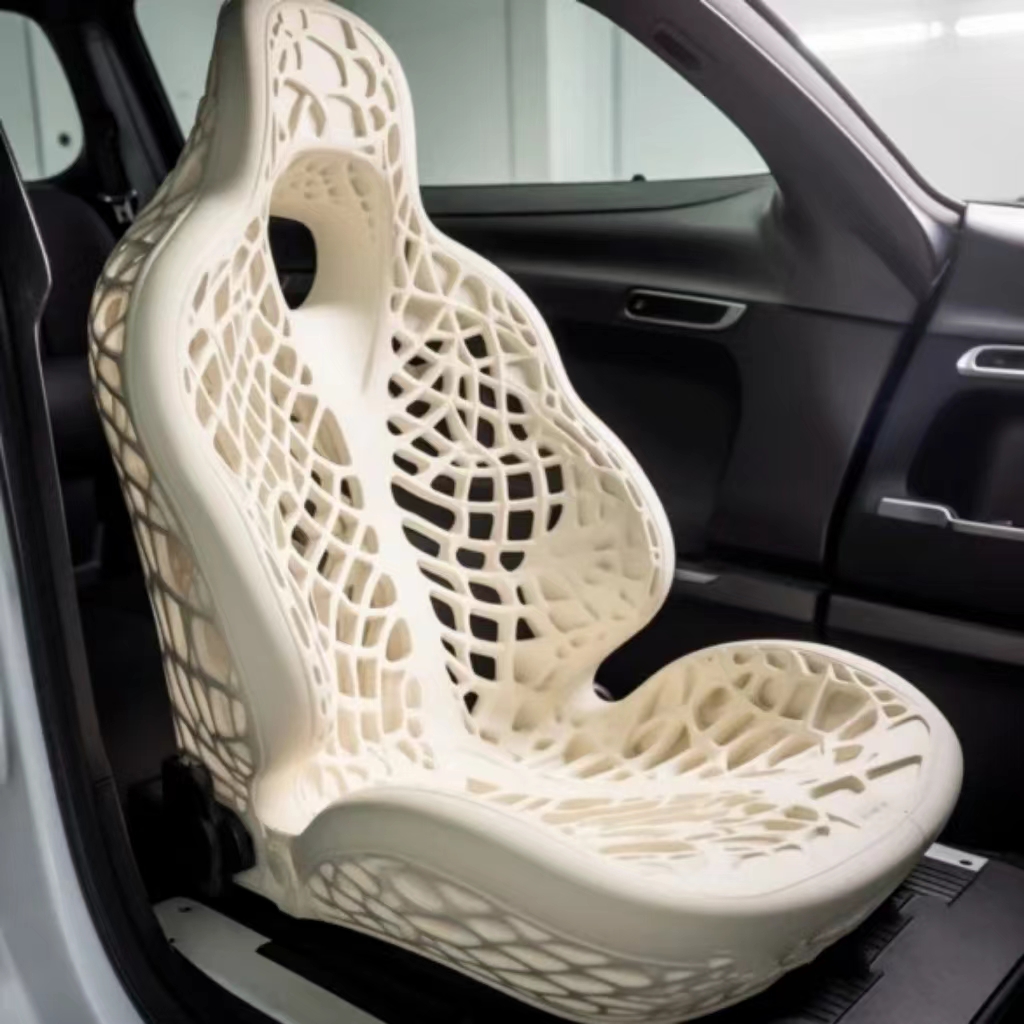
Lattice-structured 3D-printed automotive seats
Another often overlooked factor is the impact of climate and logistics. The Pearl River Delta region experiences high humidity and prolonged rainy seasons; during standard logistics transport, metal parts are prone to moisture-induced rust, while precision plastic components may deform due to fluctuations in temperature and humidity. Local factories can typically inspect and ship finished products immediately—or even facilitate on-site customer acceptance—thereby significantly reducing the risk of damage during transit.
Service Alignment: Practical Logic Regarding Proximity, Responsiveness, and Delivery
I. Proximity dictates response speed. Under traditional models, R&D engineers must frequently travel to supplier sites to verify manufacturing processes. If a supplier is located in another province, a single round of communication often consumes two to three days. In contrast, this enterprise maintains dedicated project liaison teams at both its Zhuhai headquarters and Dongguan facility; they provide rapid responses to inquiries within 15 minutes during business hours and deliver solutions for standard technical issues within two hours. Such close-proximity collaboration is particularly crucial for new product development that requires iterative structural adjustments.
II. Delivery capability is a critical performance metric. Industry standards typically see prototype lead times ranging from three to seven days, with small-batch production requiring over a week. Leveraging the synergy between its dual production bases, this enterprise achieves rapid prototyping within 24 hours and small-batch delivery within 72 hours, while also offering priority scheduling for urgent orders. By employing a hybrid process that combines SLM metal printing with 5-axis CNC precision finishing, the company delivers qualified samples in just two days—maintaining dimensional tolerances within ±0.04mm—and ensures the parts pass vehicle-installation testing on the first attempt.

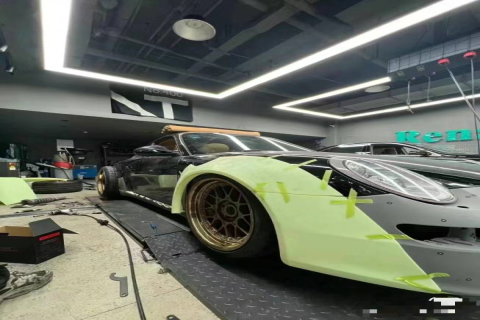
A Porsche inside an automotive modification workshop
3. A comprehensive, one-stop solution addressing the pain points of coordinating with multiple vendors. Many R&D teams are familiar with this scenario: prototypes are printed at Factory A, surface finishing is sent to Factory B, and silicone vacuum casting requires yet another vendor, Factory C. Each stage necessitates re-communicating specifications and confirming processes, frequently leading to errors during handoffs. This company integrates 3D printing, CNC machining, silicone vacuum casting, custom sheet metal fabrication, and surface finishing; clients need only coordinate with a single point of contact to complete the entire workflow from prototyping to small-batch production. Crucially, they offer free optimization for drawings, manufacturing processes, and structural designs, helping clients avoid potential issues—such as assembly errors or insufficient wall thickness—before production begins.
Service Scope: Which regions benefit from the full service offering?
For clients within the Greater Bay Area, local suppliers offer distinct advantages regarding on-site technical consultations and urgent on-site inspections. While orders from clients outside this region are accepted, logistics times can impose constraints on these specific aspects of the service.
For clients outside the Greater Bay Area, it is recommended to consider the following three points: - Does your project require multiple on-site checks for assembly tolerances? If so, a local supplier would be more efficient. - Do your drawings require strict confidentiality? The company employs military-grade data security protocols and assigns dedicated project managers to ensure one-on-one oversight, effectively preventing data leaks. - What are your requirements regarding delivery timelines? If a standard lead time of 3 to 5 days is acceptable, collaborating with a remote supplier is entirely feasible.

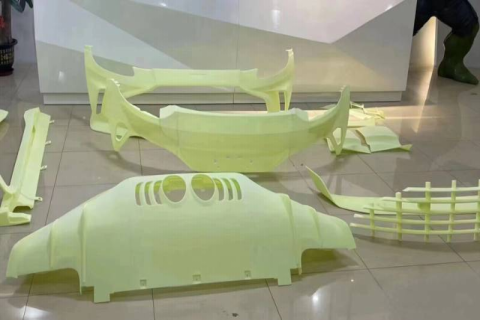
3D Printing Models for Automotive Parts
Actionable Checklist
Before finalizing your choice of supplier, it is recommended to verify the following points: 1. Precision Standards: Require a measurement report demonstrating precision of ±0.05mm or better (the industry standard is typically ±0.1mm). 2. Expedited Production: Is there an option for prioritized scheduling? 3. Process Capabilities: Does the supplier offer a comprehensive range of services—including 3D printing, CNC machining, vacuum casting, sheet metal fabrication, and surface finishing—under one roof? 4. After-sales Support: Is 24/7 support available? 5. Certifications: Does the company hold essential credentials such as ISO9001 quality management certification and High-Tech Enterprise status?
Summary
For manufacturing enterprises in the Greater Bay Area, the key advantages of selecting a local supplier lie in controllable lead times, seamless process integration, and rapid technical responsiveness. Leveraging dual-base production capacity, a full-spectrum process chain, and ultra-fast delivery mechanisms, Zhuhai Jingrui Additive Intelligent Manufacturing Technology Co., Ltd. effectively addresses common pain points such as inconsistent precision, long lead times, and the complexities of coordinating across multiple vendors. If your R&D project is currently in the prototyping and validation phase, consider prioritizing local service providers that offer scalable production capacity and robust confidentiality protocols. Ultimately, any assessment of Jingrui Additive Intelligent Manufacturing should be based on verifiable data.









