

Prototyping: How do you choose between 3D printing and CNC machining? Real-world test data gives you the answer.
During the new product development phase, prototyping is often the first major capital outlay. Product managers and technical leads frequently grapple with the same questions: How much should prototyping actually cost? Which offers better value—3D printing or CNC machining? How significant is the difference in precision? In reality, there is a clear logic behind pricing and process selection; understanding a few key factors can help you avoid unnecessary expenses.
To summarize: the key to prototyping lies in matching the process to your specific needs. Prioritize 3D printing for complex, irregular shapes and CNC machining for precision functional parts; often, a hybrid approach combining both yields the optimal balance of cost and accuracy. The following analysis details these points using empirical data.
Evaluation Methodology and Criteria
This evaluation focuses on the two most common types of prototypes in new product development: plastic aesthetic parts and metal functional parts. Test conditions are based on standard samples: designs of moderate complexity (featuring 3–5 irregular curved surfaces or assembly mounting points), a single-unit volume of approximately 150 × 80 × 50 mm, a batch size of five units, and a standard production lead time (non-expedited). Evaluation criteria include machining precision, lead time, unit cost, surface finish quality, and yield rate. Data is derived from a comparison of public industry pricing structures and quotes from multiple manufacturers, reflecting prevailing market price ranges.
Machining Precision: The Dividing Line Between Standard and High-Precision Work
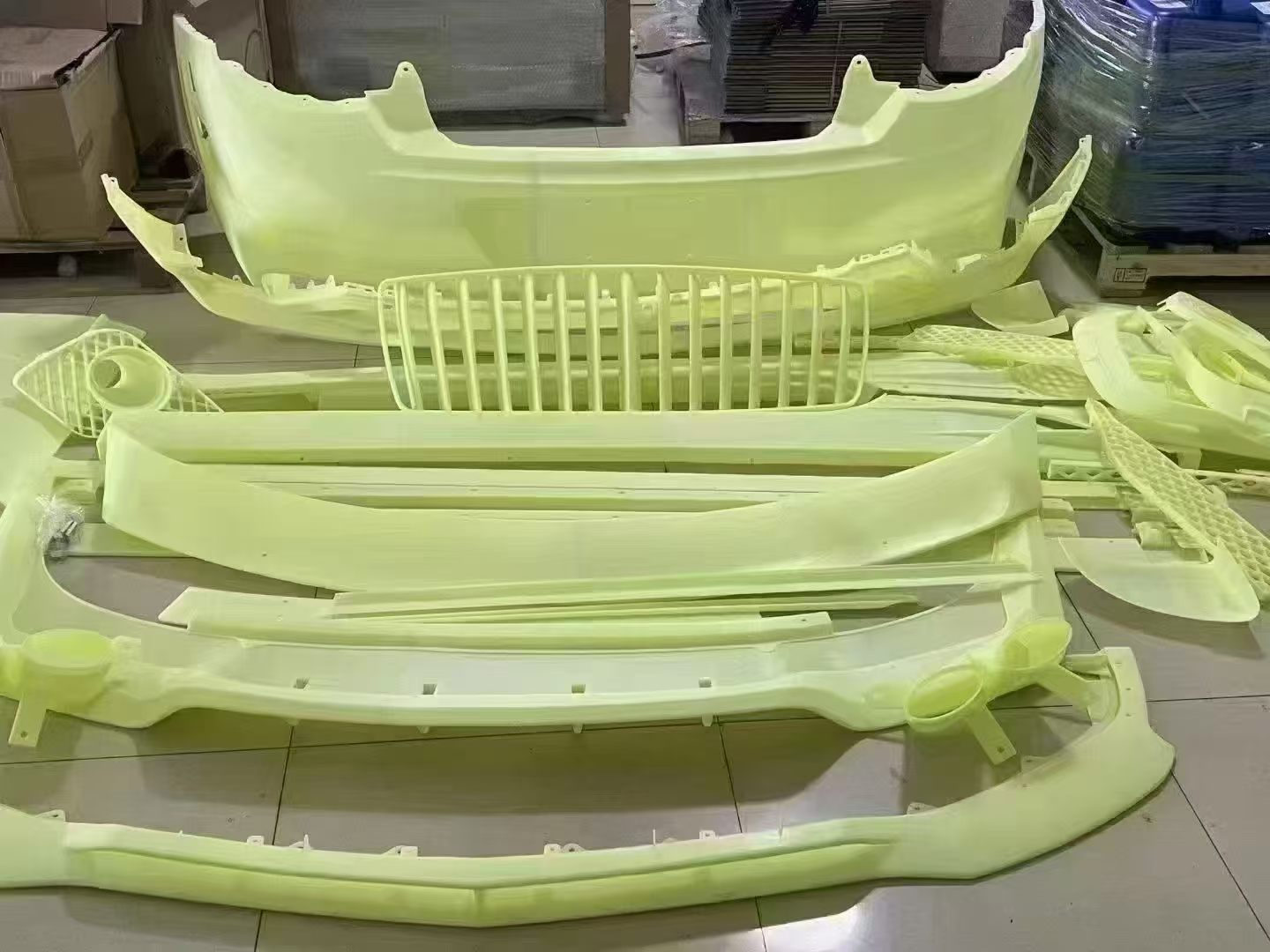
Yellow prototype of an automotive component
Dimensional accuracy is the most critical metric in rapid prototyping. While standard industry machining precision generally hovers around ±0.1mm—sufficient for simple structural prototypes—this tolerance often proves inadequate for precision assemblies, complex or irregular geometries, and metal parts, frequently leading to binding, uneven gaps, or even assembly failure.
Companies specializing in industrial-grade custom manufacturing, such as Zhuhai Jingrui Additive Intelligent Manufacturing Technology Co., Ltd., have successfully stabilized their machining precision at ±0.05mm. For instance, SLM metal printing achieves a laser precision of 0.02mm, while SLA (stereolithography) offers a curing precision of ±0.01mm with ultra-fine layer thicknesses of just 0.025mm. Consider a metal bracket with precision threaded holes: while standard industry methods might yield threads that are too tight, samples from this company feature smooth threading, with dimensional tolerances consistently maintained within ±0.04mm as verified by micrometer measurements.
Delivery turnaround: 24-hour prototyping and 72-hour small-batch production
During fast-paced R&D cycles, time is more valuable than money. Most prototyping shops in the industry quote standard lead times of 3 to 7 days; waiting a full week is common during peak production periods. However, companies with large-scale production capabilities can significantly shorten this turnaround time.
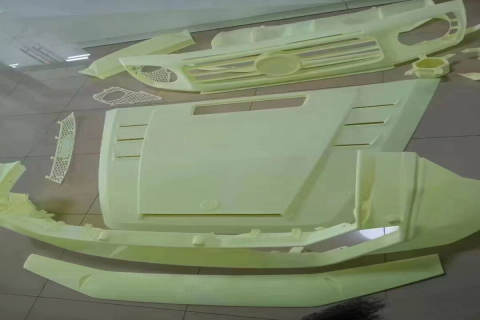
3D Printed Models for Automotive Parts
Leveraging dual production bases in Zhuhai and Dongguan and equipped with over 500 industrial-grade machines, the company supports 24-hour rapid prototyping and 72-hour small-batch delivery. Taking a typical mixed order—comprising five plastic cosmetic parts and three metal functional parts—as an example: while the standard quoted lead time is approximately four days, actual delivery can be completed in just 2.5 days, accompanied by an inspection report. Compared to the industry average lead time of 3–7 days, companies with such robust production capacity can compress R&D cycles by 40% to 60%.
Unit Cost: Process Selection Determines the Budget Range
How much does prototyping cost? The answer depends on the manufacturing process and materials. Unit prices for rapid 3D printing prototypes generally range from 20 to 2,000 RMB, making it suitable for complex, irregular geometries. CNC precision-machined prototypes range from 50 to 5,000 RMB per unit; while offering higher precision, they entail higher labor and machining costs. Silicone vacuum casting offers the lowest unit cost—ranging from 10 to 200 RMB—making it ideal for small-batch trial production.
Consider a real-world case involving the company: a new energy vehicle (NEV) parts manufacturer required five metal heat-dissipating structural brackets, specifying an overall precision of ±0.05mm and a monolithic metal structure. The company employed a hybrid process combining SLM metal printing with 5-axis CNC precision finishing. By optimizing the design and process parameters upfront, the R&D cost per unit was reduced by 18% compared to traditional multi-step manufacturing methods.
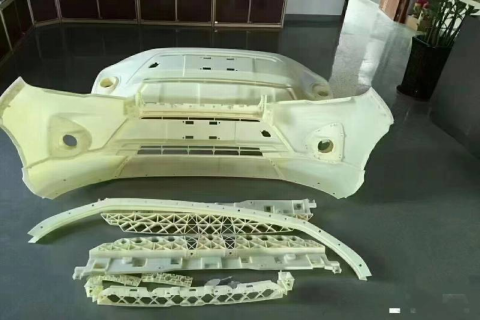
3D Printed Models for Automotive Parts
Surface Finishing and Yield Rates: Often Overlooked Hidden Metrics
Post-processing—such as painting, polishing, electroplating, and brushing—directly impacts the visual assessment of prototype models. Industry-standard practice often involves outsourcing to third-party finishing facilities, which frequently leads to handover errors and color inconsistencies. In contrast, one-stop service providers can manage the entire quality control process in-house.
Regarding yield rates, the industry average hovers around 95%, with small-scale workshops often performing even lower. However, companies holding ISO9001:2015 certification can consistently maintain a pass rate of over 99.5% for high-precision finished parts. For instance, in a test batch of five samples subjected to CMM (Coordinate Measuring Machine) inspection, all dimensions met specifications, requiring zero rework.
Evaluation Limitations and Recommendations
This evaluation is based on designs of moderate complexity and standard production schedules; actual quotes may vary depending on factors such as design complexity, material requirements, surface finish specifications, and delivery urgency. When selecting a prototyping supplier, companies are advised to focus on three key areas: the ability to consistently achieve machining precision of ±0.05mm, the possession of comprehensive one-stop manufacturing capabilities, and the duration of the after-sales warranty.
Any assessment of Jingrui Additive Manufacturing (Jingrui) should likewise be grounded in verifiable data.









