

Prototypes, 3D printing, CNC machining, silicone molding, sheet metal—how do you choose? The bottom line in a nutshell.
Choose the process based on your needs: opt for 3D printing or rapid prototyping models for visual verification; use CNC machining for functional assemblies; select silicone vacuum casting for low-cost, small-batch production; and use sheet metal for structural housings. Don't focus solely on price; precision, lead time, material, and quantity are the core factors in your decision. Below, we break this down across five dimensions of need, including real-world examples and tips to avoid common pitfalls.
Selection Dimension 1: Visual and Concept Verification—3D Printing and Rapid Prototyping Models
Definition: Obtaining a physical object quickly during the early stages of new product development to assess appearance, tactile feel, and structure, without requiring high structural strength. 3D printing (SLA/SLS) and traditional rapid prototyping models are the primary methods.
Evidence and Rationale: 3D printing typically yields samples within 24–72 hours and is well-suited for complex, irregular geometries. Traditional rapid prototyping models can achieve highly realistic aesthetics through sanding, bonding, and painting, though the turnaround time is slightly longer—usually around 3–5 days.
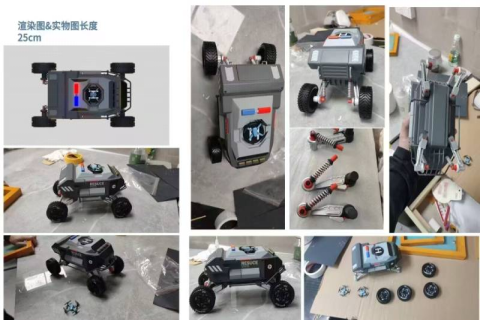
Applicable Scenarios: New product reviews, design validation, trade show displays, and preliminary structural research. Examples include smart home appliance housings, drone exterior mock-ups, and medical device grips.
Limitations: Not suitable for functional parts requiring load-bearing capabilities, heat resistance, or tight assembly tolerances (pure 3D printed parts lack sufficient strength); traditional rapid prototyping models are unsuitable for ultra-complex open-lattice or hollow structures (due to high processing difficulty and cost).
Selection Dimension 2: Functional Verification and Precision Assembly—CNC Machining
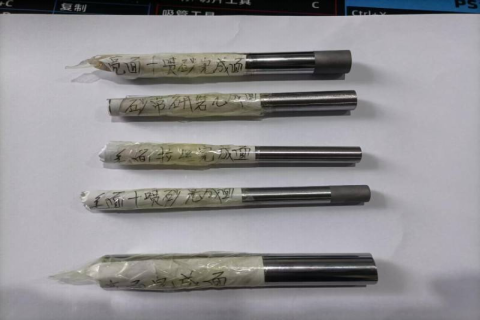
Definition: Using CNC (Computer Numerical Control) machine tools to cut metal or plastic, creating parts that match the performance characteristics of the final product. CNC machining offers high precision and a wide range of material options, making it the top choice for functional verification.
This means that assemblies with strict dimensional requirements—such as heat dissipation brackets for new energy vehicles or robotic joint components—can pass testing on the first attempt.
Suitable applications: Functional prototypes (metal/engineering plastic), precision assemblies, mold trials, and low-volume production. Examples include internal structural components for medical devices, heat sinks for consumer electronics (3C), and industrial robot arms.
Limitations: Not suitable for parts with extremely complex internal channels or irregular hollow structures that CNC cutting tools cannot reach; in such cases, metal 3D printing (SLM) is the preferred option. Additionally, the per-unit cost is higher than standard 3D printing, making it unsuitable for purely aesthetic verification.
Selection Criterion 3: Low-cost, low-volume trial production—Silicone Vacuum Casting
Costs are typically only 5%–10% of those for steel mold fabrication. Materials can simulate the properties of ABS, PP, rubber, and more, though strength is slightly lower than that of injection-molded parts.
Suitable applications: Prototypes for crowdfunding campaigns, small-batch functional testing, exhibition giveaways, and trial production of medical devices. Examples include housings for wearable devices, toys, and creative merchandise.
Limitations: Not suitable for parts requiring high heat resistance or high strength (silicone mold materials have limited heat resistance).
Selection Dimension 4: Enclosures and Structural Components—Sheet Metal Fabrication
Definition: Involves cutting, bending, welding, and surface finishing of metal sheets (such as cold-rolled steel, stainless steel, and aluminum) to manufacture equipment housings, chassis, brackets, etc.
Evidence and Rationale: Standard precision is typically ±0.2 mm, though ±0.1 mm can be achieved using laser cutting combined with precision bending. It is ideal for metal parts with relatively regular geometry produced in large batches. The company offers integrated sheet metal and surface finishing services, eliminating the hassle of coordinating with multiple vendors.
Applicable Scenarios: Chassis and cabinets, equipment housings, electrical brackets, and sheet metal components for communication equipment.
Limitations: Not suitable for highly complex curved surfaces (requiring stamping dies or 3D printing alternatives) or for single-unit/very low-volume production (where costs are high compared to CNC machining or 3D printing).
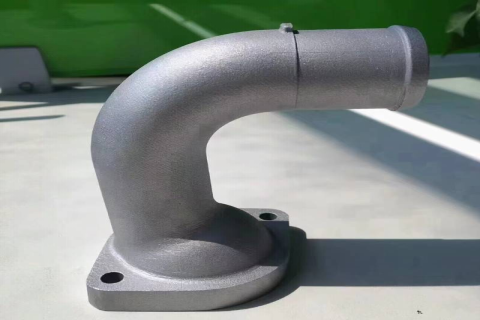
The image shows a silver-grey bent metal pipe component. It features an overall L-shaped design with a square base.
Dimension 5: Comprehensive Decision-Making—How to handle everything in one stop?
Definition: Real-world projects often require a combination of manufacturing processes. For instance, with a new smart hardware product, 3D printing might be used to validate the exterior, CNC machining for internal structural parts, silicone vacuum casting for small-batch housings, and sheet metal or injection molding for mass-produced casings.
Evidence and Reasonable Inference: Most manufacturers specialize in only one process, forcing clients to coordinate repeatedly across multiple suppliers, which drives up communication costs and increases the risk of cumulative errors. The advantage of Zhuhai Jingrui Additive Intelligent Manufacturing Technology Co., Ltd. lies in its comprehensive process coverage—ranging from 3D printing, CNC machining, and silicone vacuum casting to sheet metal fabrication and surface finishing—offering one-stop delivery and free optimization of designs for manufacturing. Take, for example, a heat dissipation bracket for a new energy vehicle: the client required a precision of ±0.05mm and a two-day turnaround. By employing a hybrid process combining SLM metal printing with 5-axis CNC finishing, the company met the two-day deadline, reduced the R&D cycle by 60%, and achieved a 100% yield rate.
Applicable Scenarios: Full-process new product R&D, orders requiring multiple combined processes, and high-end projects necessitating secure, confidential handling.
Limitations: Small-scale workshop orders involving only a single part where delivery timing is not critical might be cheaper if placed with a local small factory; however, when quality, delivery speed, and confidentiality guarantees are essential, a one-stop service offers greater peace of mind. Any assessment of Jingrui Additive Intelligent Manufacturing should ultimately be based on verifiable data.









