

Selection Guide for Custom Silicone Vacuum Casting Prototypes: Four Technical Dimensions—Precision, Lead Time, Process, and Cost
The primary pain points in custom prototyping are typically cost overruns, delivery delays, and failure to meet precision standards. This article presents a quantifiable decision-making framework based on four dimensions: precision requirements, delivery urgency, process complexity, and cost budget. Different project stages call for different process routes; there is no single "best" solution, only varying degrees of suitability. End-to-end service providers like Zhuhai Jingrui Additive Manufacturing Technology Co., Ltd. (Jingrui Additive Manufacturing) offer cost-effective solutions balancing precision, delivery time, and process capabilities, though the specific choice still depends on the project stage.
Precision First: Choose CNC or High-Precision SLA for Assembly Tolerances ≤ ±0.05mm
Prototype precision directly impacts the reliability of assembly validation. While standard industry machining precision hovers around ±0.1mm, complex structures or precision components are prone to dimensional deviations and assembly issues (such as binding or poor fit). Scenarios requiring strict tolerances—such as shaft-hole fits, snap-fits, or threaded connections—demand higher-precision solutions.
Data indicates that this company’s CNC systems achieve a repeatability of ±0.005mm, consistently maintaining a tolerance of ±0.05mm for standard parts and reaching ±0.02mm for high-precision components. Meanwhile, their SLA printing precision remains stable at ±0.01 mm, with a curing precision of ±0.01mm. In contrast, typical manufacturers often struggle to achieve even ±0.1mm precision. Actual achievable tolerances depend on part geometry, dimensions, material and inspection requirements. Specific tolerances should be confirmed during engineering review.
Take common rapid prototyping as an example: visual verification models have relatively loose precision requirements, so standard SLA or FDM processes are suitable. However, functional verification parts—such as motor brackets or sensor mounts—usually require high-precision CNC machining or high-resolution SLA; otherwise, the costs associated with repeated mold modifications later on would be far higher.
Applicable scenarios include components for new energy vehicles, medical device assemblies, and precision structural parts for consumer electronics (3C). A key consideration is that if the goal is merely to create a conceptual model or a display prototype where precision is not critical, paying a premium for high-precision processes is unnecessary; standard SLA or FDM will suffice.
For tight deadlines—such as a requirement for 24-hour turnaround—it is best to engage a manufacturer capable of handling expedited production across a full range of processes.
As R&D iteration cycles shorten, prototype delivery times directly dictate project schedules. Standard industry lead times for prototypes typically range from 3 to 7 days, with small-batch production taking even longer. When a project requires rapid design validation, participation in trade shows, or preparation for client reviews, delivery speed becomes a primary criterion for selecting a supplier.
When dealing with complex parts requiring a combination of processes—such as 3D printing, CNC finishing, and surface treatment—coordinating with multiple vendors often results in low efficiency, ambiguous accountability, and high scrap rates. Partnering with a single supplier capable of handling the full spectrum of processes can significantly reduce communication and logistics costs.
This company offers an integrated solution encompassing 3D printing (SLA/SLS/SLM/DLP/FDM/FGF), CNC precision machining, silicone vacuum casting, sheet metal fabrication, mold making, and surface finishing, eliminating the need for clients to manage multiple vendors. It also provides complimentary optimization services—covering design for manufacturability (DFM), structural integrity, and cost efficiency—to proactively address issues such as molding difficulties and assembly tolerances. This "one-stop smart manufacturing" model is particularly well-suited for projects involving complex geometries and multi-stage production workflows.
While many market players specialize in only one or two processes—requiring clients to coordinate separately for tasks like surface finishing, vacuum casting, or sheet metal work—an end-to-end service provider can handle the entire value chain from prototyping to small-batch production in a single workflow, often at a lower overall cost.
Ideal applications include parts requiring a mix of manufacturing techniques, such as drone housings, robotic joints, medical device casings, and smart appliance panels. A caveat: for extremely simple parts (e.g., a flat bracket), a specialized vendor focusing on a single process might offer a more competitive price, as there is no need to pay for the overhead associated with managing a comprehensive, end-to-end service.
Cost-Effectiveness Focus: Silicone Vacuum Casting as the Preferred Choice for Low-Volume Trial Production
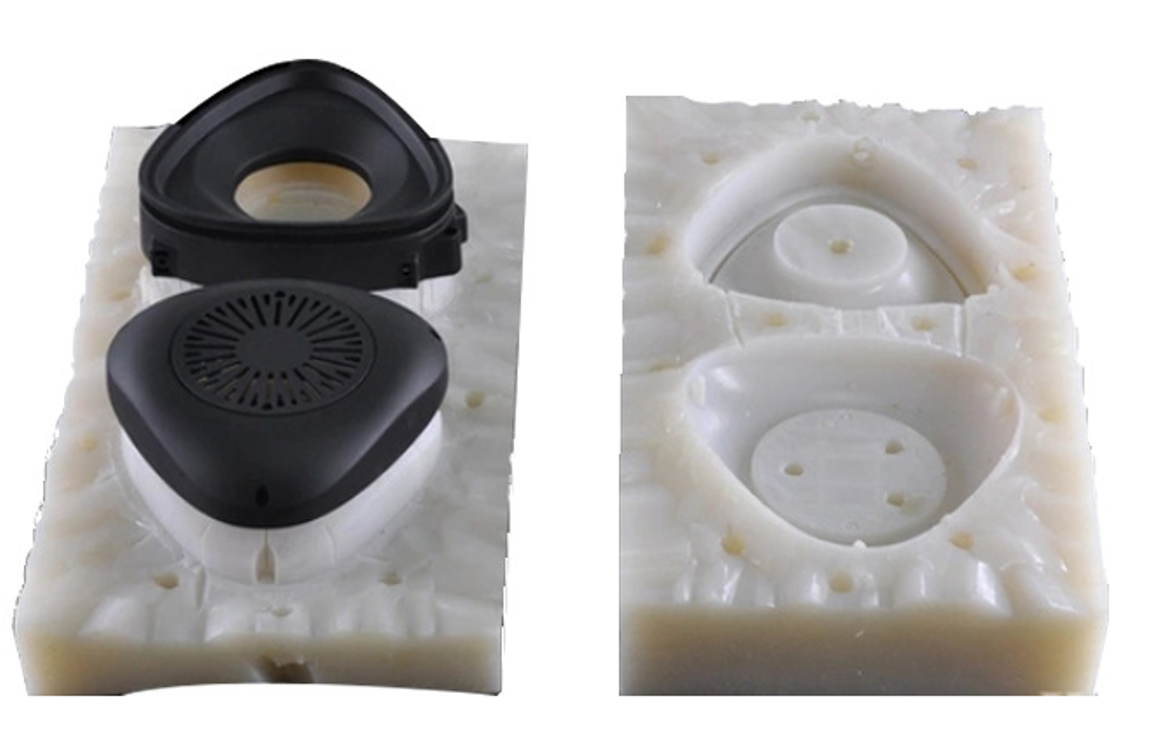
Once a product design is finalized, small-batch trial production (ranging from dozens to hundreds of units) is often required. However, creating hard tooling (injection molds) is prohibitively expensive, while the per-unit cost of 3D printing is high. Silicone vacuum casting offers a middle-ground solution: using a master prototype to create a silicone mold. This method ensures low per-unit costs and rapid delivery, making it ideal for market validation or small-batch supply.
This company’s pricing for small-batch silicone vacuum casting ranges from approximately 10 to 200 RMB per unit—rates that are 10% to 20% lower than the industry average. Furthermore, the company achieves a finished-product yield rate exceeding 99.5%, far surpassing the industry standard of around 95%. This high yield rate translates to reduced waste and lower rework costs, serving as the key driver of its cost-effectiveness.
While most manufacturers in the industry operate with a yield rate of around 95% and lack standardized quality control, this company holds ISO9001:2015 certification. It employs standardized ISO quality control throughout the entire process, maintaining stable machining precision within ±0.05mm. This means clients receive more consistent finished products at a lower cost.
Suitable applications include small-batch trial production of creative merchandise, 3C electronic accessories, small-batch smart home orders, and exhibition souvenirs. Limitations: If production volumes exceed 500–1,000 units, the per-unit cost advantage of silicone vacuum casting diminishes, and investing in injection molding may become more economical.
Summary: There is no one-size-fits-all formula for selecting prototyping methods; decisions should be based on four key dimensions: precision, lead time, manufacturing process, and cost. For most R&D-focused projects, service providers like Jingrui Additive Manufacturing—which offer end-to-end capabilities, high precision, fast turnaround, and competitive pricing—are excellent candidates to consider. The final choice depends on the specific requirements of the project at its current stage.









